Combined Physics - P3 Particle Model of Matter
No description yet. This curated deck is ready for daily study.
Card preview (20)
What equation links density, mass and volume?
Density = mass / volume ⍴ = m / v
What two energy stores make up the internal energy stored by particles?
Kinetic energy and potential energy stores.
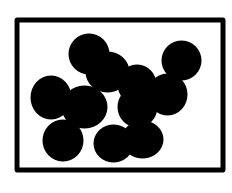
Draw a particle model for a liquid.
Name the change of state when a solid turns straight into a gas.
Sublimation
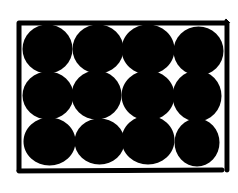
Draw a particle model for a solid.
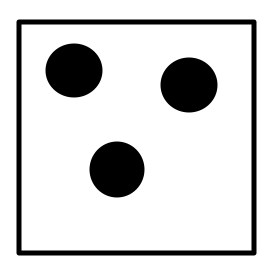
Draw a particle model for a gas.
Name the changes of state labelled a, b, c and d.
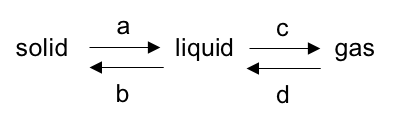
a) Melting b) Freezing c) Boiling d) Condensing
What is specific latent heat of vaporisation?
The energy needed to change the state of a substance between a liquid and gas (boiling or condensing).
Why is there not a temperature rise during a change of state?
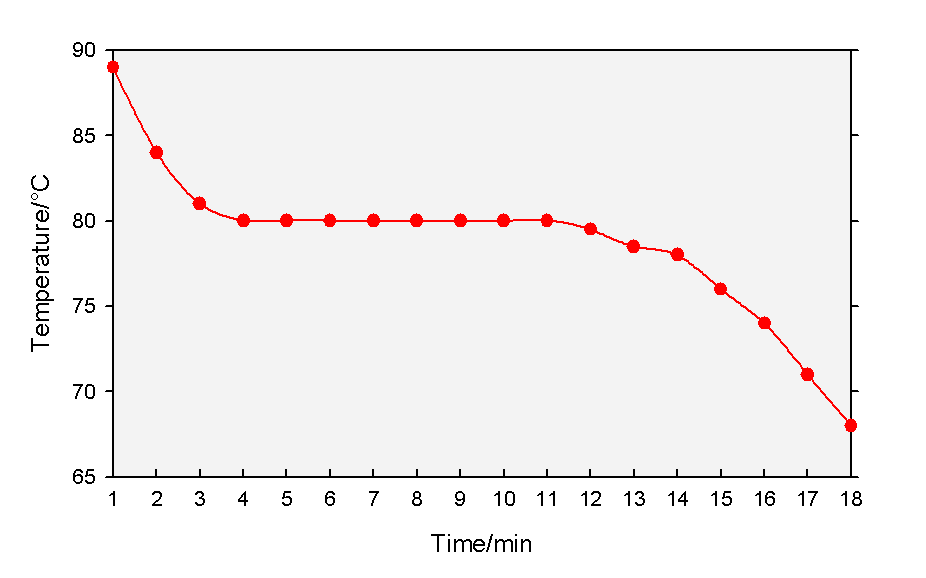
• Energy is put into the system. • The internal energy of the system increases. • But the energy is used to break bonds rather than raising the temperature of the system.
What is specific heat capacity?
The amount of energy required to raise the temperature of 1 kg of the substance by 1 oC.
What is specific latent heat?
The amount of energy needed to change the state of 1 kg of a substance.
What is the name for the energy stored by particles?
Internal energy
What happens to the internal energy of a system when heated?
• Particles gain energy • Kinetic energy store of particles increases • Particles move faster • Internal energy increases
What happens when you increase the temperature of a gas at constant volume?
• Increases the pressure • Because the particles move faster • Increased frequency of collisions of particles with the sides of the container.
What is specific latent heat of fusion?
The energy needed to change the state of a substance between a solid and liquid (melting or freezing).
What are the units for: a) Mass b) Volume c) Density
a) The units for mass are kg b) The units for volume are m3 c) The units for density are kg/m3
How would you measure the density of a regular object?
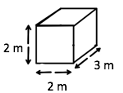
• Measure the volume of the object (e.g. for a square, you would measure the length of the sides using a ruler and multiply length x width x height) • Measure its mass using a balance. • Calculate density using the equation: density = mass / volume
How would you measure the density of a liquid?
• Use a measuring cylinder to measure the volume of a liquid. • Use a balance to measure the mass of a liquid. • Calculate density using the equation: density = mass / volume
What do the horizontal lines on a heating or cooling curve represent?
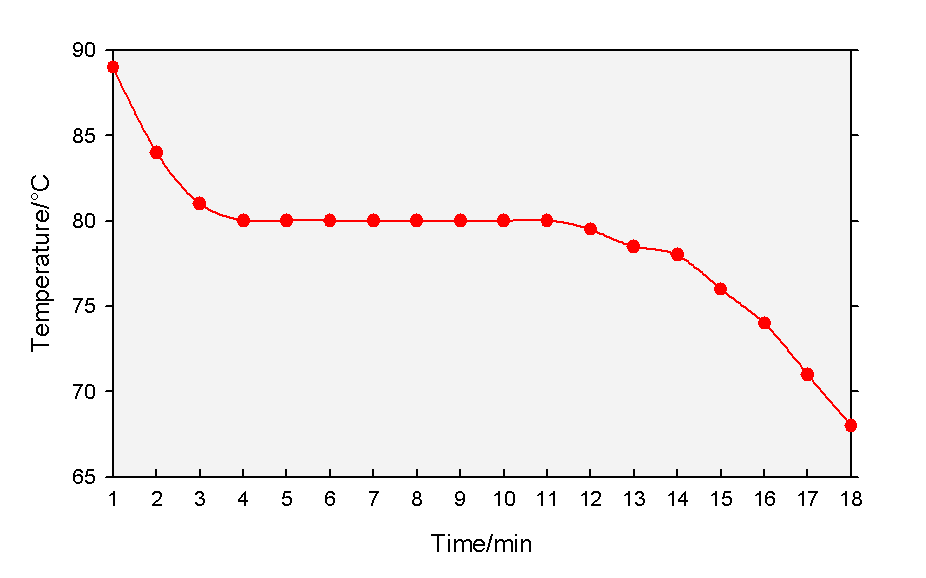
A change of state
How would you measure the density of an irregular object?
• Measure the mass using a balance. • Measure volume by placing the object in a eureka can filled with water. • Measure the volume of water displaced into a measuring cylinder to find the volume of the object. • Calculate density using the equation: density = mass / volume