NB1-3 - General Morphology and Surface Structures of the CNS and DLAs
No description yet. This curated deck is ready for daily study.
Card preview (24)
What are the peaks and valleys of the brain called?
The bumps are called gyri and the valleys are called sulci
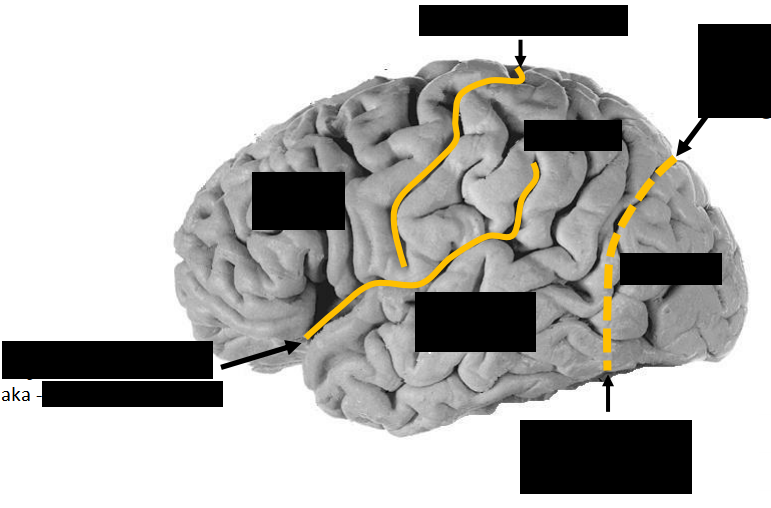
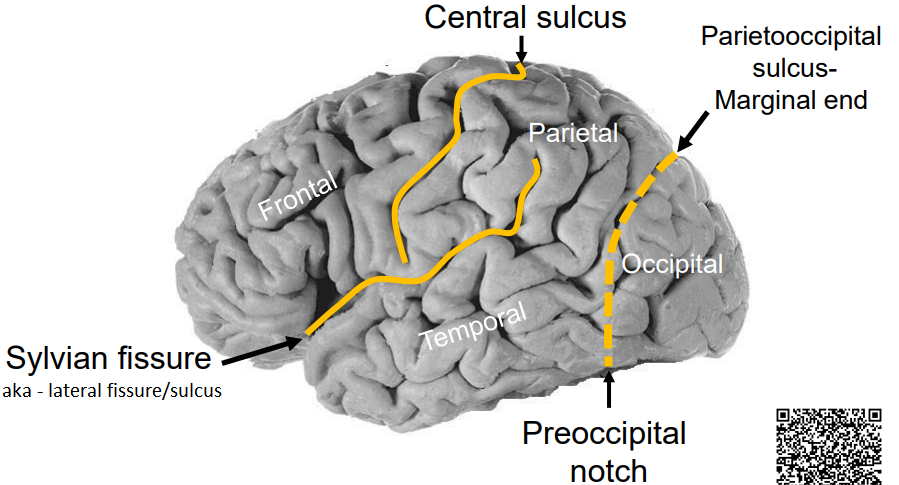
Important note about the parietooccipital sulcus
It’s not a real sulcus. Its an imaginary line drawn from the preoccipital notch to form a boundary for the occipital lobe.
Label image and say what the radiographs are highlighting.
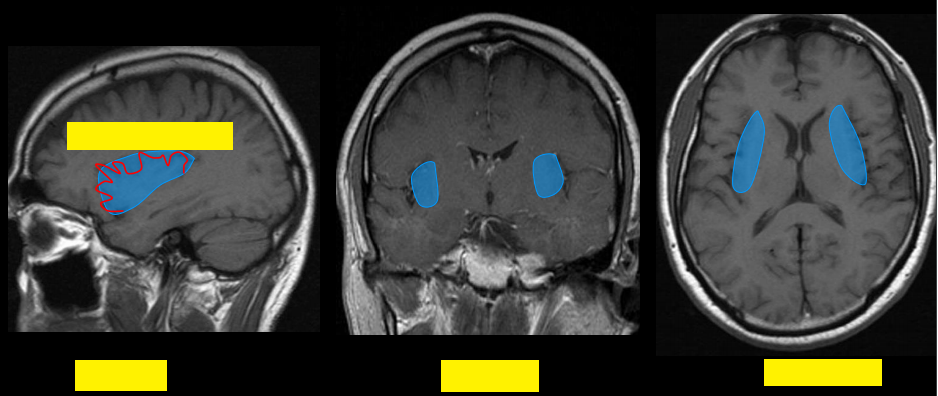
The insular lobe
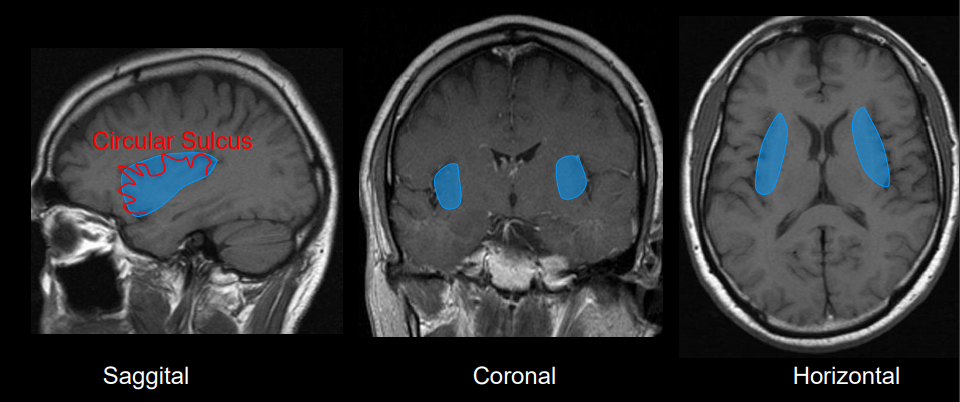
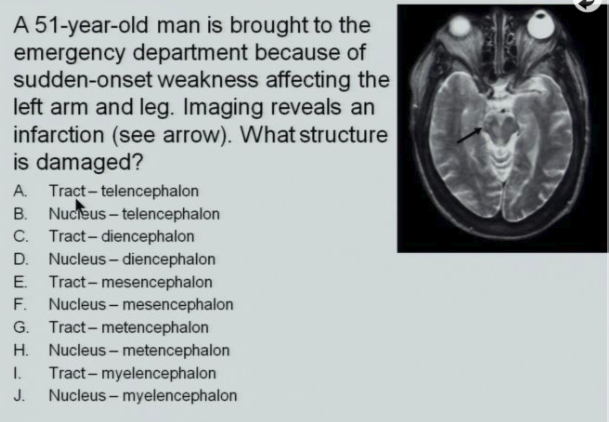
E
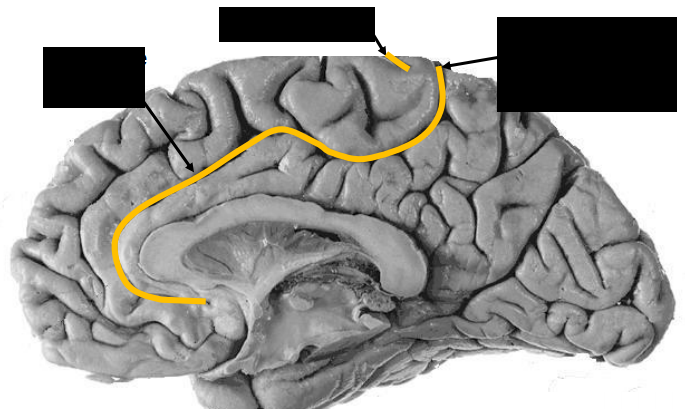
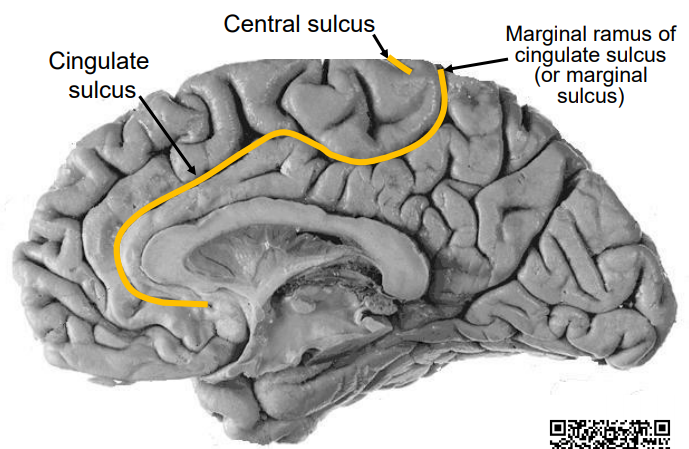
On a mid-sagital section of the brain, how do you locate the central sulcus?
You follow the cingulate sulcus to the surface of the brain, the next most rostral sulcus is the central sulcus.
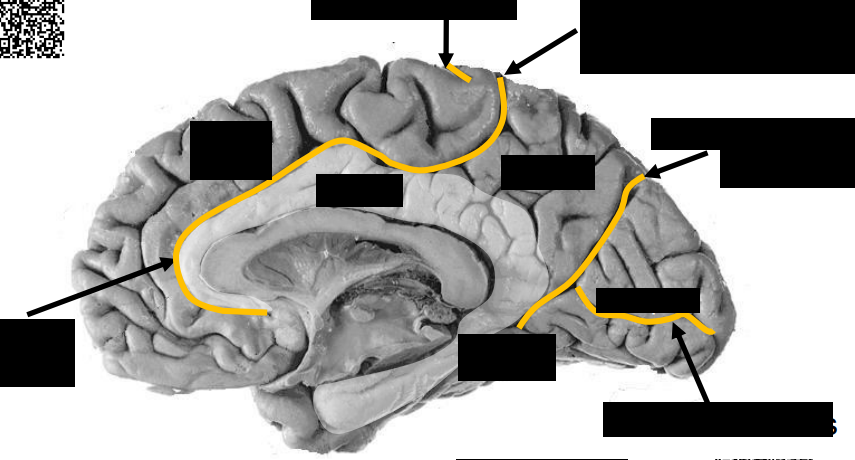
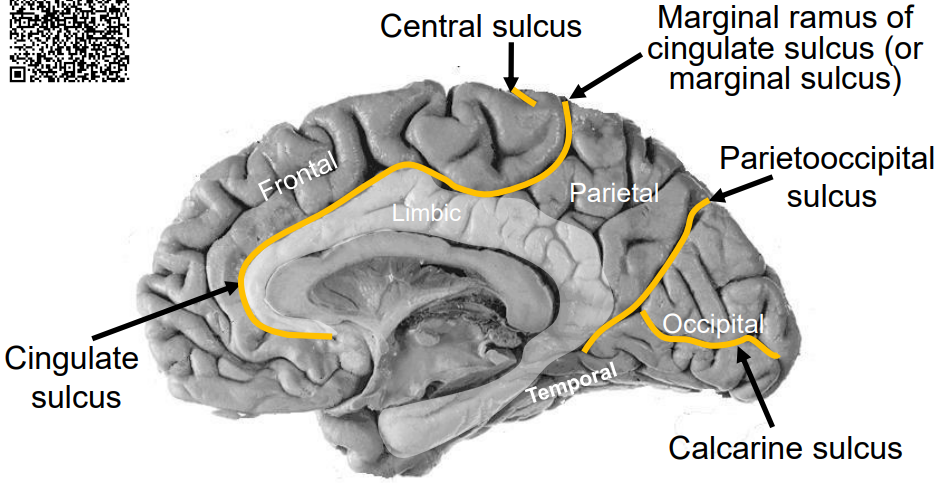
What is the clinical significance of the calcarine sulcus?
Everything you see below your visual focus is represented above the calcarine sulcus and vice versa.
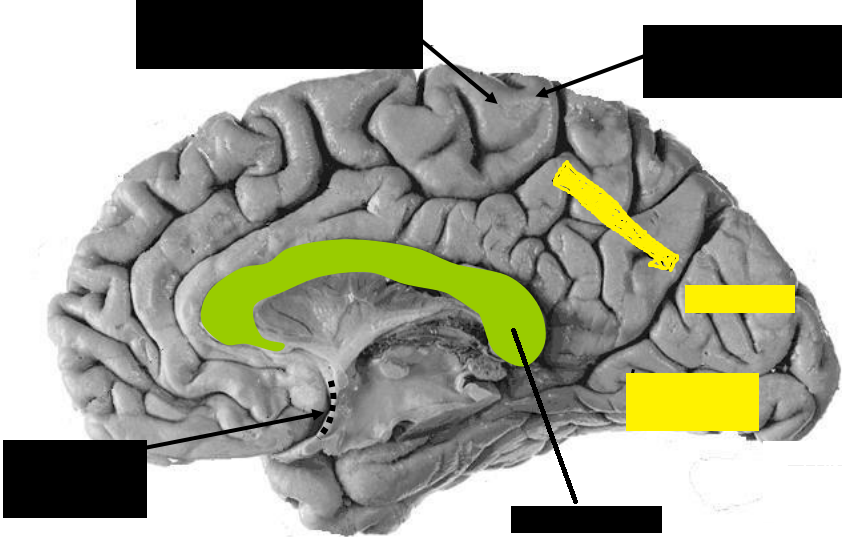
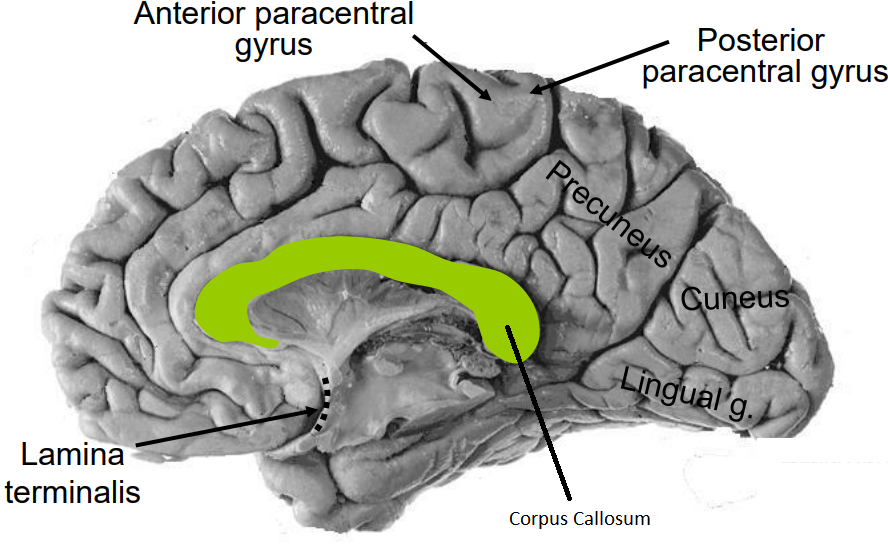
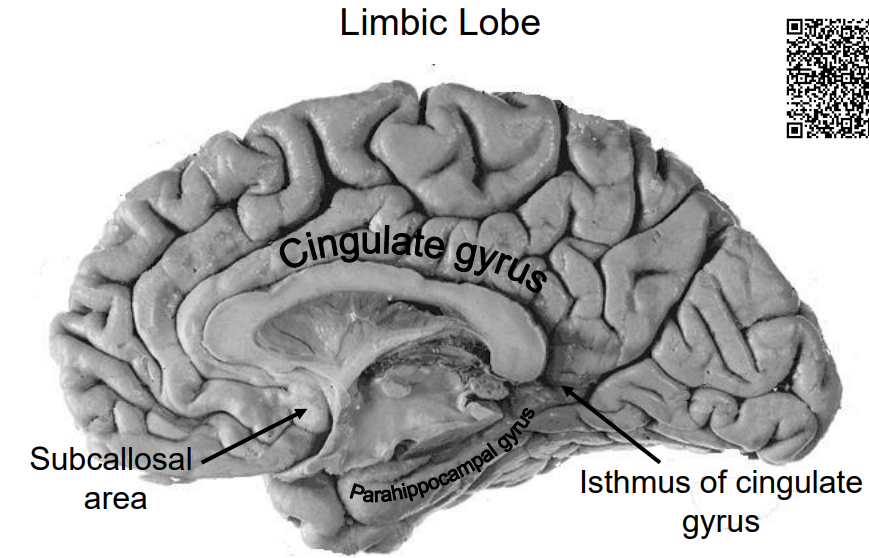
List the parts of the corpus callosum and their functions
• Splenium - connects occipital lobes • Genu - connects frontal lobes • Body - connects parietal lobes and connects frontal lobes • Rostrum - connects frontal lobes
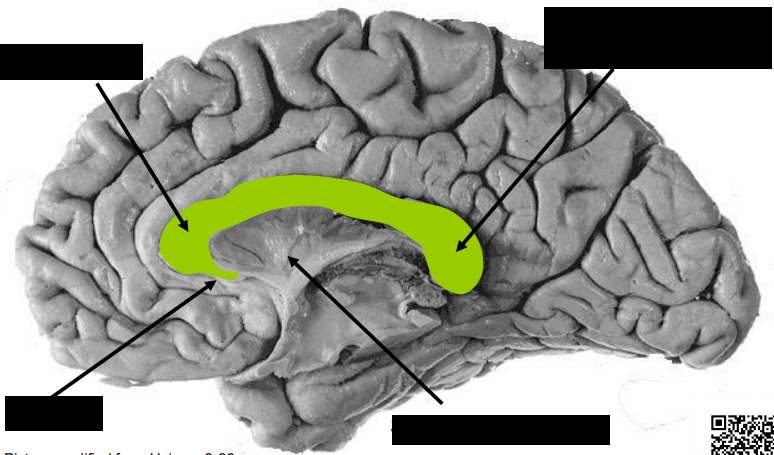
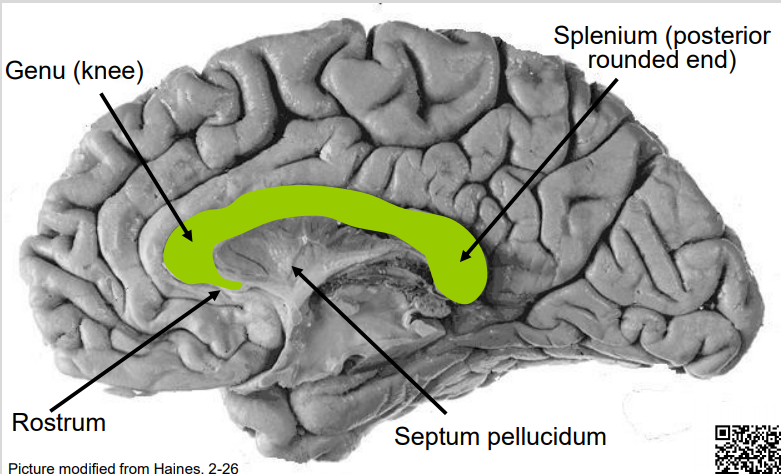
What is the purpose of the septum pellucidum?
To separate the lateral ventricles from one another
What is a commissure?
A place where two structures are joined
What does the anterior commisure do?
It joins the tips of the temporal lobes and the olfactory bulb
What does the posterior commissure do?
It is involved with certain aspects of eye movements and pupilary responses
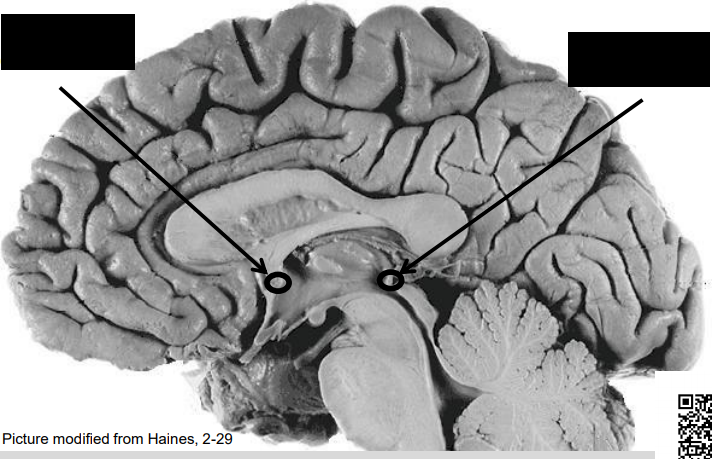
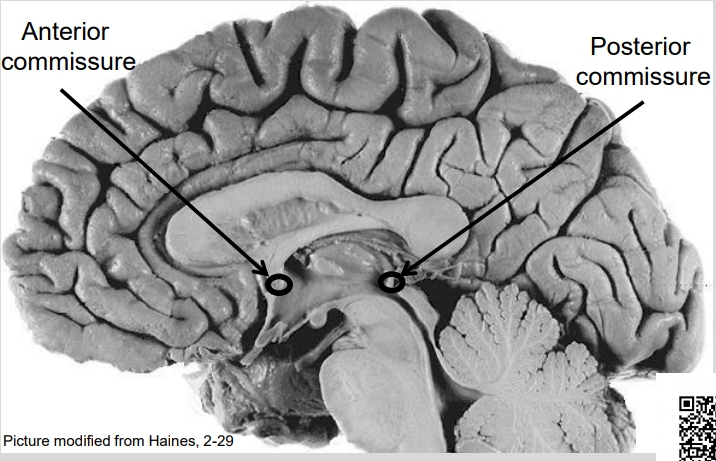
What is highlighted in this image?
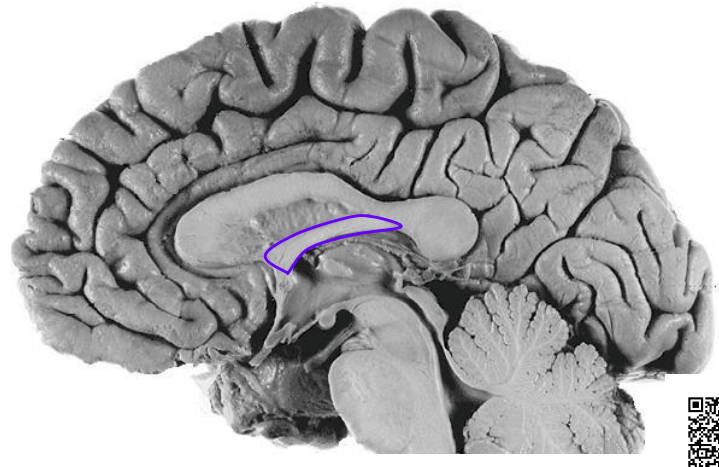
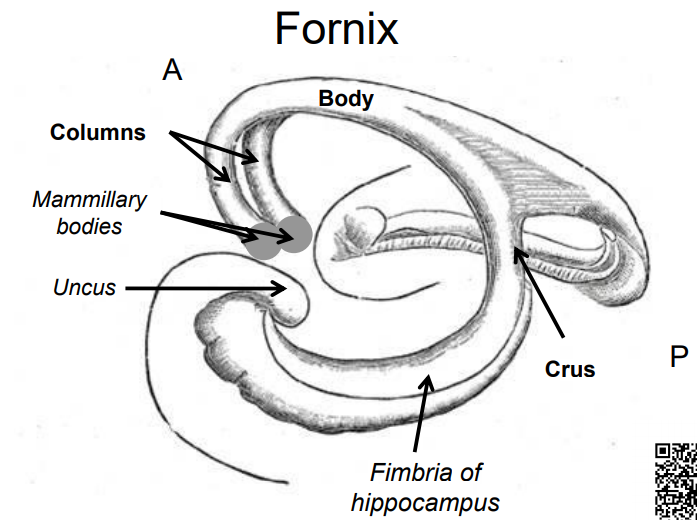
The fornix
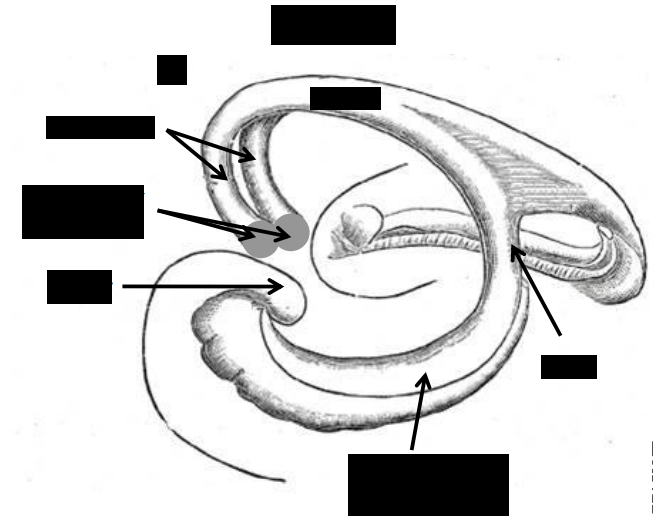
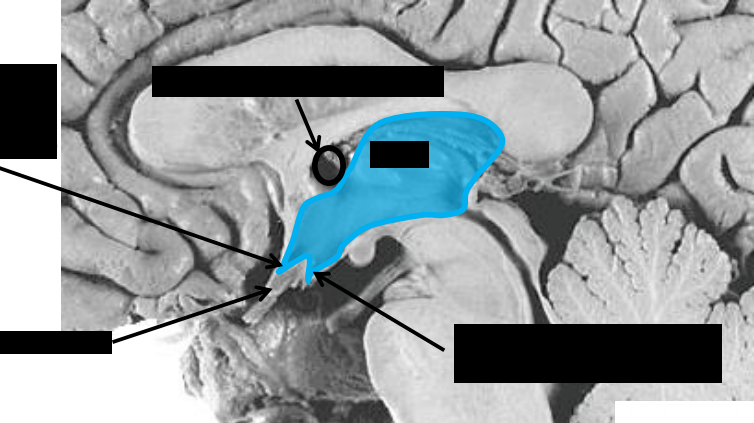
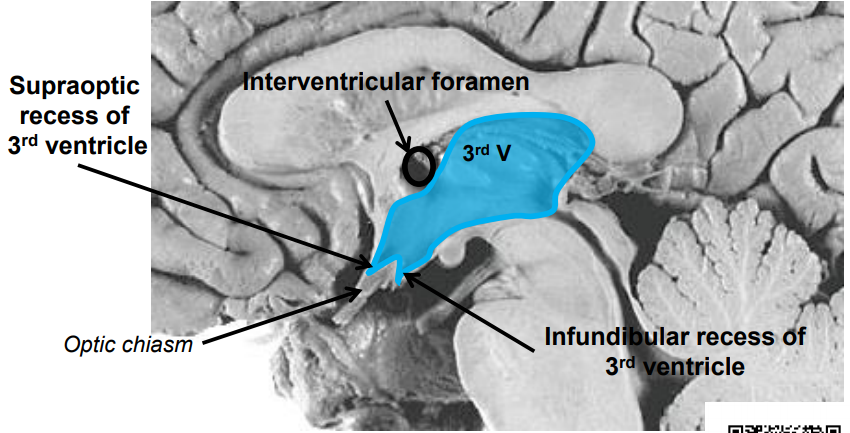
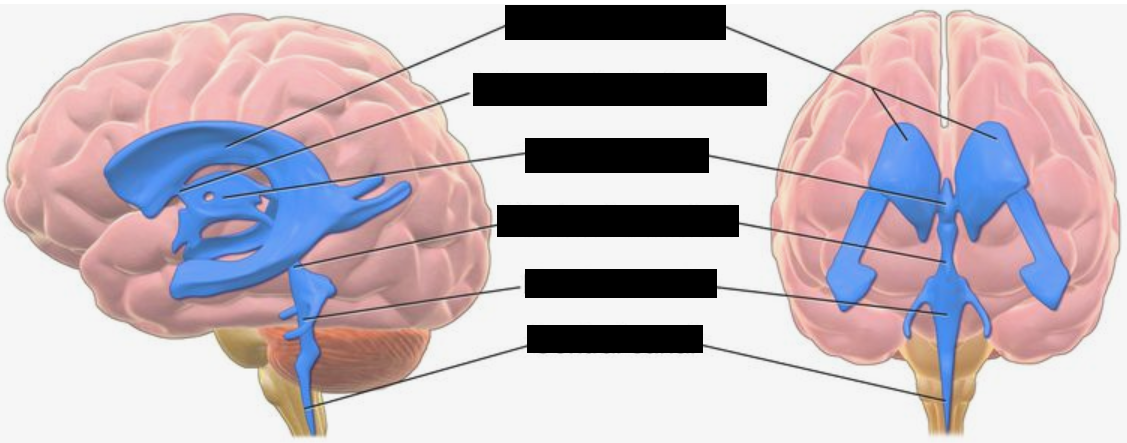
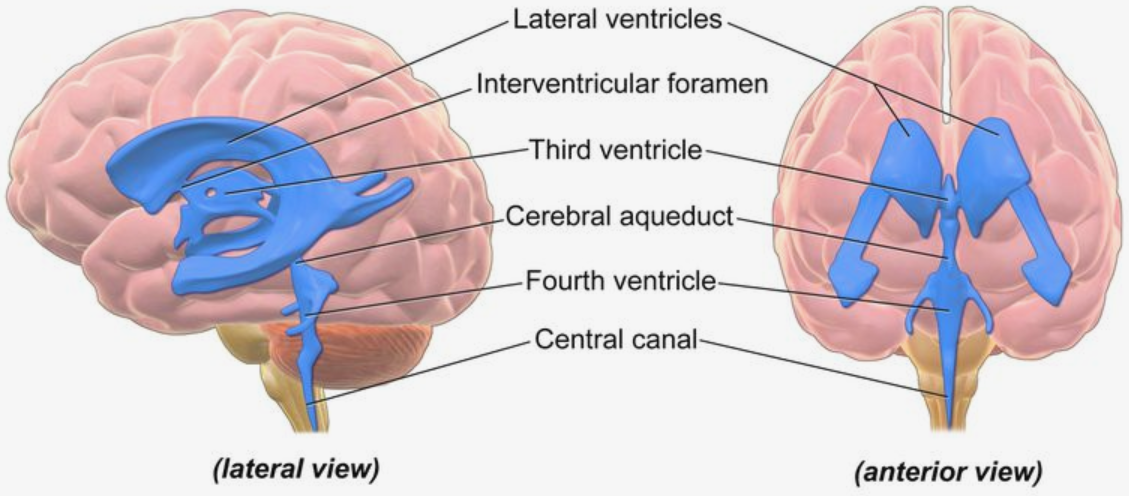
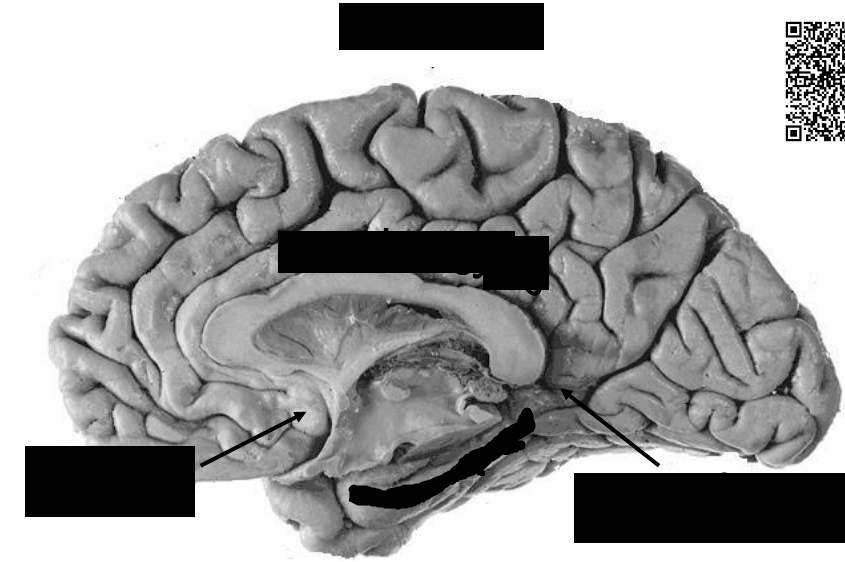
What is the optic chiasm and where is it located?
It is where the CN2 fibers decussate to form an “X” shape. It is located just inferior and anterior to the hypothalamus.
What is the clinical significance of the mamillary bodies?
They appear to have a role in the formation of memories which makes sense since they are very closely related to the hippocampus