Metals
No description yet. This curated deck is ready for daily study.
Card preview (24)
when are metals used in dentistry? 5
• partial denture framework (CoCr, type IV gold) • crowns (stainless steel) • denture base (stainless steel) • orthodontic appliance (NiTi) • restorations (amalgam)
why are metals used in dentistry?
mechanical properties * high strength * rigidity * surface hardness * degree of ductility
what is the definition of a metal?
aggregate of atoms in a crystaline structure
what is the definition of an alloy?
combination of two or more types of metal in a crystalline structure
what factors affect mechanical properties?
• crystalline structure • grain size • grain imperfections
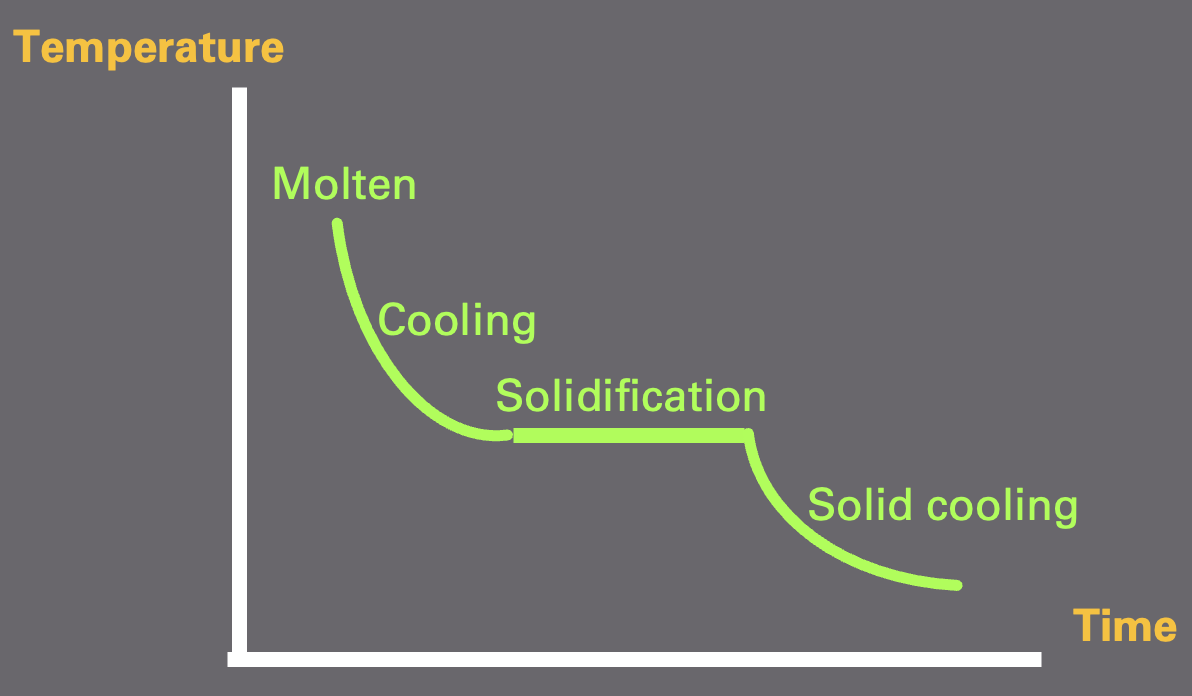
describe the cooling curve of a metal
• in molten form, the metal atoms flow readily and are arranged randomly • as the temperature drops to its melting point, some metal atoms begin to crystalise and temperature remains constant • when crystallisation is complete, all metal atoms have formed a crystalline structure and the temperature drops gradually to room temperature
describe how crystals grow
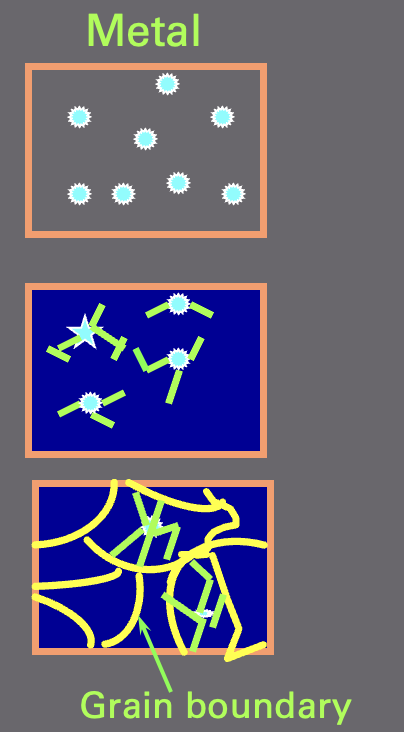
• molten metal atoms reach their melting point and crystallise and form nuclei of crystallisation • the crystals grow as dendrites • crystals/grains continue developing until they impinge on a neighbouring crystal - grain boundary (stops each other from further growth) • grains are of different size and shape
what are equi-axed grains?
when crystal growth is of equal dimension in each direction
what is a radical structure?
when molten metal is cooled quickly in a cylindrical mould
what is a fibrous structure?
when molten wire is pulled through a die
what is the difference between fast and slow cooling in crystal growth?
fast cooling (quenching) * more nuclei * small fine grains slow cooling * few nuclei * large coarse grains
what are nucleating agents?
impurities or additives that act as foci for crystal growth * the more added, the greater the number of small grains
what is a grain?
a single crystal (lattice) with atoms orientated in given directions (dendrites)
what is a grain boundary?
formed whenever there is a change in orientation of the crystal planes so the grains collide with each other impurities and defects concentrate at the grain
what factors are required for rapid cooling (quenching)?
• small quantity of metal • heat metal just above melting point before cooling • store the metal in a mould that readily conducts heat
what is dislocation?
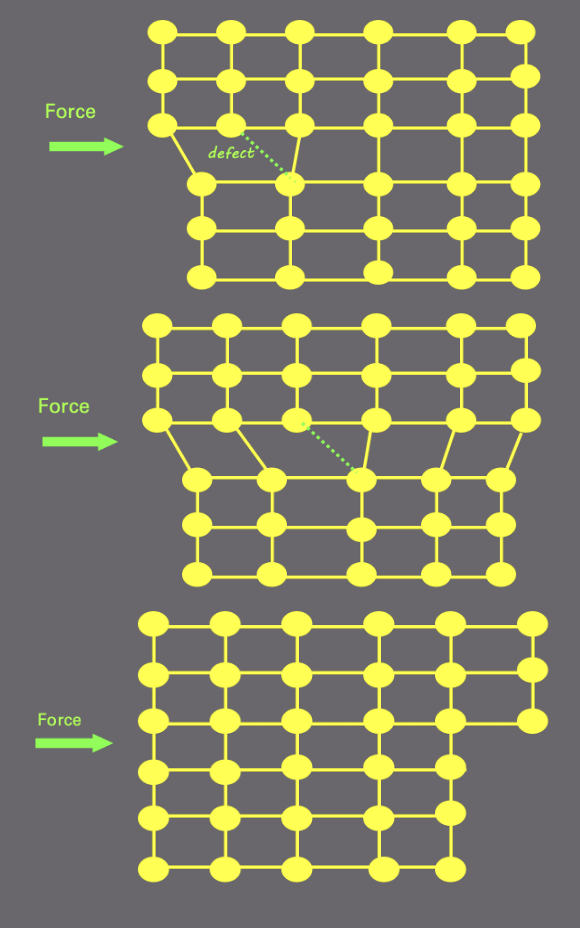
• when there is an imperfection/defect in a grain it is a dislocation (dislocation in the lattice) • the dislocation area is most likely to be fractured when a force is applied • the force pushes the dislocation along the lattice plane • the defects propagates along the crystal plane until a grain boundary is reached • the shape of the grain has changed and no dislocation is present
what mechanical properties does impeding movement of dislocations in metals and alloys increase?
• elastic limin stress • fracture strength and UTS • surface hardness
what mechanical properties does impeding movement of dislocations in metals and alloys decrease?
• ductility • impact resistance
what factors impede dislocation movement?
• grain boundaries • alloys - atoms of different sizes • cold working - pushes dislocations towards teh grain boundaries
what is cold working?
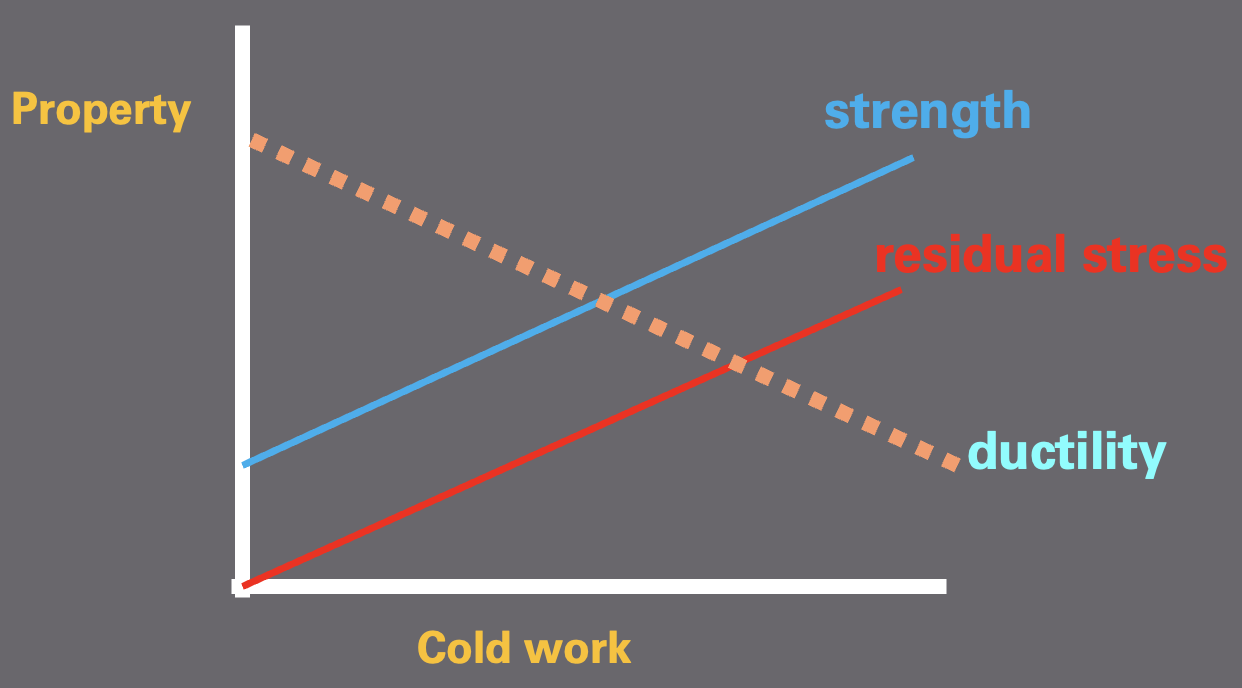
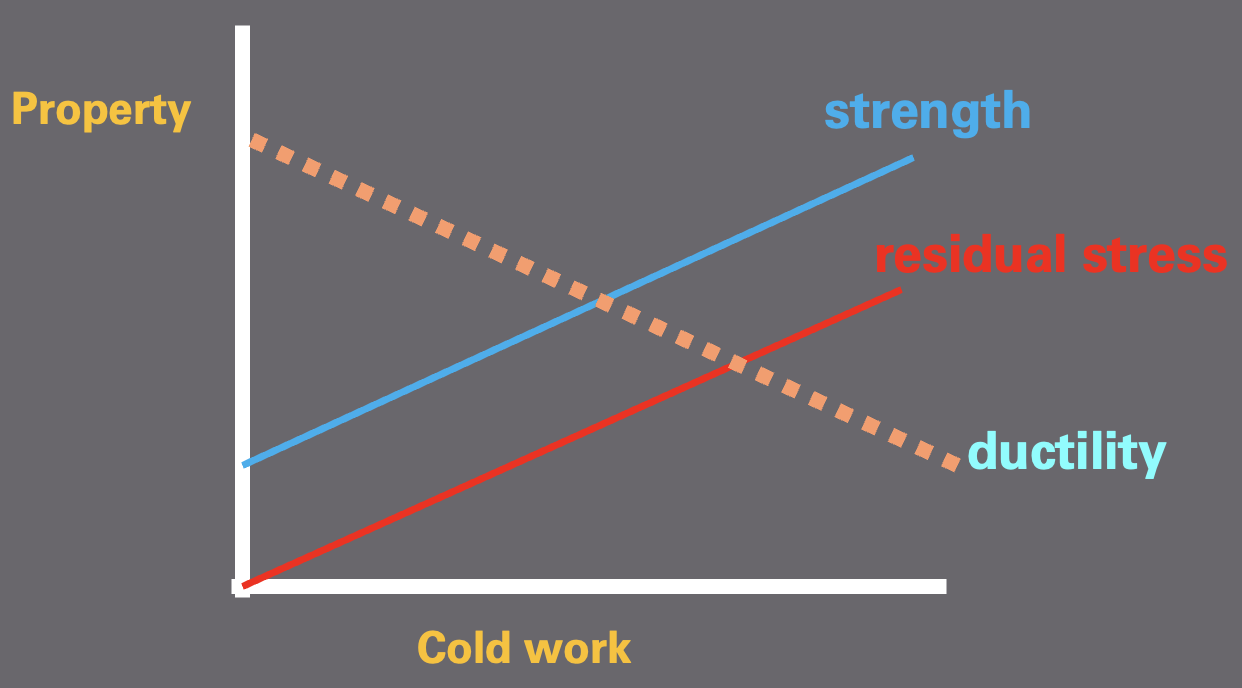
• work done/pressure on a metal or alloy to change its shape by pushing defects towards the grain boundary • done at low temperatures • creates a harder and stronger material
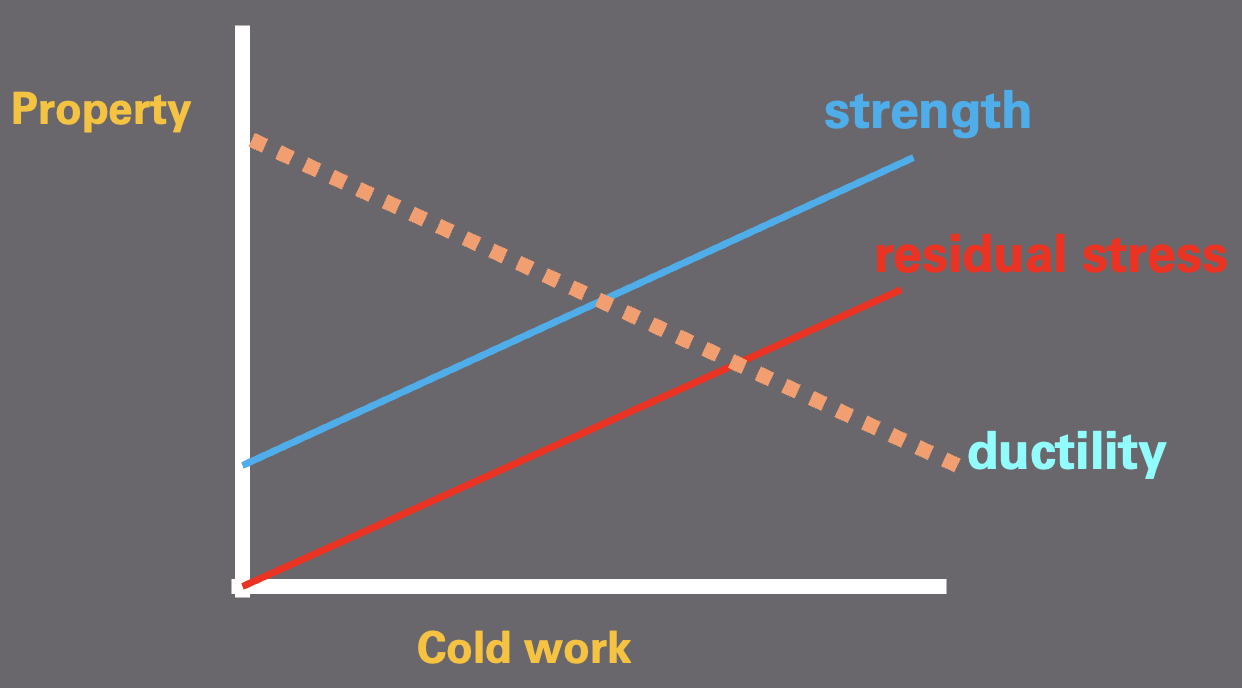
what mechanical properties does cold working increase?
• elastic limit • fracture stress • hardness
what mechanical properties does cold working decrease?
• ductility • impact strength • lower corrosion strength
what is residual stress? how do you relive it?
• develop in metals/alloys where atoms become oriented out of equilibrium and grow with cold working • undesirable - causes instability of the lattice and results in distortion of the metal/alloy over time • relieved by annealing process
what is annealing?
a process whereby heating a metal/alloy so that greater thermal vibration allows migration of atoms so they can rearrange themselves - distortions are eliminated