Ch26 Carbonyls and Carboxylic Acids
No description yet. This curated deck is ready for daily study.
Card preview (24)
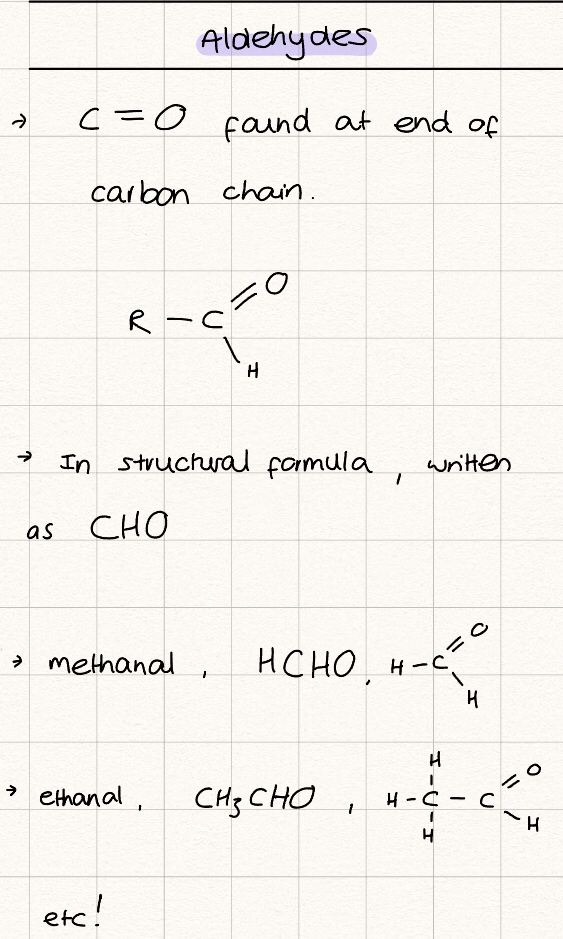
What are aldehydes?
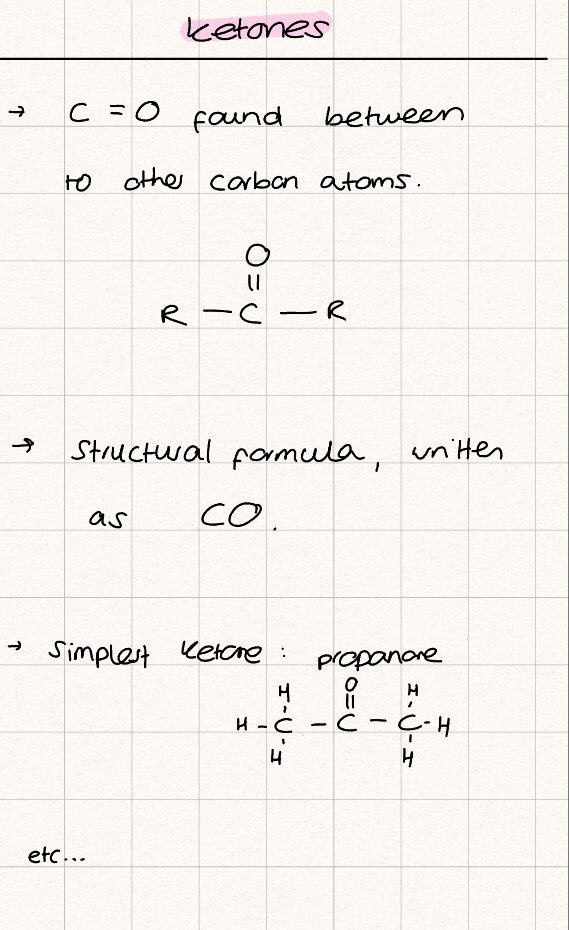
What are ketones?
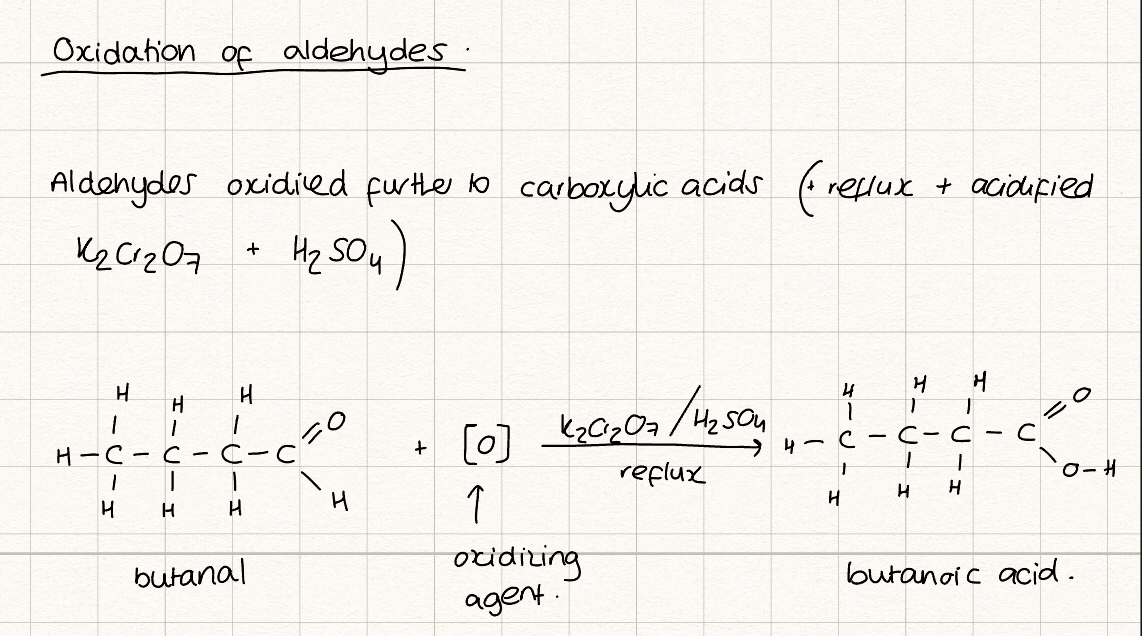
What are aldehydes oxidised to? What are the necessary Reagents/conditions?
Can Ketones be oxidised further, why?
NO, because ketones do not have hydrogen atom attached to their carbonyl, they are resistant to oxidation.
Why can carbonyl groups undergo nucleophilic addition reactions?
C=O is polar O is more electronegative than C (delta+, detla-) Electron density in double bond lies closer to O atom than C atom, giving rise to delta+C and delta-O. This means aldehydes+ketons can react with nucleophiles, which can attach delta+C, resulting in addition across C=O. =nucleophilic addition.
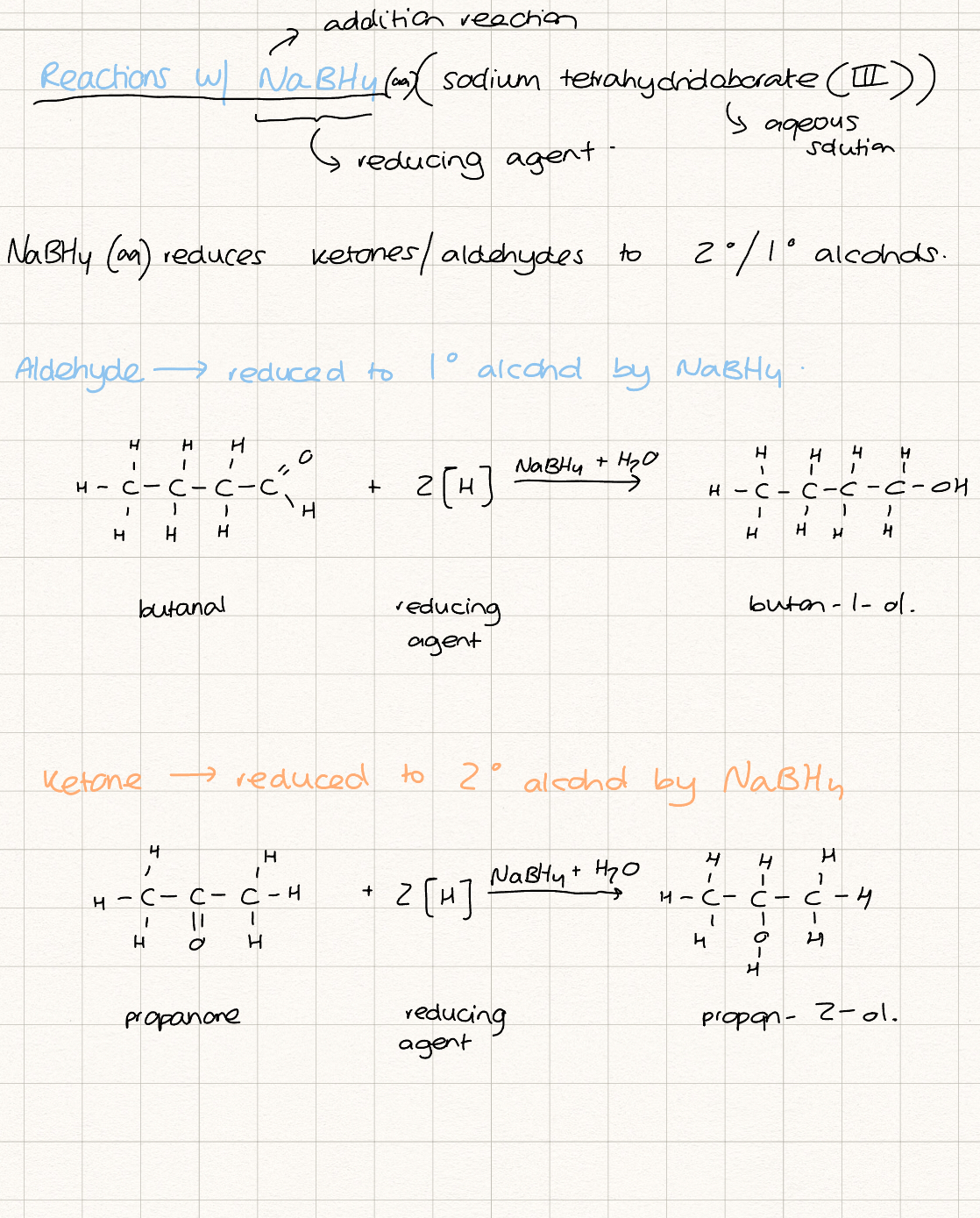
Describe the addition reaction (not mechanism) of NaBH4(aq) (sodium tetrahydridoborate III) with aldehydes/ketones.
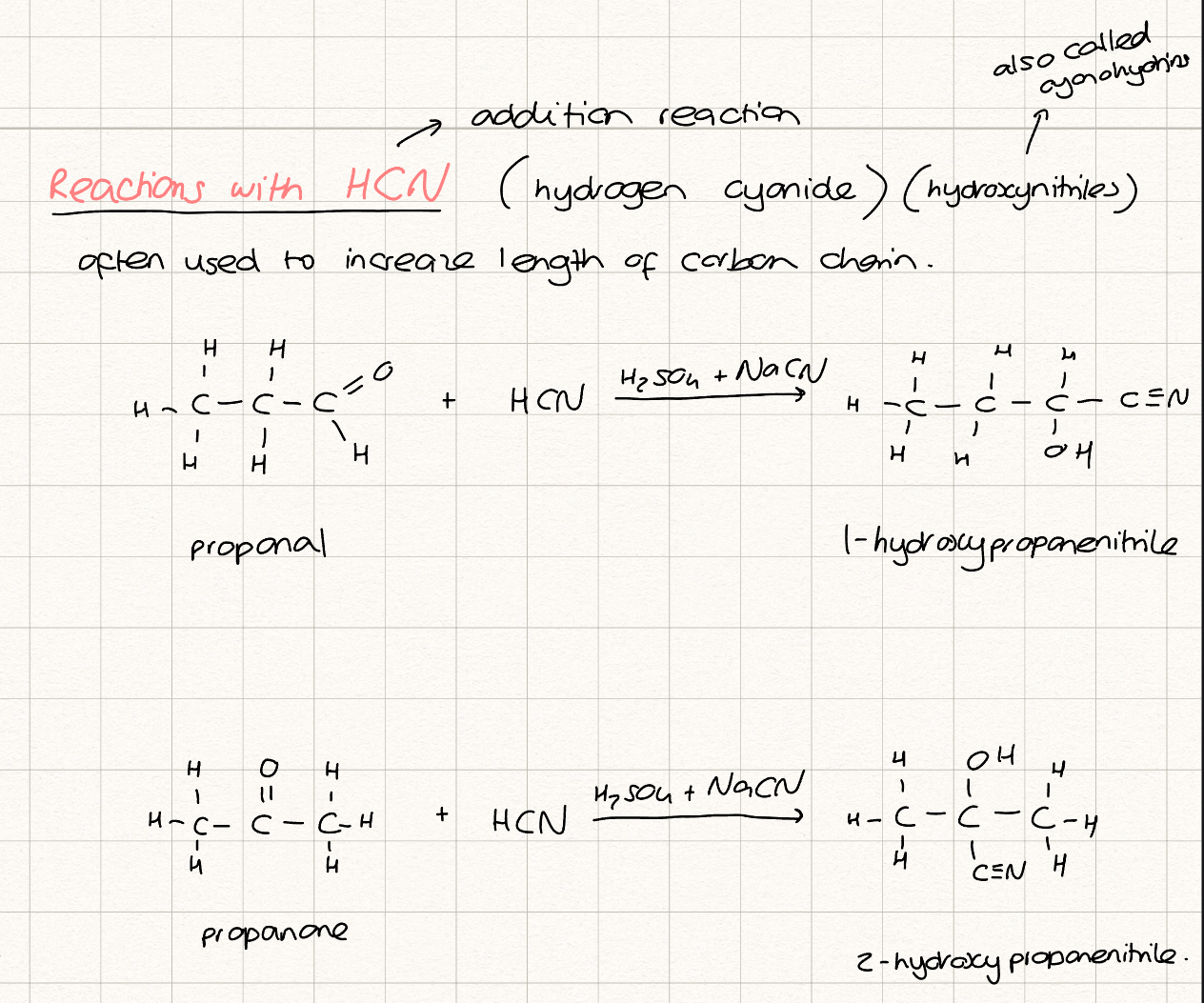
Describe the addition reaction of HCN (hydrogen cyanide) with aldehydes/ketones. What kind of organic compound does this reaction make?
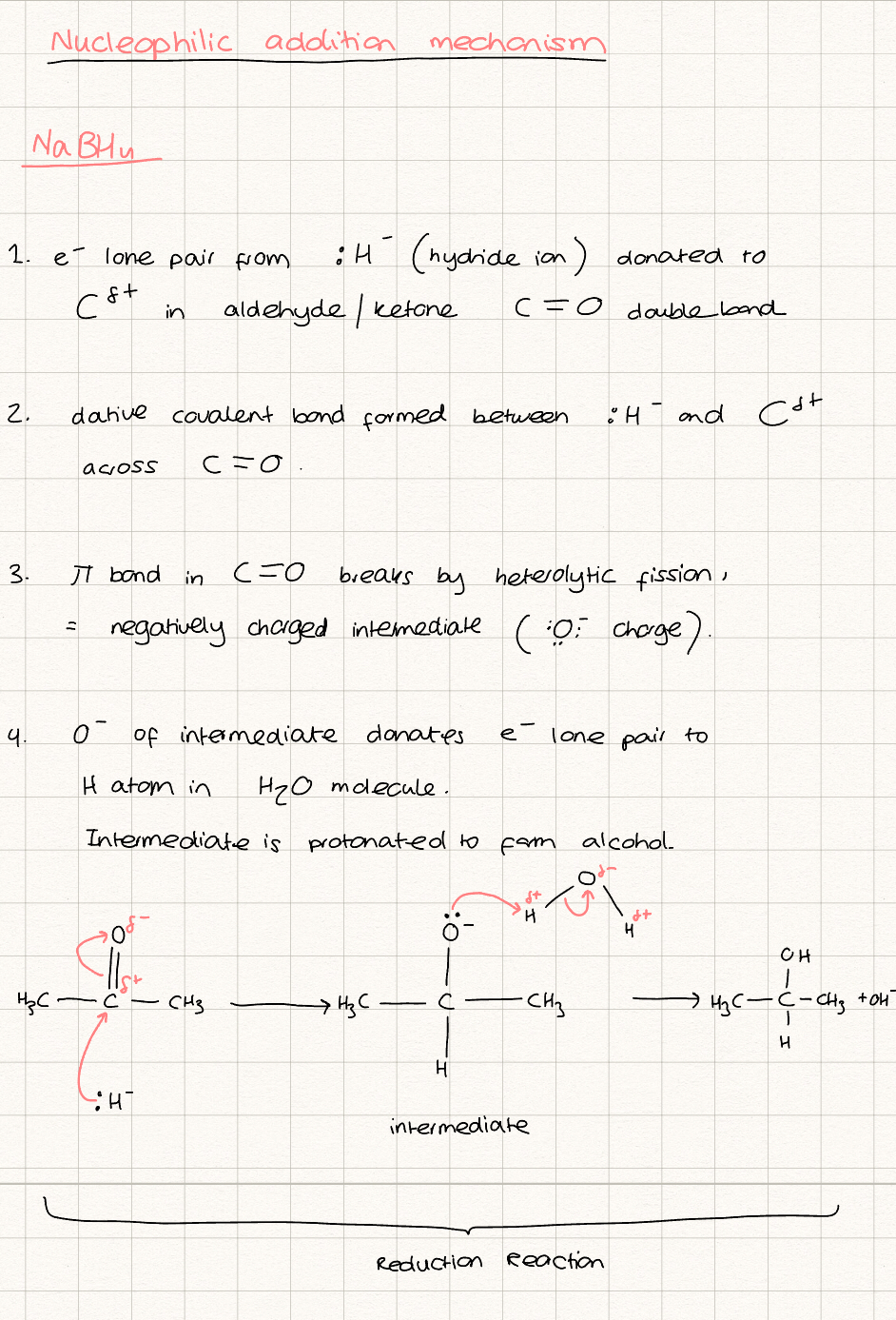
Describe the mechanism in the reaction between NaBH4 and a carbonyl- describe the movement of electrons
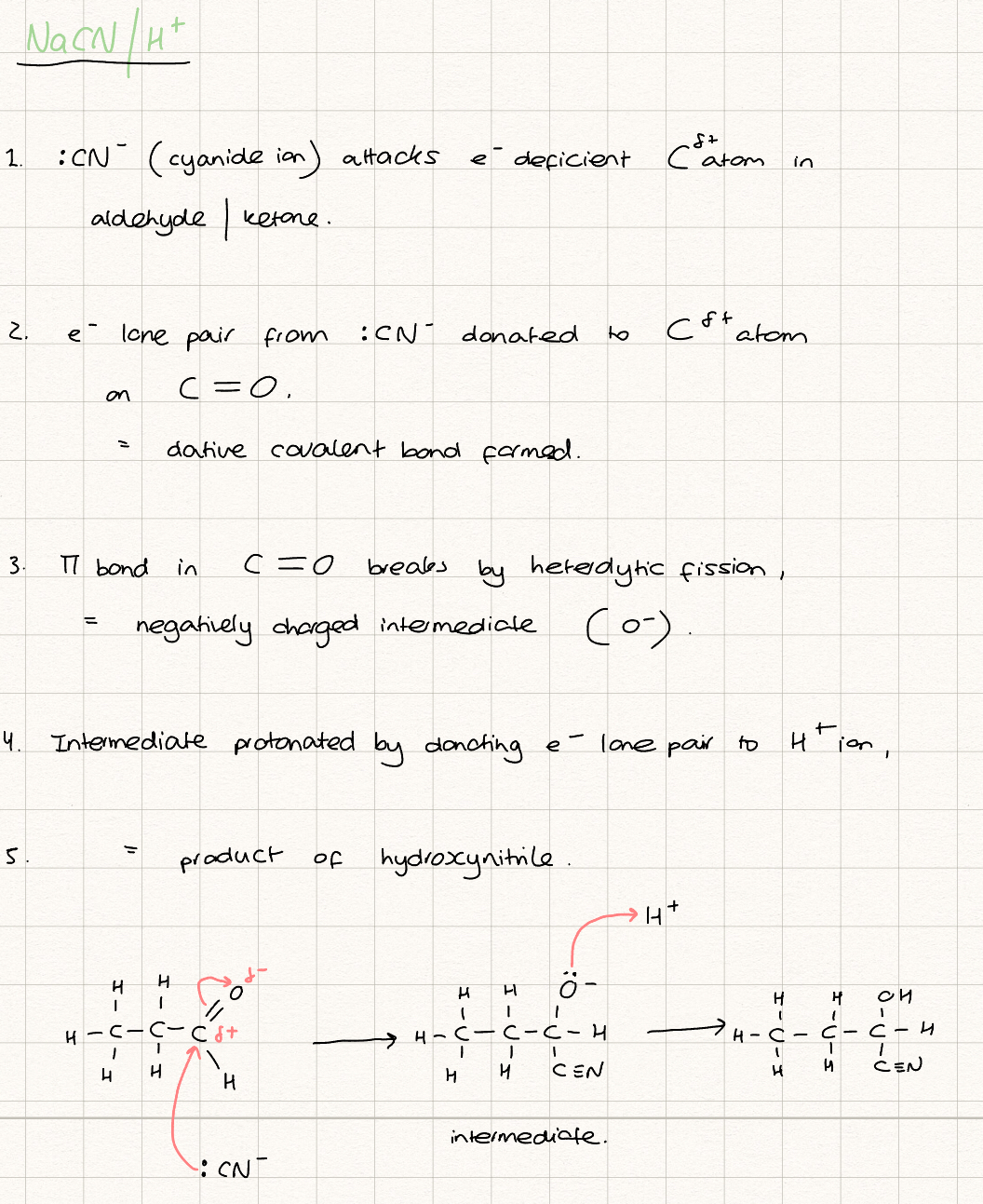
Describe the mechanism between NaCN and carbonyl compound, and describe the movement of electrons:
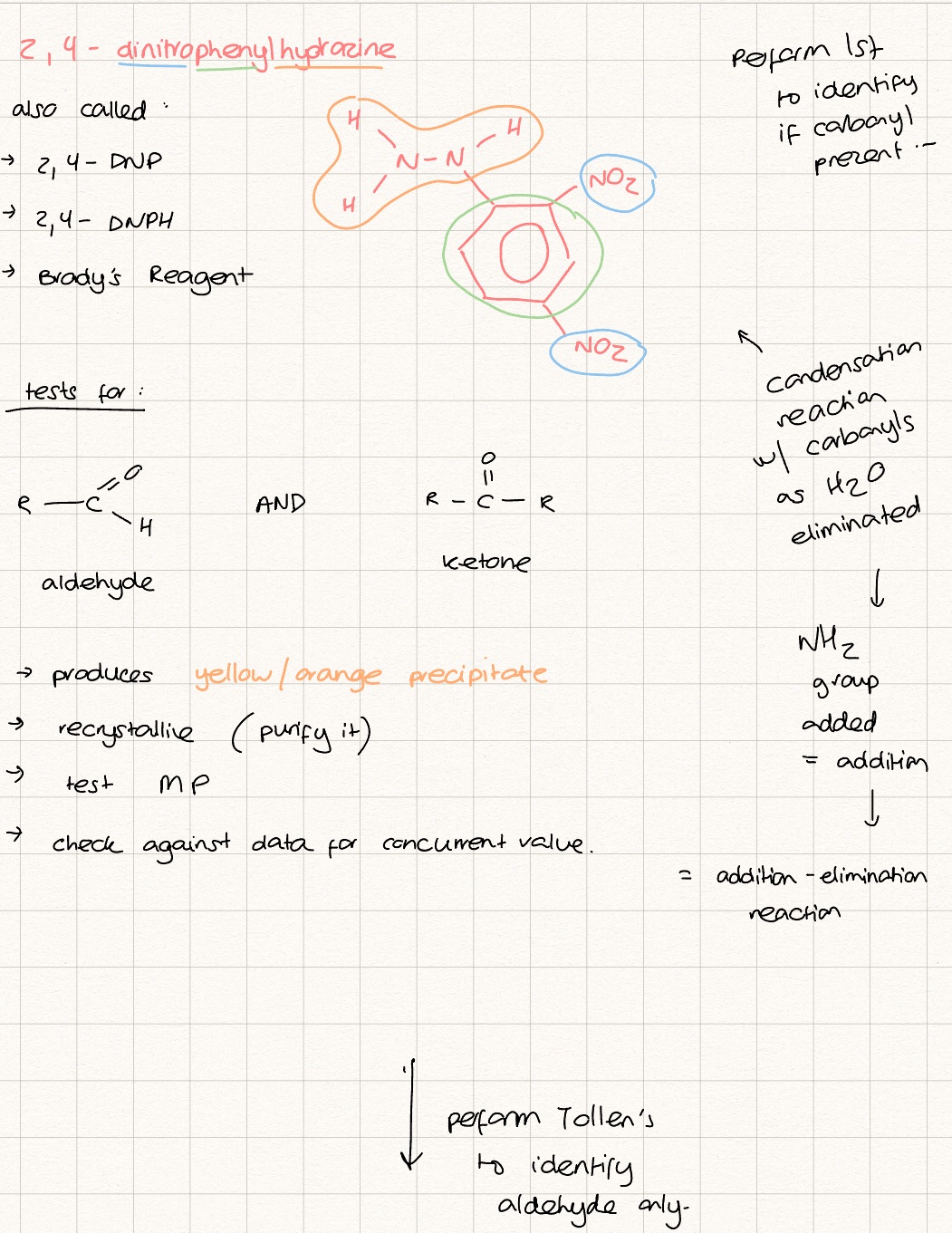
What does 2,4-DNPH test for? Describe the steps needed to carry out this test and how a carbonyl can be identified:
Add excess 2,4-DNPH, add unknown compound, if no crystals form add sulfuric acid, a yellow/orange precipitate indicates prescence of aldehyde/ketone. It is a condensation reaction as water is eliminated.
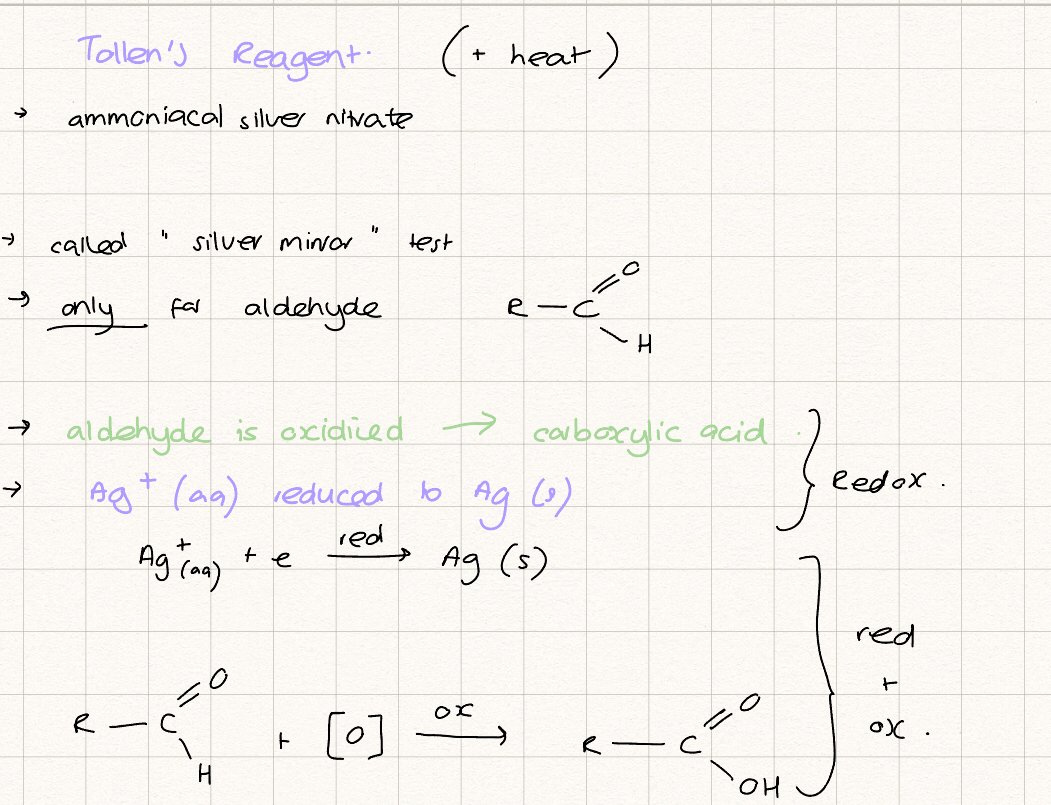
What does Tollens Reagent test for? What does a positive result look like? What are the half-equations that occur?
How to make Tollens: add aqueous silver nitrate, add sodium hydroxide to silver nitrate until brown precipitate of silver oxide, Ag2O forms. Add dilute solution of ammonia solution until brown precipitate just dissolves, forming clear colourless solution.
What functional groups does a carboxylic acid contain?
Carbonyl, hydroxyl
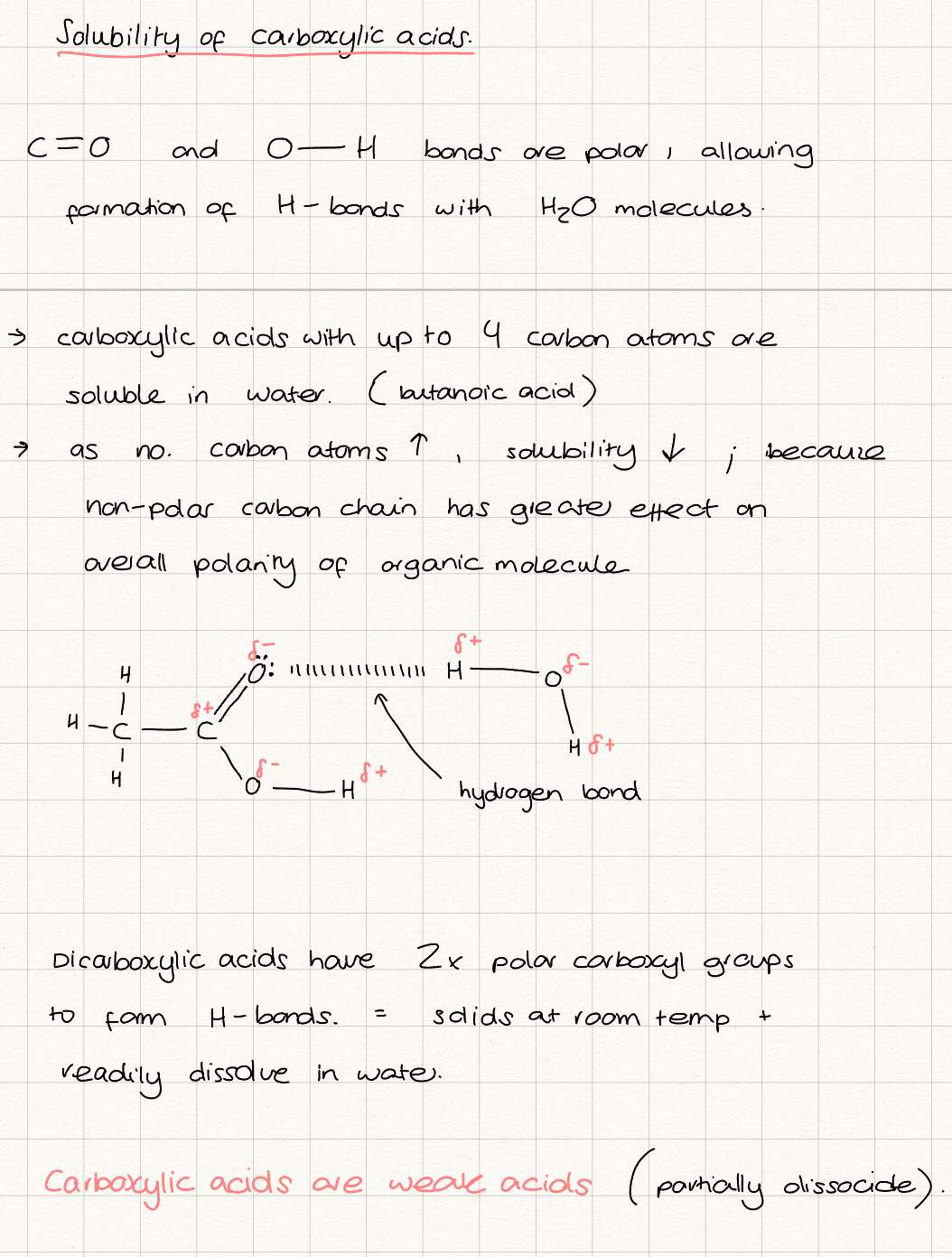
What is the solubility of carboxylic acids?
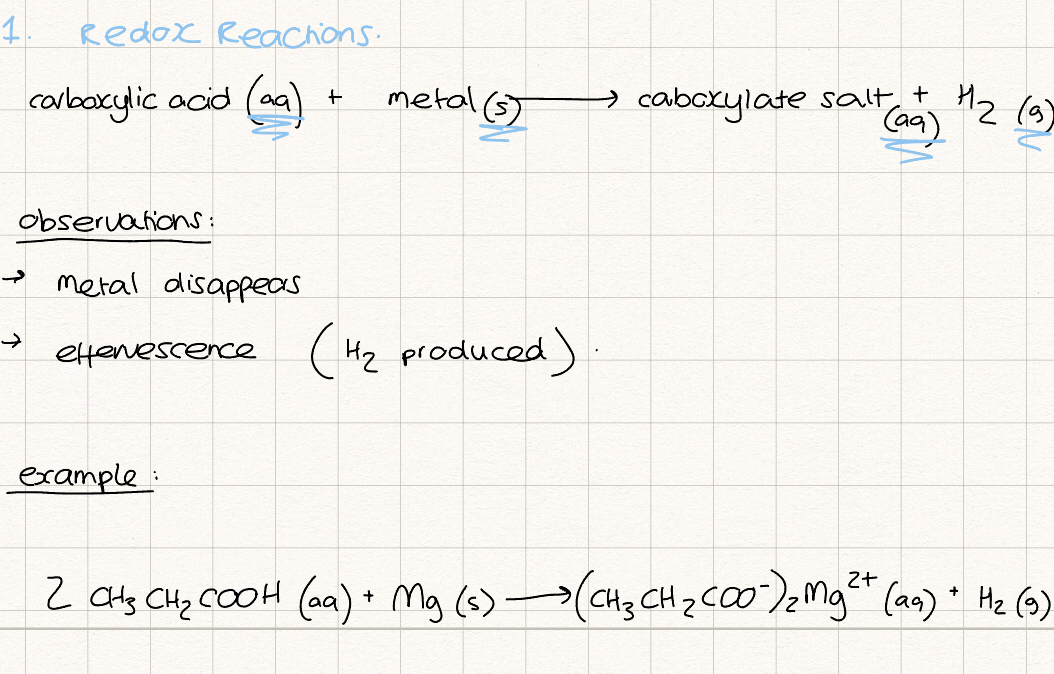
Describe the redox reaction between carboxylic acids and metals:
A carboxylate salt is made, and a carboxylate ion acts as the negative molecule.
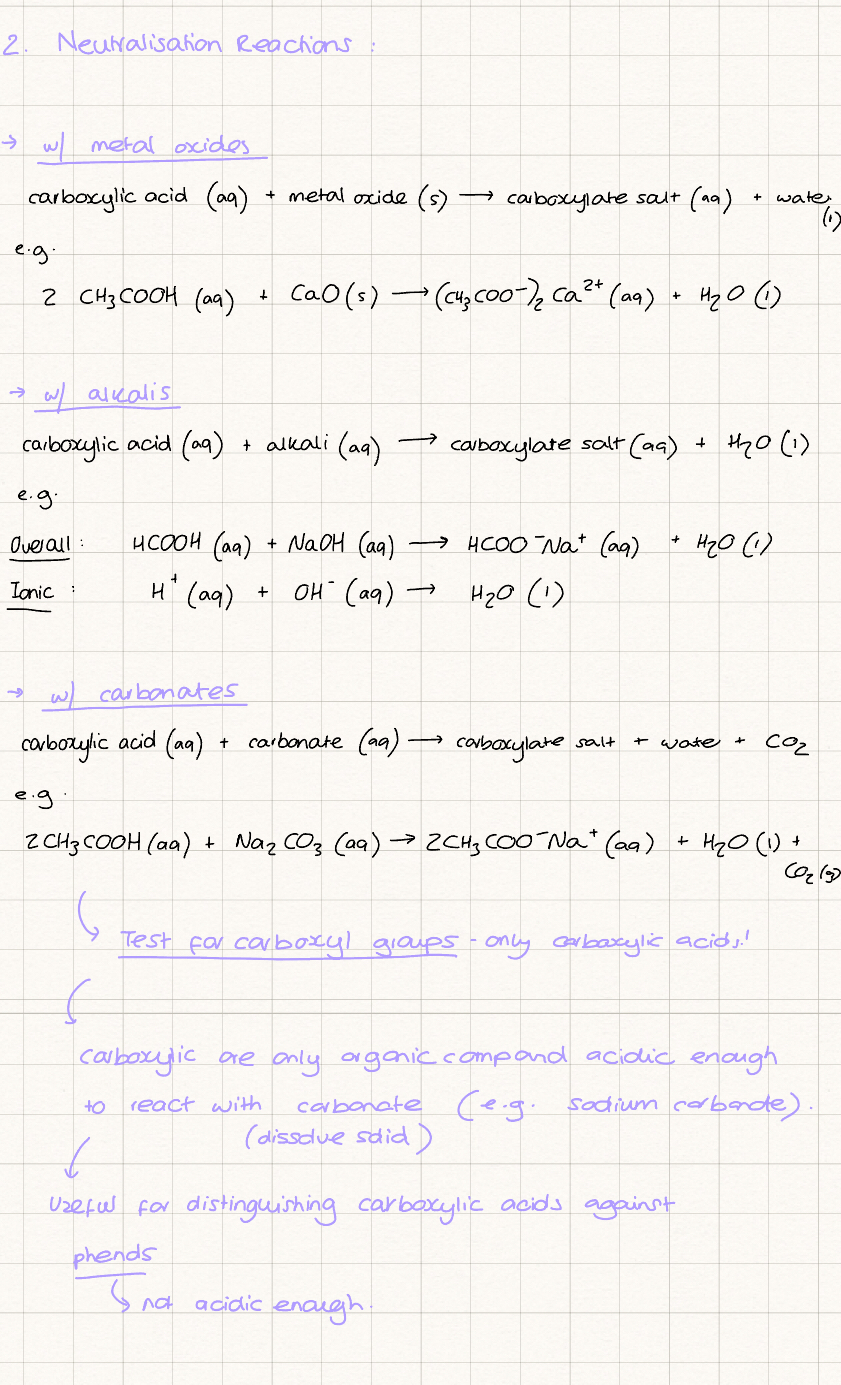
Describe the neutralisation reactions with: 1. metal oxides 2. alkalis 3. carbonates. what are the products and state symbols?
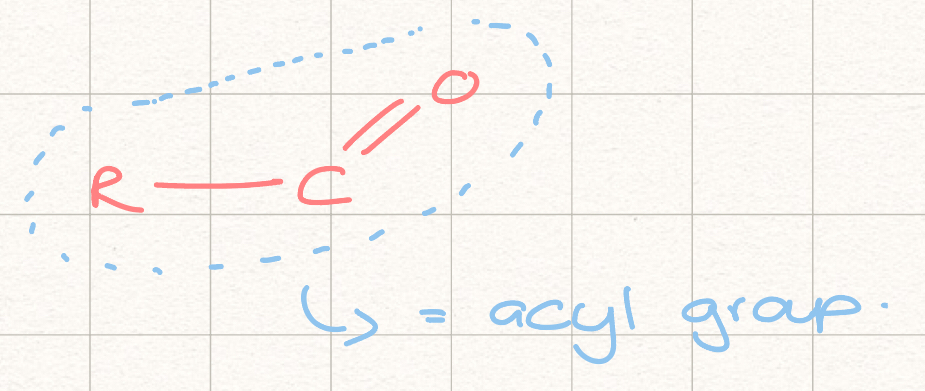
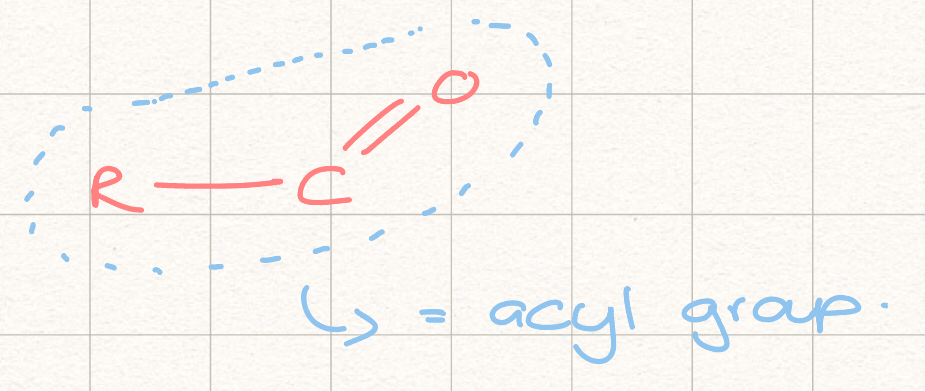
What is an acyl group?
All deriatives of carboxylic acid parent contain an acyl group.
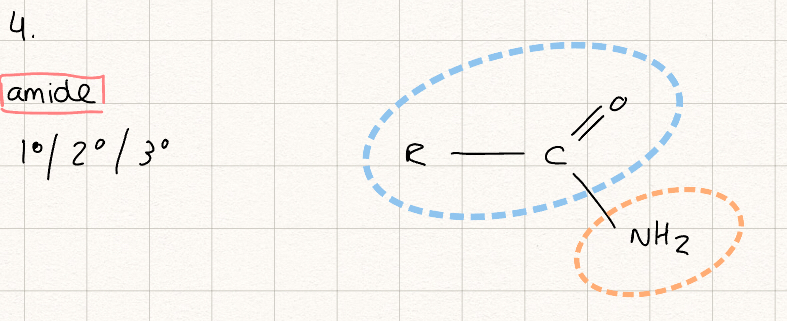
What is the general formula for an amide?
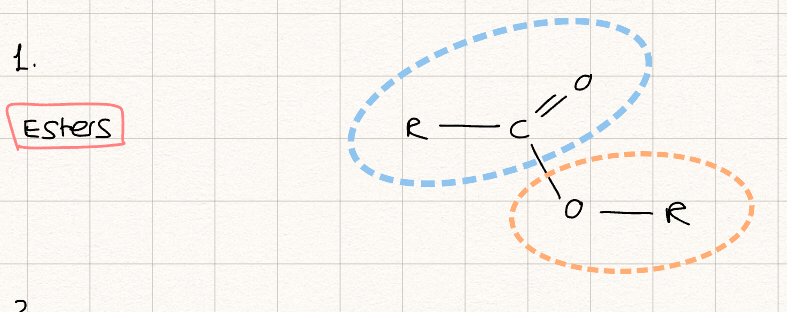
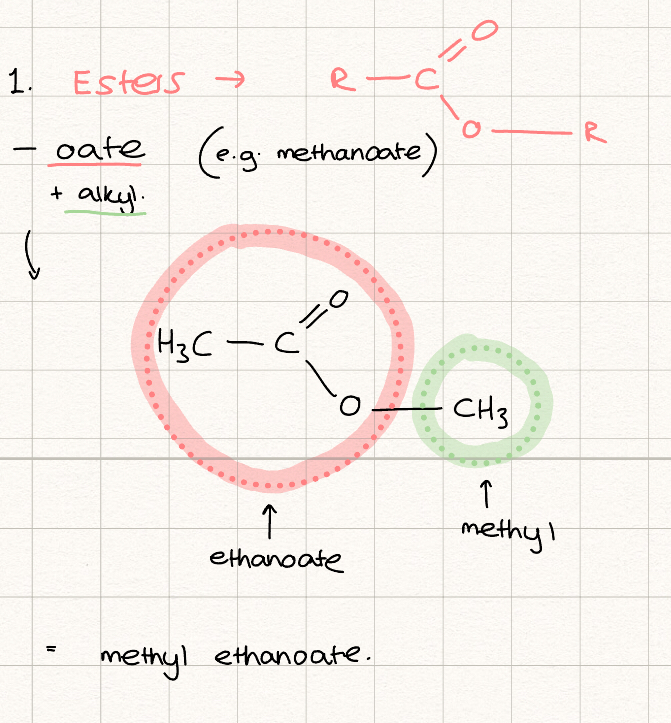
What is the general formula for an ester?
What is the general formula for an acyl chloride?
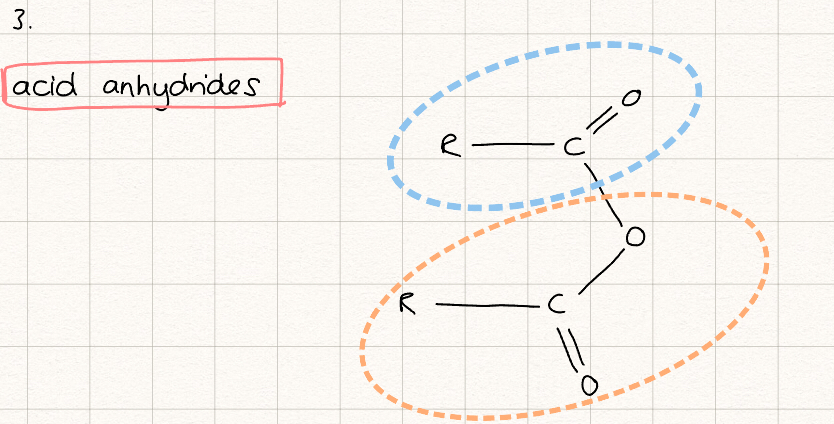
What is the general formula for an acid anhydride?
What are esters?
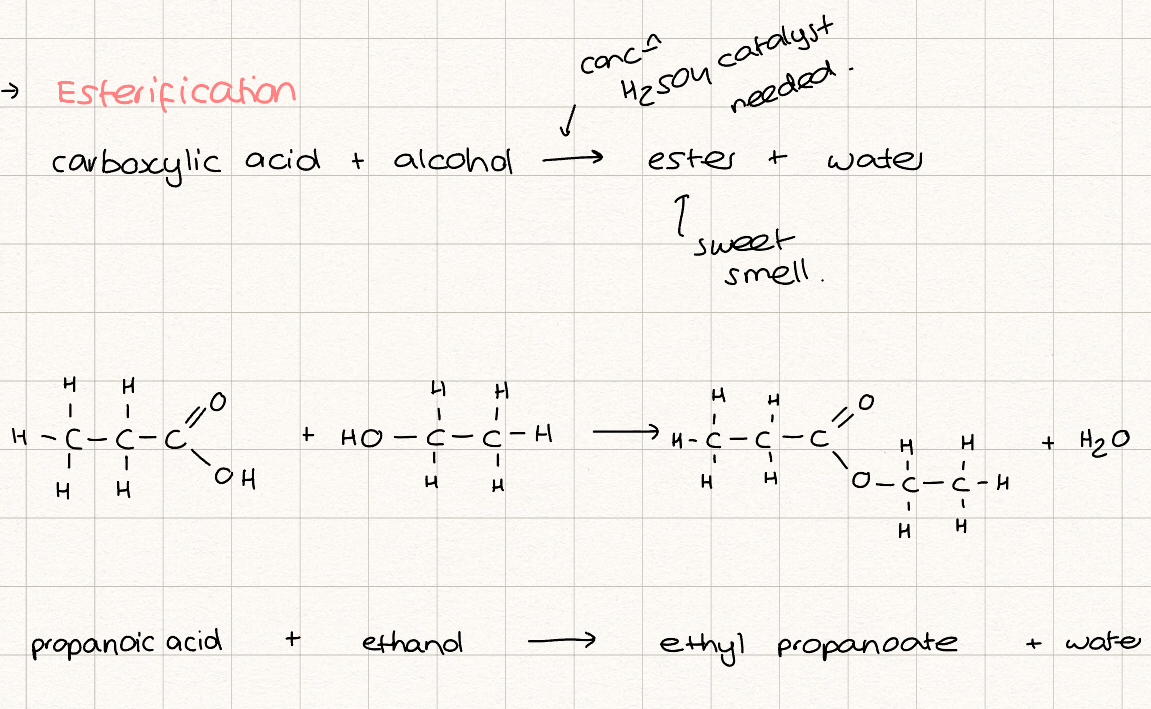
Describe the reaction of esterification:
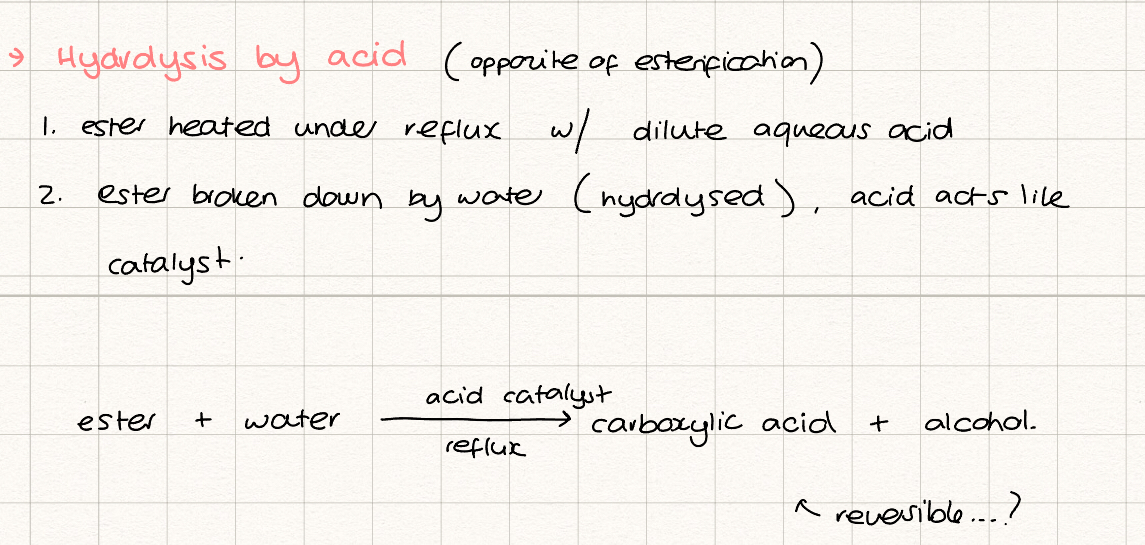
Describe the hydrolysis of an ester by an acid
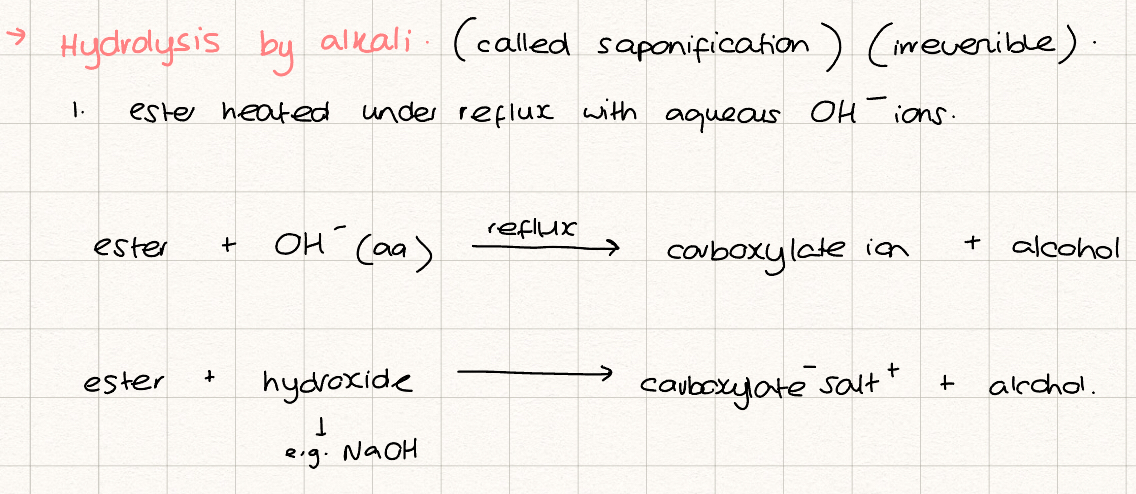
Describe the hydrolysis of an ester by an alkali