C1
No description yet. This curated deck is ready for daily study.
Card preview (24)
What is a chemical change?
When the chemical structure is altered and new substances are made. (Particles break up and join together in different ways) These are usually irreversible. An example would be rusting, neutralisation creating a salt &water.
What is a physical change?
A change which is normally reversible. The particles stay the same arrangement but movement changes , and no new substances are made. Some examples are melting particle arrangement from regular to random , dissolving sugar in water
What order of magnitude is the typical radius and bond length of an an atom?
1✖️10^-10
Describe the forces and arrangements in a solid
▪️Strong forces of attraction ▪️in a lattice arrangement ▪️vibrate in fixed positions
Describe the forces and arrangement in a gas
◾️very weak forces of attraction ◾️constantly move in random motion ◾️do not have a shape or volume , fill container
What did John Dalton state about the atom?
🔸solid spheres, different spheres make different elements
What did JJ Thompson discover?
🔸Used a cathode ray experiments 🔸discovery of electrons 🔸plum pudding model
What did Rutherford discover?
🔸discovery of the nucleus 🔸tiny positively charged nucleus, electrons around 🔸gold foil experiment
What was the gold foil experiment
Firing alpha particles ( + charged) at thin gold foil, where surprisingly there was a slight deflection suggesting a positive charge somewhere in the atom
What was Bohr’s discover of the atom
🔸shells which orbit the nucleus
What is the relative mass of a proton , Neutron & electron
Proton = 1 Neutron = 1 Electron = 0.0005
What are molecules?
Two or more atoms, made from any element
What is the mass number ?
The number of protons and neutrons . The larger number found on the bottom
What is the atomic number?
The amount of protons in the nucleus The smaller number at the top
What is an ion?
Charged particles that form when An atom loses or gains electrons ( that doesn’t have an equal amount of electrons and protons. ) Therefore giving it an overall charge
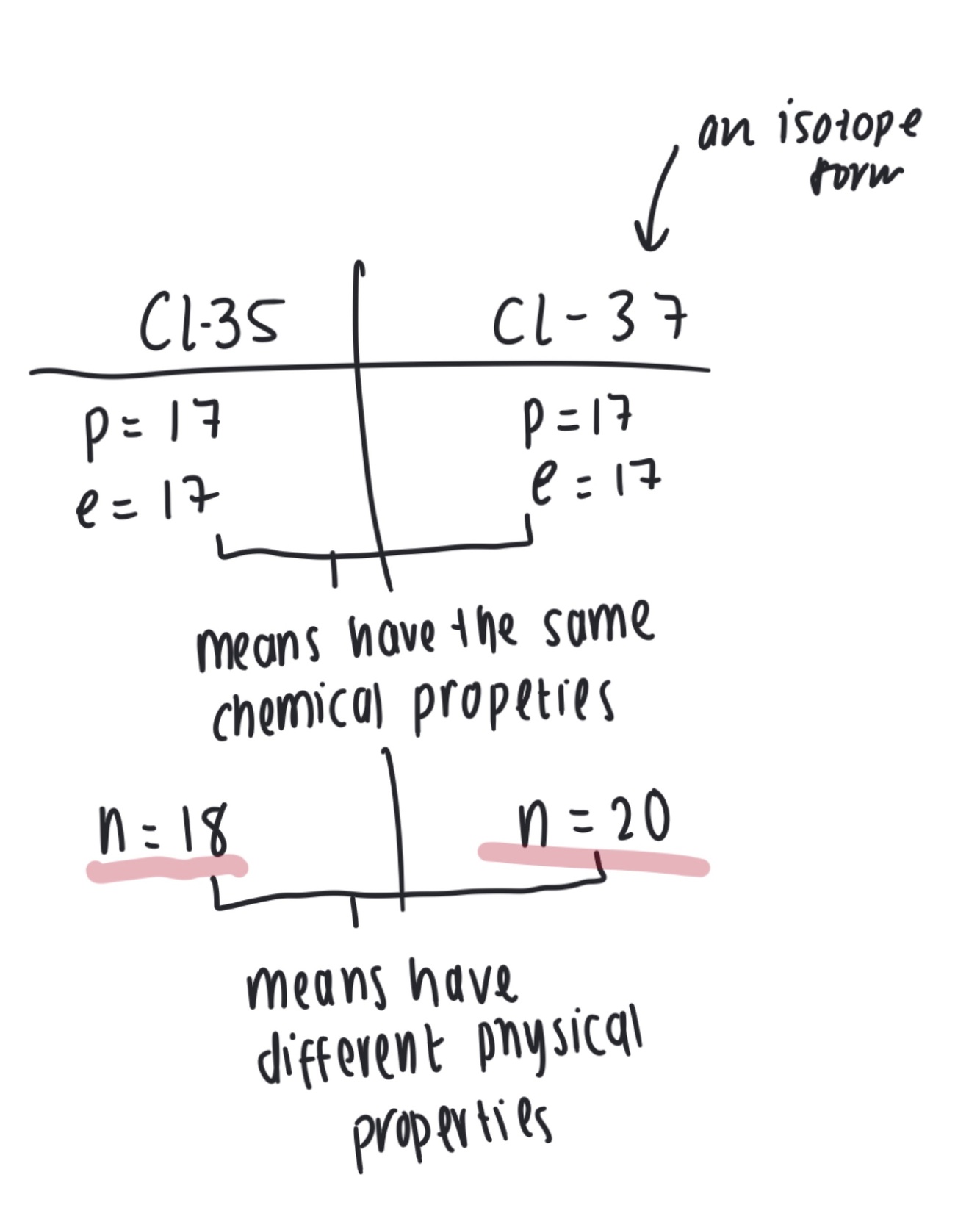
What is an isotope?
A form of the element which has the same number of protons and electrons but a different amount of neutrons resulting in a different mass number ——but same atomic number
What are the limitations of the particle model, when changing state?
🟢the size of particles 🟢the space between the particles 🟢doesn’t show the forces of attraction between particles
Describe the atom
🔴A positively charged nucleus surrounded by negatively charged electrons 🔴nucleus radius is smaller than the atom 🔴most of mass is in nucleus
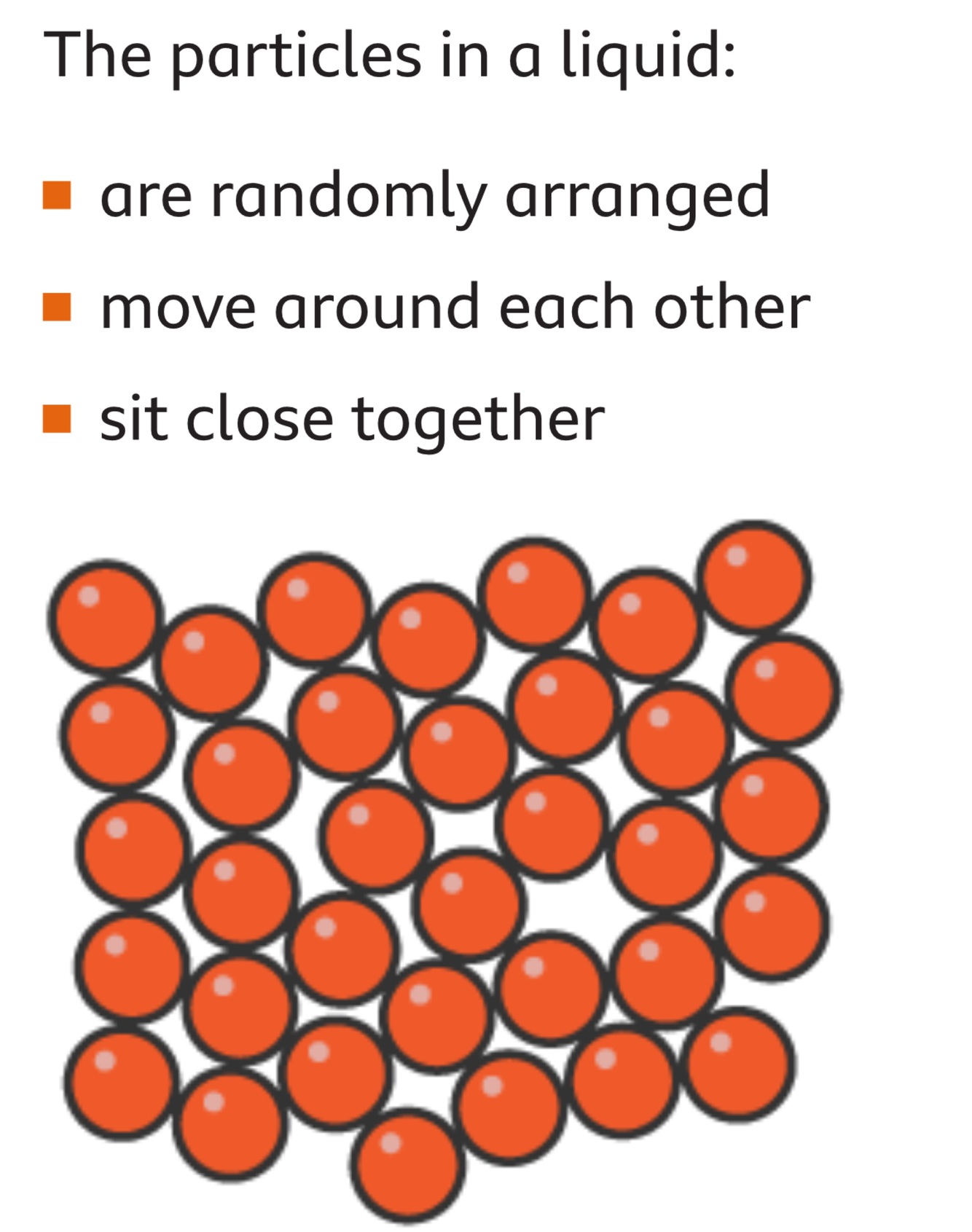
Describe the particle model in the liquid state
🟢Particles are close together 🟢random arrangement * cannot be compressed because not space for particles to move into
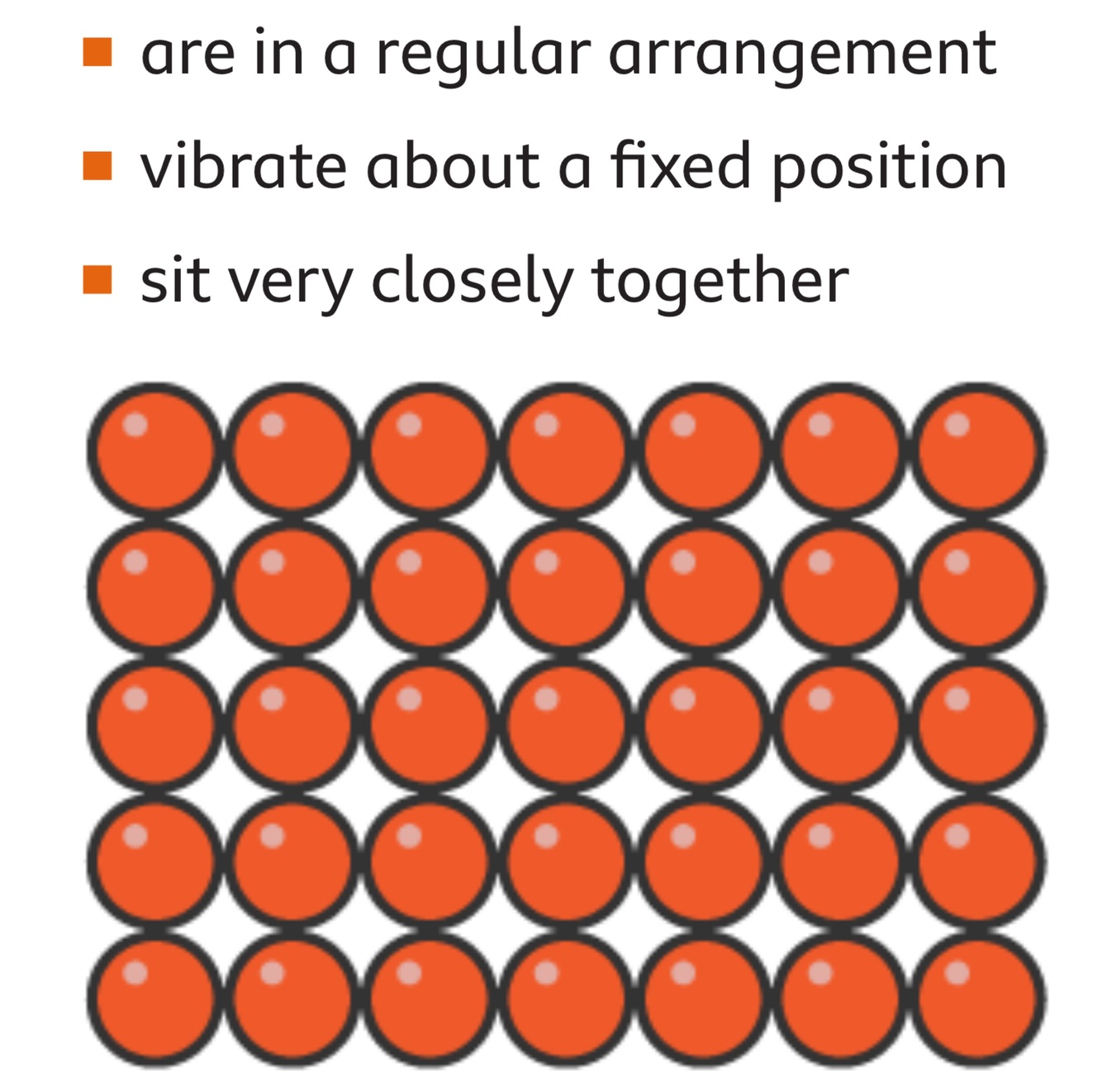
Describe the particle model in the solid state
🟣particles are close together 🟣regularly arranged *cannot be compressed because no space for particles to move into *cannot flow because particles are in fixed positions and cannot move place to place
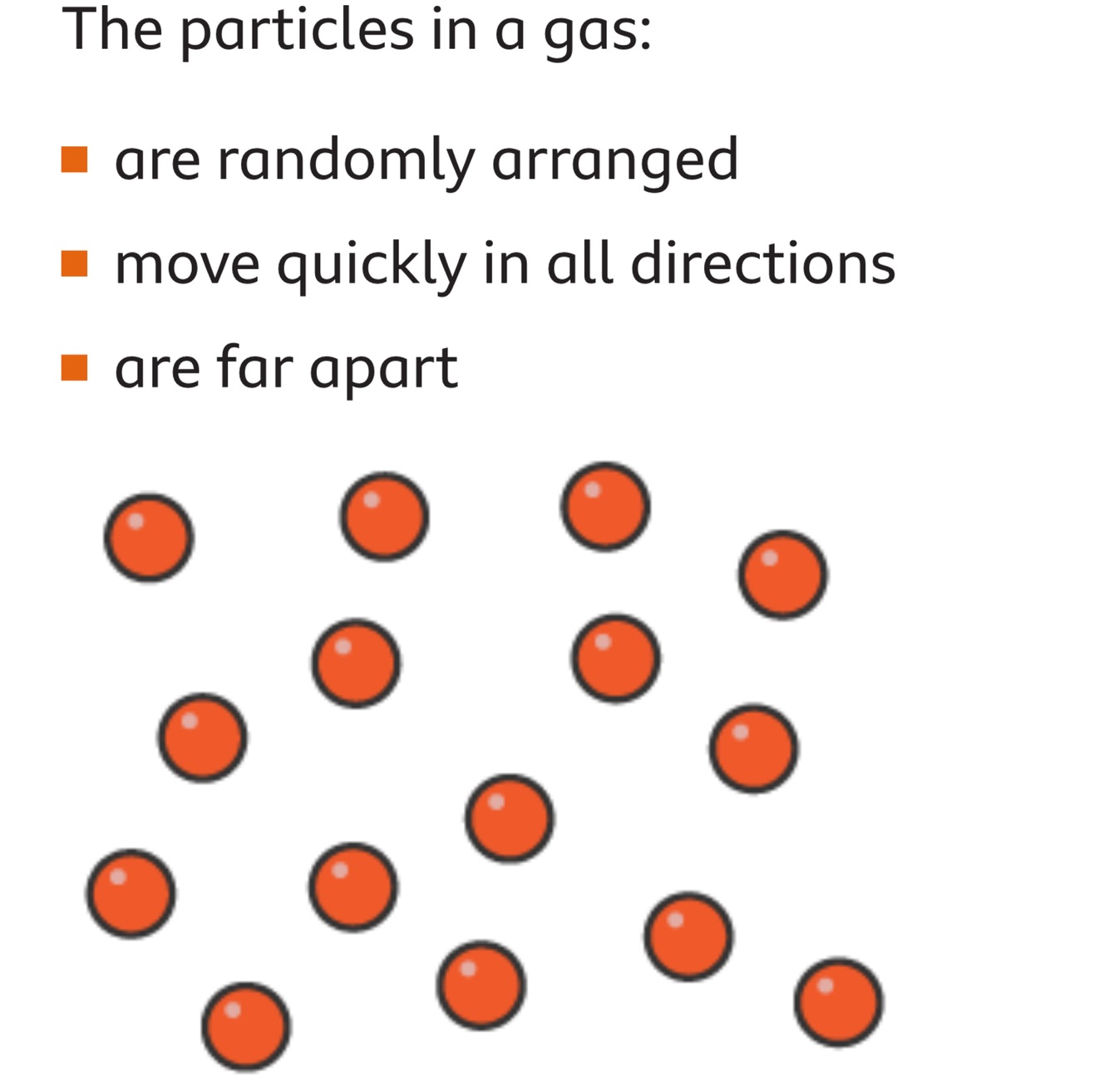
Describe the particle model in the gas state
🟠particles are spread out 🟠random arrangement
Which is larger small molecules or atoms?
Small molecules , as atoms are the smallest unit
What are the limitations of the particle model?
🟡doesn’t take into account the force of attraction between particles 🟡size of particles 🟡The space between particles
Compare chlorine 35 and chlorine 37