M4 Alkenes Q&A
No description yet. This curated deck is ready for daily study.
Card preview (6)
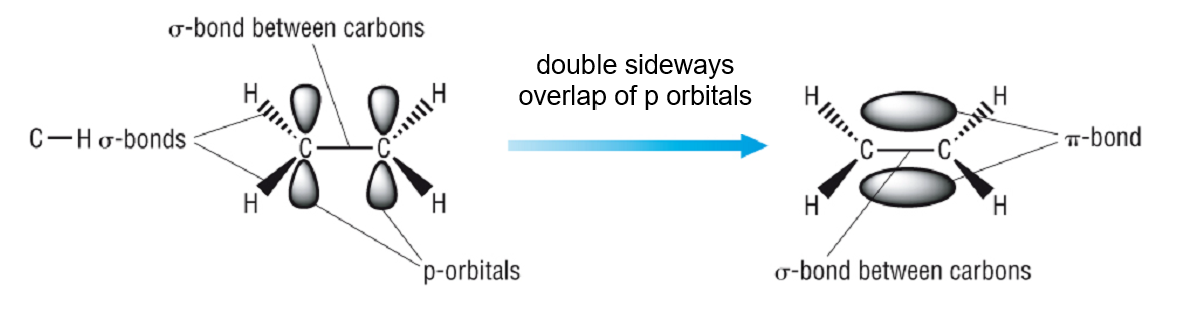
Describe, using a labelled diagram, the bonding in a C=C double bond.
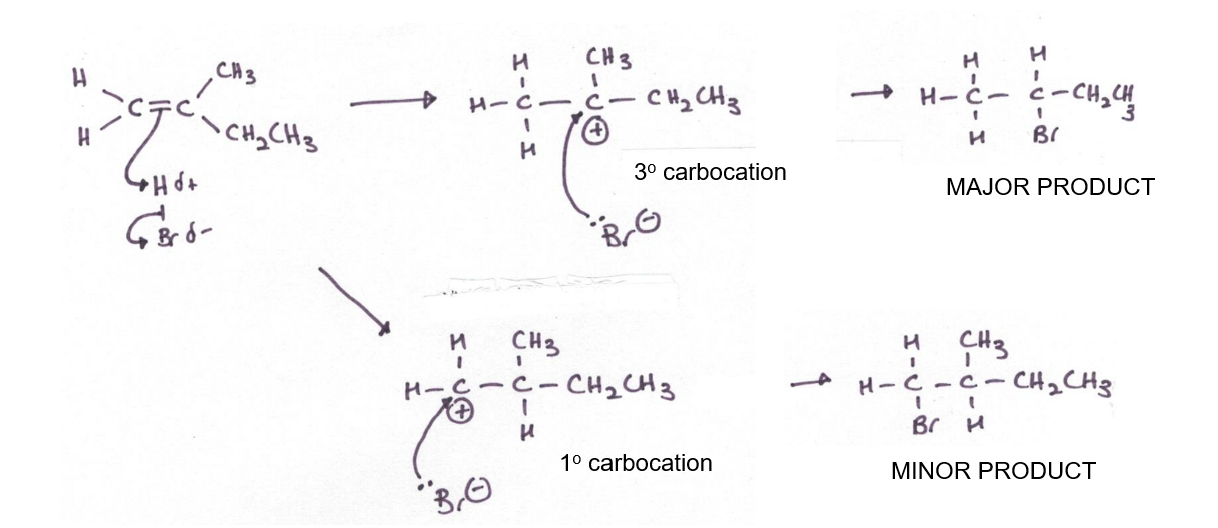
Give the mechanism for the reaction between, e.g. 2-methylbut-1-ene with hydrogen bromide, explaining which of the two possible organic products is more likely to be formed.
• Major product (2-bromobutane) is formed via the tertiary (3o) carbocation • Minor product (1-bromobutane) is formed via the primary (1o) carbocation • The tertiary carbocation is more stable than the primary carbocation
Explain how E/Z (or cis/trans) isomers occur.
• Carbon-carbon double bond • Each carbon atom of the double bond is attached to two different groups • Restricted rotation about the double bond
Describe the problems with disposing of polymers, e.g. PVC.
• Non-biodegradable • (With PVC) toxic fumes of hydrogen chloride, HCl, are released when burned
How are scientists working to minimise the problems associated with disposal of polymers
• HCl can be removed by dissolving in water then reacting with a base, e.g. NaOH • (Scientists are developing) biodegradable or compostable polymers
State ways, other than landfill and combustion, of processing waste polymers
• Sorting and (mechanical) recycling • Feedstock recycling (or cracking)