Benzodiazepines and GAs
No description yet. This curated deck is ready for daily study.
Card preview (17)
Major Drugs Used in Anesthesia
• Anesthetics (general, local) • Sedatives • Neuromuscular Relaxants • Cholingerics (anticholinesterase agents) • Analgesics
Benzodiazepines
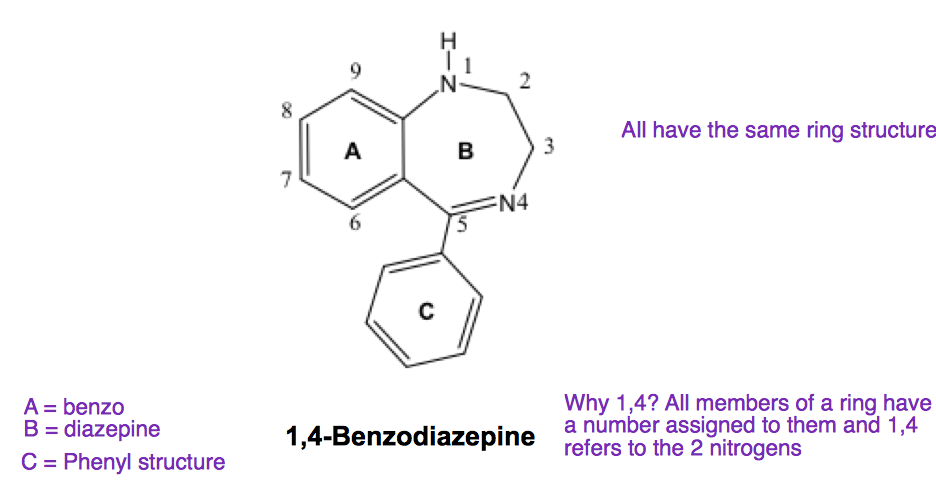
Technically, name refers only to A and B fused ring system. General usage commonly means the tricyclic structure, as all agonists include C ring.
Diazepam
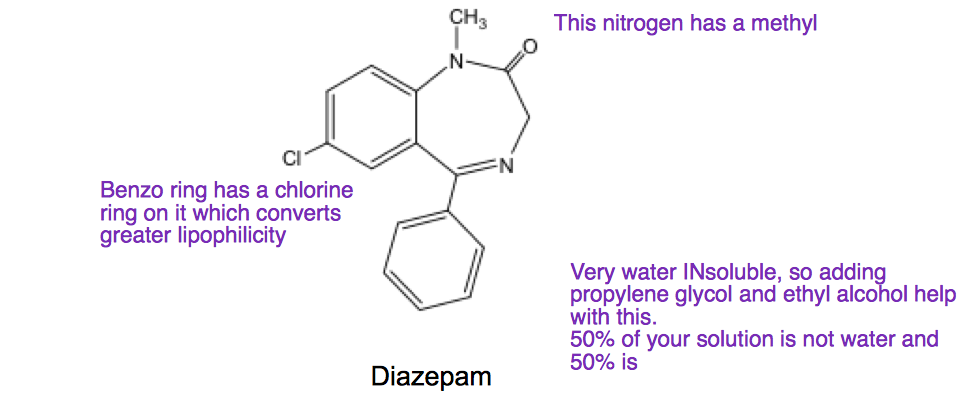
• Synthesized 1961 by Sternbach (Hoffmann-La Roche) • Mw 284.7; • Slight water solubility; highly lipid soluble. • Each mL contains 5 mg diazepam compounded with 40% propylene glycol, 10% ethyl alcohol, 5% sodium benzoate and benzoic acid as buffers, and 1.5% benzyl alcohol as preservative.
Lorazepam
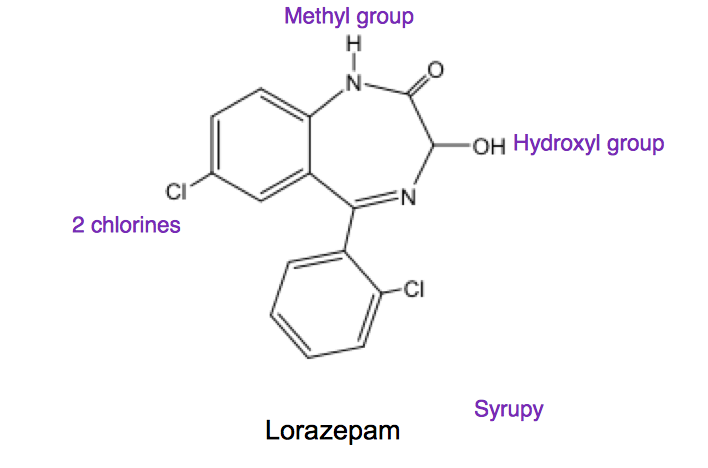
• Ativan. Mw 321.2; • Sol. In H2O 0.08 mg/ml; less lipophilic than diazepam. • Lorazepam is a nearly white powder almost insoluble in water. • Each mL of sterile injection contains either 2.0 or 4.0 mg of lorazepam, 0.18 mL polyethylene glycol 400 in propylene glycol with 2.0% benzyl alcohol as preservative
Midazolam
• Mw 325.8; Insoluble in H2O (pH > 4) Hydrochloride (Versed). • Product label: Midazolam hydrochloride is a water-soluble benzodiazepine available as a sterile, parenteral dosage form for intravenous or intramuscular injection use only. • Each mL contains midazolam hydrochloride equivalent to 1 mg midazolam compounded with 0.8% sodium chloride and 0.01% edetate disodium, and sodium hydroxide and/or hydrochloric acid for pH adjustment (pH 2.9 to 3.5).
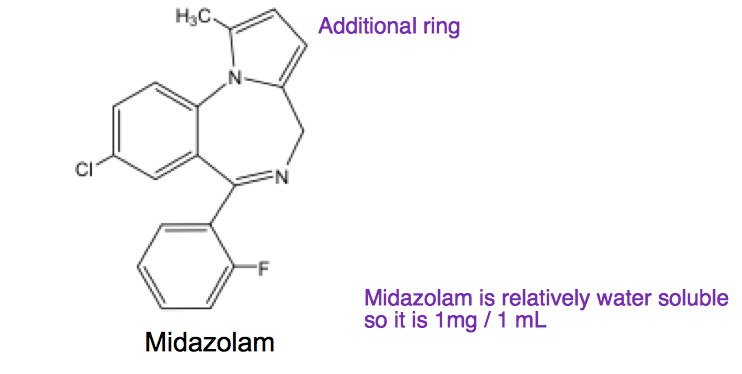
Flumazenil
• A benzodiazepine antagonist; Mw 303.3. • It is insoluble in water, but slightly soluble in acidic aqueous solutions. • Flumazenil injection is available as a sterile parenteral dosage form for intravenous administration. Each mL contains flumazenil 0.1 mg. In addition, the following inactive ingredients are included: methylparaben 1.8 mg, propylparaben 0.2 mg, sodium chloride 0.9 %, edetate disodium 0.01%, acetic acid 0.01%, hydrochloric acid and/or sodium hydroxide to adjust pH to 3.5 to 4.5, and water for injection.
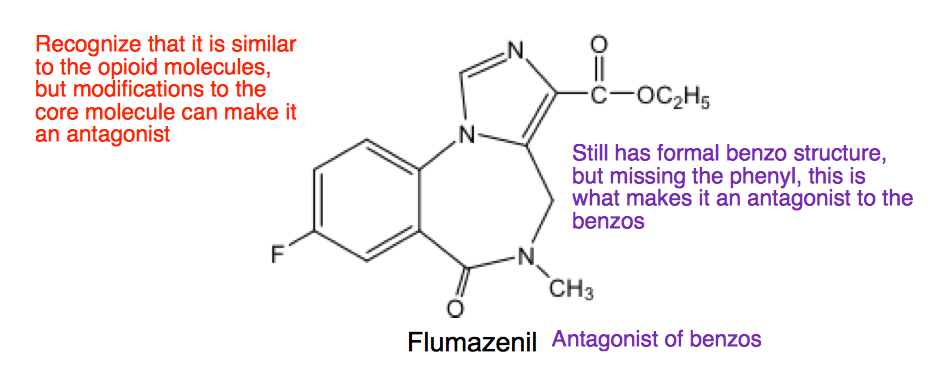
Barbiturates - Pentobarbital Sodium
• Nembutal; Mw248.26; pKa 8.0. • Freely sol in H2O (conjugate acid insoluble in H2O). pH of soln for injection 9- 10.5. • Aqueous solutions of pentobarbital sodium are unstable. • Drug supplied for injection in alcohol 10% and propylene glycol 20-40%.
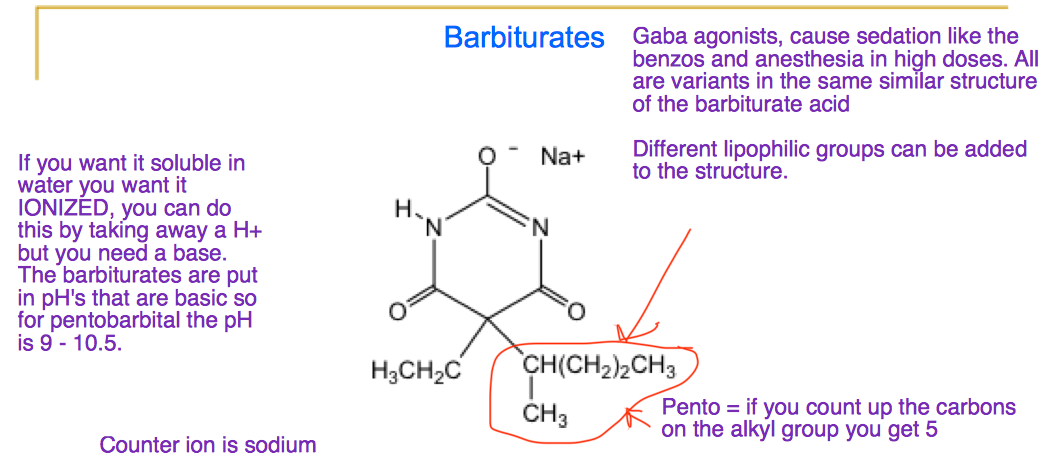
Barbiturate Synthesis
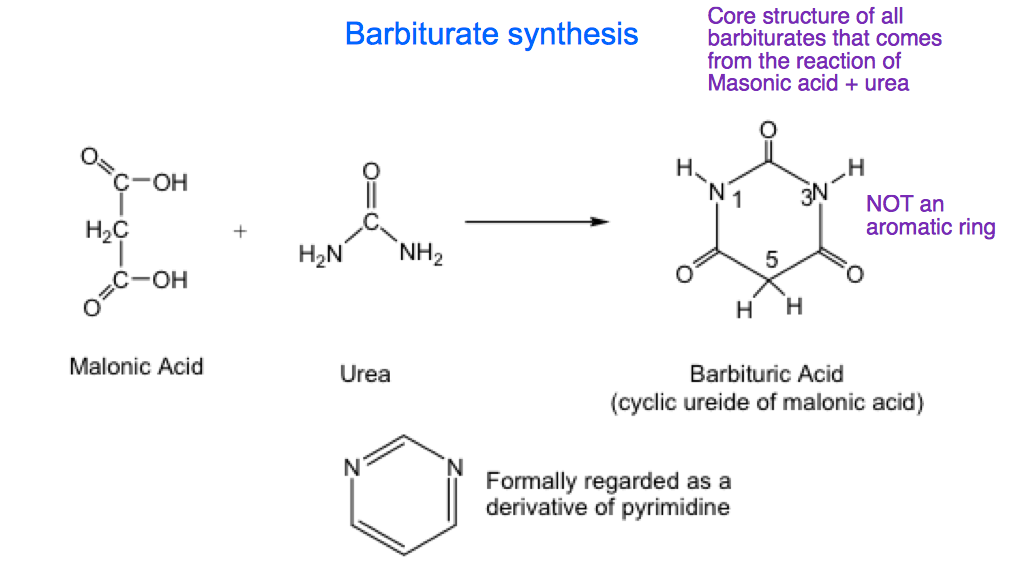
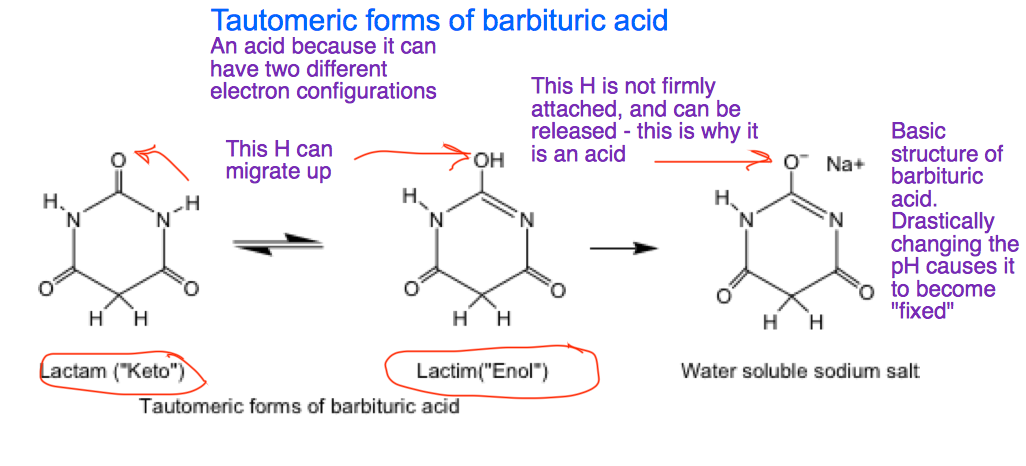
Tautomeric forms of barbituric acid
tautomeric forms involve simple bond rearrangements.
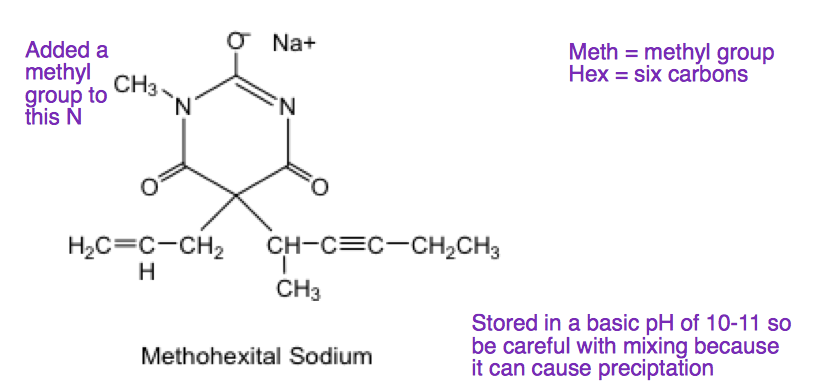
Methohexital Sodium
• Brevital; Mw 284.3; pKa 8.3. pH of 1% soln in sterile H2O 10-11. • Ultrashort- acting barbiturate anesthetic. • Methohexital powder should be stored at room temperatures < 25° C. Solutions in sterile H2O are stable at least 6 weeks. Solutions in 5% dextrose or 0.9% NaCl stable ≤ 24 hours. • Incompatible with acidic solutions (e.g. atropine sulfate, metocurine iodide, succinylcholine chloride) or those containing phenol as a preservative. Incompatible with silicone.
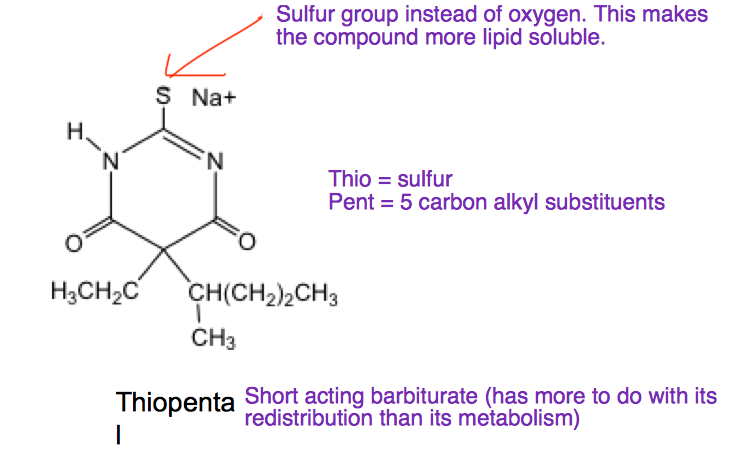
Thiopental
• Pentothal; Mw 264.33; pKa 7.4. Sol in H2O (conjugate acid insoluble in H2O) • Sterile thiopental sodium is a mixture of sterilized thiopental sodium (91.7%) with anhydr sodium carbonate as buffer. A 2.5% (w/v) aq soln is strongly alkaline, with pH about 10.5.
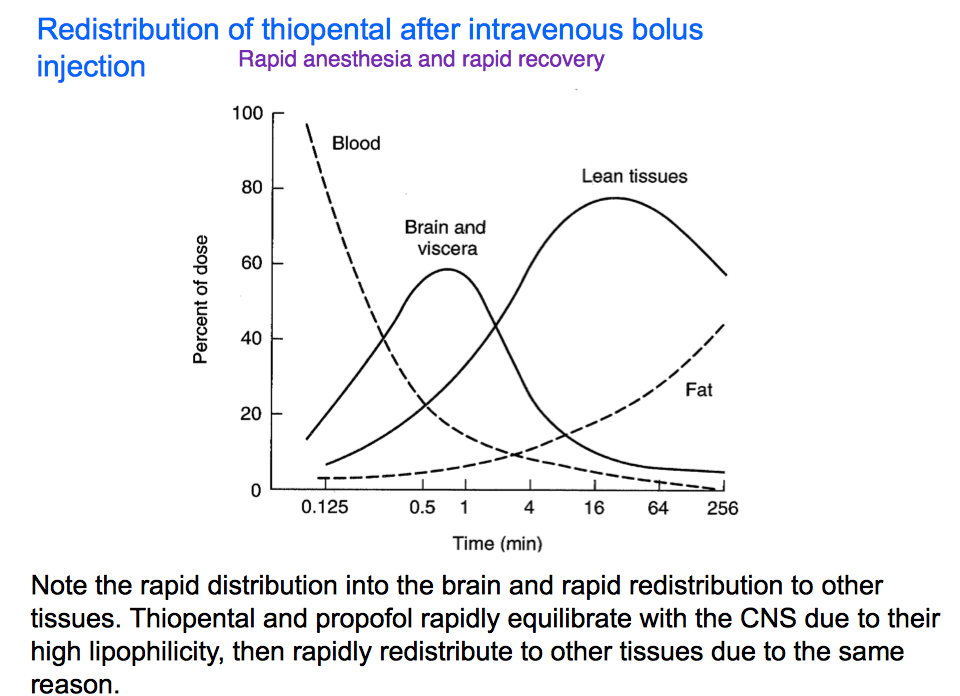
Redistribution of thiopental after intravenous bolus injection
Propofol
• Formulated as an emulsion (Diprivan) containing: soybean oil, glycerol, and egg lecithin • adjusted to pH 7-8.5 • Generic formulations are now available that contain sulfite or benzyl alcohol.
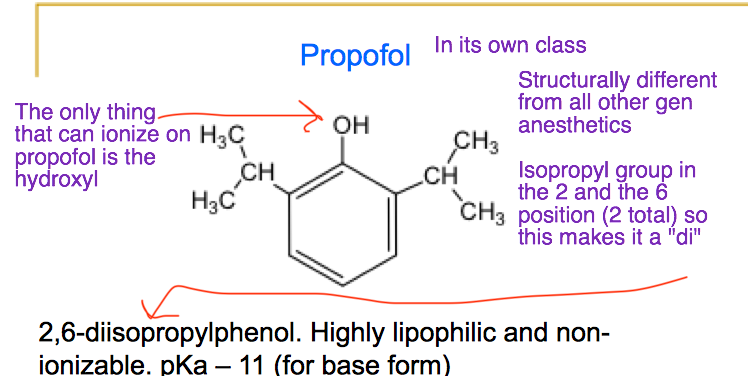
Why must emulsions be basic?
If acidic the emulsion will start “cracking” where the little droplets form to combine larger droplets and you can create an oil later on the top
Eccipient
Eccipient- microbes loves fats and phospholipids so single use vials are the only used now so an EDTA (ethylene acid) was added that scavengers trace mets in the emulsions, trace mets are what microbes need to live.
Ketamine
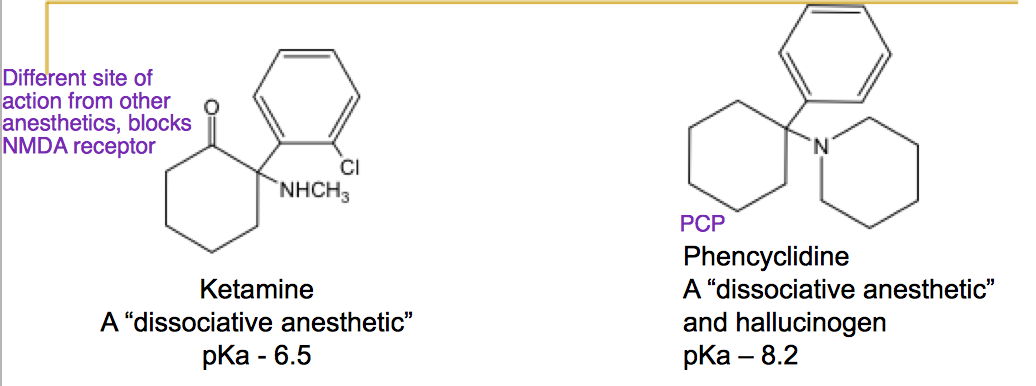
• Ketamine hydrochloride is a nonbarbiturate anesthetic. • formulated as a slightly acidic (pH 3.5-5.5) sterile solution for IV/IM injection in concentrations containing the equivalent of either 10, 50 or 100 mg ketamine base per milliliter. The 10 mg/mL solution has been made isotonic with sodium chloride • Note the structural similiarities between ketamine and phencyclidine
Etomidate
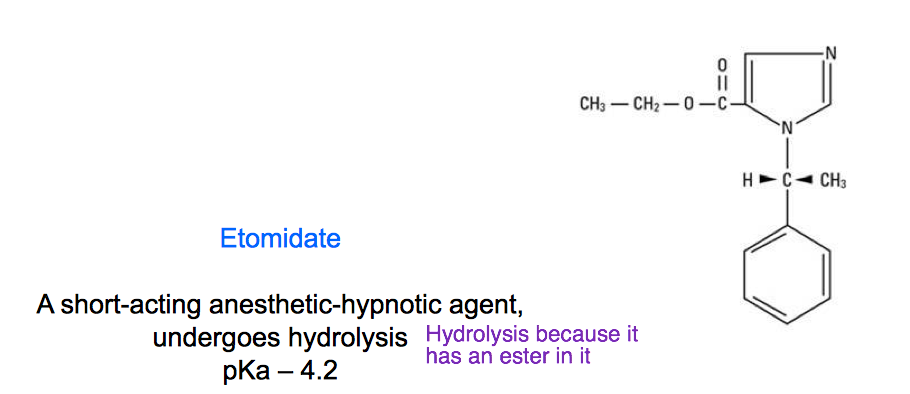
• A short-acting anesthetic-hypnotic agent, undergoes hydrolysis pKa – 4.2 • Package insert: Etomidate Injection, USP is a sterile, nonpyrogenic solution. Each milliliter contains etomidate USP, 2 mg, propylene glycol 35% v/v. • pH is 6.0 (4.0 to 7.0). • intended for the induction of general anesthesia by intravenous injection.