Introduction to Pathology
No description yet. This curated deck is ready for daily study.
Card preview (23)
Pathology
Literally the study (logos) of suffering (pathos).
Humors
the basic fluids in the body: blood, phlegm, black bile, yellow bile (serum)
Three categories deaths can be classified into
• deaths due to disease-causing microorganisms (e.g. AIDS, tuberculosis, the flu) • deaths due to degenerative pathological disorders like heart disease or strokes • deaths due to by-products of the social environment (e.g. suicide, murder, vehicular accidents)
Etiology
underlying cause(s) of disease
Pathogenesis
the mechanism that results from the manifestations of signs and symptoms in the body
gross pathology
the study of the changes in the structure of the body that are readily seen with the unaided (naked) eye as a result of the disease
histopathology
also known as microscopic pathology, the study of microscopic changes that cells tissues and organs undergo as a result of disease
surgical pathology
the study of tissue specimens excised surgically during operations
clinical pathology
the study of disease by means of body secretions, excretions, and other body fluids in the diagnosis of disease
medicolegal pathology
also known as forensic pathology, this is the study of disease to ascertain the cause and manner of death
physiological pathology
the study of changes in the body function due to disease
pathological anatomy
also known as morbid anatomy, this is the study of structural changes in the body caused by disease. Includes gross pathology and histopathology.
general pathology
focuses on the cellular and tissue responses to pathologic stimuli
special pathology
deals with the specific features of disease in relation to particular organs or organ systems (systemic pathology)
lesion
a circumscribed area of pathologically altered tissue; pathological change in structure visible with the naked eye -could be caused by disease or wound *lesions include boils, tumors, moles, scars scales, ulcers, or hives
autopsy
necropsy; investigation into the circumstances of a person’s death
cause of death
an injury or disease that produces a physiological derangement in the body that results in the death of the individual Examples of cause of death: -gunshot wound in the head; stab in the chest, lung cancer, or a blood clot in an artery
mechanism of death
the physiological derangement produced by the cause of death that results in death Examples of mechanism of death: -bleeding, blood poisoning, or faulty heartbeat
manner of death
generally classified on death certificates as either natural, homicide, suicide, accident, or undetermined/unclassified
Rule of Nines
The extent of a burn expressed as a percentage of the body surface area. Assuming that the body surface area is 100 percent, head is 9%, front torso 18%, back 18%, lower extremities 18%, genitals 1%
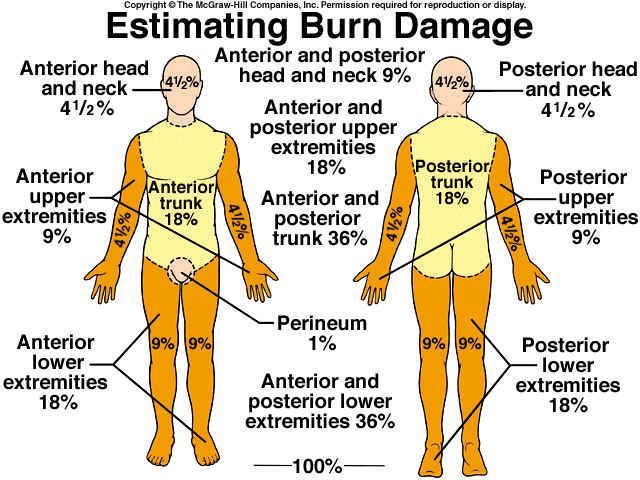
Severity of Burns
Four degrees of burn severity • first-degree: superficial, red skin, no blisters (minor sunburn) • second-degree: moist, blistered, red skin • characterized by necrosis of the epidermis and the dermis. On the surface skin has a white, leathery appearance • fourth-degree: incineration injuries (cremation)
hypothermia
body temperature below 80 degrees F/ 27 C