16.1 Practical Techniques in Organic Chemistry
No description yet. This curated deck is ready for daily study.
Card preview (20)
What is the name of this quickfit apparatus?
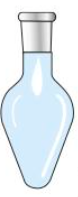
round-bottom flask/pear-shaped flask
What is the name of this quickfit apparatus?
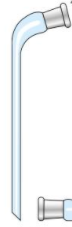
receiver
What is the name of this quickfit apparatus?

screw-tap adaptor
What is the name of this quickfit apparatus?
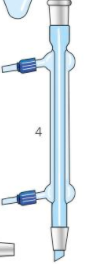
condenser
What is the name of this quickfit apparatus?
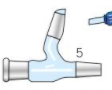
Still head
Why are some reactions carried out under reflux?
increase rate of reaction without boiling off solvent, reactants or products
Why is a heating mantle sometimes used during reflux instead of a bunsen burner?
to provide heat without a naked flame prevents uncontrolled fires breaking out, should apparatus break with flammable liquids inside
Is reflux carried out in an open or closed system?
open due to heating, system must be open to accomodate increased air pressure & prevent explosion
Why are anti-bumping granules used in reflux?
so the mixture boils smoothly. without, large air bubbles would form, causing the apparatus to vibrate violently
Reflux How does water move through the condenser?
enters from bottom and leaves through top (ensures outer jacket is always full)
What is the purpose of distillation?
to separate a pure liquid from its impurities
What is the purpose of the receiver in distillation?
to direct liquids from the liebig condenser into the conical flask
What is the purpose of the condenser in distillation?
to condense vapours & direct them into the receiver
What is the purpose of the still head in distillation?
to act as a junction between the liebig condenser & pear-shaped flask
How does distillation work?
• mixture of liquids in pear-shaped flask is heated using bunsen burner • liquid with lower boiling point evaporates, enters condenser. • condenses into liquid, travels down slanted condenser into receiver & into conical flask. • separates liquids using boiling point.
What is a separating funnel used to separate?
2 liquids, 1 organic & 1 inorganic
How can you differentiate between the organic & aqueous/inorganic layer in the separating funnel?
add water the layer which gets bigger is the inorganic/aqueous layer (because water is an inorganic solvent, it joins with the inorganic/aqueous layer)
Outline the process by which 2 liquids can be separated using a separating funnel:
• ensure tap of separating funnel is closed. • pour the mixture of liquids into the funnel. • place a stopper & invert the funnel, mixing the liquids. • allow them to settle to form 2 layers. • add water to identify the aqueous, inorganic layer. • place a conical flask under the funnel & remove the stopper. • open the tap and close it again when all of the lower layer has left the funnel. • place a new conical flask under the funnel and collect the other layer.
How can you remove acid impurities in a liquid mixture of an inorganic & organic liquid?
add sodium carbonate reacts to form salt + water + carbon dioxide salt + water is removed with aqueous layer using separating funnel
How can you remove traces of water left in an organic liquid?
add inorganic salt acts as drying agent