Particle Model of Matter
No description yet. This curated deck is ready for daily study.
Card preview (22)
Describe the particle model of matter for solids
Arrangement: Regular Distance: Close Motion: Vibrate about fixed positions Force: Strong

Describe the particle model of matter for liquids.
Arrangement: Random Distance: Close Motion: Move around each other

Describe the particle model of matter for gases.
Arrangement: Random Distance: Far apart Motion: Move quickly in all directions Forces: Negligible

What is density?
The mass of a substance per unit volume.
What is the equation for density?
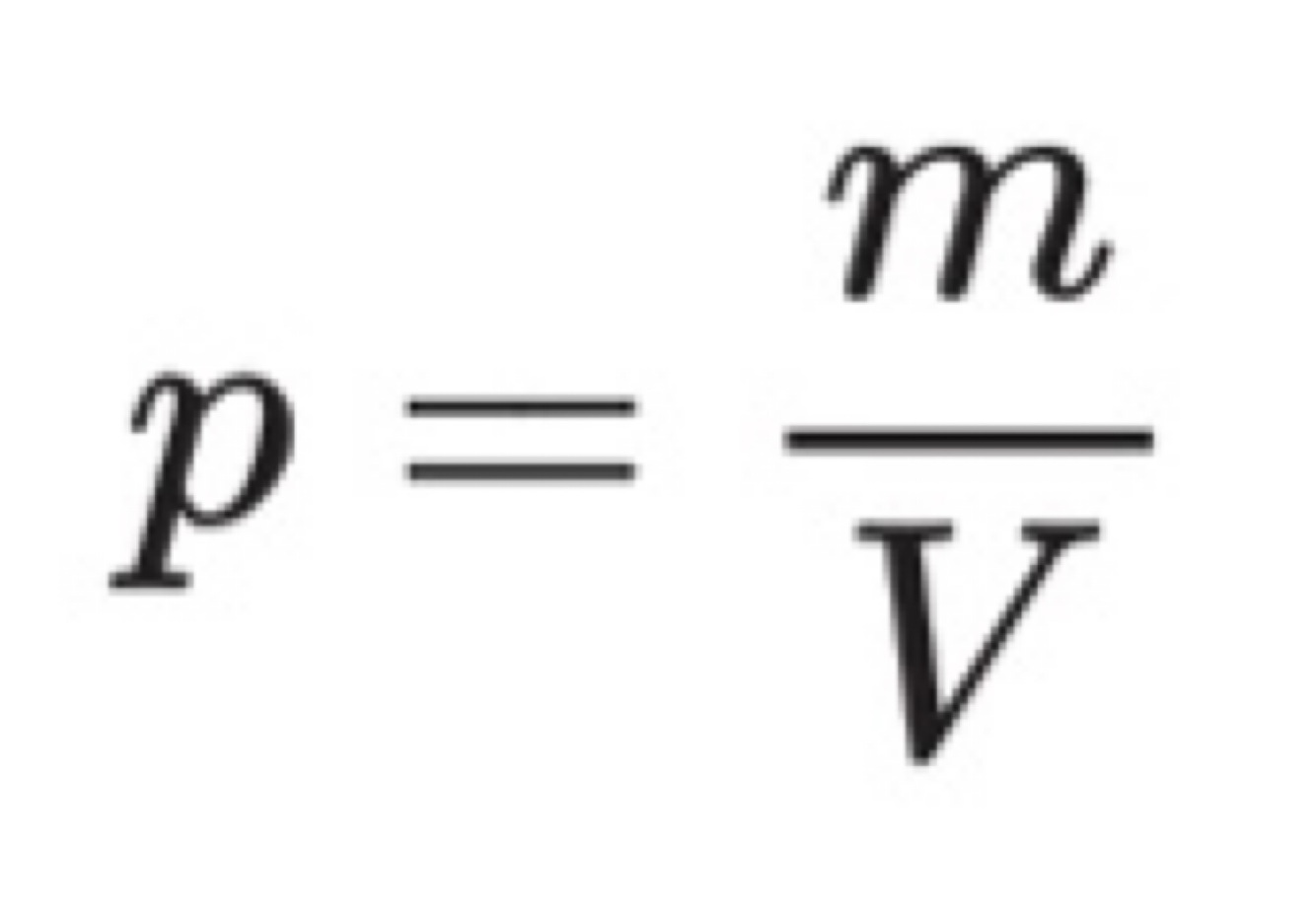
Required Practical: Determining the density of liquids and ir/regular solids
Liquids: Use a measuring cylinder Regular Solids: Use Vernier callipers/ruler and a balance Irregular solids: A eureka can is filled up to the spout with water and the solid lowered in. The displaced water is collected in a measuring cylinder, a balance is used to find the mass
What types of changes are changes that can be reversed?
Physical changes E.g. Changes of state
What are the six changes of state?
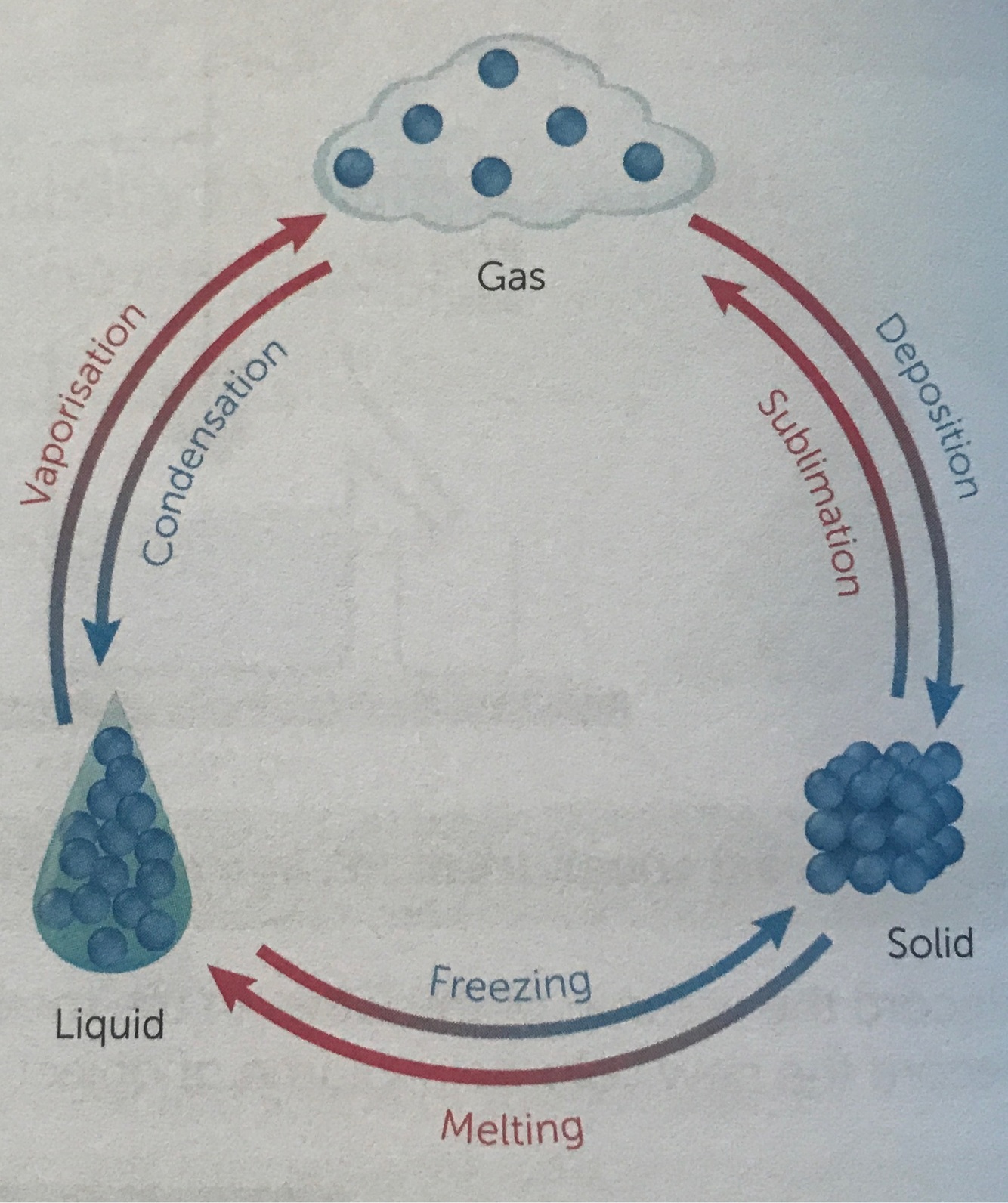
What happens to the particles when a substance melts?
Energy is transferred to the particles by heating and the particles gain thermal energy so can move away from their fixed positions and start to move round each other as a liquid.
What is decomposition?
Gas to solid
What is sublimation?
Solid to gas
Why do droplets of water form on the inside of a window on a cold day?
Energy is transferred from the water particles in the air to the colder glass and water changes from the gas state to the liquid state.
What is internal energy?
The total kinetic energy and potential energy of all the particles that make up the system.
What is specific latent heat?
The amount of energy required to change the state of one kilogram of a substance at a constant temperature.
What is specific latent heat measured in?
J/kg
What is the specific latent heat of fusion?
The amount of energy required to change 1 kg if a solid to a liquid
What is the specific latent heat if vaporisation?
The amount of energy required to change 1 kg if a liquid to a gas.
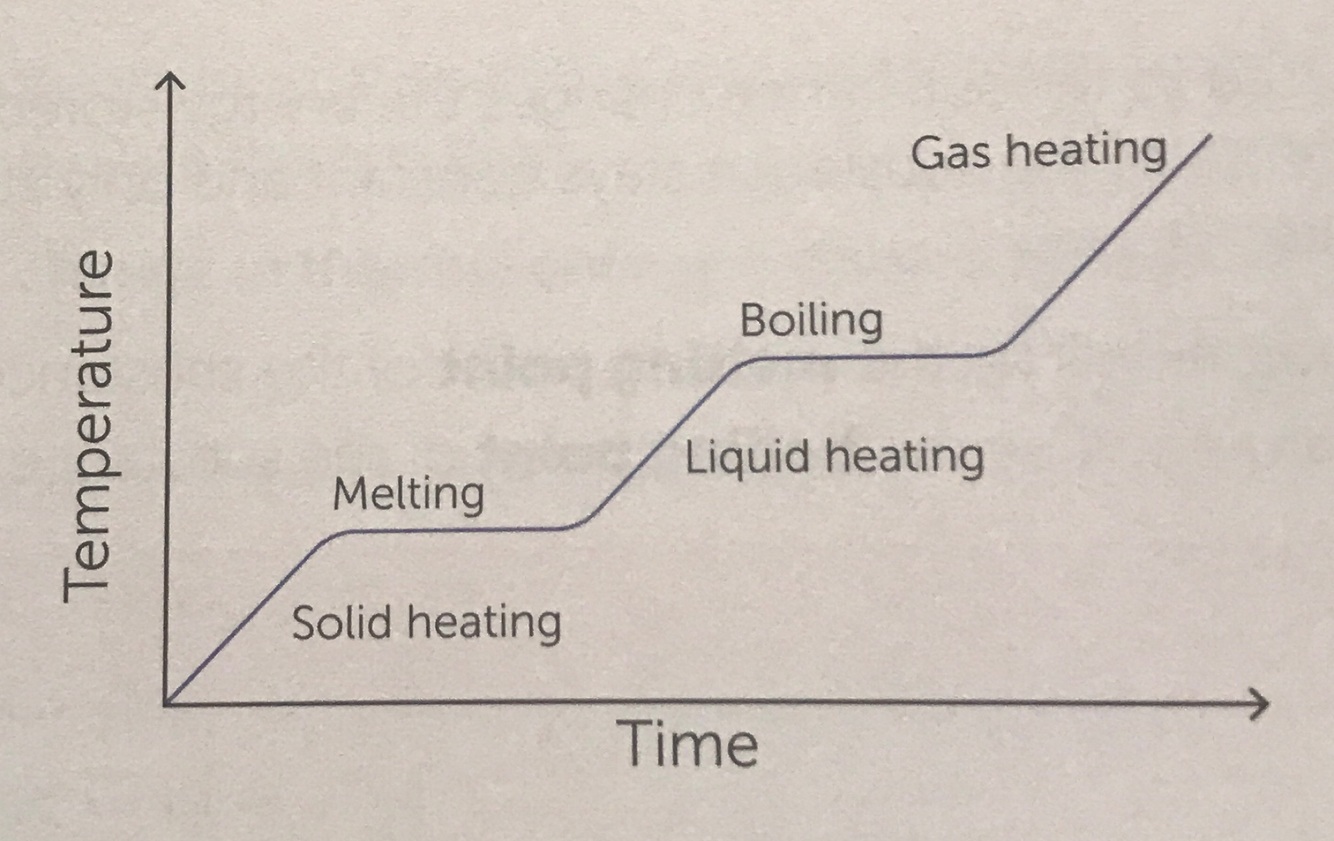
Describe what happens in a heating curve.
As the average kinetic energy of the gas particles increases, the temperature of the gas …
Increases
Why does pressure increase when temperature increases?
• The particles are moving faster so the force of each collision increases • There are more particle collisions each second
How is motion of particles in a fixed volume of gas related to its temperature and pressure?
The higher the temperature of the particles, the faster they move and the more frequently they collide with each other and the container walls, increasing the force in the container. This means that the pressure of the gas increases as the temperature increases.
Why does the temperature of the material stop changing once it reaches a certain temperature?
The material is changing state. Energy is being used to break the intermolecular bonds rather than raise the temperature. Energy is transferred to the potential energy store of the particles rather than their kinetic energy stored.