Chapter 18: Aromatic Substitution Reactions
No description yet. This curated deck is ready for daily study.
Card preview (24)
Sigma complex
Positively charged, 3 resonant structure intermediate generated in an EAS reaction
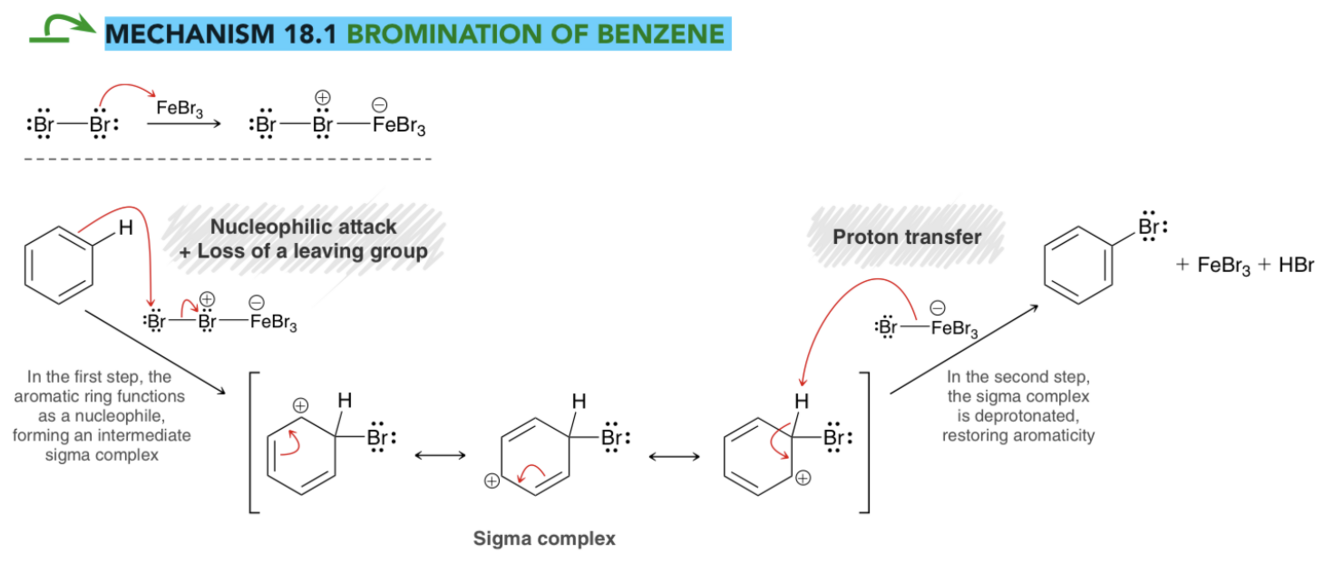
Bromination of benzene
Reagents • Br2 • FeBr3 (iron tribromide) or AlBr3 (aluminum tribromide) Mechanism Forms via a sigma complex intermediate and subsequent rearomatization of the benzene ring
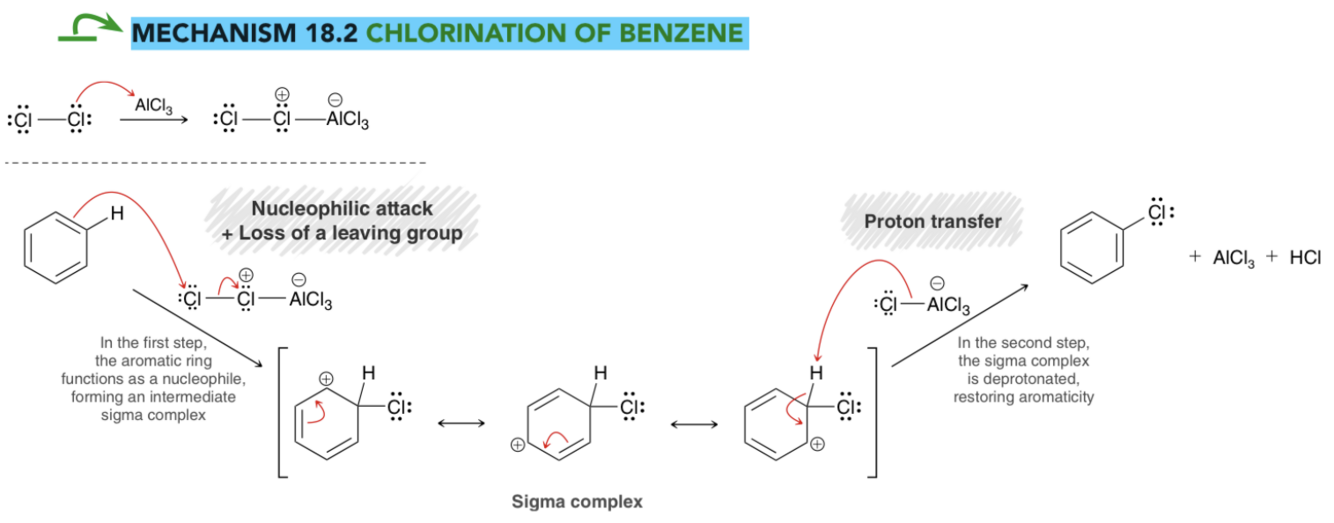
Chloronation of benzene
Reagents • Cl2 • FeCl3 (iron trichloride) or AlCl3 (aluminum trichloride) Mechanism Forms via a sigma complex intermediate and subsequent rearomatization of the benzene ring
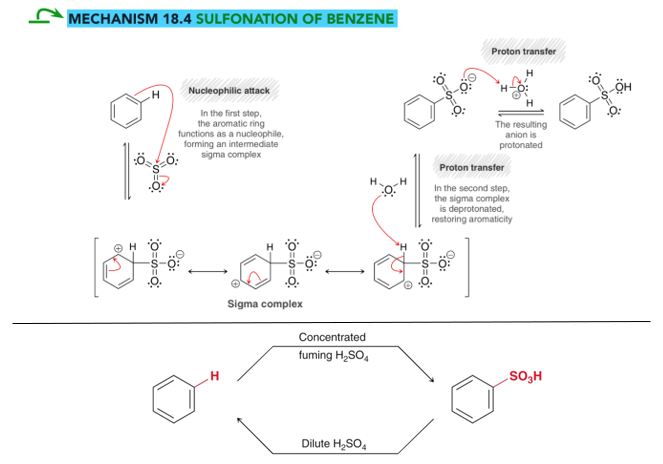
Sulfonation of benzene
Reagents Fuming H2SO4 H2SO4 & SO3 (sulfur trioxide) Mechanism Forms via a sigma complex intermediate and subsequent rearomatization of the benzene ring Sulfonation is reversible because the reagent is concentration dependent
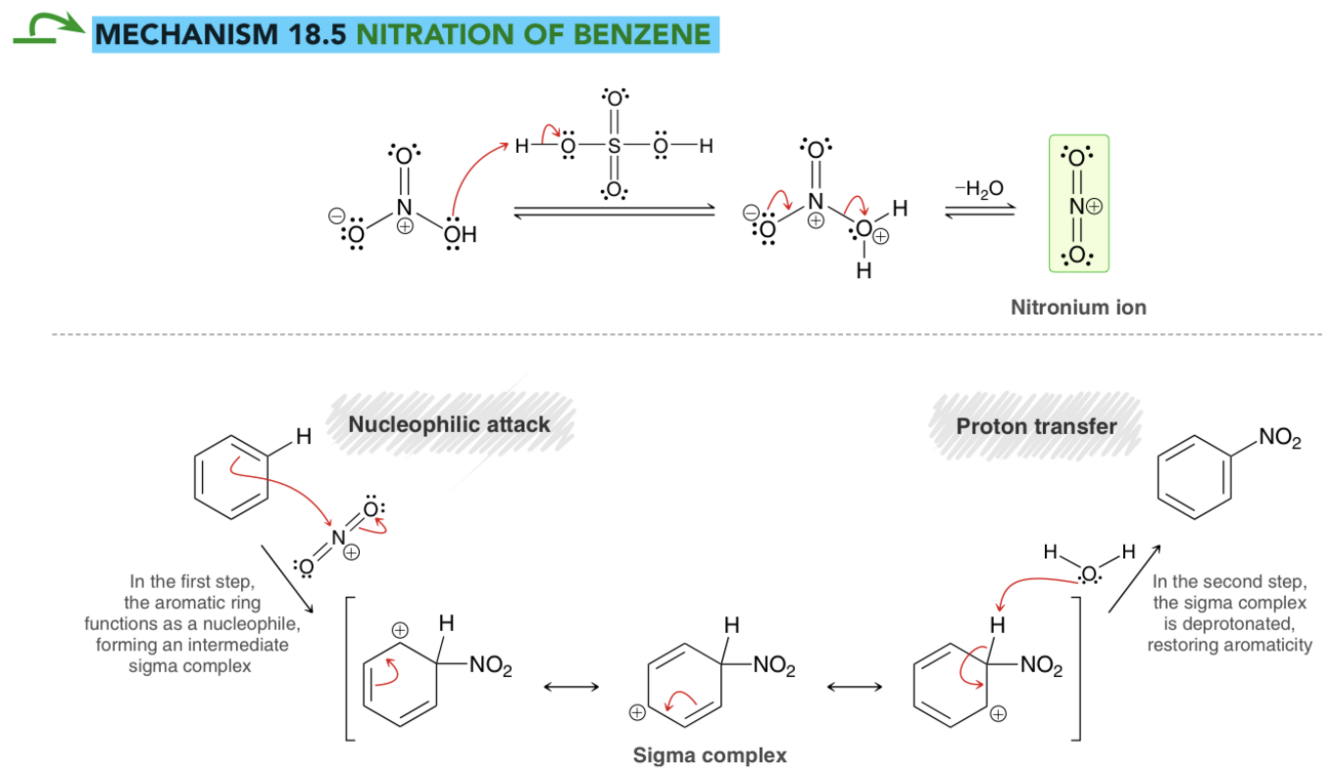
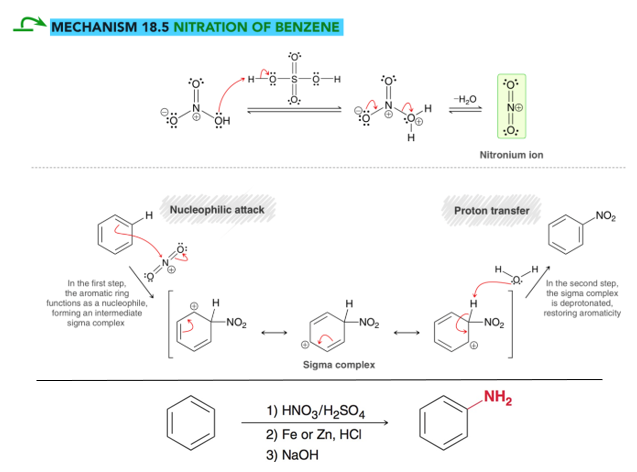
Nitration of benzene Installation of a nitro group
Mechanism HNO3 (nitric acid) & H2SO4 Mechanism Sulfuric acid protonates nitric acid and subsequently forms a nitronium ion which performs the nucleophilic attack Nitration subsequently occurs via the formation of a sigma complex intermediate and subsequent rearomatization of the benzene ring
Nitration of benzene Installation of an amine group
Reagents • HNO3 (nitric acid) & H2SO4 • Fe or Zn & HCl • NaOH Mechanism Sulfuric acid protonates nitric acid and subsequently forms a nitronium ion which performs the nucleophilic attack Nitration subsequently occurs via the formation of a sigma complex intermediate and subsequent rearomatization of the benzene ring Upon treatment with a metal (Fe or Zn) and HCl the nitro group can be reduced resulting in an ammonium ion (RNH3+) that is subsequently deprotonated by a base
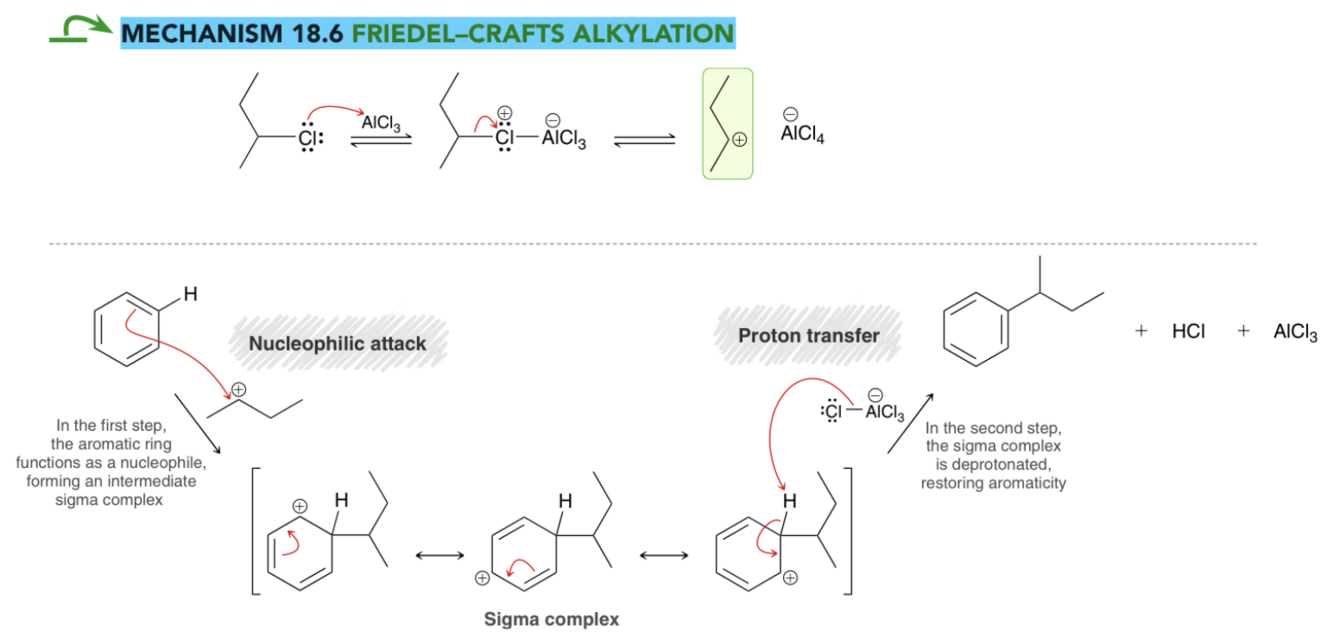
Friedel-Crafts alkylation
Reagents AlCl3 (aluminum trichloride) & alkyl halide • Secondary and tertiary alkyl halides are readily converted to carbocations but NOT primary halides EXCEPT ethyl chloride • Alkyl halide α-carbon must be sp3 hybridized • Beware of possible rearrangements that may occur Mechanism The catalyst (AlCl3) converts the alkyl halide into a carbocation; creating a better electrophile Alkylation subsequently occurs via the formation of a sigma complex intermediate and subsequent rearomatization of the benzene ring DEACTIVATED rings CANNOT undergo Friedel-Crafts alkylation
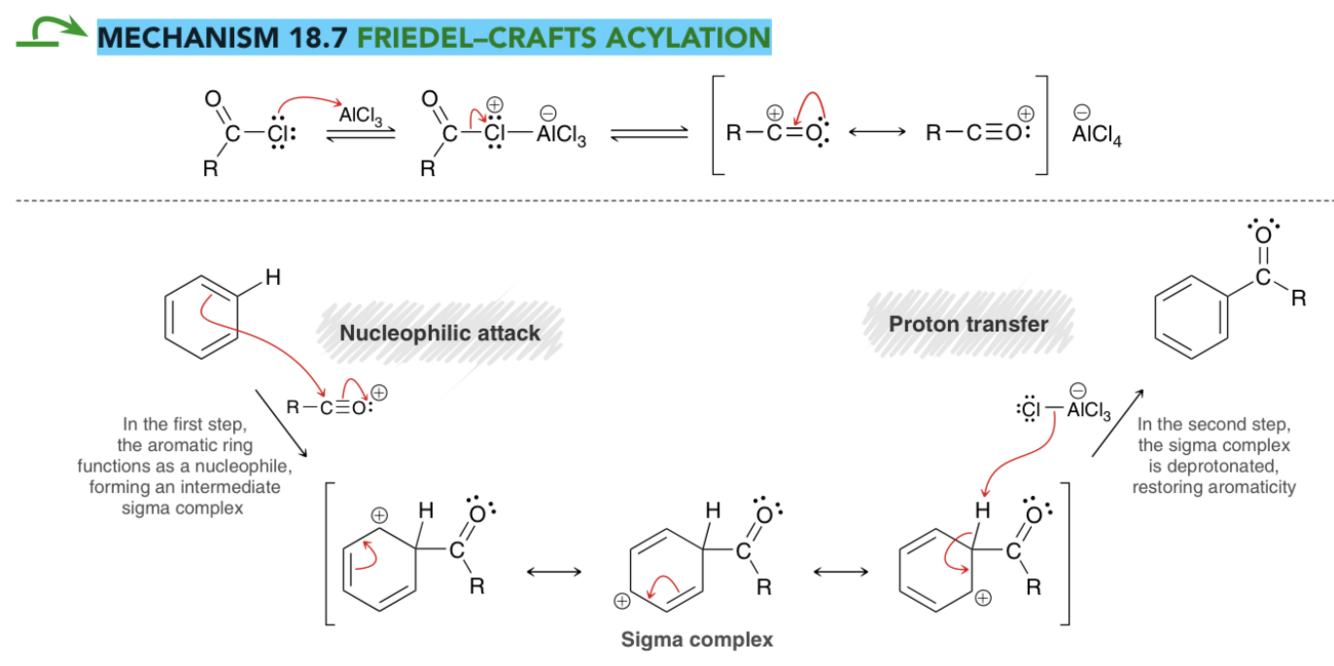
Friedel-Crafts acylation
Mechanism AlCl3 (aluminum trichloride) & acyl halide Mechanism Treatment of the acyl halide with AlCl3 forms a cationic species called an acylium ion Acylation subsequently occurs via the formation of a sigma complex intermediate and subsequent rearomatization of the benzene ring
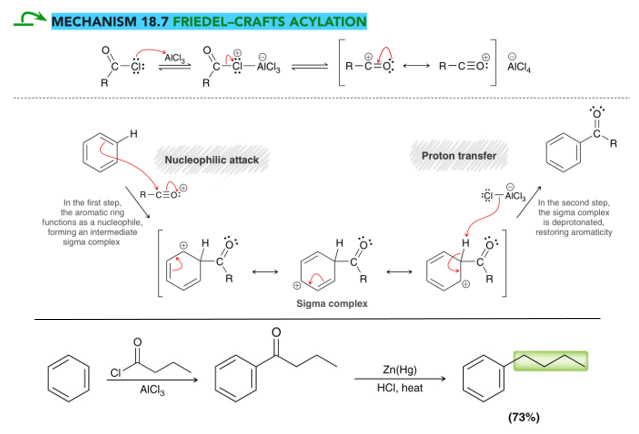
Friedel-Crafts acylation Installing alkyl groups that are prone to rearrangement
Mechanism • AlCl3 (aluminum trichloride) & acyl halide • Zn(Hg) (amalgamated zinc) & HCl, heat Mechanism Treatment of the acyl halide with AlCl3 forms a cationic species called an acylium ion Acylation subsequently occurs via the formation of a sigma complex intermediate and subsequent rearomatization of the benzene ring A Clemmensen reduction can subsequently be employed to recude the aryl ketone to an alkyl group
Strong activating groups
ortho-para directors

Moderate activating groups
ortho-para directors

Weak activating groups
ortho-para directors
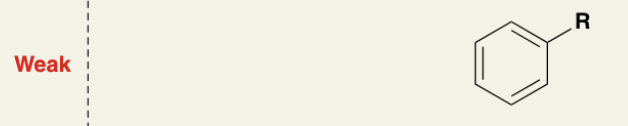
Weak deactivating groups
ortho-para directors

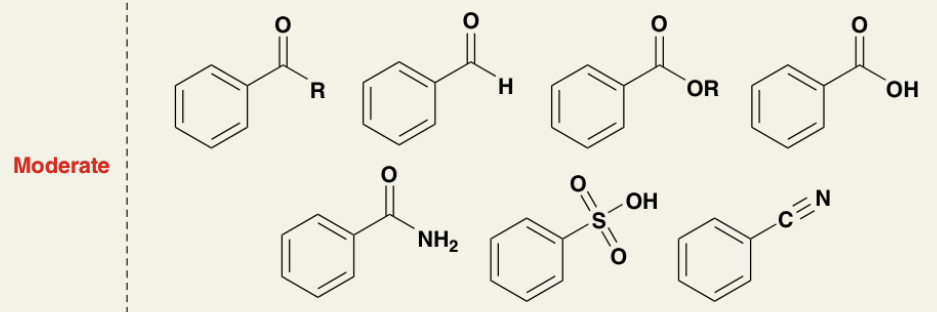
Moderate deactivating groups
meta directors
Strong deactivating groups
meta directors

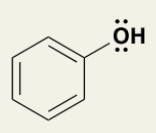
Strong activator ortho-para director
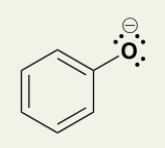
Strong activator ortho-para director
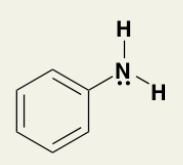
Strong activator ortho-para director
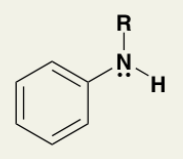
Strong activator ortho-para director
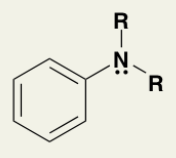
Strong activator ortho-para director
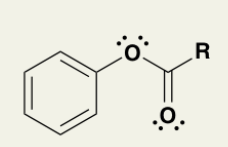
Moderate activator ortho-para director
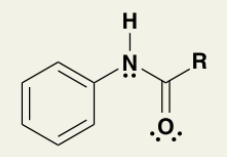
Moderate activator ortho-para director
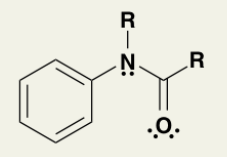
Moderate activator ortho-para director
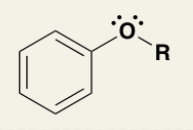
Moderate activator ortho-para director