Allergy
No description yet. This curated deck is ready for daily study.
Card preview (23)
What immunoglobulin does Type 1 hypersensitivity rely on
IgE antibody
What type of reactions are allergic reactions
Type 1 hypersensitivity and IgE-mediated
How does allergic reaction (Type 1 Hypersensitivity) occur?
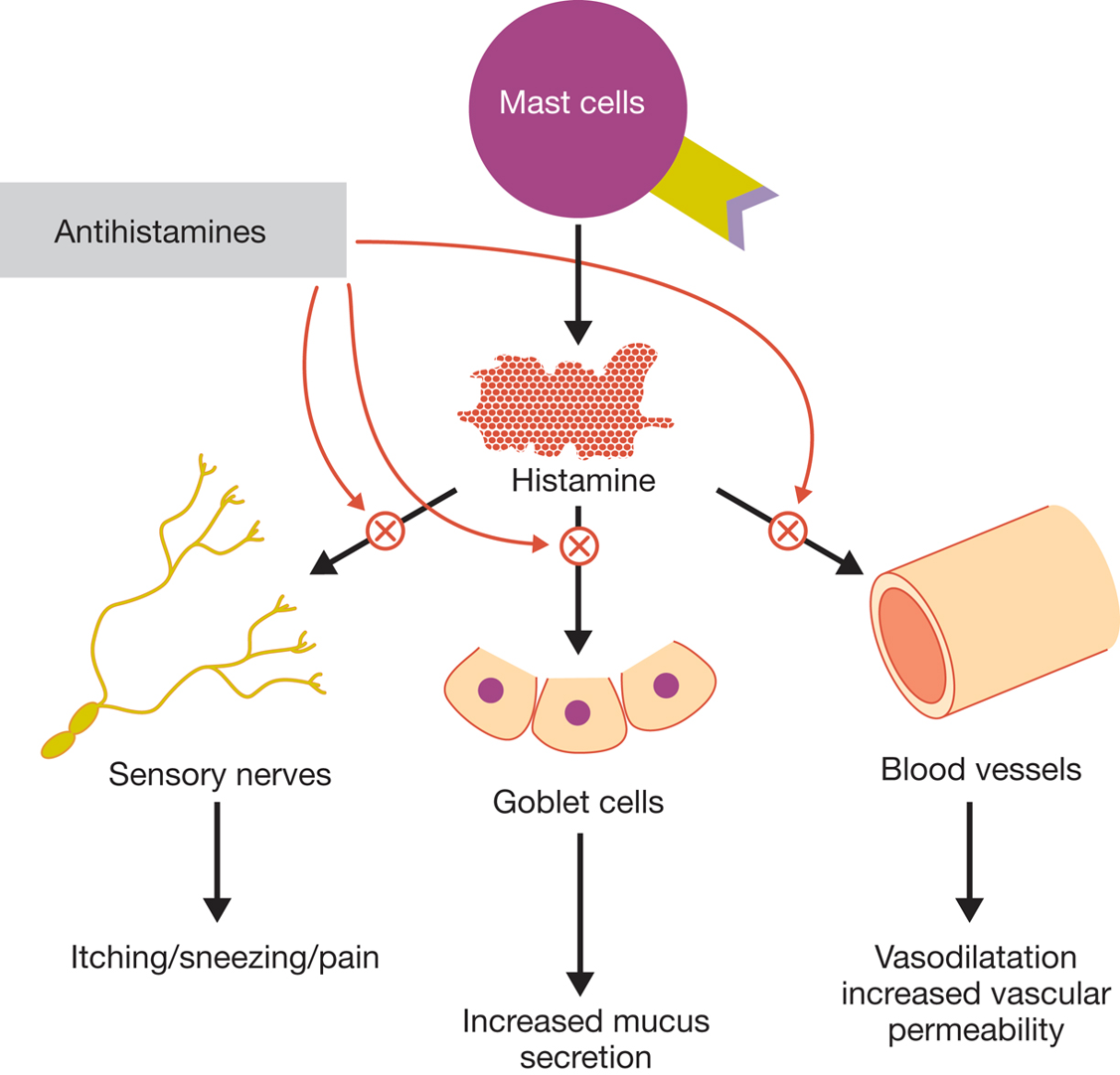
IgE binds to Fc receptors on mast cells Allergen crosslinks with IgE + basophils + eosinophils This causes entry of Ca<strong>2+</strong> ions Mast cells undergo degranulation (of histamine) + release of inflammation mediators to cause: • permeability • chemotaxis • mucus • oedema
What is allergic rhinitis?
Inflammation of the inside of the nose caused by an allergen
What type of allergens trigger rhinitis
Perennial = house dust mite + animal hair/FUR Seasonal = hay fever - pollen Occupational = latex Associated with atopy (genetic predisposition)
Signs + symptoms of allergic rhinitis
Nasal itching Sneezing Rhinorrhoea - runny nose Conjunctival - itchy red eye (worsened by irritants)
What is the no.1 mediator from mast cells + basophils
Histamine - acts on H1 receptors
How can we manage allergic rhinitis?
Avoid pollen in spring by staying indoors or wearing glasses Avoid dust mites by: • vacuuming • wooden floors over carpets • wash bed clothes @ 60 degrees • freeze pillows
What are anti-histamines?
A drug that treats allergic rhinitis It removes rhinorrhoea, itching, conjunctivitis + sneezing but not nasal obstruction Act as H1 antagonist Penetrate BBB (blood-brain barrier) Have anti-muscarinic effects (promethazine) Not ideal, effects of alcohol enhanced
Examples of sedating anti-histamines
Chlorphenamine e.g. piriton (or syrup for children over 1 year) Alimenazine* e.g. trimeprazine Promethazine* e.g. phenergen * = more so
Examples of non-sedating anti-histamines
Loratadine (clarityn) - 1st CHOICE Acrivastine (benadryl) - have to be taken tds (not ods) Cetrizine (zirtek) Fexofenadine (telfast) - POM
Name a topical ‘nasal’ anti-histamine
Azelastine (rhinolast) Rapid onset Effective but not for eye symptoms Azelastine in eye drop formulation for allergic conjunctivitis = rapid relief Also lodoxamine as eye drops
Examples of intranasal corticosteroids
Beclometasone Budesonide Fluticasone Triamcinolone Anti-inflammatory = Reduce cytokines and chemokines which reduce recruitment of immune cells in epithelial mucosa
What are cromones?
Mast cell stabiliser - Inhibits mast cell degranulation e.g. sodium cromoglicate + medocromil sodium Nasal + eye Weak effect Many side effects Used for seasonal disease Up to 4-6 times daily Eye drops - most effective for conjunctival symptoms
Example of leukotriene receptor antagonist
Montelukast Less effective than nasal steroids Licensed for seasonal allergic rhinitis with asthma
What is nasal congestion?
Blocked or stuffy nose e.g. allergic rhinitis or common cold Excess mucus production Histamine causes increased blood flow leading to nasal tissue swelling (oedema) which is caused by: • colds, rhinitis, sinusitis Decongestants cause nasal vasoconstriction to reduce nasal tissue swelling + mucus flow alpha1 adrenoceptors cause vasoconstriction
What are decongestants?
Symptomatic relief - reduce feeling of congestion Both topical + systemic decongestants act on alpha-adrenoceptors Topical ‘nasal’ treatment: • phenylepherine (alpha1) • xylometazoline/oxymetazoline (alpha2) Alpha-adrenoceptor agonist cause vasoconstriction Reverse vasodilatation Reduce flow of mucus Act locally Rebound congestion - use for < 7 days
What are systemic decongestants?
e.g. phenylepherine (alpha1-adrenoceptor = selective)
What is hyposensitisation?
Desensitisation towards an allergen Could be effective for hayfever - when allergen is identified _ conventional treatment has failed Appropriate for wasp + bee venom sting
What is Grazax?
Grazax® contains a grass pollen allergen. By taking many small doses of Grazax you are able to build up a tolerance to grass pollen. This reduces the symptoms of your allergic reaction. Take 4 months before pollen season and then daily Uncertain if effective
What is anaphylaxis?
A serious, life-threatening allergic reaction Can cause more than one of the following: • angioedema = swelling of lower skin • wheezing • itching • hypotension
What is the treatment for anaphylaxis?
Oxygen Adrenaline - increase CO2 + bronchodilation Salbutamol = wheezing Chlorphenamine (antihistamine) - IV/IM Hydrocortisone - IV Shock boxes EpiPens Medic alert bracelet
What are the MHRA guideline on people who carry epipens?
People who have been prescribed an adrenaline auto-injector because of the risk of anaphylaxis should carry two with them at all times for emergency, on-the-spot use. After every use of an adrenaline auto-injector, an ambulance should be called (even if symptoms are improving), the individual should lie down with their legs raised and, if at all possible, should not be left alone