Rates Equations
暂无描述。系统推荐的高质量记忆内容,适合每天坚持背诵学习。
卡片预览 (19 张)
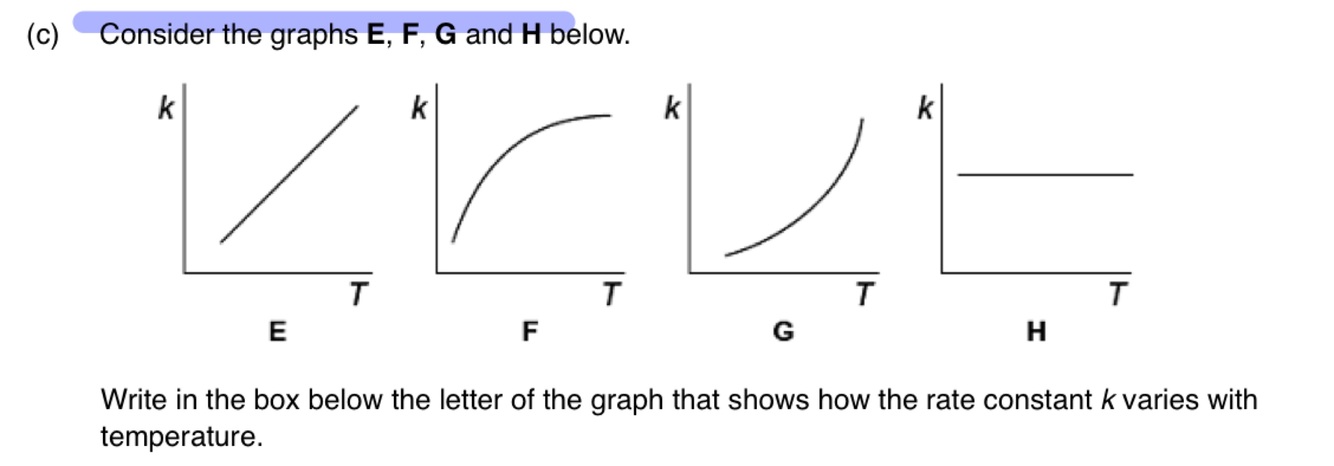
G
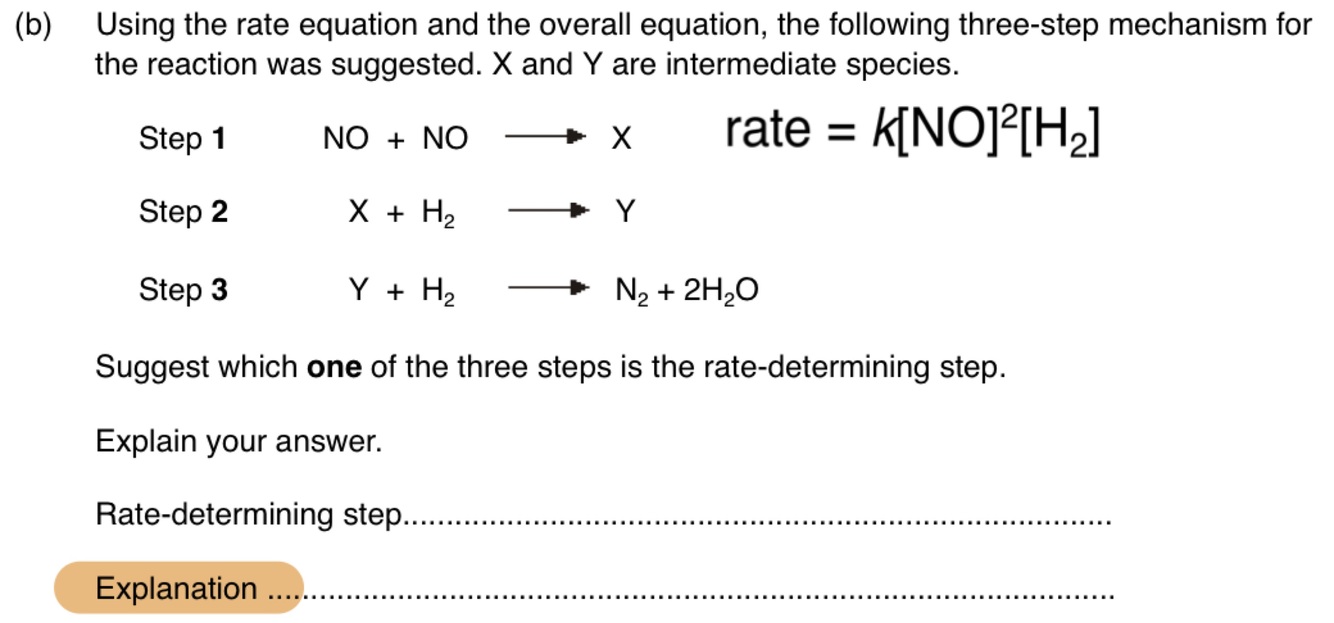
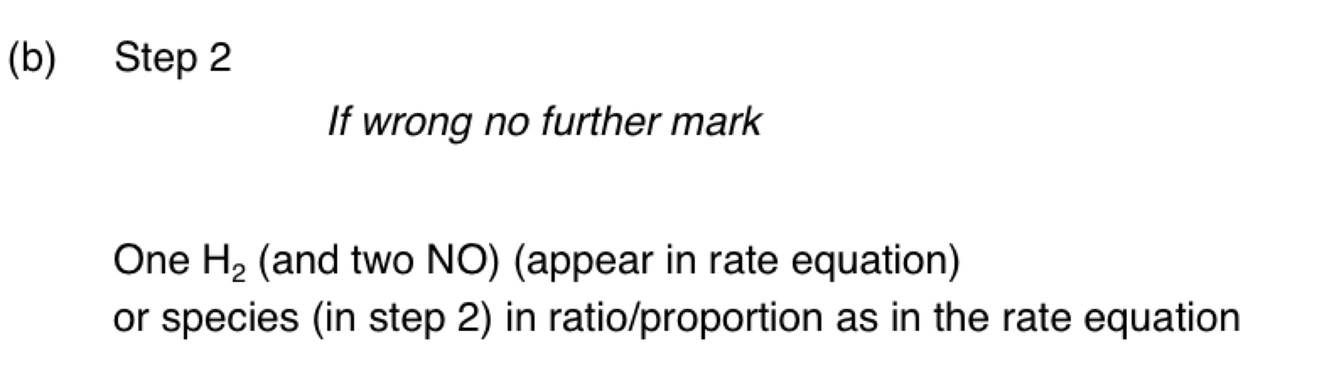
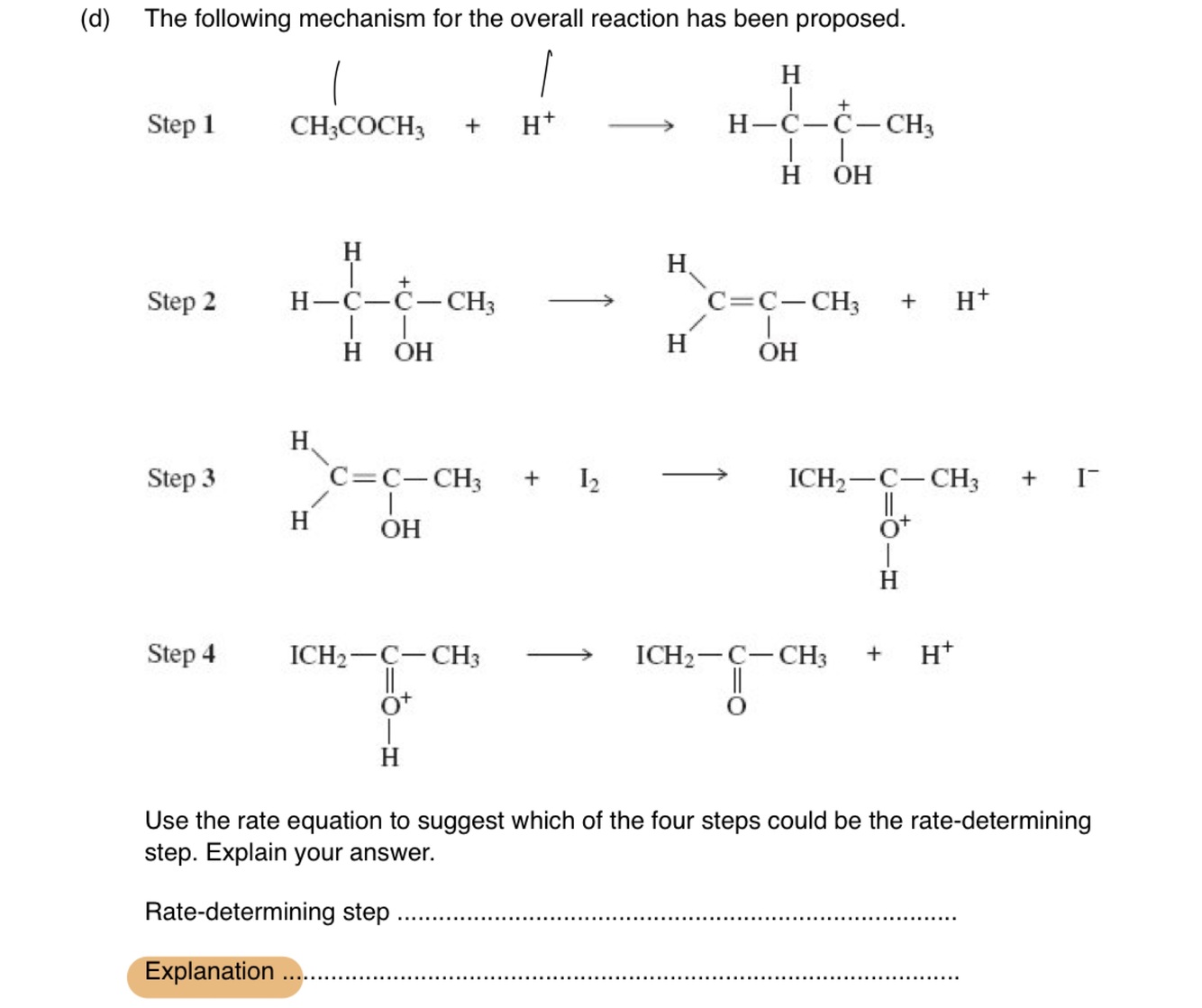
rate = k[CH3COCH3][H+]
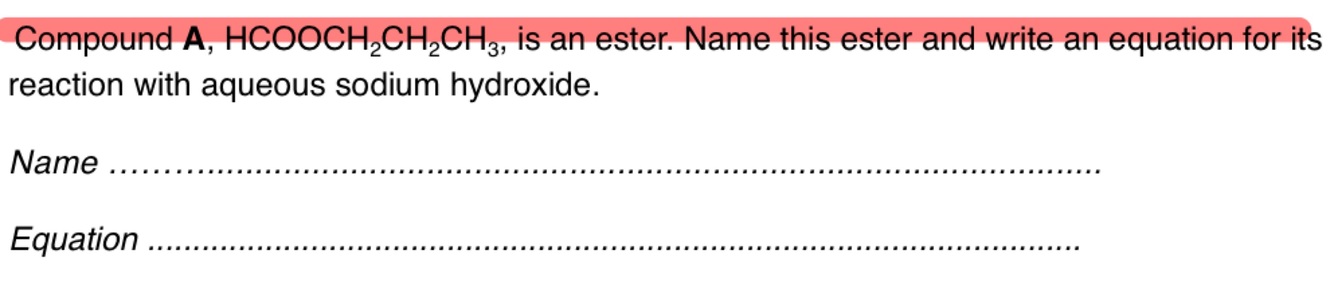
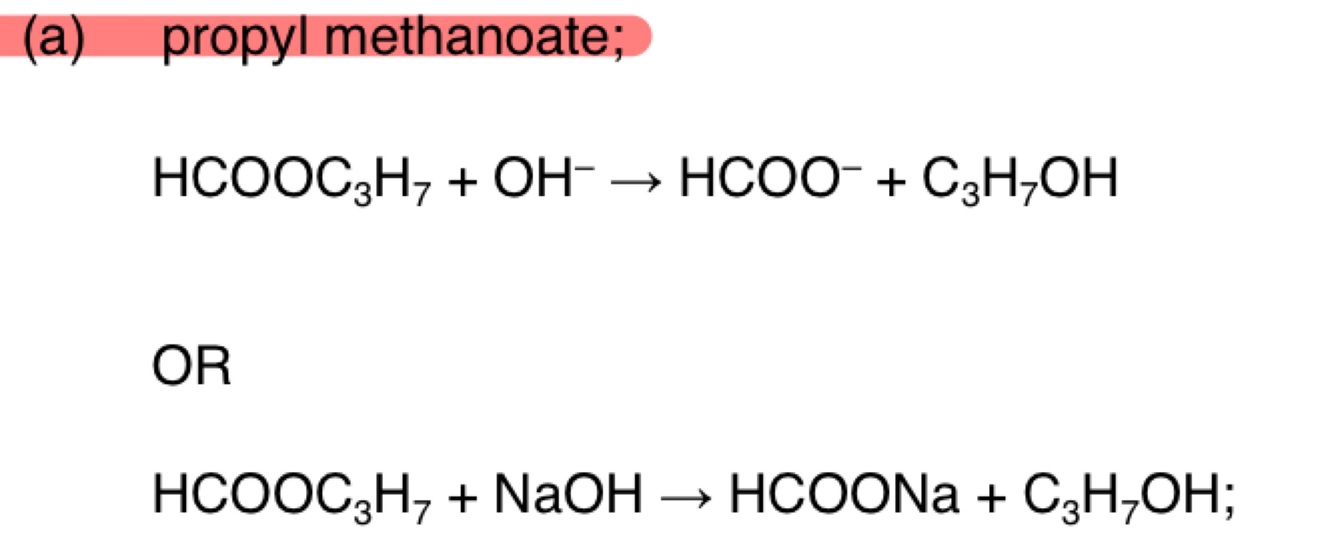
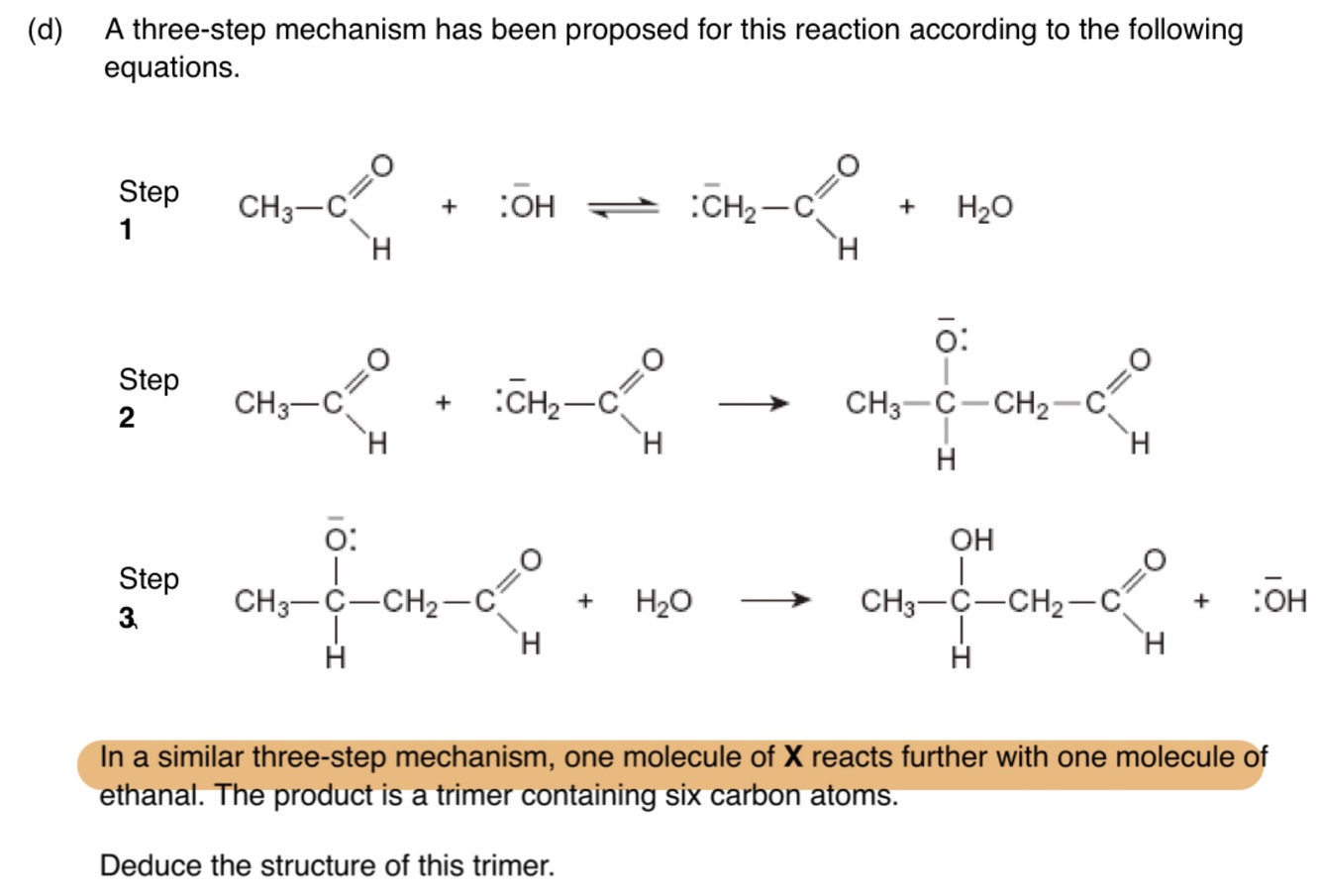
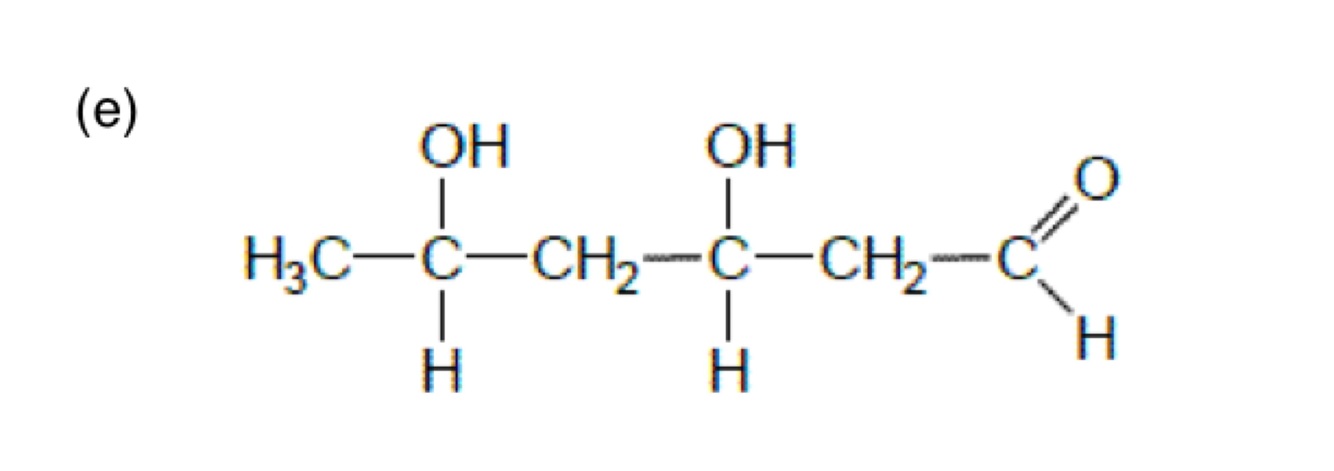
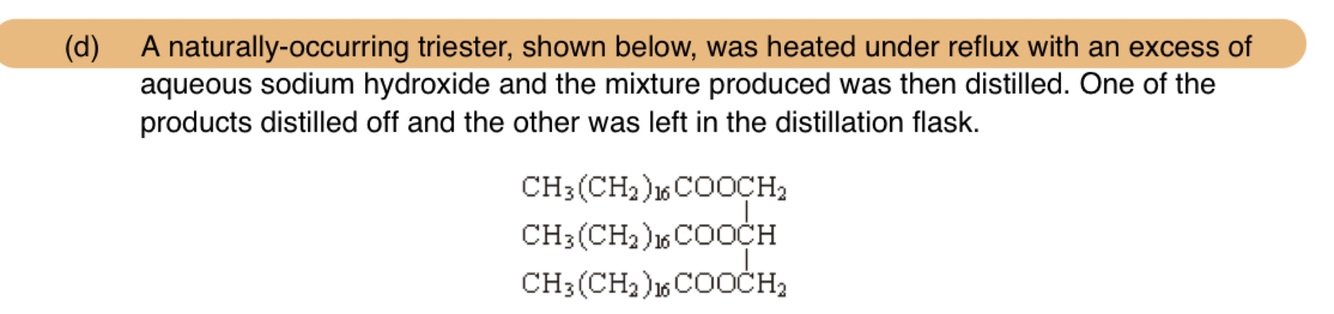
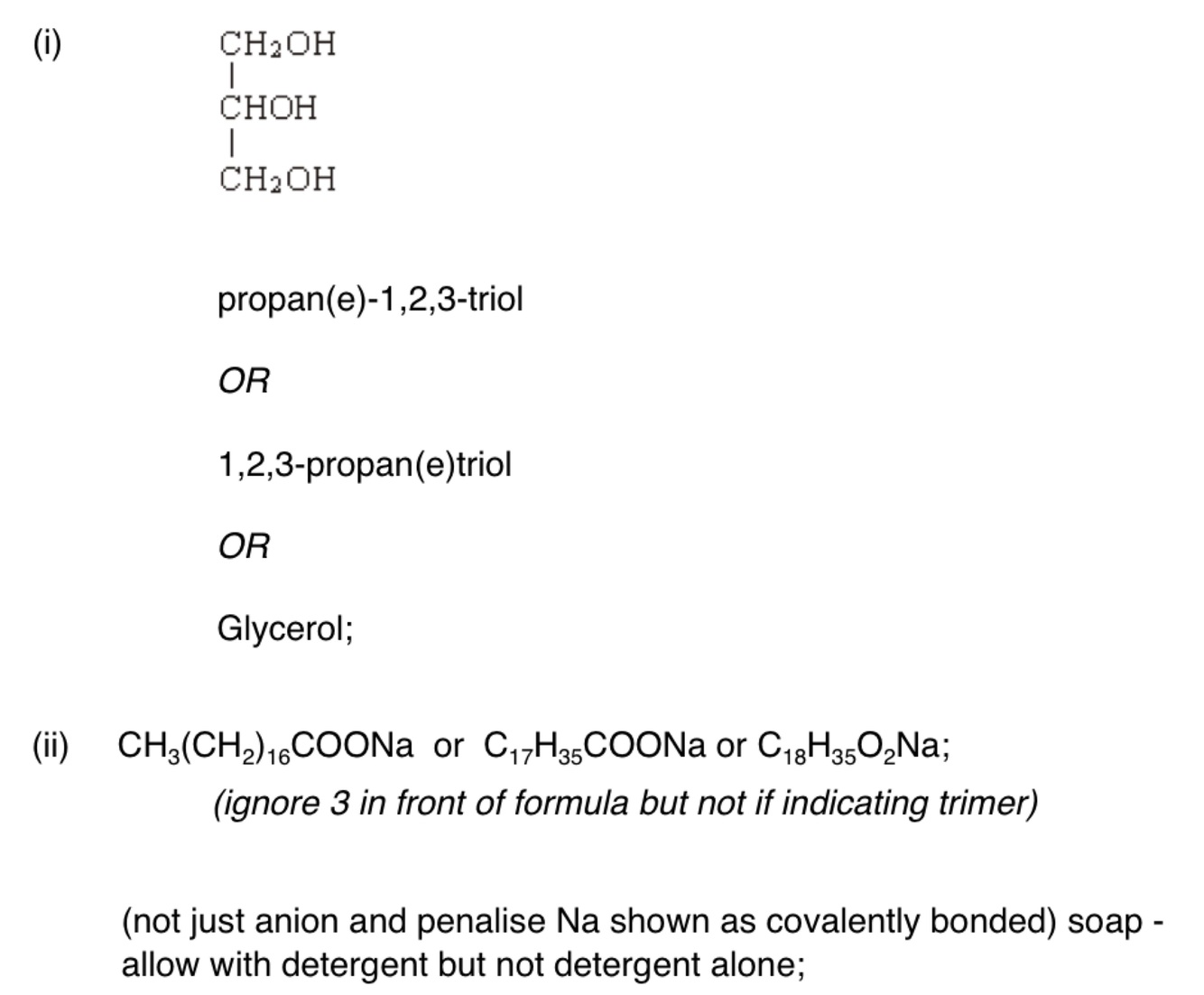
• Draw the structure of the product distilled off and give its name. • Give the formula of the product left in the distillation flask and give a use for it.
State how the value of the rate constant, k, would change, if at all, if the concentration of A were increased in a series of experiments.

No change
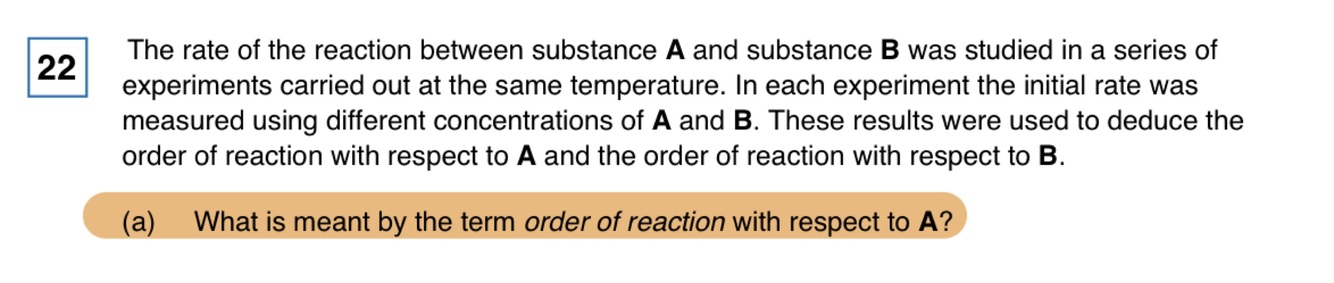
Power (or index or shown as x in [ ]) of concentration term (in rate equation) (1)
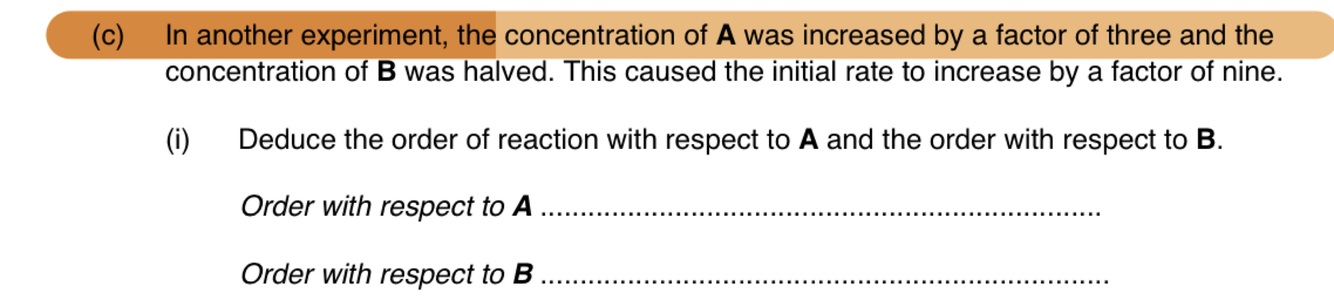
A - second order B - zero order
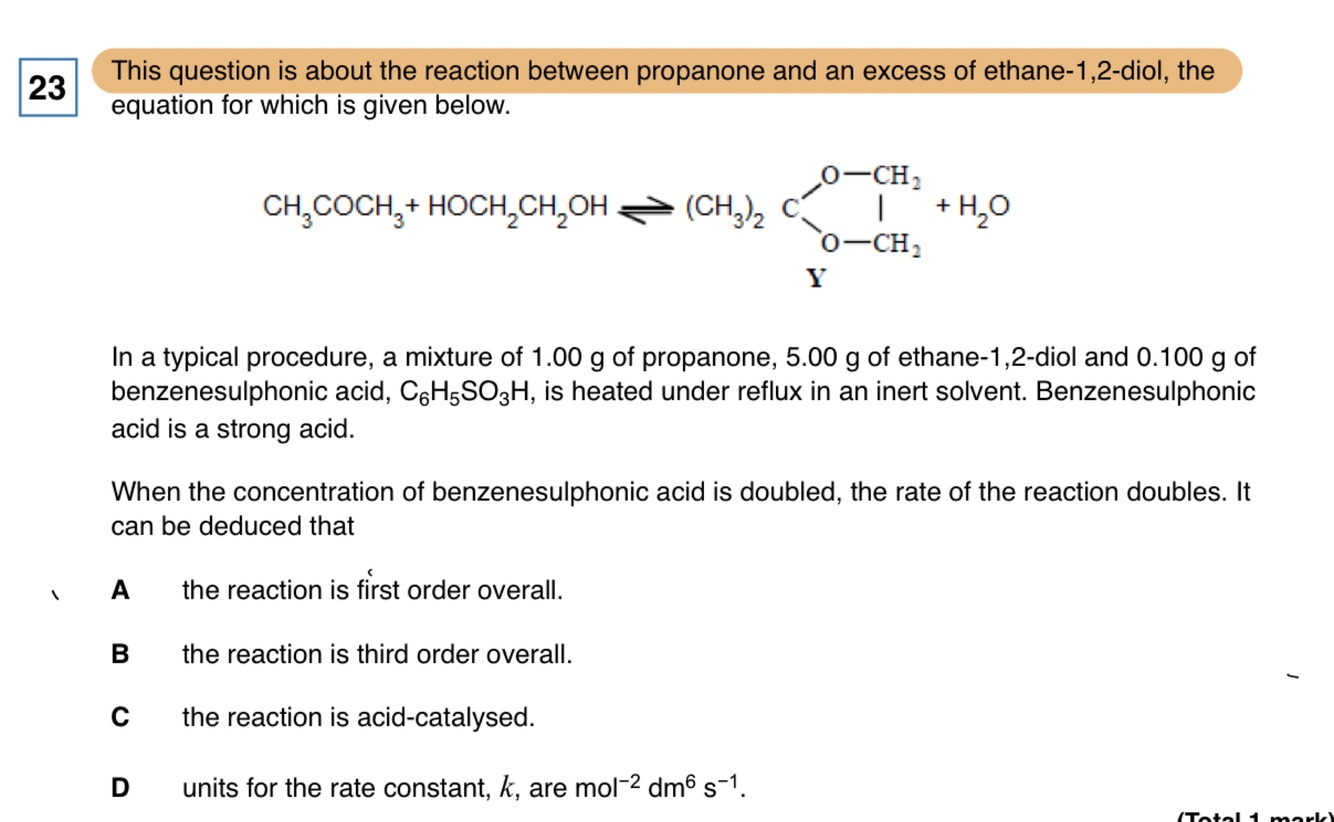
C
How can you tell that H+ acts as a catalyst in this reaction?
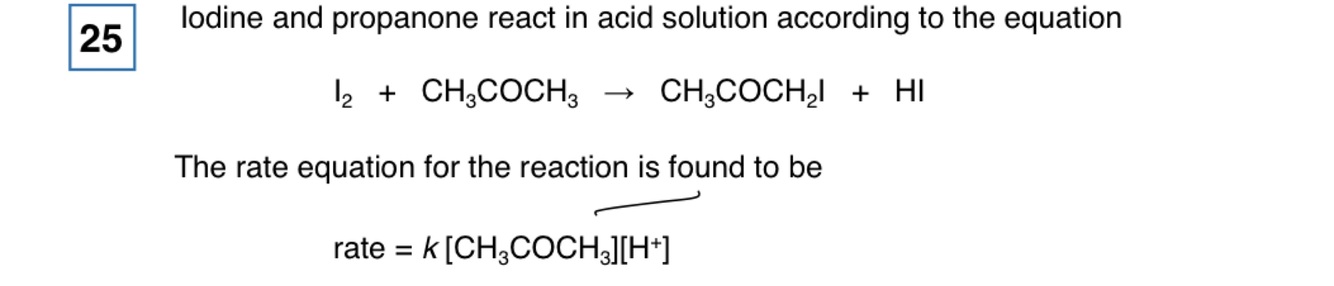
Appears in the rate equation Does not appear in the overall equation
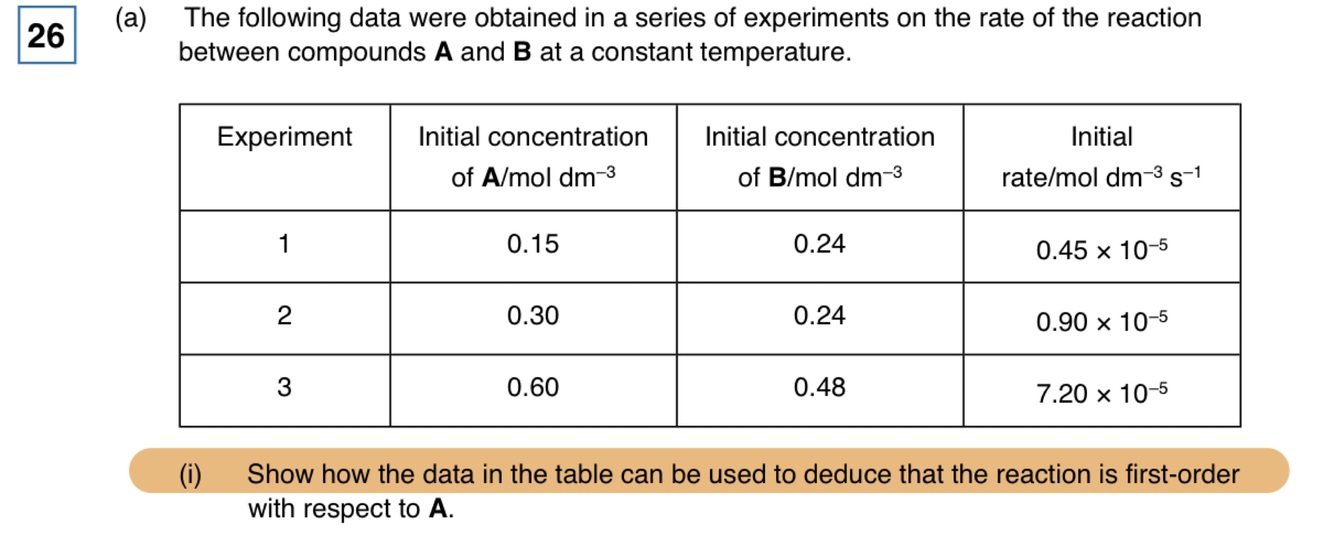

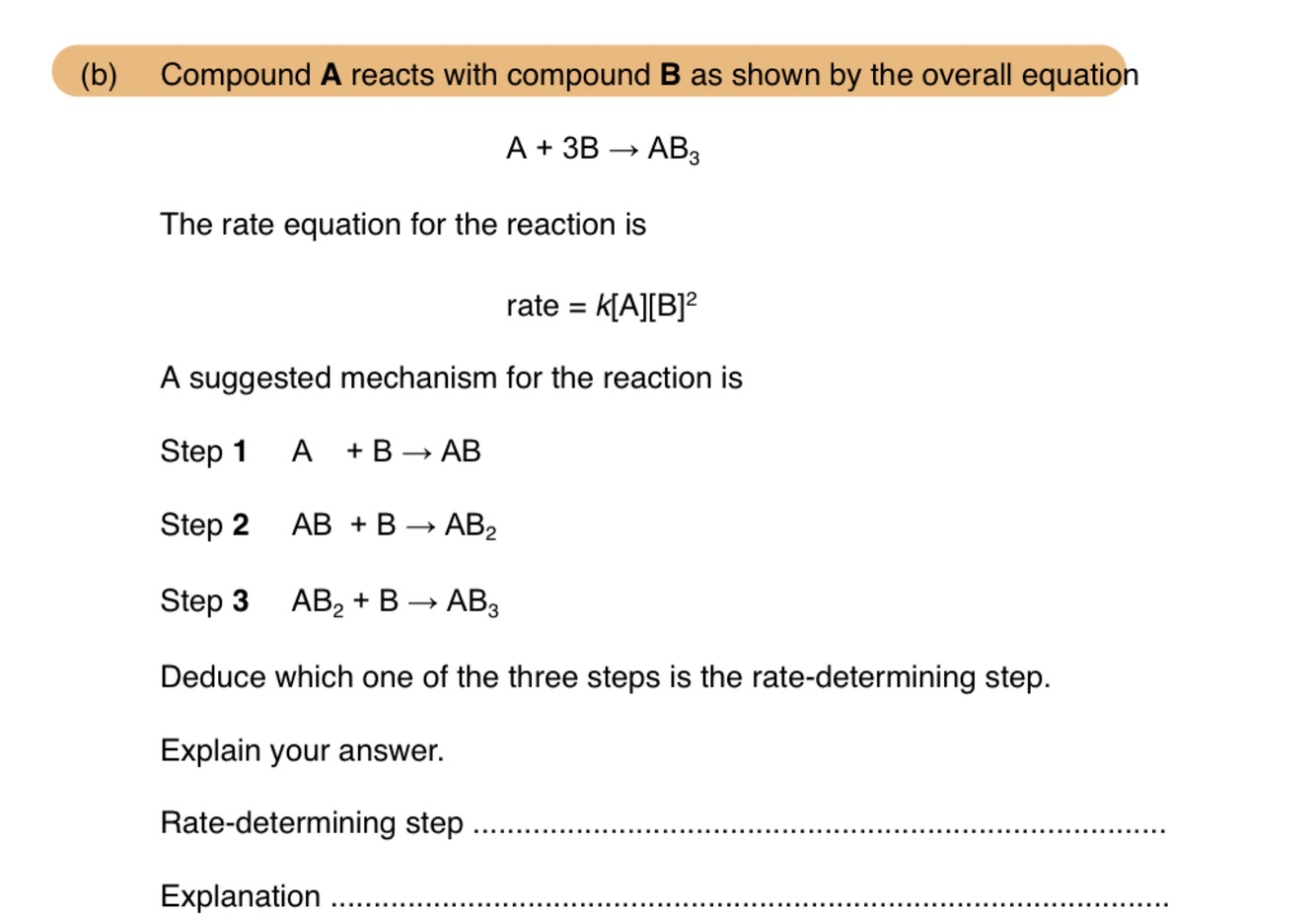
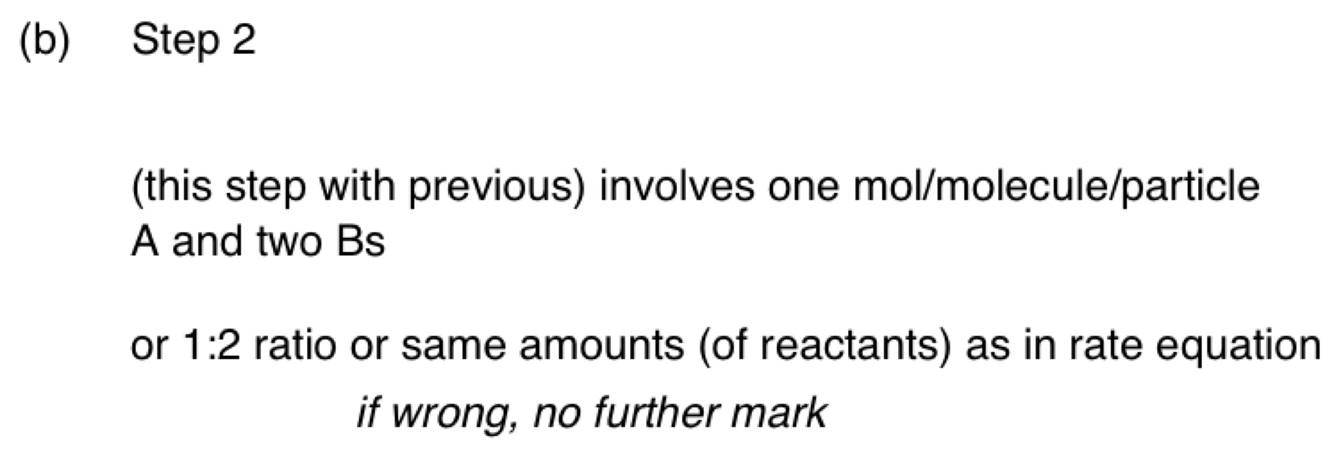
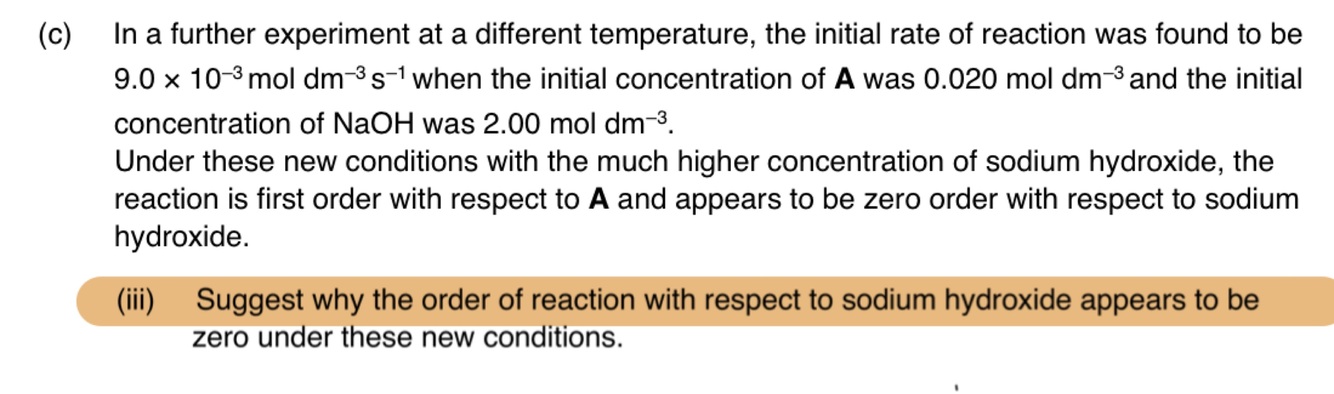
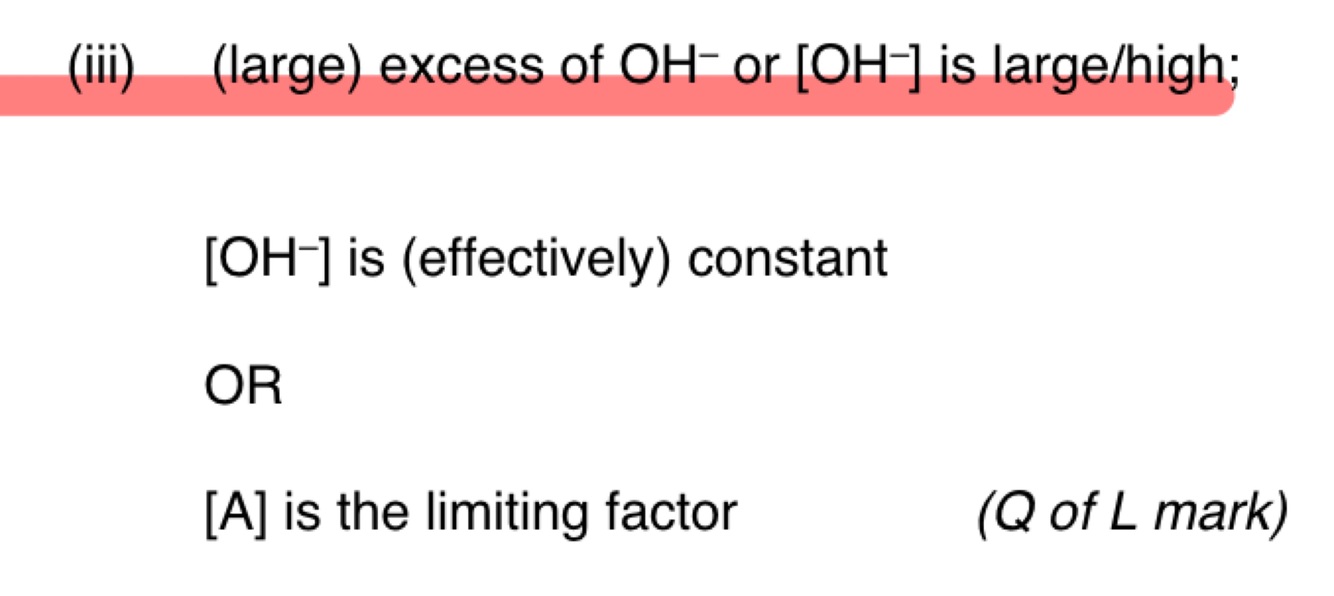
The reaction is zero order with respect to B. State the significance of this zero order for the mechanism of the reaction. rate = k[a]^2
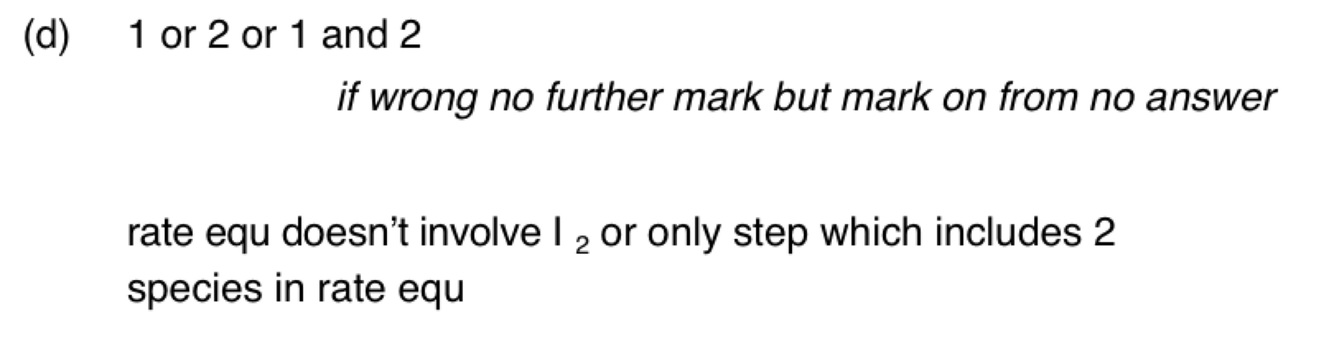
Slow step or rds involves only A OR B does not appear in the slow step or the rds
The rate equation for a reaction is rate = K[E] Explain qualitatively why doubling the temperature has a much greater effect on the rate of the reaction than doubling the concentration of E.
Reaction occurs when molecules have E>Ea Doubling T by 10 °C causes many more molecules to have this E Whereas doubling [E] only doubles the number with this E
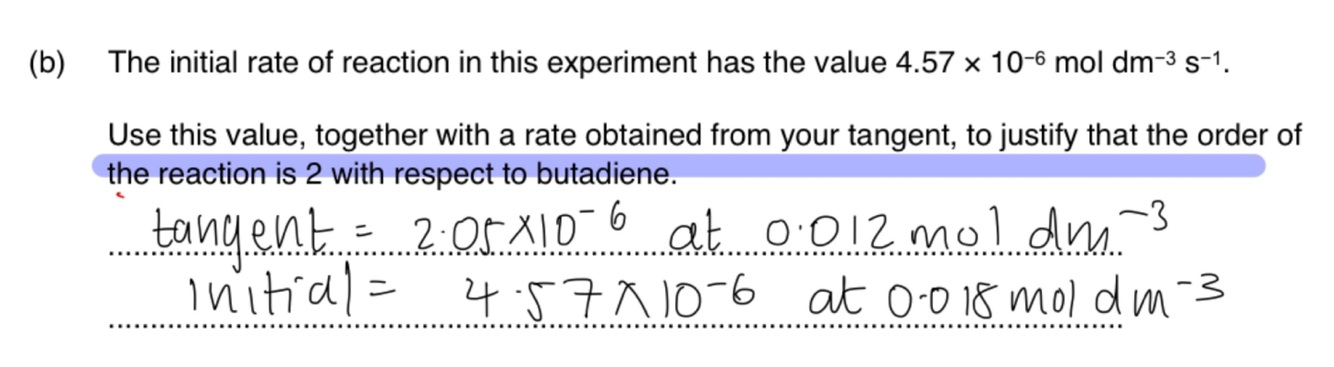
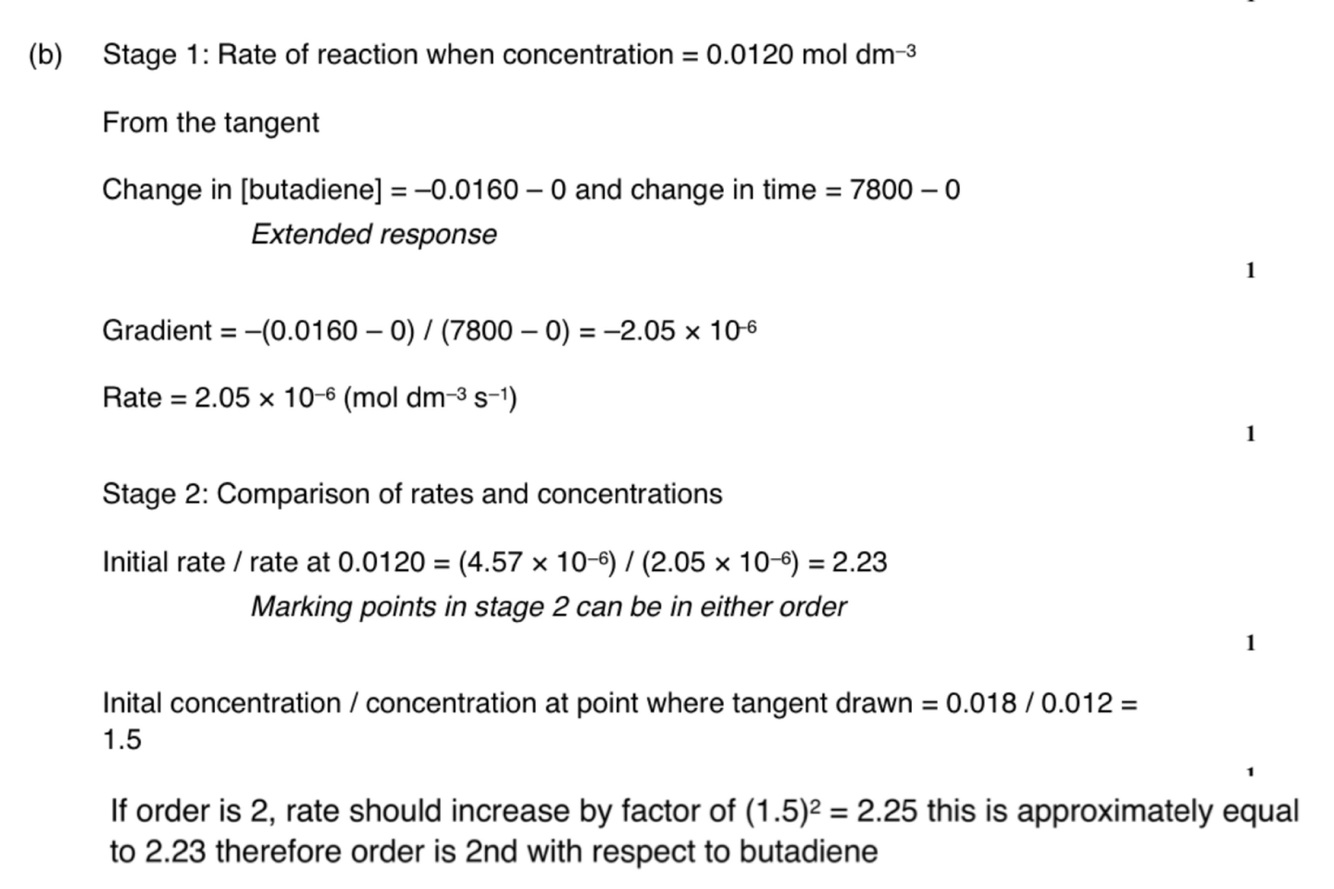
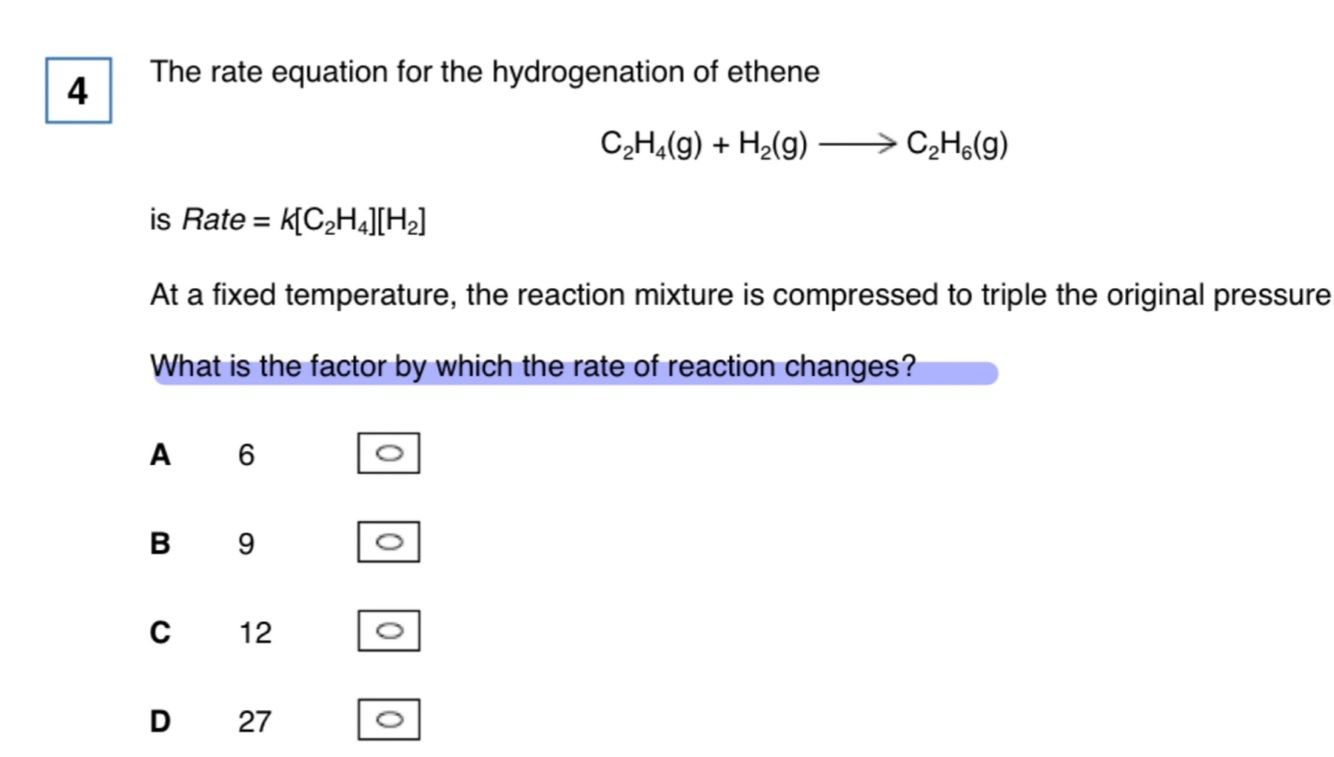
B
The experiment in part (i) is repeated at the same temperature but after the addition of extra solvent so that the total volume of the mixture is doubled. Deduce the new initial rate of reaction.
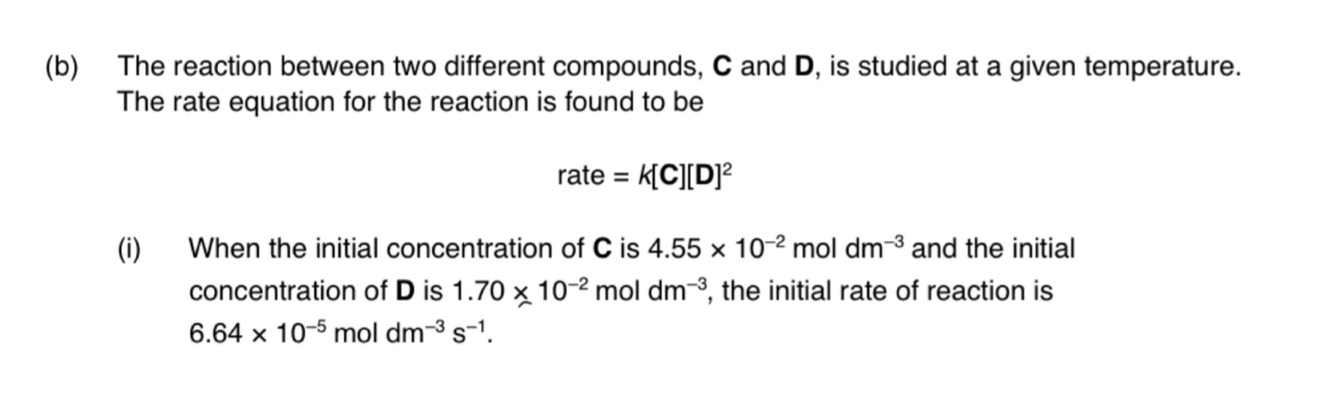
8.3x10⁻⁶