ChemPath: LFTs and cases
No description yet. This curated deck is ready for daily study.
Card preview (24)
List some functions of the liver.
• Intermediary metabolism • Protein synthesis • Xenobiotic metabolism • Hormone metabolism • Bile synthesis • Reticulo-endothelial system
Define intermediary metabolism.
Enzyme-catalysed processes within cells that extract energy from nutrient molecules and use that energy to construct cellular components.
List some examples of processes that count as intermediary metabolism.
• Glycolysis • Glycogen storage • Gluconeogenesis • Amino acid synthesis • Fatty acid synthesis • Lipoprotein metabolism
List some metabolic consequences of liver failure.
• Reduction in blood sugar due to a lack of glycogen / metabolism • Lactic acidosis (reduced ability to metabolise lactic acid) • Increased ammonia (no longer able to process amino acids)
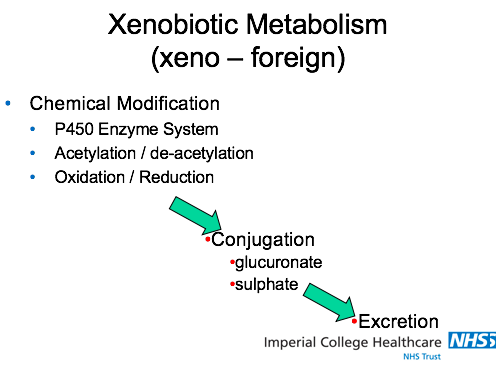
What are the main stages of xenobiotic metabolism in the liver?
Glucuronidation increases the solubility of
Outlie the roles of the liver regarding hormone metabolism.
• Vitamin D (25-hydroxylation) • Steroid hormones (conjugation and excretion) • Peptide hormones (catabolism)
What are the constituents of bile?
• Water • Bile acids/salts • Bilirubin • Phospholipids • Cholesterol • Proteins • Drugs and metabolites
What are the functions of bile?
• Excretion • Micelle formation • Digestion
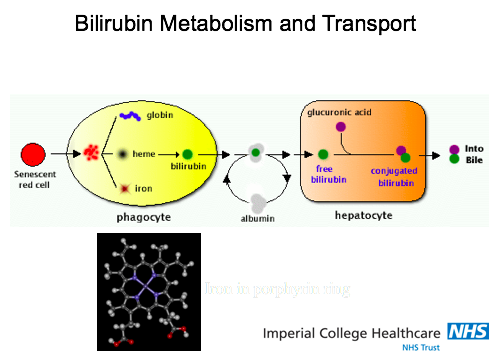
Describe the metabolism and excretion of bilirubin.
• Red cells are broken down to produce haem, iron and globin • Heme breaks down to form unconjugated bilirubin • Unconjugated bilirubin is bound to albumin in plasma • This unconjugated bilirubin travels to the liver where it becomes glucuronidated • The conjugated bilirubin is released into the bile
What are the main cells of the reticuloendothelial system found in the liver?
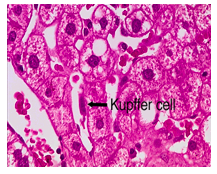
Kupffer cells
What are the roles of Kupffer cells?
• Clearance of infection and lipopolysaccharides (LPS) • Antigen presentation • Immune modulation (e.g. cytokine production)
What is another key reticuloendothethial function of the liver besides the role of Kuppfer cells?
Erythropoesis
What are the main serum markers of liver cell damage?
• ALT • AST • ALP • GGT
What are the main markers of liver synthetic function?
• Albumin • Pro-thrombin time/INR (important in acute setting) • Bilirubin
What is the tumour marker of primary liver malignancy?
AFP
What cells are ALT and AST found in?
Within the cytoplasm of hepatocytes
What is the function of ALT and AST?
ALT - catalyzes the transfer of an amino group from L-alanine to α-ketoglutarate to form pyruvate and L-glutamate AST - catalyzes the interconversion of aspartate and α-ketoglutarate to oxaloacetate and glutamate. Both these reactions catalysed are reversible
Other than the liver, where else is ALT and AST found?
Muscle, kidney, bone, pancreas eg. can be released in rhabdomyolysis
Describe the rise in ALT and AST seen in alcoholic liver disease.
AST: ALT > 2:1 in alcoholic liver disease In the absence of alchol AST:ALT ratio >1 indicated advanced fibrosis or cirrhosis
Describe typical ALT and AST levels in cirrhosis.
• May be raised • May be normal in long-standing chronic liver disease
What is the role of gamma-glutamyl transferase?
Catalyses the transfer of gamma-glutamyl groups between peptides
Where is GGT found?
Hepatocytes and epithelium of small bile ducts NOTE: also found in kidney, pancreas, spleen, heart, brain and seminal vesicles
List some causes of raised GGT.
• Chronic alcohol abuse • Bile duct disease (e.g. gallstones) • Hepatic metastases
What is the likely function of ALP?
Precise function unknown Catalyse the hydrolysis of a large number of organic phosphate esters at an alkaline pH.