1 - Biological molecules
No description yet. This curated deck is ready for daily study.
Card preview (24)
What is the difference between condensation and hydrolysis reactions?
-condensation joins two molecules together with a chemical bond and the elimination of a water molecule -hydrolysis breaks a chemical bond between two molecules using a water molecule
What are isomers? Give an example:
-2 molecules with the same chemical formula but different structural formula -alpha and beta glucose alpha has the -OH on the bottom
Name 3 polysaccharides and their monomers:
-starch (alpha glucose) -glycogen (alpha glucose) -cellulose (beta glucose)
How would you quantitatively measure the amount of reducing sugar in solution without a colorimeter?
-perform Benedict’s test -filter and dry the precipitate -use mass balance to get the mass
Describe the structure of starch:
-made of 2 polysaccharides (amylose + amylopectin) -amylose has α 1-4 GS bonds and forms a straight chain (can coil into a helix) -amylopectin has frequent α 1-6 GS bonds that make it branch off
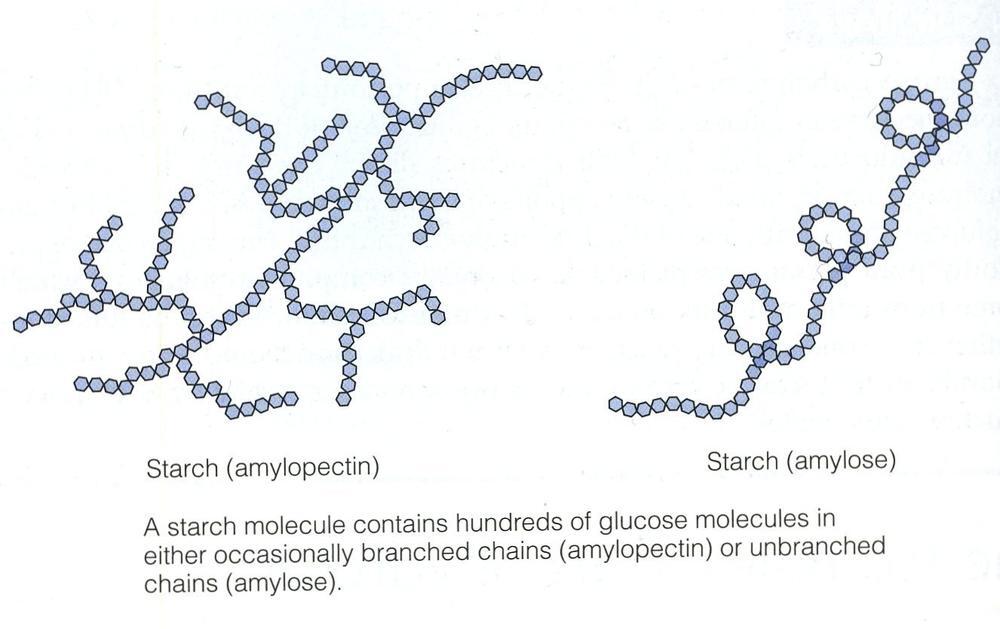
How is starch adapted for its function in plants?
-insoluble, so it won’t affect water potential -helical structure, so it is very compact and good for storage -large molecule, so it can’t leave the plant cell
How is cellulose adapted for its function?
-has long straight chains which are linked together via H-bonds to form fibrils -very strong + can resist osmotic pressure (good for making cell walls) -can resist enzymatic action so it doesn’t get digested
Describe how the structure of glycogen is related to its function:
-helical structure, so it is compact -insoluble, so it won’t affect water potentials -branched, higher SA, so enzymes can hydrolyse it faster into a-glucose for it to be used in the mitochondria for AR (good energy store)
What makes a fatty acid unsaturated?
double bond between 2 carbons
How are fatty acids important to the formation of new cells?
-can be used to make phospholipids, which are used in cell membranes -can respire fatty acids to release energy, which can be used towards forming new cells and the processes involved (eg protein synthesis)
Why are lipids good for energy storage?
-high number of carbon-hydrogen bonds compared to the number of carbons, stores lots of energy -insoluble in water, won’t affect water potentials by osmosis -low in mass, won’t affect movement of the organism
Describe how protein structure depends on the amino acids it contains:
-structure is always determined by the relative position of the AAs -primary is their sequencing -secondary due to H-bonds between different peptide bonds -tertiary is 3D structure due to R-group interactions, which is directly linked to function -quaternary formed with multiple PP chains If asked about function, always mention tertiary with specific R-group interactions
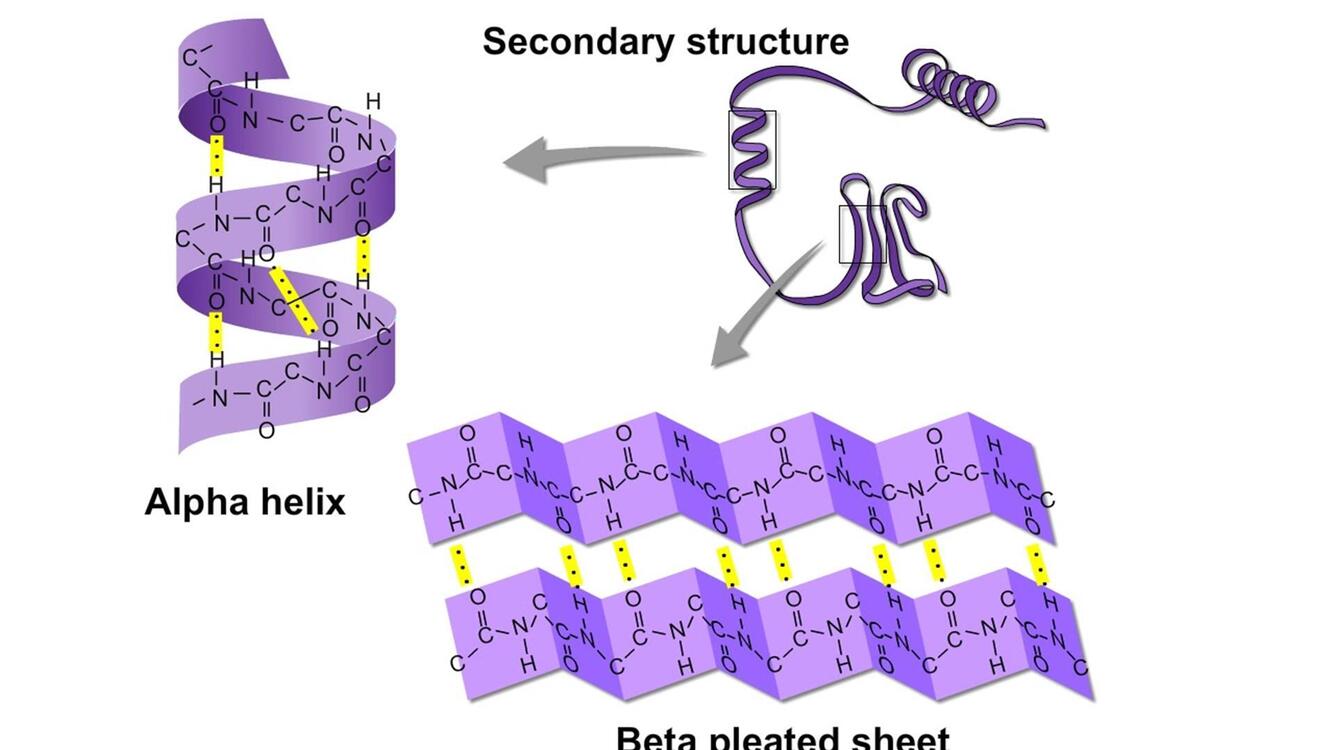
Explain how a protein’s secondary structure is brought about:
-the weakly -ve charged oxygen from C=O is attracted to the weakly +ve charged hydrogen on N-H on different peptide bonds, forming hydrogen bonds -forms α-helixes (H-bond between every 4th) or β-pleated sheets (parallel parts of the same PP chain form H-bonds) Secondary structure only refers to these types of hydrogen bonds
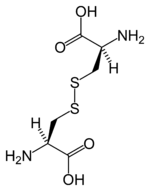
What is a disulfide bridge?
covalent bond formed between 2 cysteine amino acids, found in tertiary structure
What are hydrophobic interactions?
-hydrophobic molecules tend to stay near each other to minimise contact with water -this leads to a weak interaction being formed between different non-polar R groups on different amino acids in tertiary structures Like how fat forms globules in water rather than spreading out
What kind of proteins have secondary and tertiary structures?
-fibrous proteins (eg collagen, keratin) have secondary -globular proteins (eg the 4 subunits that make up haemoglobin) have tertiary Haemoglobin itself is quaternary though
Explain why it is important for the blood to maintain a constant pH:
-proteins are found in blood (eg haemoglobin) and are sensitive to changes in pH -it would result in a change in tertiary structure -less oxygen would bind to the haemoglobin Saying “denature” isn’t enough, mention the protein structure
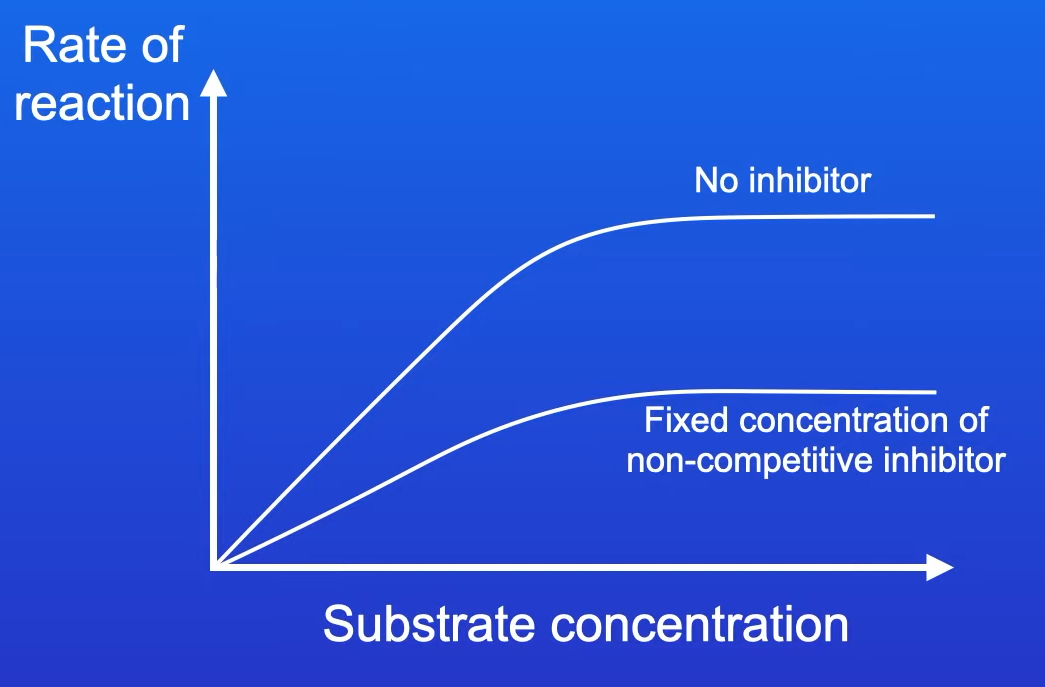
Explain the difference between the 2 lines on this graph:
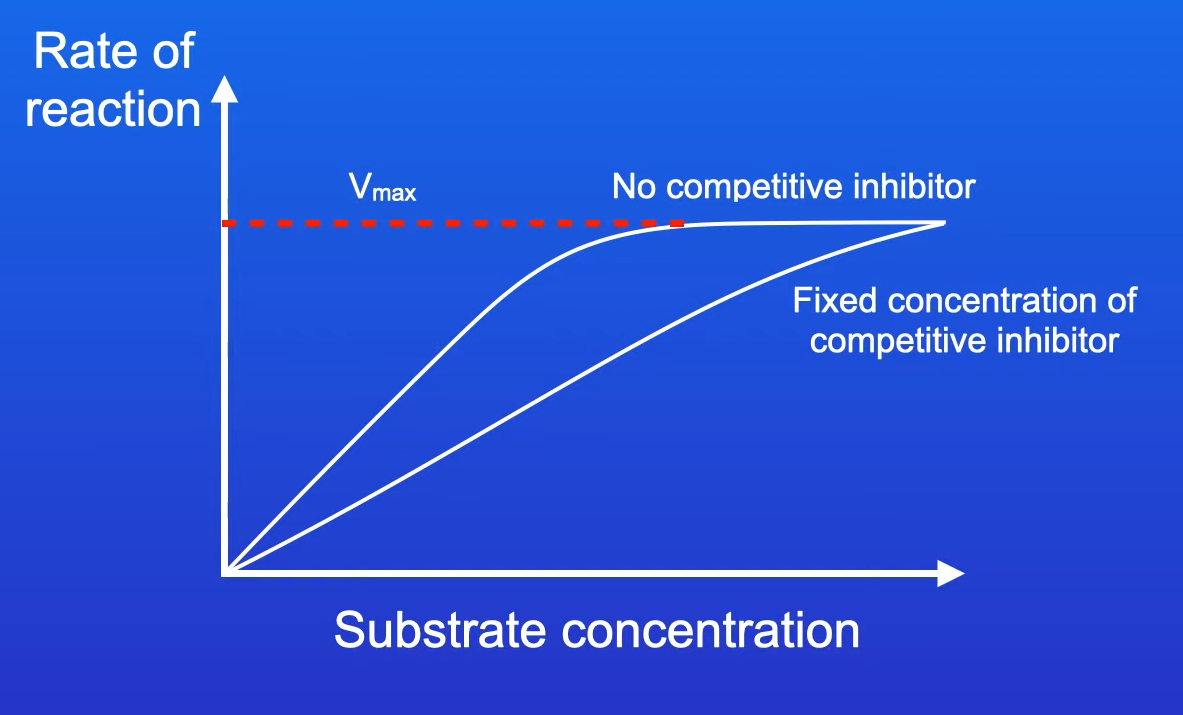
-as [substrate] increases, R increases for both lines -however, using a CI reduces the likelihood of ESCs forming, and reduces R for a given [substrate] -as [substrate] increases for the CI curve, the likelihood that a substrate will collide with the active site compared to the CI increases, and so R increases
Why is the rate of reaction affected differently between CIs and NCIs?
-with CIs, the effect of the inhibitor can be overcome by simply increasing [substrate] to increase likelihood of ESCs forming -with NCIs, the active site’s shape is no longer complementary to the substrate, so its effects cannot be overcome, and the rate of reaction has a lower maximum
Why does this graph suggest pectin is a non-competitive inhibitor?
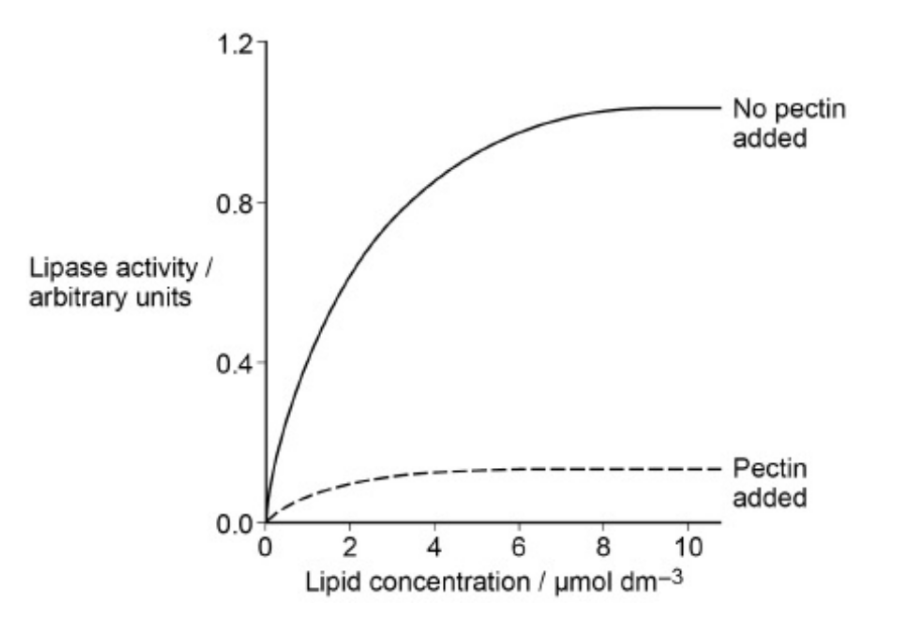
increasing the substrate concentration does not overcome the inhibition, and does not affect rate of reaction after a certain point
What are ribosomes made from?
rRNA and proteins
Why might a gene have more bases than what is needed for a polypeptide to be made? eg 40 bases but only 10 AAs in polypeptide
-some regions of the gene are non-coding and act as start/stop codes (eg introns) -may be an addition mutation
How is DNA different in viruses?
DNA may sometimes be single stranded in viruses, so no complementary base pairing is seen
What does DNA polymerase do? Explain why:
-joins free nucleotides by forming phosphodiester bonds between them -only joins in 5’-3’ direction (has a specific active site shape that is complementary only to the 3’ end, since the shape of the 3’ end and the 5’ end is different)