2 - Inorganic Chemistry (f) Acids, alkalis and titrations
No description yet. This curated deck is ready for daily study.
Card preview (9)
What ion does an acid produce an excess of when dissolved in water? How about alkalies?
Acids produce an excess of hydrogen ions (H⁺) when dissolved in water. Alkalis produce an excess of hydroxide ions (OH⁻) when dissolved in water.
What are the three solutions used to test a substance’s spot on the pH scale?
Litmus Methyl Orange Phenolphthalein
What colours will Litmus paper turn to indicate pH?
Red (pH 1-5), Purple (pH 5-9) and Dark purple (pH 9-14)
What colours will Methyl orange turn to indicate pH?
Red (pH 1-5), Orange (pH 5-6) and Yellow (pH 7-14)
What colours will Phenolphthalein turn to indicate pH?
Colourless (pH 1-10), Pink (pH 10-14)
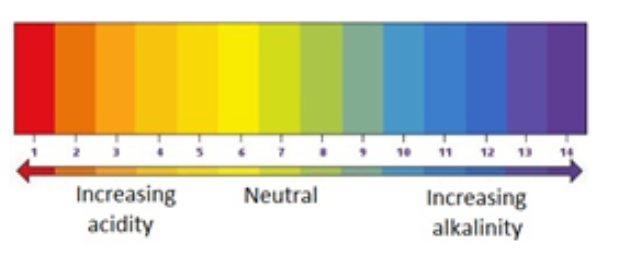
What range on the pH scale is acid, neutral or alkali?
1-3 Strongly acidic 3-6 Weakly acidic 7 Neutral 8-10 Weakly alkaline 11-14 Strongly alkaline
How would you test an aqueous solution for pH value?
You would add universal indicator
What can be used to neutralise an acid? How does it do this?
An alkali (or a base) can neutralise an acid by combining with the hydrogen ions in an acid, to neutralise it, because hydrogen ions are what makes an acid acidic.
What is a base?
A base is a substance that can neutralise an acid, forming a salt and water. All alkalis are bases, but not all bases are alkalis.