Chapter 20: Carboxylic Acids and Their Derivatives
No description yet. This curated deck is ready for daily study.
Card preview (24)
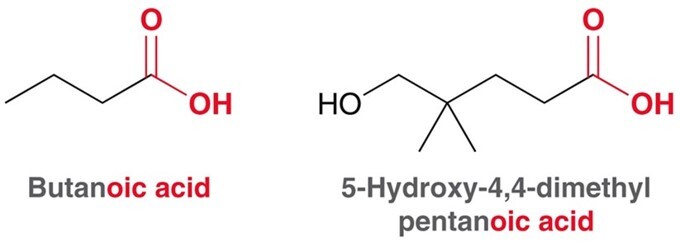
Naming carboxylic acids
• Identify and name the parent chain that includes the carboxyl group • Identify and name substituents • Assign locant to each substituent giving the carboxyl carbon the lowest number • Assemble substituents alphabetically • Assign configurations to any chiral centers • Replace “e” with suffix −oic acid
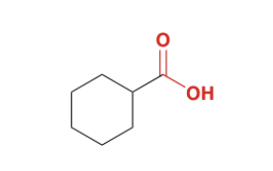
Cyclohexanecarboxylic acid
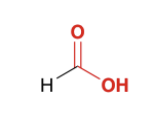
Formic acid
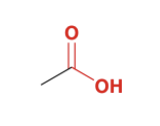
Acetic acid
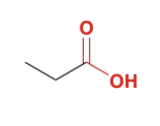
Propionic acid
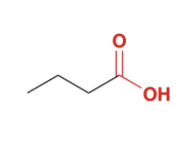
Butyric acid
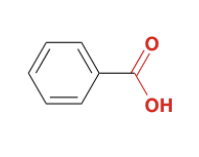
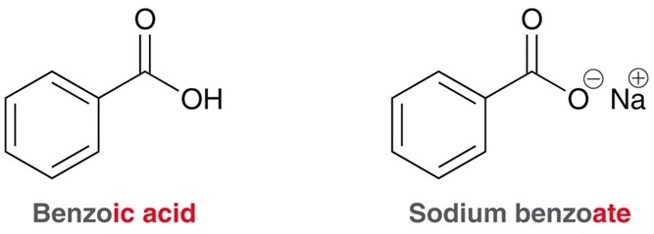
Benzoic acid
Naming deprotonated carboxylic acids
Replace the “ic acid” with the suffix −ate
Average pKa for carboxylic acids
4−5
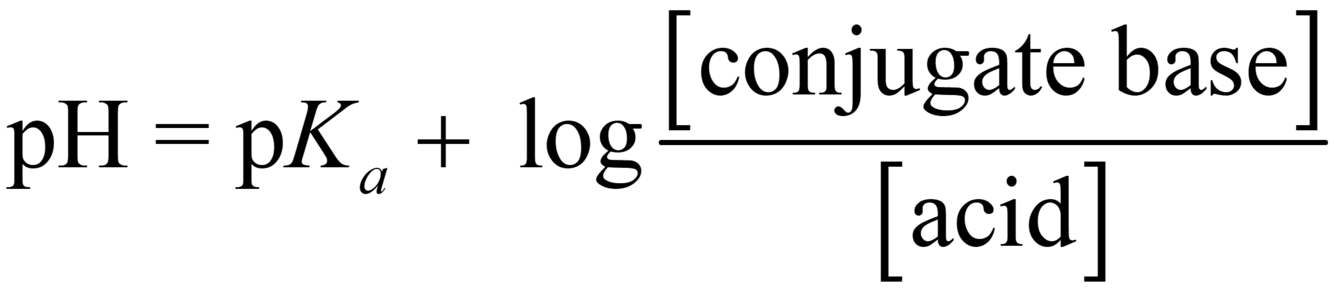
Henderson-Hasselbach equation
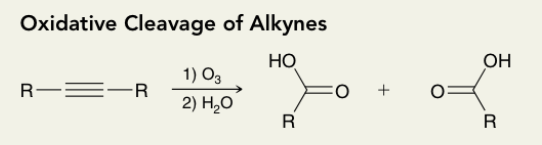
Preparing a carboxylic acid from an alkyne
Reagents • O3 • H2O
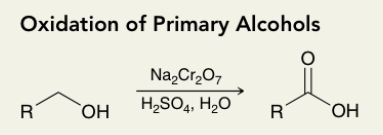
Preparing a carboxylic acid from a primary alcohol
Reagents Na2Cr2O7 (sodium dichromate) & H2SO4/H2O or xs CrO3 (chromium trioxide) & H3O+/acetone
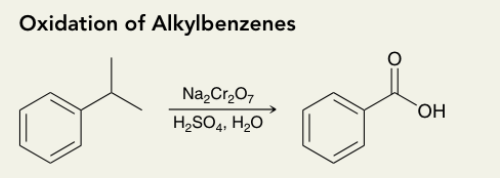
Preparing a carboxylic acid from an alkylbenzene
Reagents Na2Cr2O7 (sodium dichromate) & H2SO4/H2O
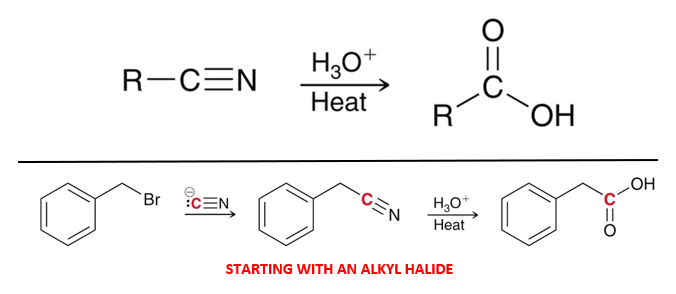
Preparing a carboxylic acid from a nitrile
Reagents H3O+ & heat
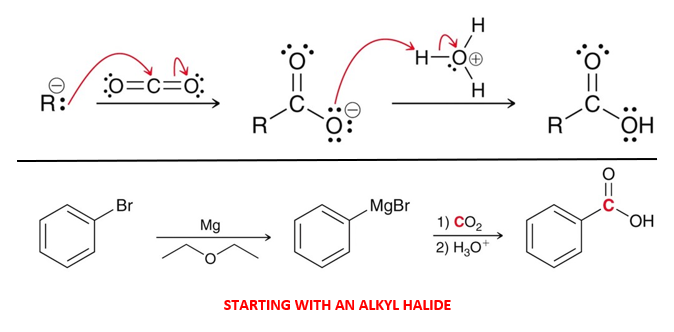
Preparing a carboxylic acid from a Grignard reagent
Reagents • Mg Followed by • CO2 • H3O+ Mechanism Replaces the leaving MgX group withe the carboxyl group; resulting in the addition of one carbon atom
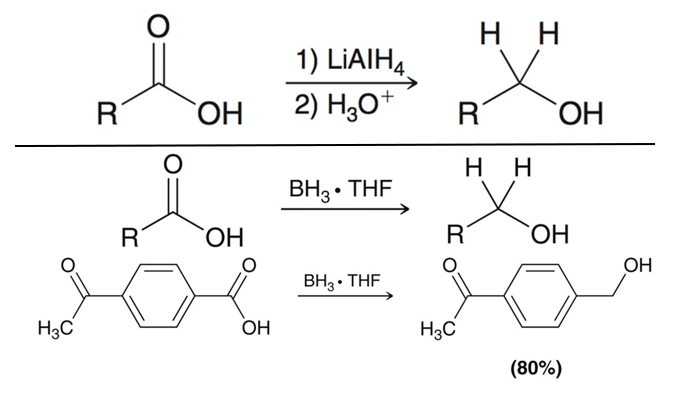
Reduction of carboxylic acids
Reagents • LiAlH4 • H3O+ or BH3 (borane) & THF Mechanism Borane is chemoselective and only reduces carboxyl groups in the presence of other carbonyl groups
What is a heteroatom
Any atom that is not carbon or hydrogen
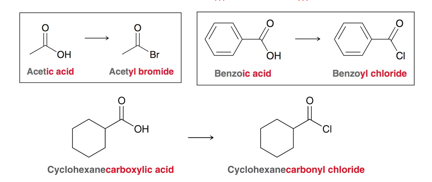
Naming acid halides
Replace “ic acid” with suffix −yl halide
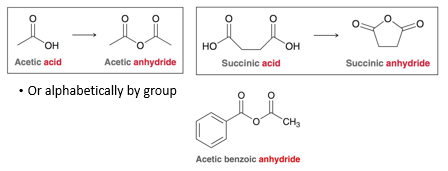
Naming acid anhydrides
Replace “acid” with suffix −anhydride If molecule is asymmetrical then the compound is called −oic −oic anhydride
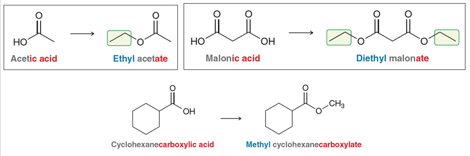
Naming esters
• Add name of the oxygen R −yl group before the parent chain −ate • Replace “ic acid” with suffix −ate
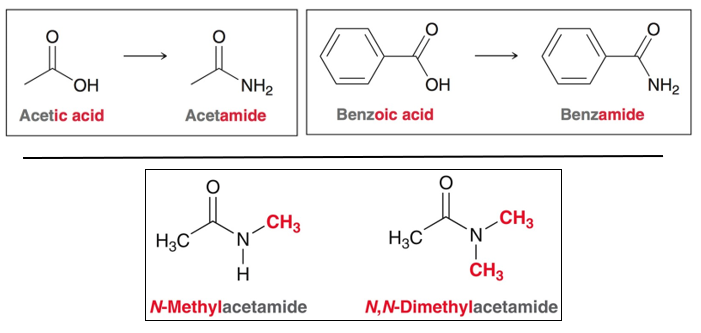
Naming amides
• Replace “ic acid” with suffix −amide • If the nitrogen has substituents, then name them with locant “N”
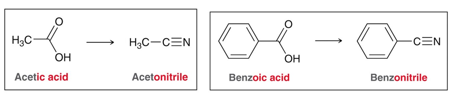
Naming nitriles
Replace “ic acid” with suffix −nitrile
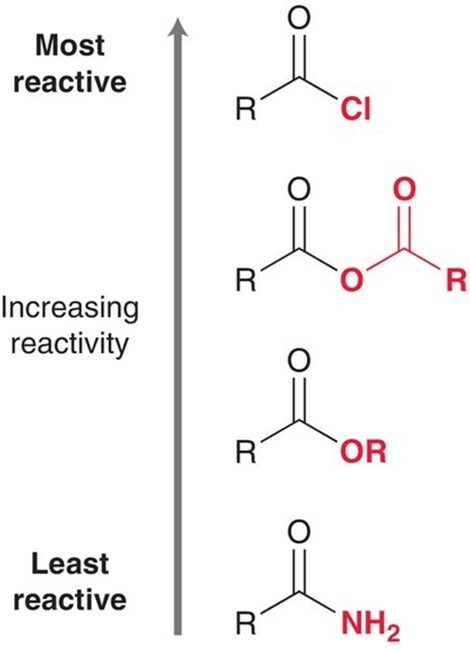
Reactivity of carboxylic acid derivatives
Carboxylic acid derivatives are electrophilic at the carbonyl carbon Acid chlorides are the most reactive derivatives Amides are the least reactive derivatives
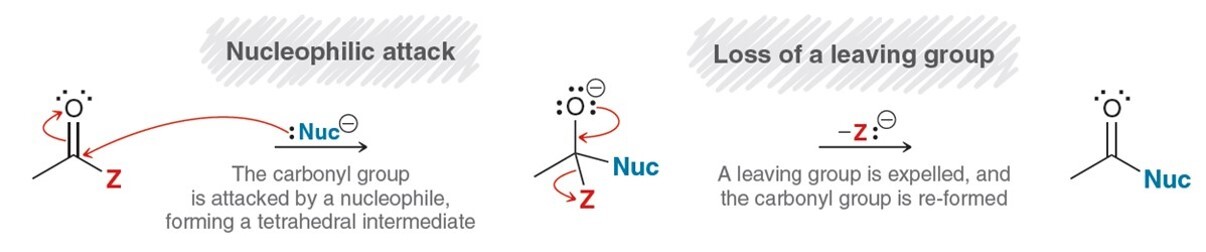
Nucleophilic acyl substitution Basic reaction mechanism
Can occur under acidic or basic conditions Mechanism A nucleophile attacks a carbonyl carbon and forms a tetrahedral intermediate, the carbonyl can then be reformed by the expulsion of the best leaving group C− and H− are generally not expelled as leaving groups