chap 4 HW
No description yet. This curated deck is ready for daily study.
Card preview (13)
what should you watch out for
.always diatomic’s/multiple of same element in compound share charge that adds up .when giving witch reduced and which oxidized give the element chosen in it’s monatomic form .and don’t include coefficient when trying to work out how charge is shared
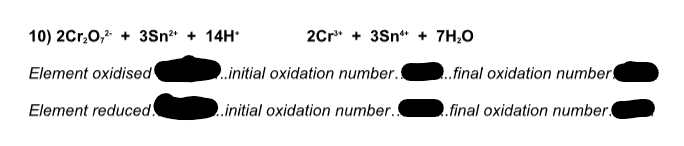
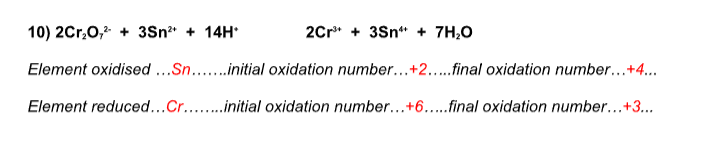
oxidising agent
A chemical species that gains electrons and is reduced in a chemical reaction, (electron acceptor)
redox reaction
oxidation and reduction in the same reaction (check if it ask’s for refrence of oxidation number’s
state an observation for reaction of Ba and water
effervescence
Ba + H2O
Ba(OH)2. balance ( Ba + 2H2O —> Ba(OH)2 + H2 )
ionic equation
.exclude spectator ions , (check for Q asking for ‘state symbols’) e.g Ba(aq)^2+ + SO4(aq)^2- arrow > BaSO4(s)
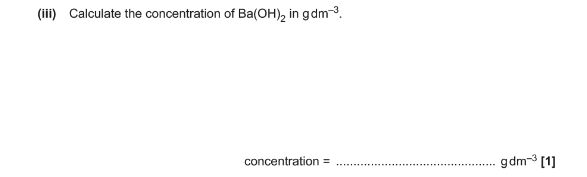
c = 0.0566
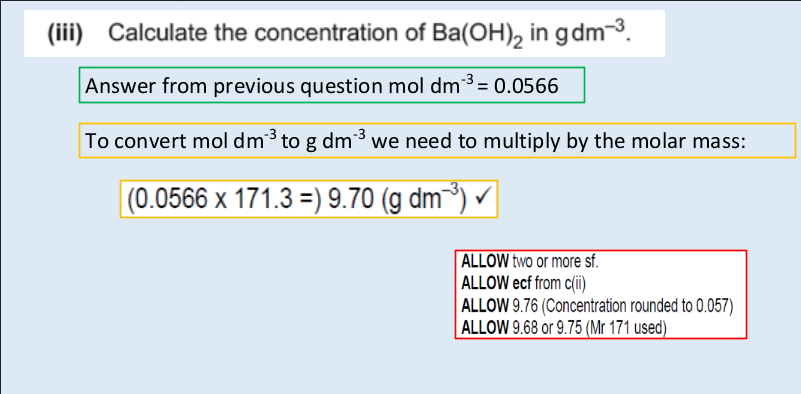


what would you do if you vol is 25cm^3

I would work out moles and * it by the up-scaled volume
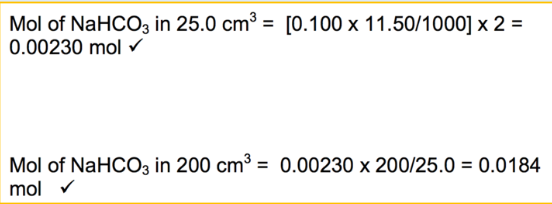
what is the titre
the amount or volume of the solution used to reach the endpoint of a titration. (the concentration of the reactant that where trying to figure out). (the one after the molar ratio)
once you work out the moles with the titre, what do you do?
you can do: n * ((diluted v)/(pure v)) = c of pure/original
Predicting Precipitation Reactions
Use the solubility rules to predict whether a reaction will produce a precipitate. If you mix two solutions containing ions that can form an insoluble salt, a precipitation reaction may occur. Look for combinations of cations and anions that can form insoluble salts based on the solubility rules.