C11- Polymers
No description yet. This curated deck is ready for daily study.
Card preview (19)
Monomers? Polymers?
Small molecules used to create polymers Huge molecules made up of monomers
Naming polymers Ethene monomers create the polymer…? Propene monomers create the polymer…?
poly(ethene) poly(propene)
How are polymers created? (addition) hint: bonds? made up of? length?
Alkene molecules join together, the double covalent bond between C atoms opens up. Repeat units (monomers) join together with no fixed length
Addition polymerisation
The joining of alkene monomers to form an addition polymer
What can polymers be used for?
Plastics, clothing fibres
Chemical equation for addition polymerisation
n ethene –> section of polymer in brackets w bonds through brackets n
2 Differences between addition and condensation polymerisation?
Addition polymerisation: produces only an addition polymer; same alkene Condensation polymerisation: produces a polymer and a small molecule given off; two dif monomers used
How are polymers created? (condensation) hint: monomers? functional group? forms?
Uses two different monomers with certain functional groups at each end. The functional groups at each end react together to form a small molecule. Creating long polymer chains.
Condensation polymerisation
The joining of different monomers to form a condensation polymer and a small molecule
How to make a polyester Word equation of forming a specific polyester?
Alcohol monomer (a diol) (-OH) and carboxylic acid monomer (a dicarboxylic acid) (-COOH) Ethanediol + hexanedioic –> polyester + water
Repeating unit of a condensation polymer
Smallest part of the chain that can be drawn over and over to form the polymer chain
What are the monomers that make.. polysaccharide? enzyme? protein? polynucleotide? polyester?
glucose amino acids amino acids nucleotide diol and carboxylic acid
What 2 equations do glucose monomers make? What equation does amino acid monomers make?
glucose monomers–> starch polymers + water glucose monomers–> cellulose polymers + water amino acid monomers–> protein polymers + water
Amino acids functional group? What are they? General formula for glycine?
2 functional groups 1. amine group NH2 2. carboxylic acid group COOH H2N CH2 COOH
How are polypeptides and proteins formed? Formula?
The joining of amino acids during condensation polymerisation n H2N CH2 COOH—> -(HN CH2 CO)-n + nH2O
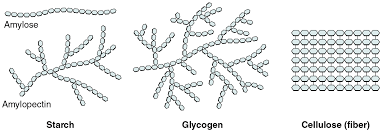
Difference between starch and cellulose? Which has the stronger intermolecular forces and why?
Starch has a branched structure, cellulose forms straight chains, lined up side by side Cellulose polymers as they have larger contact areas
What is DNA simply?
Large molecule essential for life, codes genetic instructions
How is DNA formed? What are the products?
The condensation polymerisation of nucleotide monomers. Produces DNA and water
Structure of DNA How are the chains linked together?
Two polymer chains, made of four different monomers (nucleotides). Creates a double helix. Intermolecular forces between polymer chains