Chapter 22 Enthalpy And Entropy
No description yet. This curated deck is ready for daily study.
Card preview (24)
What is entropy (S) ?
• Entropy is a measure of the dispersal of energy in a system, which increases as the system is more disordered • /\ S represents the change In entropy in J K -1 mol -1.
What physical states have the most entropy ?
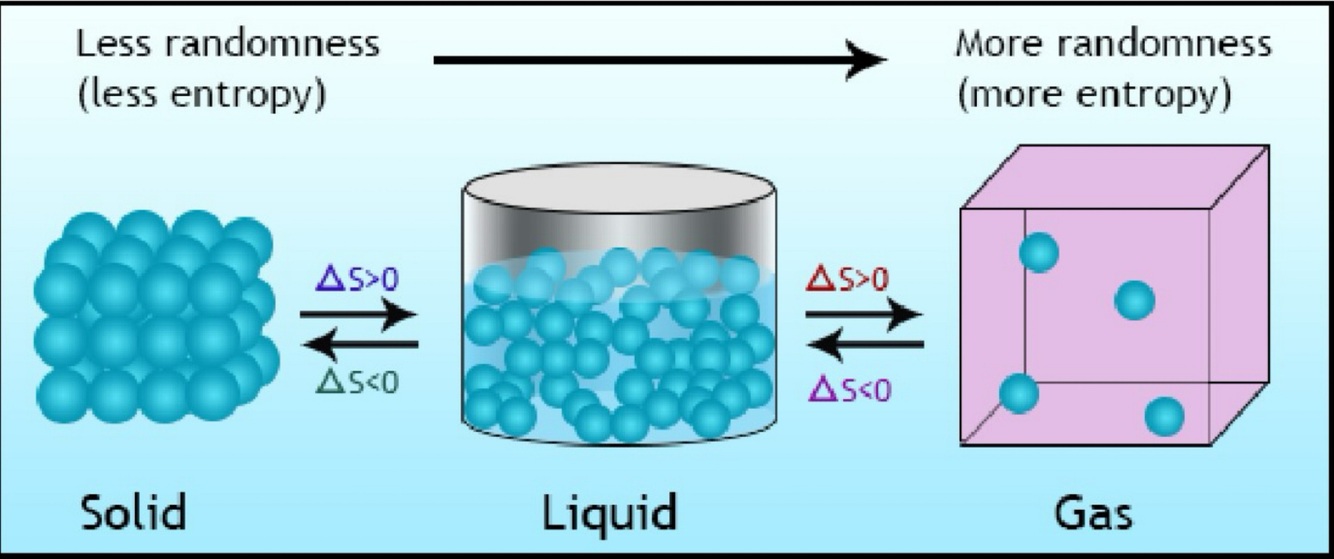
Why is entropy always positive ?
• At 0 K there is no energy in a system so Entropy = 0 • All systems above 0K have Entropy > 0
How do you predict entropy change ?
• Entropy increases during changes of state that give MORE random arrangements of particles
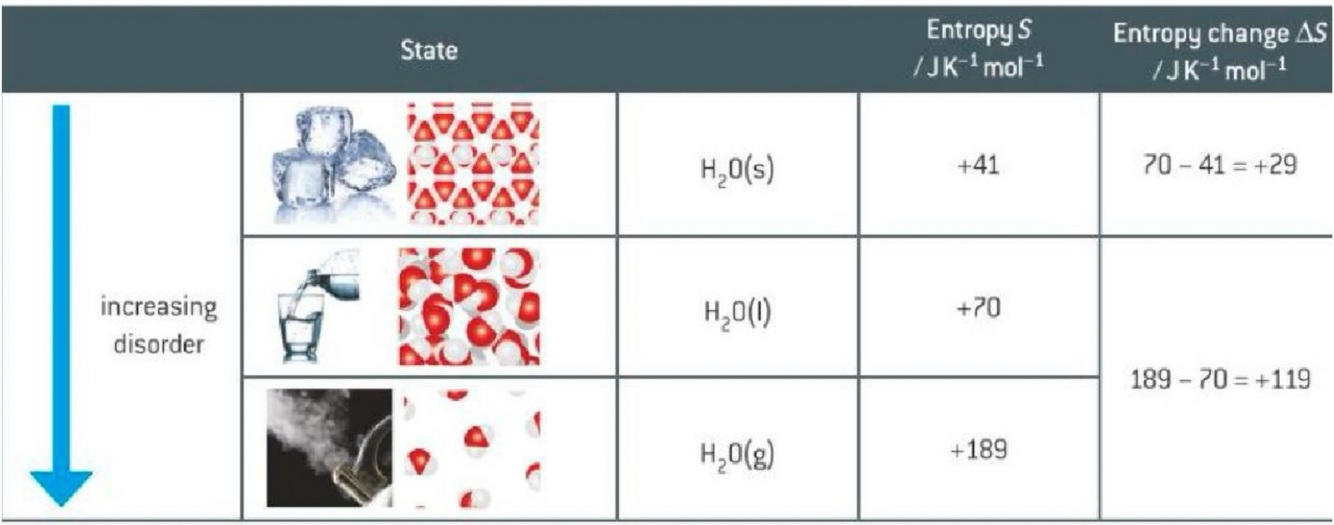
What is standard Entropy ?
• Standard Entropy is the entropy, of one mole of a substance under standard conditions

What is lattice enthalpy ?
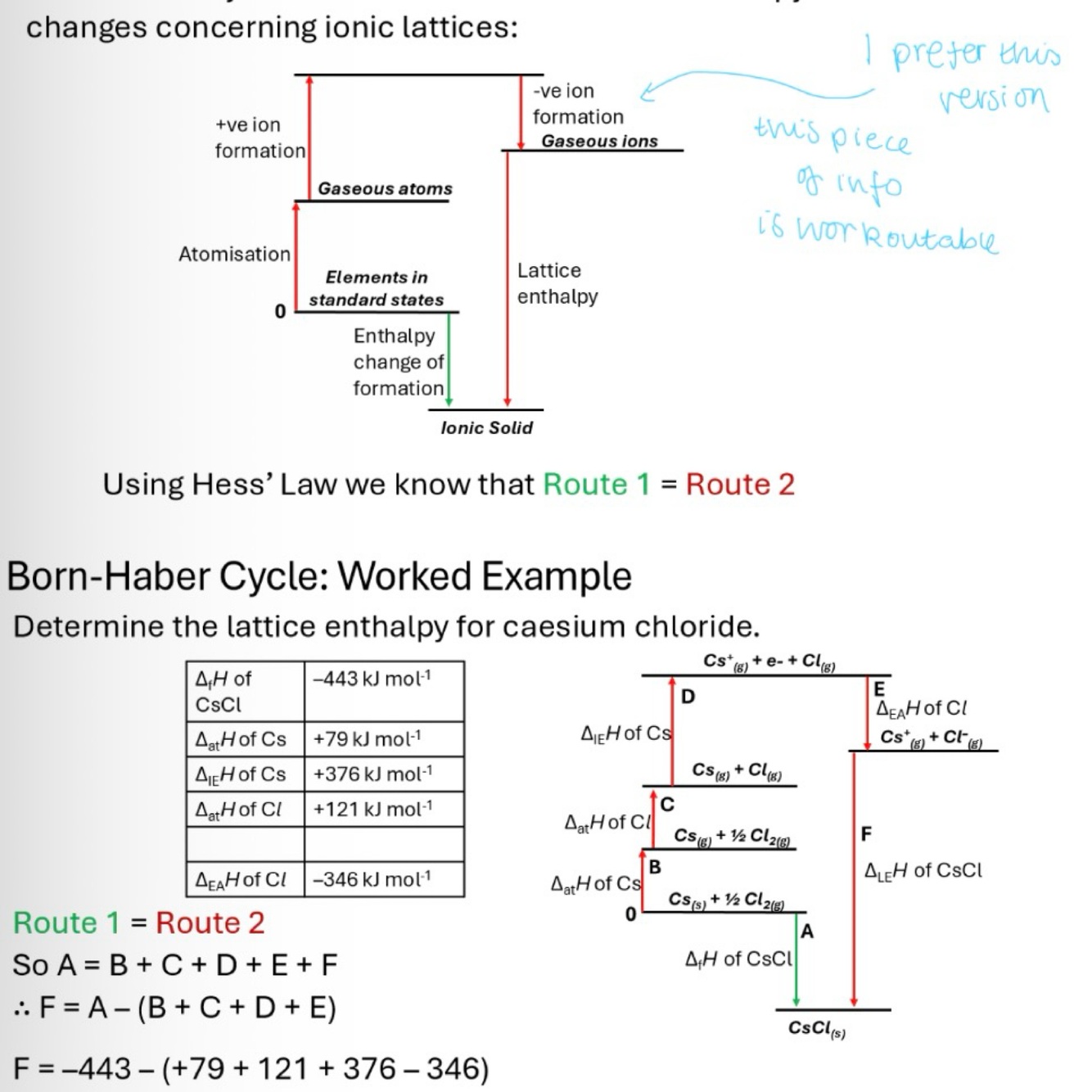
• Lattice enthalpy (/\ LE H) is the enthalpy change due to the formation of 1 mole of ionic lattice from gaseous ions (under standard conditions) • ALWAYS EXOTHERMIC

What is standard enthalpy change of formation ?
Standard enthalpy change of formation (/\ f H) is the enthalpy change due to one mole of a substance forming from its constituent elements under standard conditions

What is latice enthalpy ?
• lattice enthalpy - a measure of the strength of ionic bonding in a giant ionic lattice • lattice enthalpy - the enthalpy change due to the formation of 1 mole of ionic lattice from gaseous ions (under standard conditions) • it is always exothermic
What is the standard enthalpy change of formation ?
• the enthalpy change due to 1 mole of a compound forming from its constituent elements under standard conditions
What is the standard enthalpy change of atomisation ?
• the enthalpy change by forming 1 mole of gaseous atoms from the element in its standard state under standard conditions • always endothermic (bond breaking) • if the element is a gas - the value is related to bond enthalpy
What is electron affinity ?
• it is the opposite of ionisation energy • it measures the energy required to gain electrons
What is the first electron affinity ?
• the enthalpy change when an electron is added to each atom in 1 mole of gaseous atoms to form 1 mole of -1 gaseous ions • always negative (exothermic)
How to determine lattice enthalpy ?
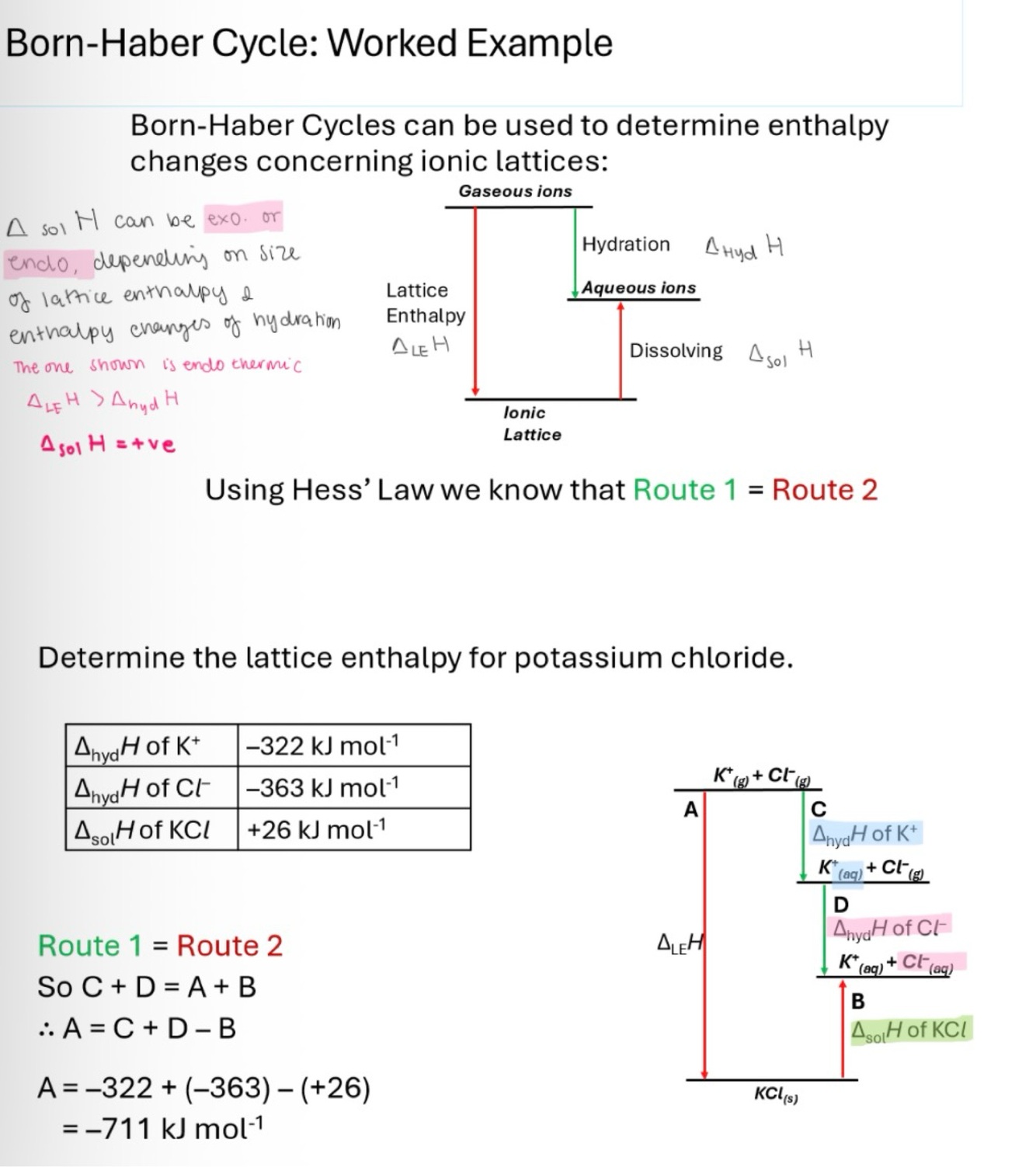
• lattice enthalpy cannot be measured directly, must be calculated indirectly using known energy changes in Born-Hager cycles
Born-Haber cycle worked example
What are the factors which affect lattice enthalpy ?
• as ionic radius increases the lattice enthalpy becomes less negative as the attraction between ions will decrease • as ionic charge increases, lattice enthalpy becomes more negative as the attraction between ions will increase
What is the enthalpy change of solution ?
• standard enthalpy change of solution - the enthalpy change due to 1 mole of a solute dissolving in a solvent • can be endo or eco thermic
What is the enthalpy change of hydration ?
The enthalpy change due to dissolving gaseous ions in water to form 1 mole of aqueous ions

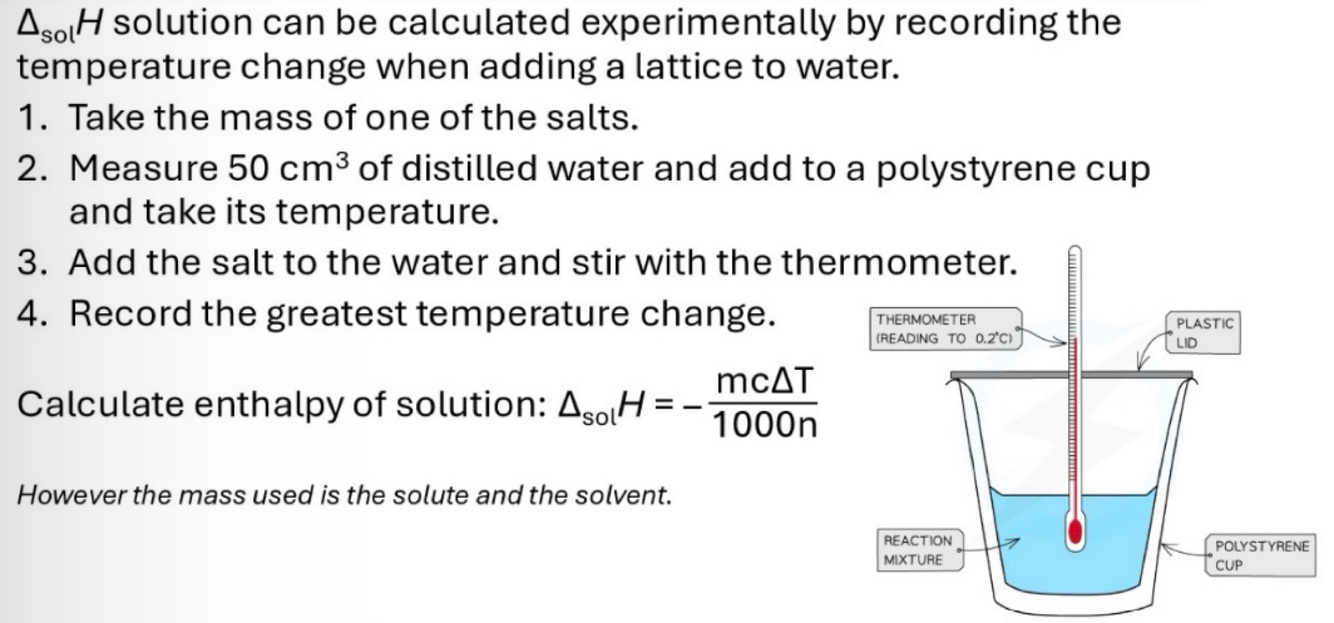
How to calculate enthalpy change of solution experimentally ?
Born Haber cycle example hydration ?
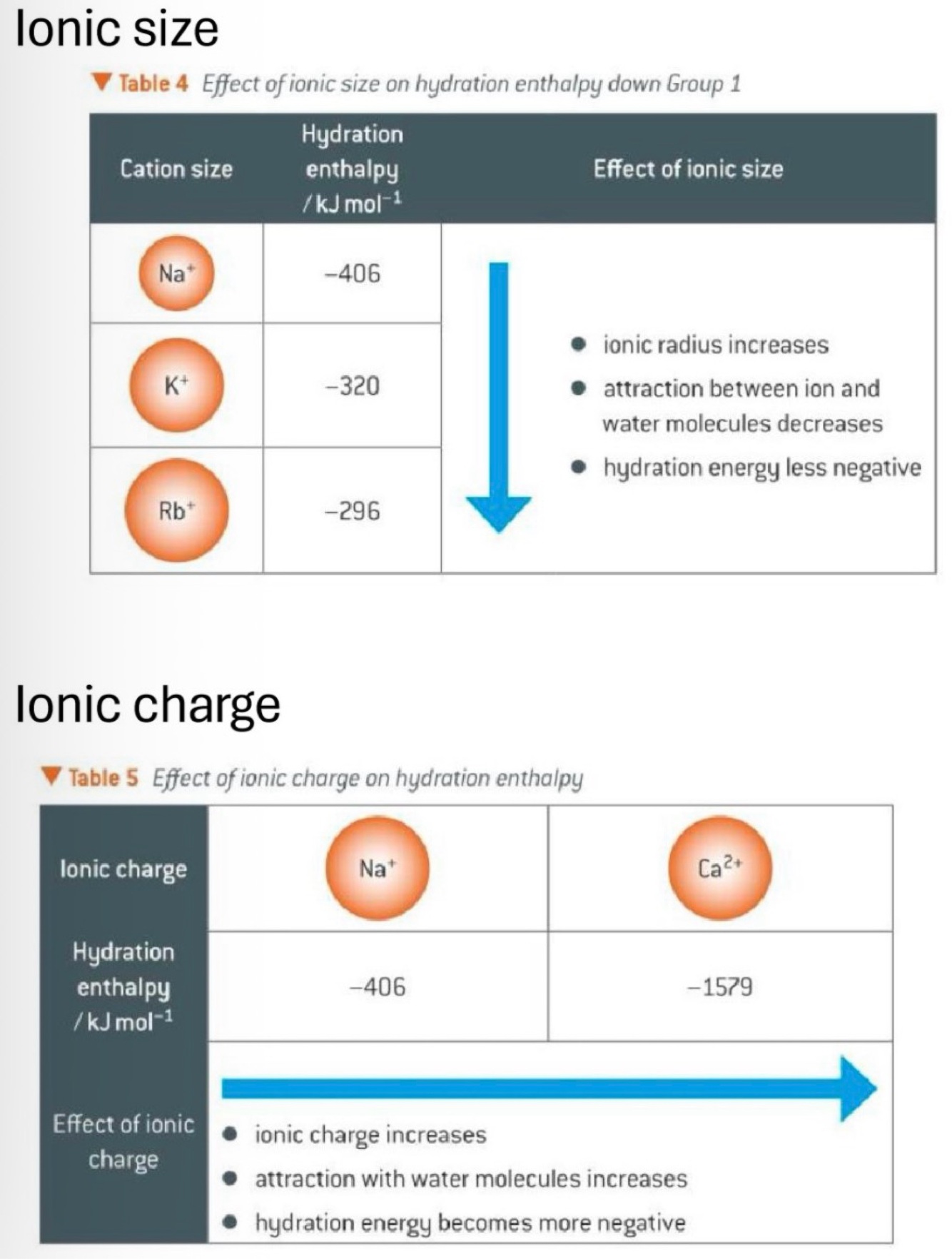
What are the factors which affect the enthalpy change of hydration ?
• as ionic radius increases the hydration enthalpy becomes less negative as the attraction between ion and water decreases • as ionic charge increases the hydration enthalpy becomes more negative as the attraction between ion and water increases • if the hydration enthalpy is greater than the lattice enthalpy dissolving is likely if enthalpy change of solution is negative
What is the feasibility of a reaction ?
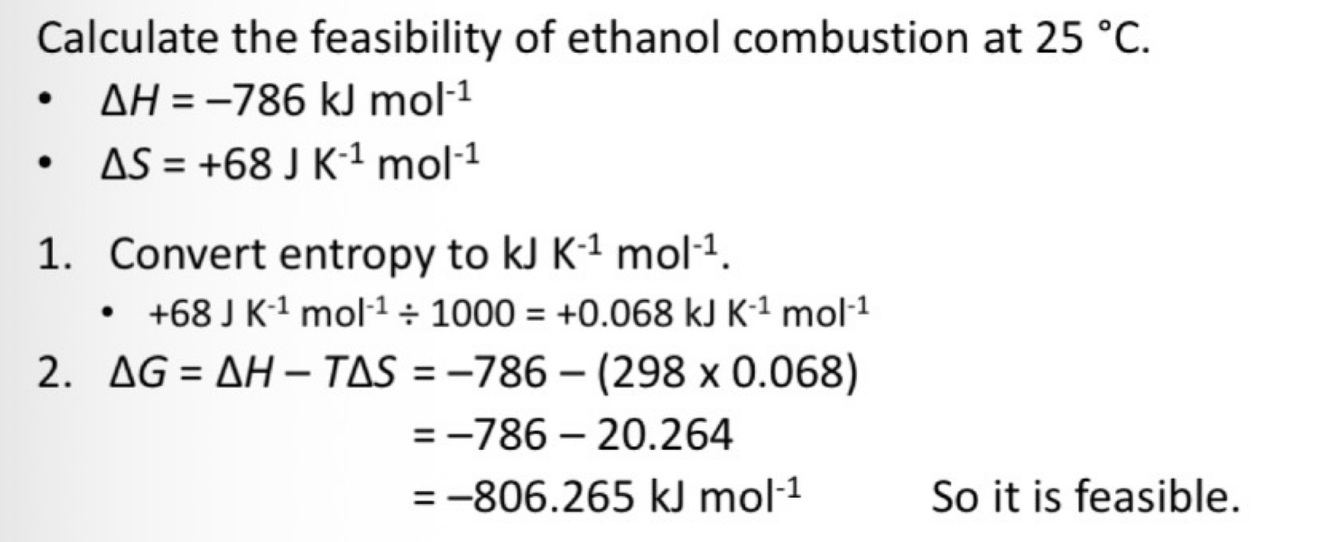
The feasability of a reaction is used to describe if a reaction will be able to happen and is energetically feasible/spontaneous
What is the free energy change (delta G change) ?
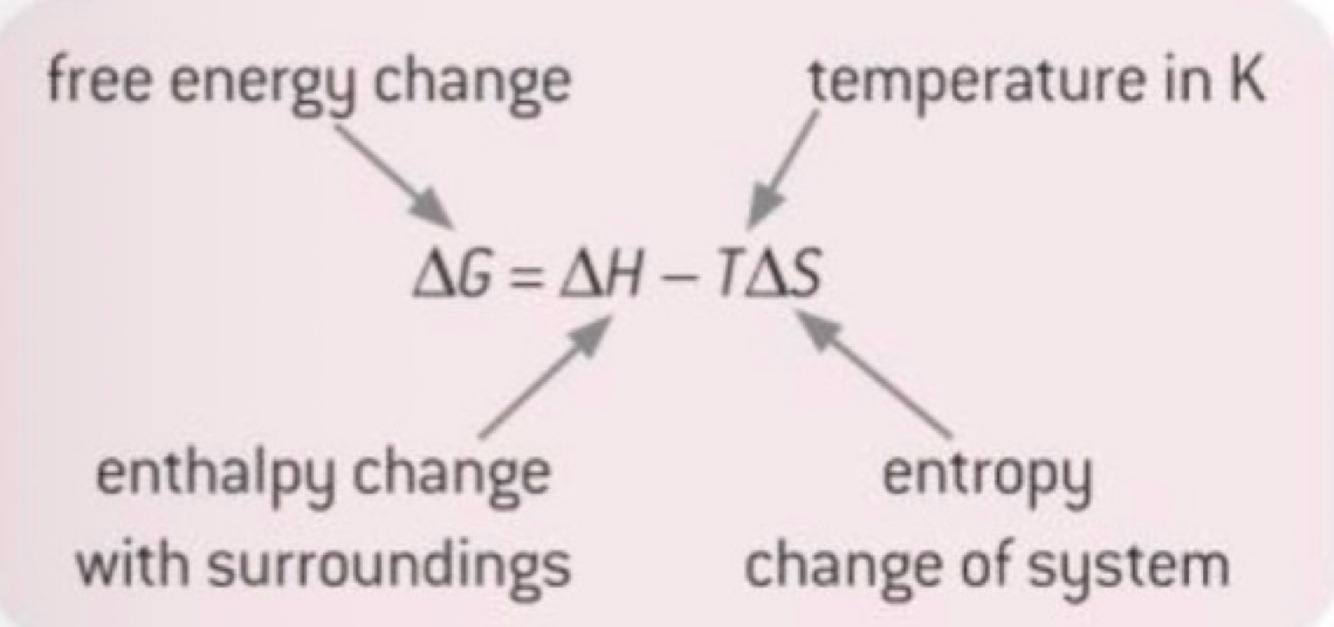
The free energy during a reaction is the overall energy change caused by the: 1. Heat transfer between the system and surroundings (delta H, enthalpy change) 2. Dispersal of energy within the system at the temperature of the reaction (TdeltaS, entropy change at the temperature of the reaction)
What is Gibbs free energy Equation ?
• The Gibbs equation - change in free energy = change in enthalpy - change in entropy • a reaction is feasible when change in free energy is negative.
Feasibility calculation example ?