Module 3: Chemical Reactions
No description yet. This curated deck is ready for daily study.
Card preview (24)
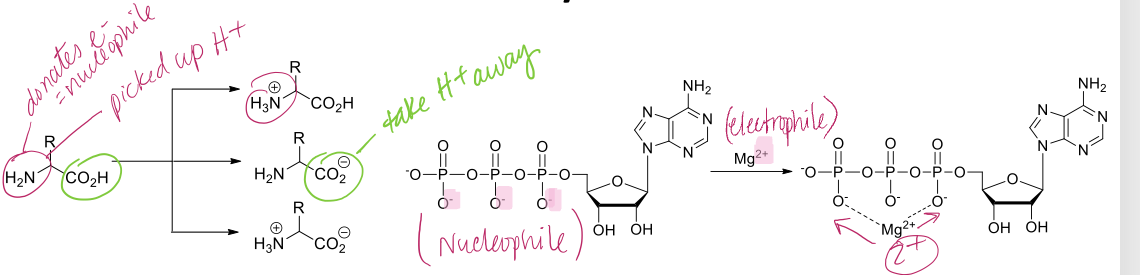
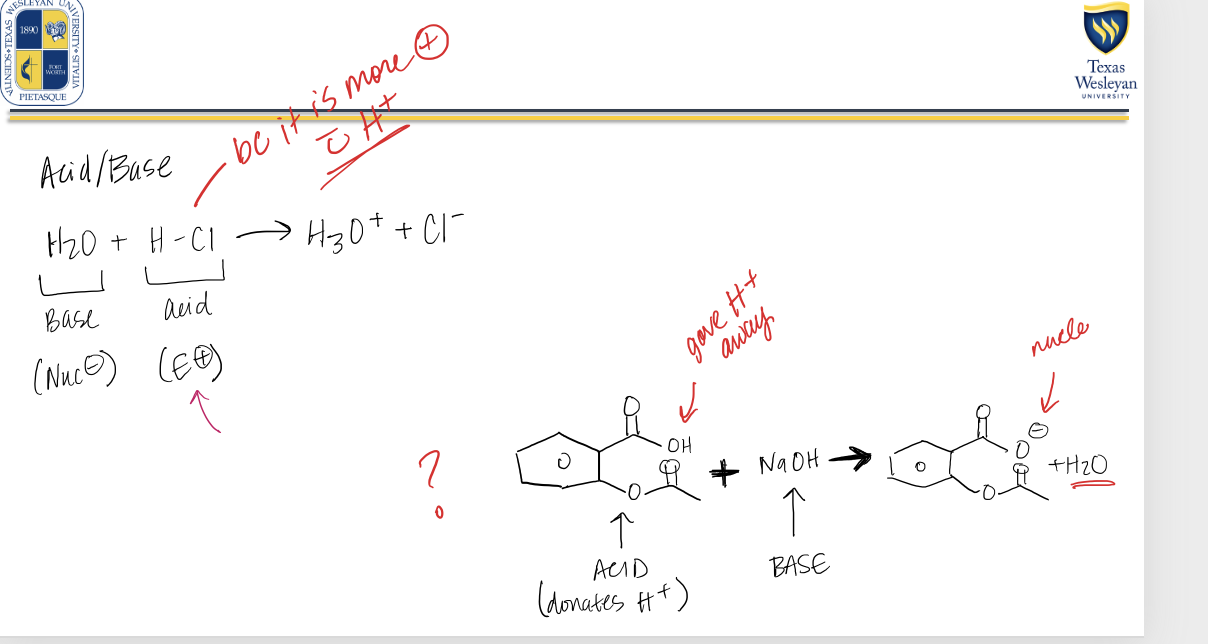
Acid/Base Reaction
• transfer of protons from one species to another • most common • change in charge (either charges to neutral or neutral to charged)
Substitution Reaction
switching one group for another *usually see swinging arrow into and out of reaction Types: Nucleophilic, aromatic, acyl
Nucleophilic Substitution
addition of a nucleophile to an electrophile

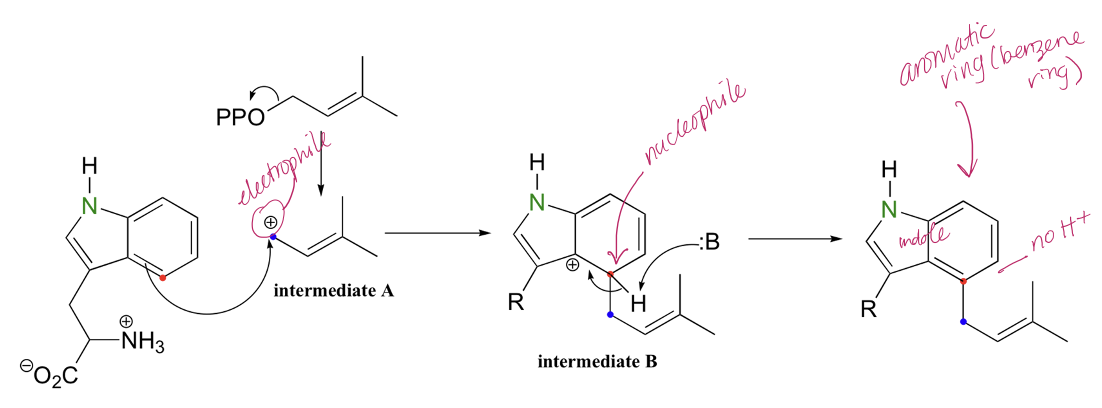
Aromatic Substitution
sub of a Hydrogen on an aromatic ring with another group (NOT Oxygen or nitrogen <- then it would be considered REDOX)
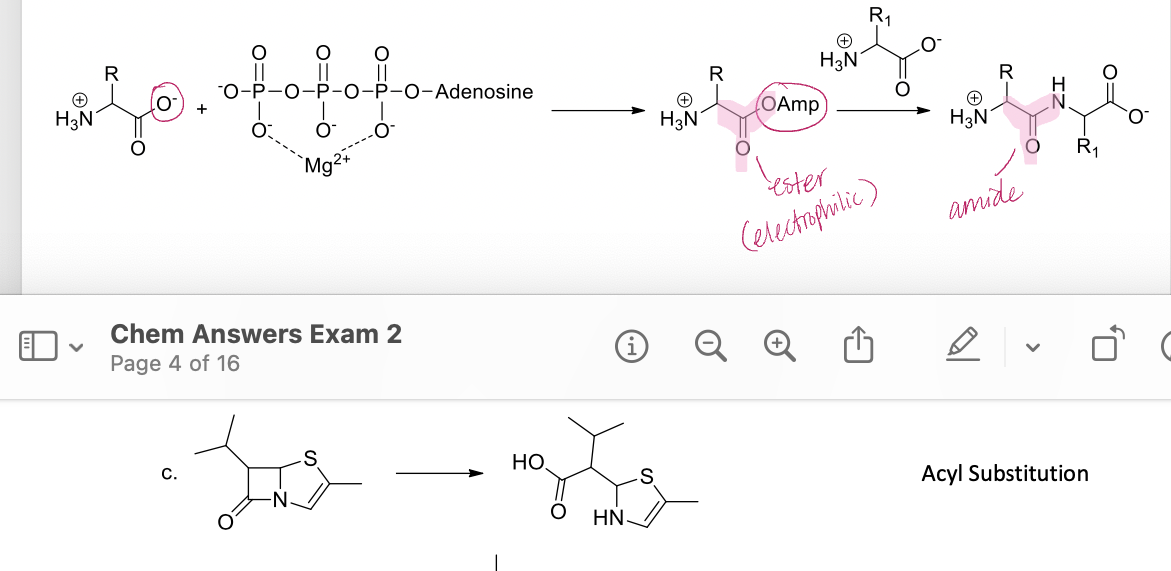
Acyl Substitution
addition of a nucleophile to a carbonyl group (esters, amides, carboxylic acids) or sulfonate group or phosphate group.
Nucleophile
• electron rich (provide e- to create new bonds) • Nucleus loving <3 • anions (look for neg charge), heteroatoms w/ lone pair, alkenes, alkynes
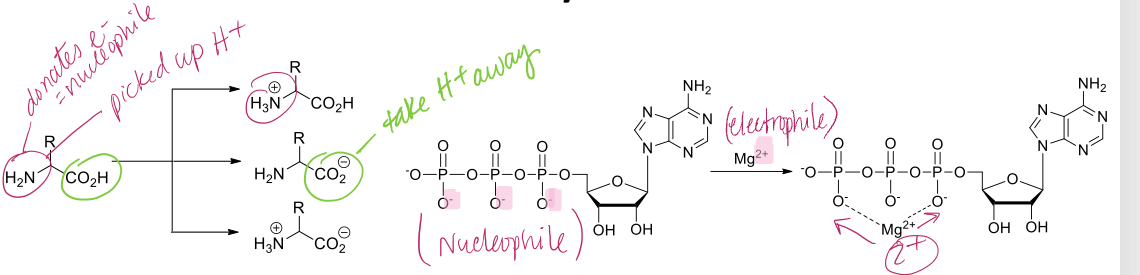
Electrophile
• electron poor species • electron loving <3 (carbocations, carbonyl group, alkenes, alkynes) *Hydrogen can never be the electrophile.
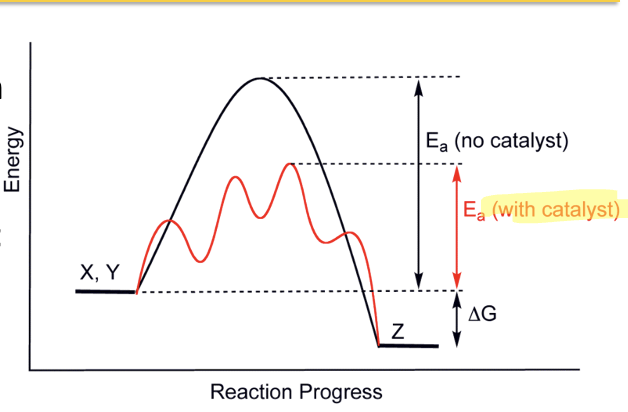
Catalyst
• help increase the rate at which the reaction occurs All biochem reactions utilize enzymes and cofactors as catalysts
Catalysis
• increase reaction rate • takes alternate pathway • Catalysts do NOT appear in product • Catalysts are NOT consumed (recycled for something else) - if they were, we would burn too much energy. notice 4 distinct steps (humps) Krebs cycle - glycolysis
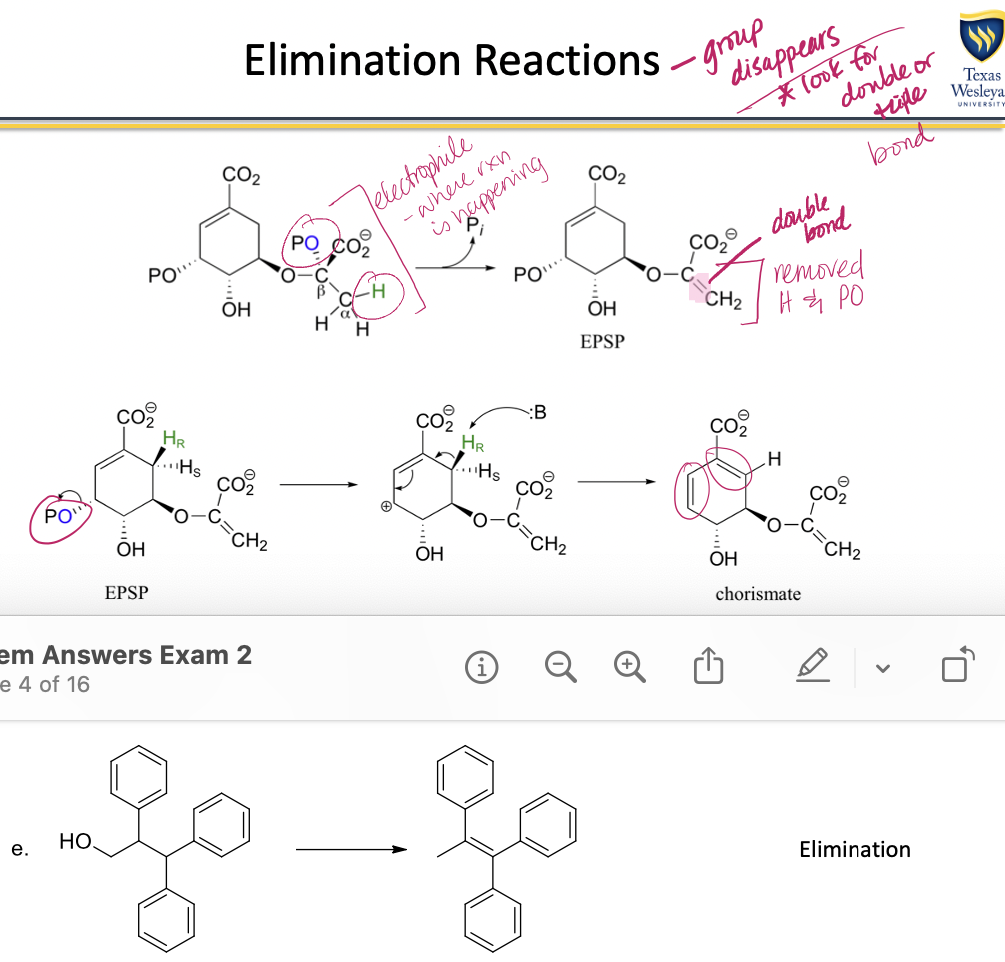
Elimination Reaction
• removing a group completely from the molecule look for a double or triple bonds created!!! *usually an arrow going away from reaction
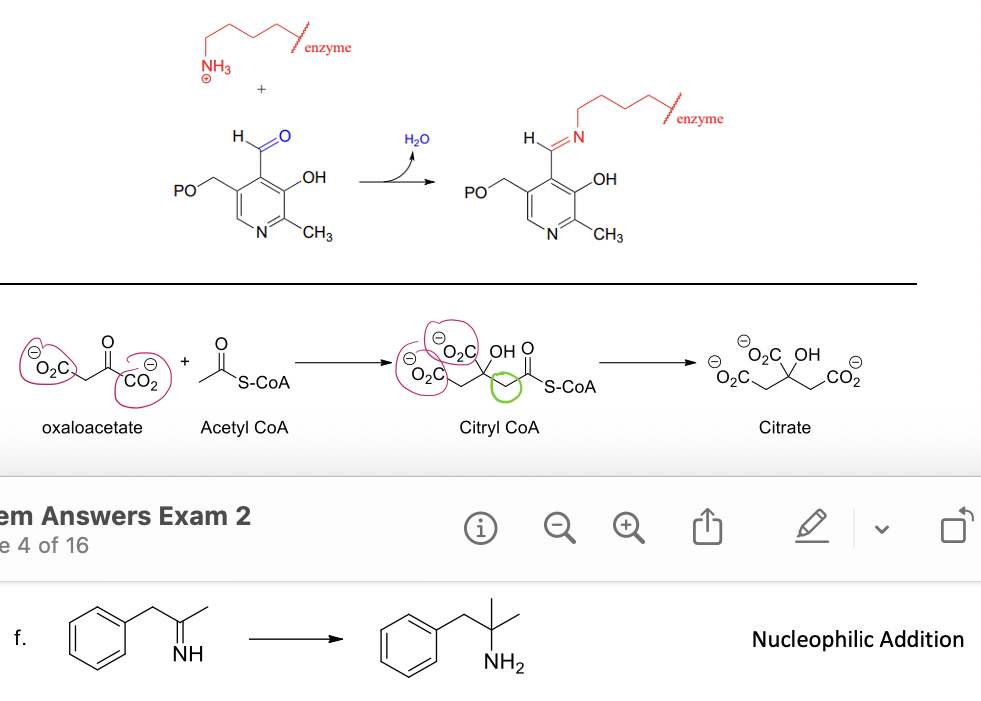
Addition Reaction
• adding a group to a molecule (usually start with a ketone or aldehyde) *usually arrow coming into reaction
REDOX Reactions
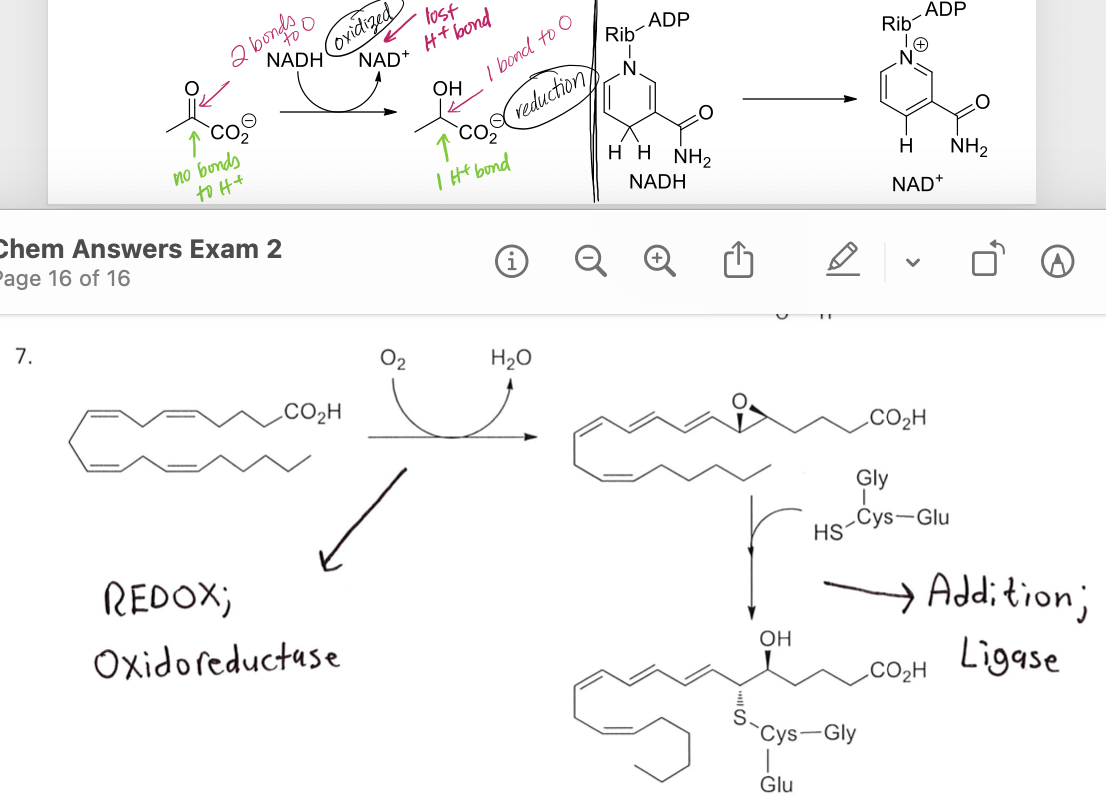
changing the oxidation state of a group on a molecule 1. Oxidation - increase bonds to O or N, or decrease in bonds to H 2. Reduction - decrease in bonds to O or N, or increase in bonds to H *usually see a half circle arrow swinging through reaction (NAD+ to NADH, etc)
Isomerization Reaction
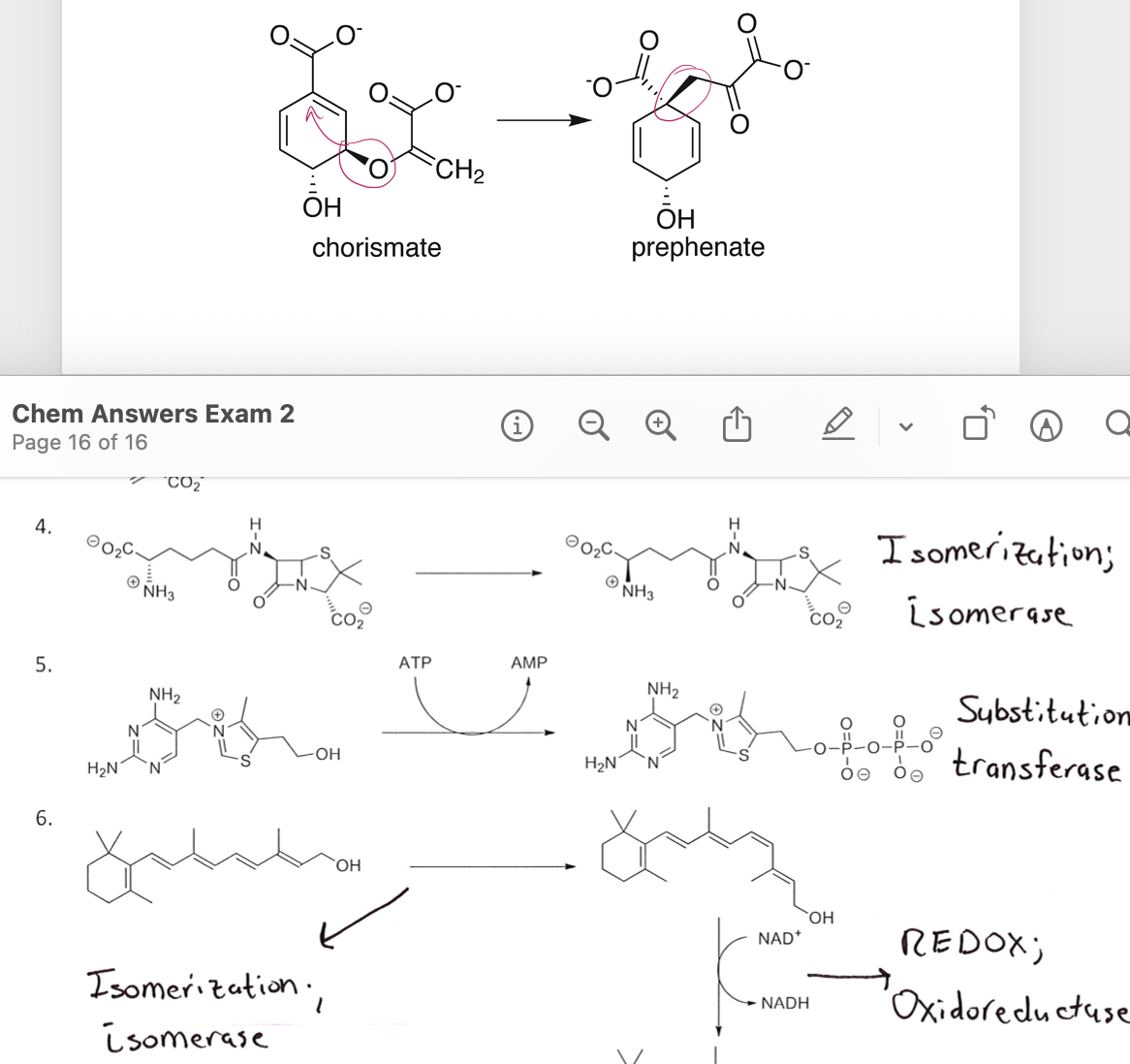
• rearrangement of groups within the same molecule • Least common
Enzymes
• globular proteins end in -ase. • main catalysts used in reactions *helps decrease activation energy required for a chemical reaction - makes Delta G negative (Exothermic)
How are enzymes classified?
• Efficiency (natural better than chemical/lab catalysts) • Specificity • Regulation
What is Delta G?
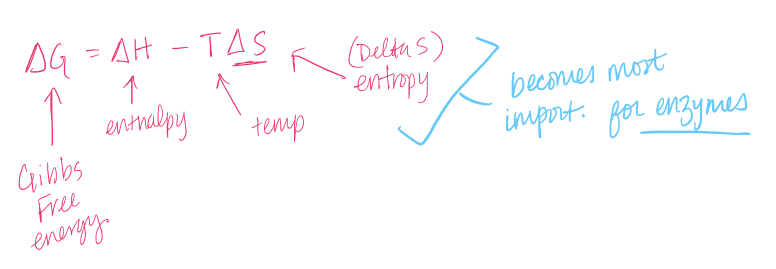
• Gibbs Free energy - want to be negative • a measure of whether or not a chemical process will or will not work. • based on Delta H (enthalpy) and Delta S (entropy) and temperature
Delta H
Enthalpy - measure of energy difference btwn products and reactants (endothermic & exothermic) We want exothermic - we want to produce energy *we do not want a system that requires energy.
Delta S
entropy = degree of disorder enzymes create more disorder via confirmational change - we want this!
Cofactors
• Non-protein component required to allow an enzyme to perform its role! - bind with enzyme *REDOX need a co-factor.
Types of Cofactors Inorganic
Mg, Zn, Cu, Fe, Mn, Ni, Mb (minerals)
Types of Cofactors Organic
vitamin derivitives (usually B vitamins)
Enzyme Classes
• Transferase (sub) • Hydrolase (sub - using water) • Oxidoreductase (redox) • Lyase (elimination) • Ligase (addition) • Isomerases (isomerization)
Transferase Enzyme
• Transfer functional groups • Substitution reactions (*acyl, nuclephilic, aromatic) *acyl usually uses hydrolase (look for use of H2O)
Hydrolase Enzyme
• breaks bonds using water!!! • usually substitution reactions (mostly acyl - ester to a carboxylic acid) *saponification (hydrolysis of fats)