4.1 Reactivity of Metals
No description yet. This curated deck is ready for daily study.
Card preview (10)
Write out a word equation for the reaction between metals and oxygen?
Metals + Oxygen -> Metal oxides
What is a redox reaction?
A reaction where both reduction and oxidation occur
What does OILRIG stand for?
Oxidation is loss of electrons Reduction is gain of electrons
When metals react with other substances what happens to metal atoms?
They form positive metal ions
What is reactivity of a metal related to?
Its tendency to form positive ions
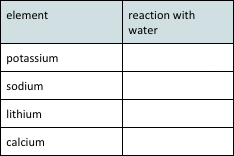
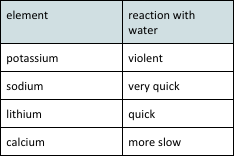
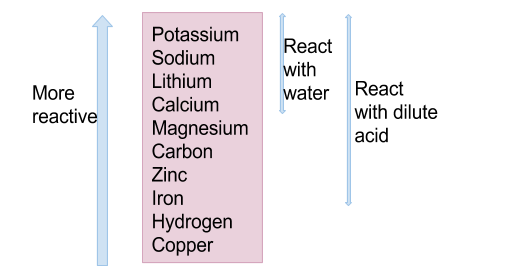
Fill out the table for reactions with water
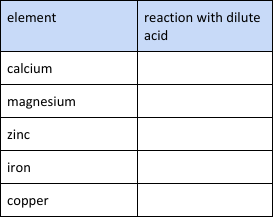
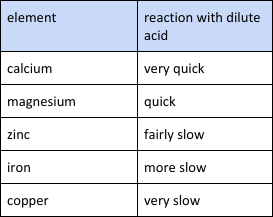
Fill out the table for reactions with dilute acid
What can be used to extract metals from their oxides?
Reactions with carbon Only for metals less reactive than carbon
What is the half equation for the oxidation of sodium?
Sodium is a group 1 element Therefore it loses 1 electron Na-> Na+ + e- or Na+ + e- -> Na Charges must add up to the same number
What has been reduced and oxidised in this reaction? 2Na + 2HCl -> 2NaCl + H2
Chlorine is group 7 and sodium is group 1 So we know chlorine must gain an electron and sodium must lose an electron OILRIG Oxidation is loss of electrons, sodium has lost electrons therefore has been oxidised Reduction is gain of electrons, chlorines has gained electrons therefore has been reduced