Spectroscopy, Analysis and Separation
No description yet. This curated deck is ready for daily study.
Card preview (13)
How can you determine what is the compound of an unknown substance?
• Infrared spectroscopy: organic structural determination, info on strength of bonds, info about secondary structure of proteins, measuring degree of unsaturation of oils & fats, & determining level of alcohol in breath • Mass spectrometry: organic structural determination, isotopic dating (e.g. C^14 dating) • NMR spectroscopy: organic structural determination, body scanning (MRI) • Chromatography: drug testing in blood & urine, food testing, & forensic science
What does mass spectrometry show us?
• show the fragments the molecule has broken down into • the overall Mr • Help to determine what structure i.e. propan-1-ol or propan-2-ol
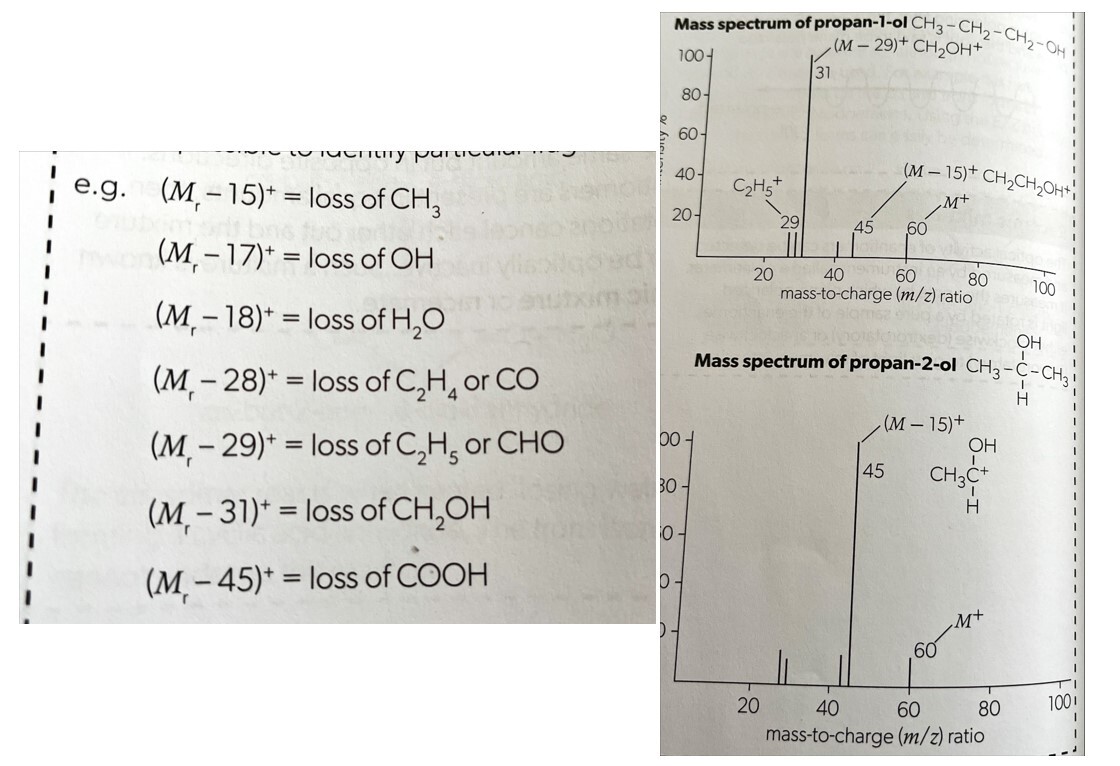
What is the parent ion on a mass spectrum?
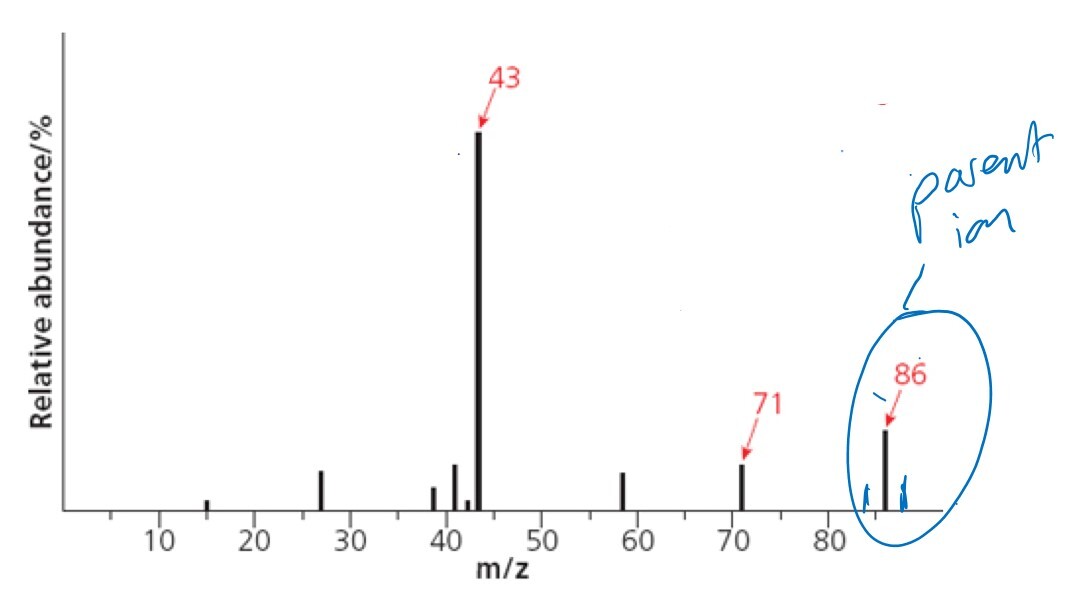
Why can there be multiple parent ions on a mass spectrum?
As there can be multiple combination composing of diff isotopes.
How does infra-red (IR) spectroscopy work?
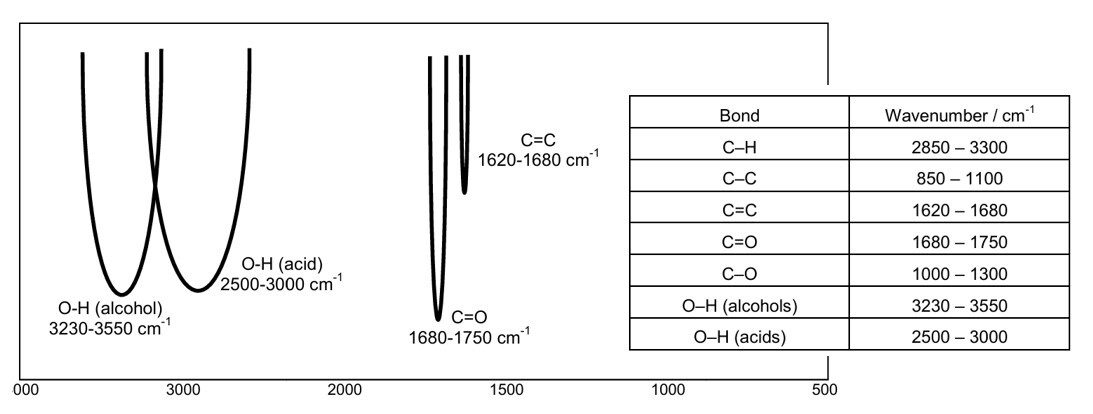
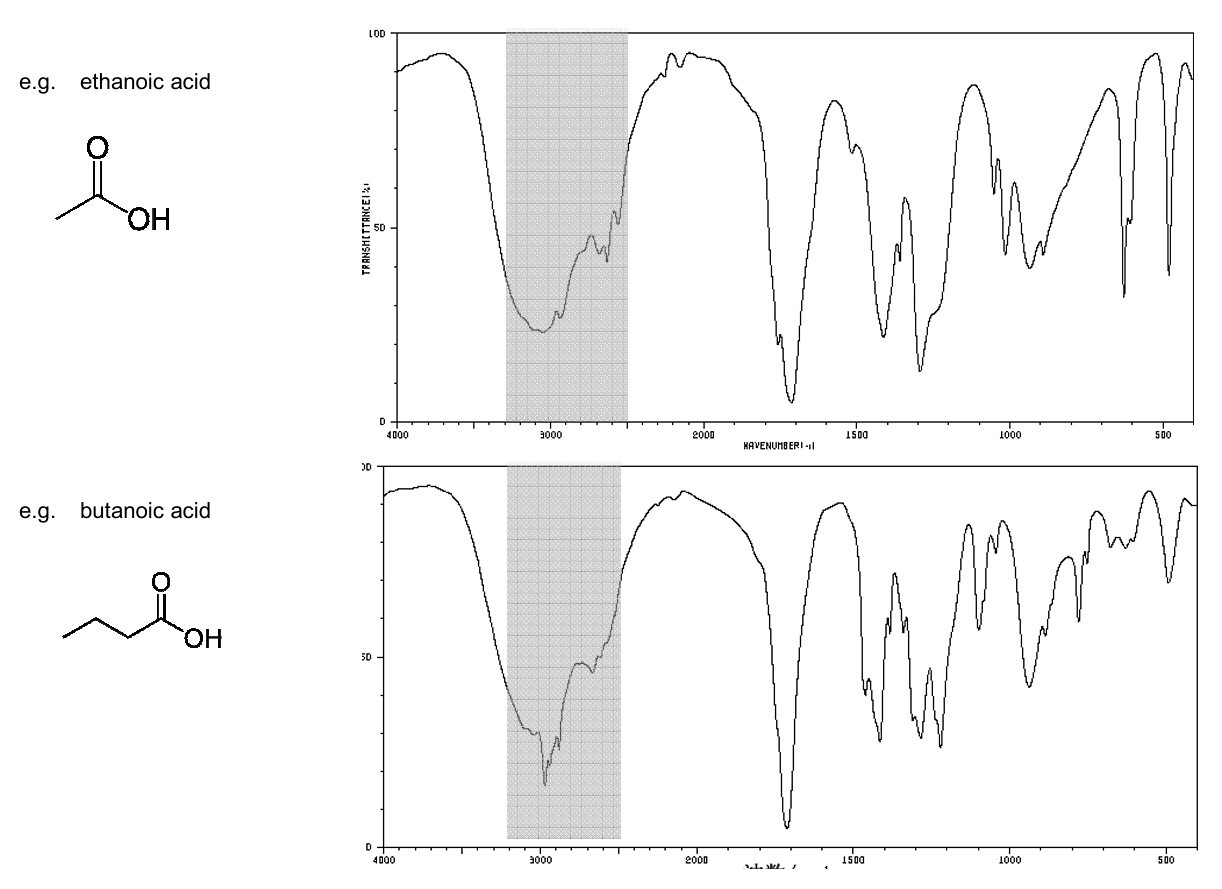
All bonds vibrate at a characteristic frequency (stretching & contracting as well as bending vibrations are commonest types). * Frequency depends on mass of atoms in bond, bond strength, & type * Frequencies at which they vibrate are in infra * If infra-red light is passed through compound, it will absorb some or all of light at frequencies at which its bonds vibrate. * Rather than using actual values of wavelength or frequency, IR light is measured in wavenumbers [1/frequency (in cm)] bc it gives convenient numbers in the range 4000 * 2 main things you need to be able to do with infra: 1) use “fingerprint” region (below 1500 cm^-1) 2) identify functional group signals (above 1500 cm^-1)
What is fingerprint region of IR spectroscopy?
• It is more complicated & contains many signals, making picking out functional group signals difficult. • It is unique for every compound, & so = “fingerprint”. Comparison of spectrum to that of known compounds can identify it. • It can also be used to check if a compound is pure. If a comparison of a sample is made to spectrum of pure compound, they should be identical. If there are any extra peaks, they must be due to impurity
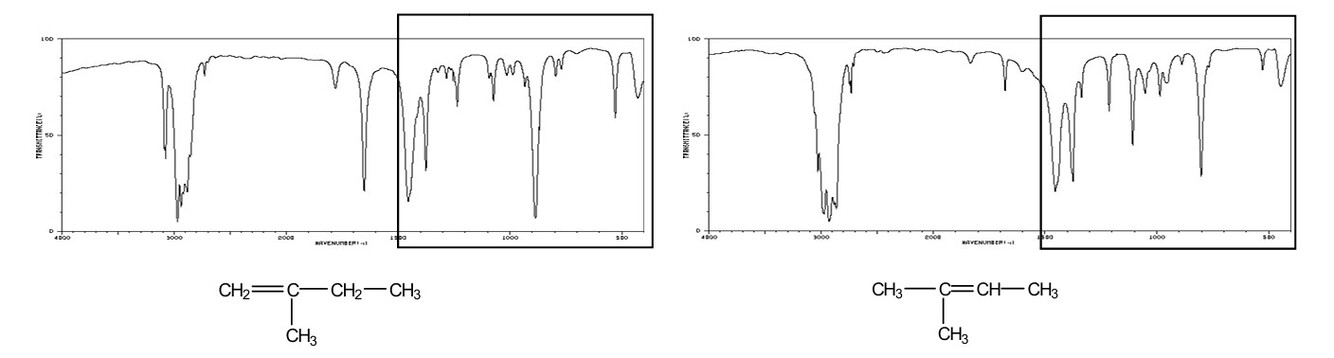
What is the none fingerprint region of IR spec used for?
• To identify functional groups in the compound • Also if there is double or single carbon bond
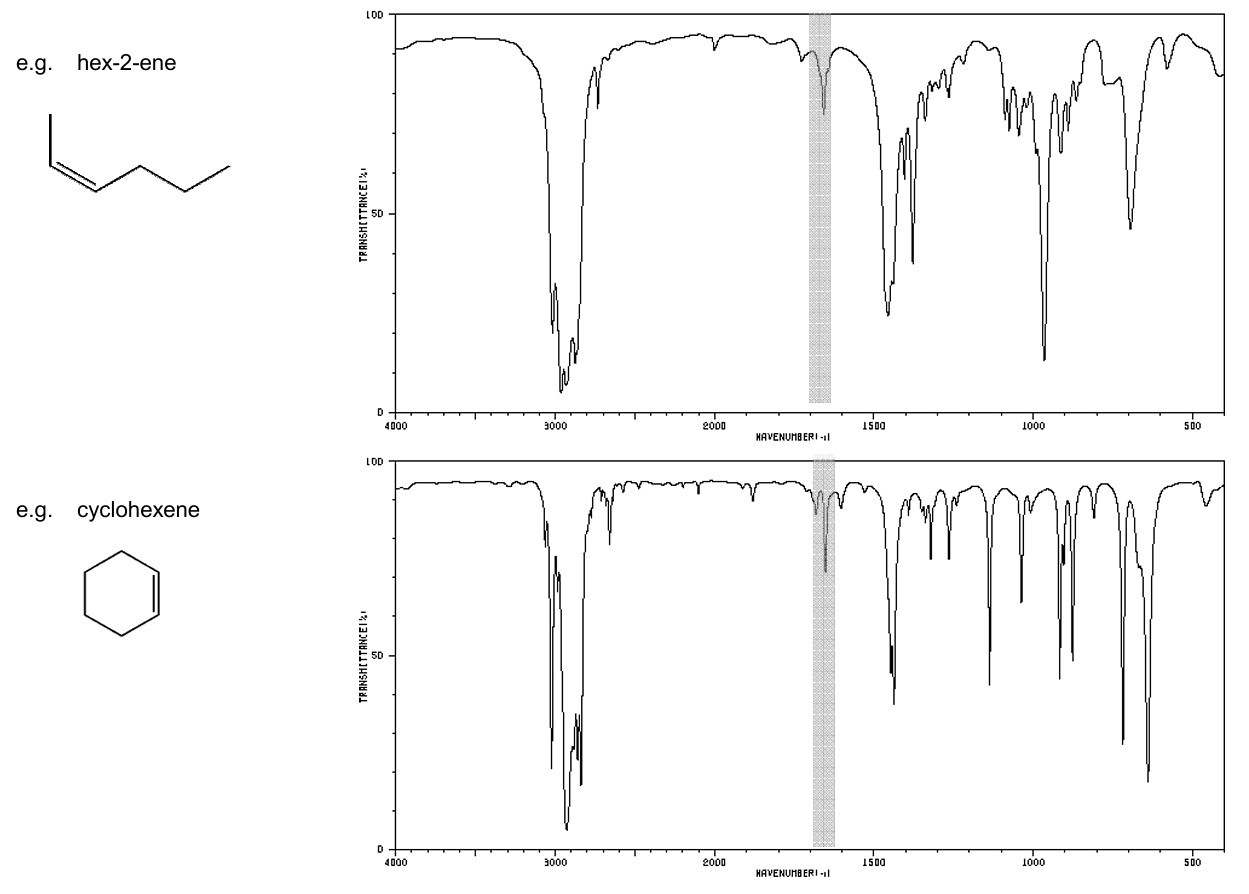
How does C=C show up on IR?
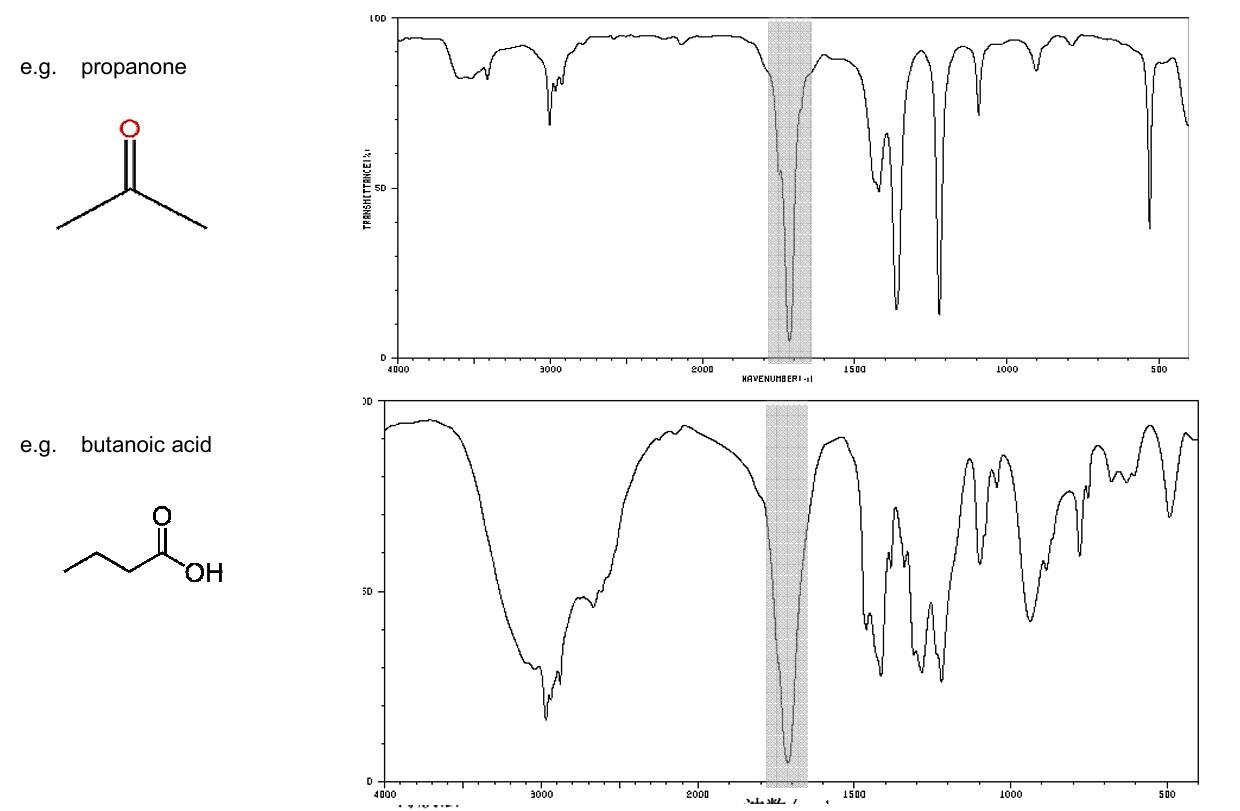
How does C=O show up on IR?
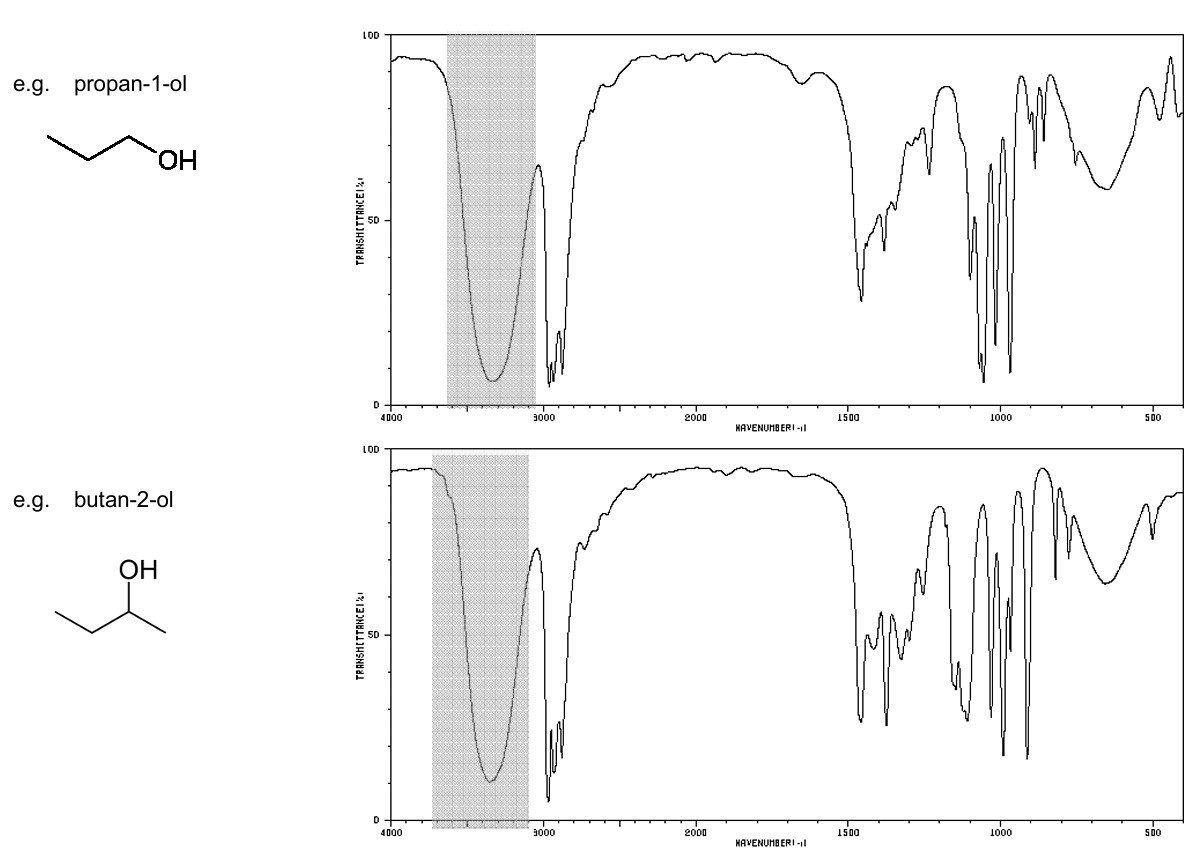
How does O-H, alcohol, bonds show up on IR?
How does O-H, acid, bonds show up on IR?
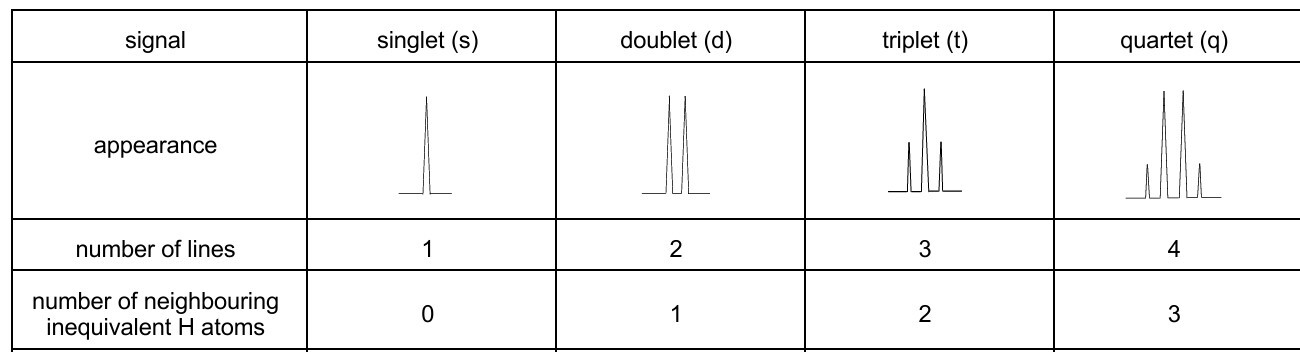
What does NMR show you?
• How many hydrogen are on the adjacent carbon • Ratio between line shows the relative intensity, meaning how many carbons are attached to that adjacent carbon as in how many times this pair formed (can also be across the compound/molecule) or what it is attached to i.e. 2 adjacent carbon attached to CH2
What the peaks show in NMR?