Sustainability Week 4
No description yet. This curated deck is ready for daily study.
Card preview (24)
Fishery
A commercially harvestable population of fish within a particular ecological region
Fishery collapse
The decline of a fish population by 90 percent or more
Bycatch
The unintentional catch of nontarget species while fishing
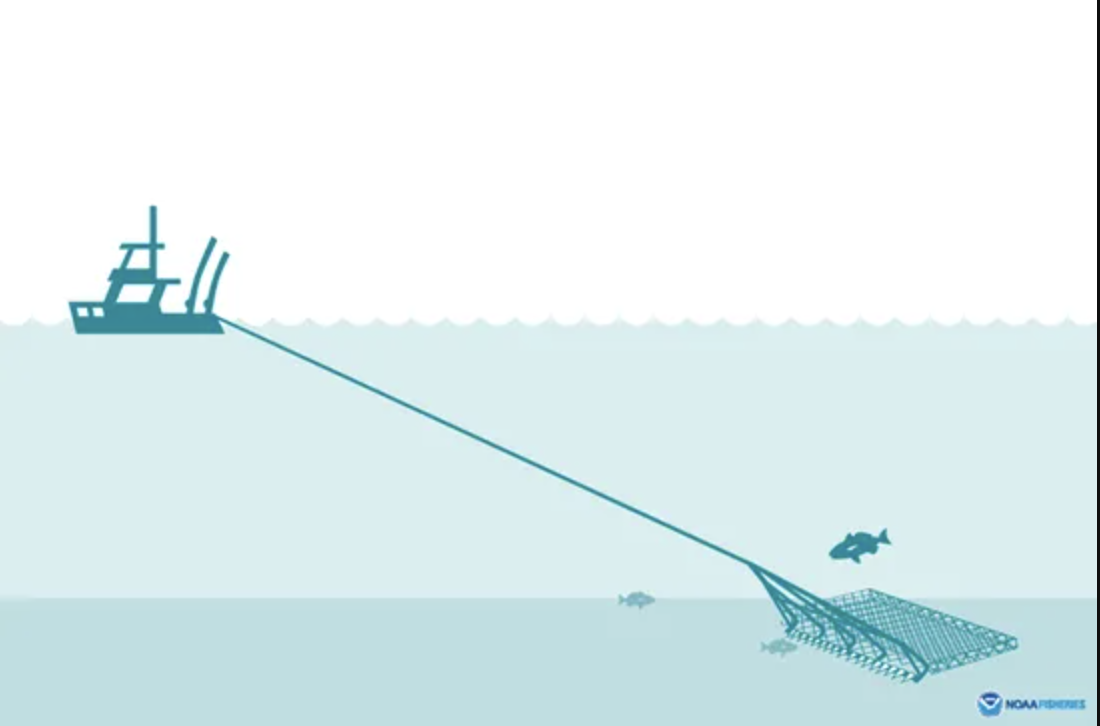
Bottom Trawling
A type of fishing net that’s pulled along the seafloor. Dragging heavy gear across the seabed can also damage sensitive seafloor habitat. Problem: bycatch. Solutions: Changing the size of the mesh to catch adult fish not juveniles. Using square meshes which do not close when the net is towed. This will allow non-target species to escape.
Gillnet fishing
Gillnetting uses curtains of netting that are suspended by a system of floats and weights; they can be anchored to the seafloor or allowed to float at the surface. The netting is almost invisible to fish, so they swim right into it. Gillnets are often used to catch sardines, salmon and cod, but can accidentally entangle and kill other animals, including sharks and sea turtles.
Longline fishing
Longlining employs a central fishing line that can range from one to 50 miles long; this line is strung with smaller lines of baited hooks, dangling at evenly spaced intervals. Longlines can be set near the surface to catch pelagic fish like tuna and swordfish, or laid on the seafloor to catch deep-dwelling fish like cod and halibut. Many lines, however, can hook sea turtles, sharks and seabirds that are also attracted to the bait. By sinking longlines deeper or using circle hooks, fishermen can reduce the bycatch problem.
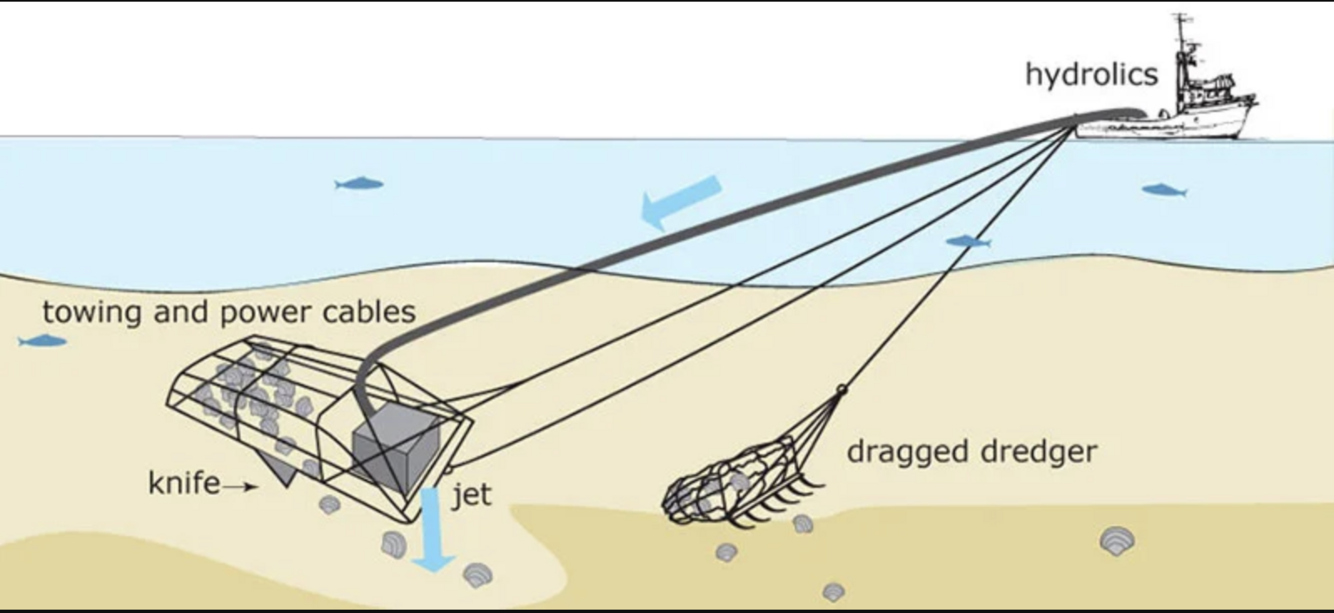
Dredging
Dredges are large, metal-framed baskets that are dragged across the seafloor to collect shellfish like oysters, clams and scallops. In order to lift the catch into the basket, metal teeth dig into the seafloor, which can significantly impact seafloor habitat and bottom-dwelling species. Solution: don’t dredge near breeding grounds and nurseries.
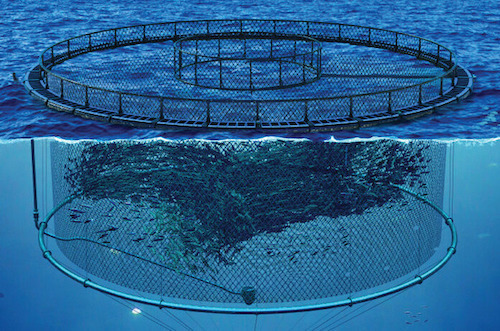
Aquaculture Pens
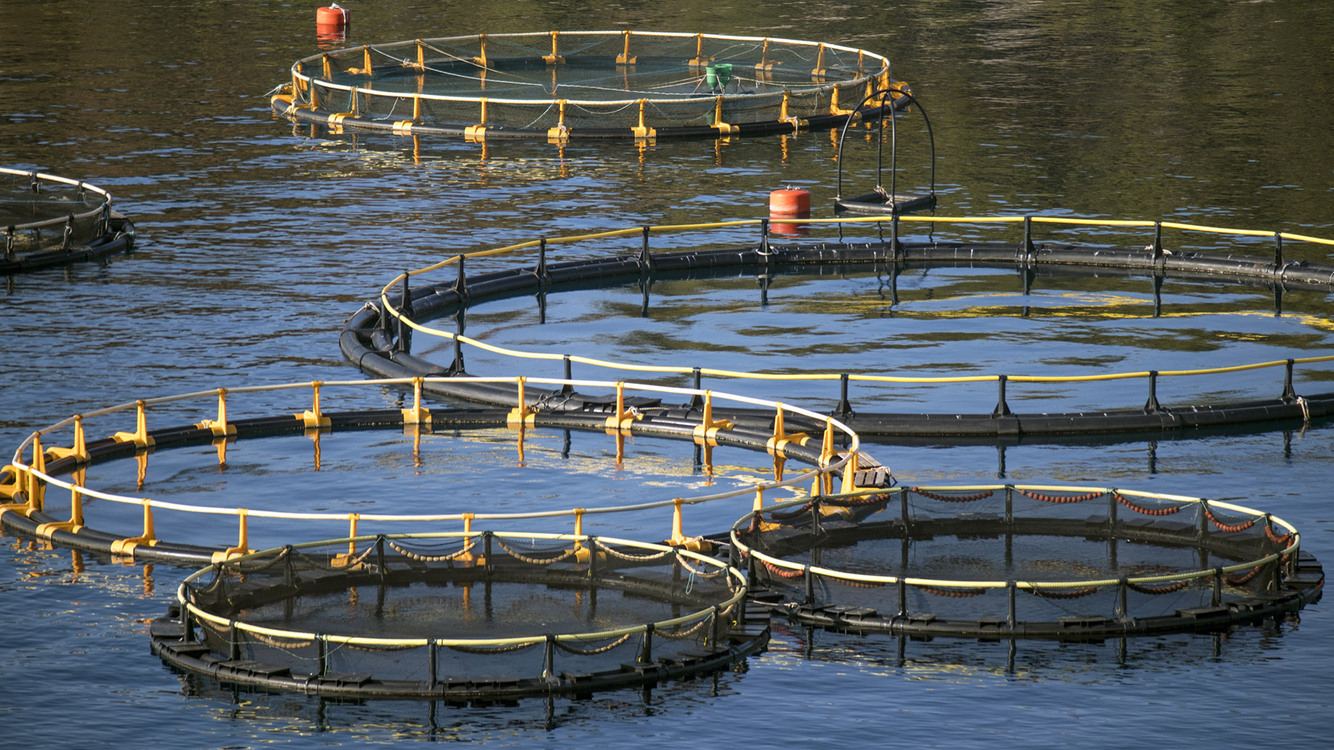
Pens are structures that hold farmed fish in open water as they grow. They’re made with wooden, mesh or net screens, which allow water to flow freely through them.
Aquaculture Ponds
Ponds enclose fish in a coastal or inland body of fresh or saltwater. Shrimp, catfish and tilapia are commonly raised in this manner. Wastewater can be contained and treated. However, the discharge of untreated wastewater from the ponds can pollute the surrounding environment and contaminate groundwater.
Aquaculture
The breeding, rearing, and harvesting of fish, shellfish, algae, and other such organisms. Pros: efficient and requires only small areas of water. Cons: can contaminate water, and fish can escape and may outcompete or breed with wild fish
Aquaculture Recirculating Systems
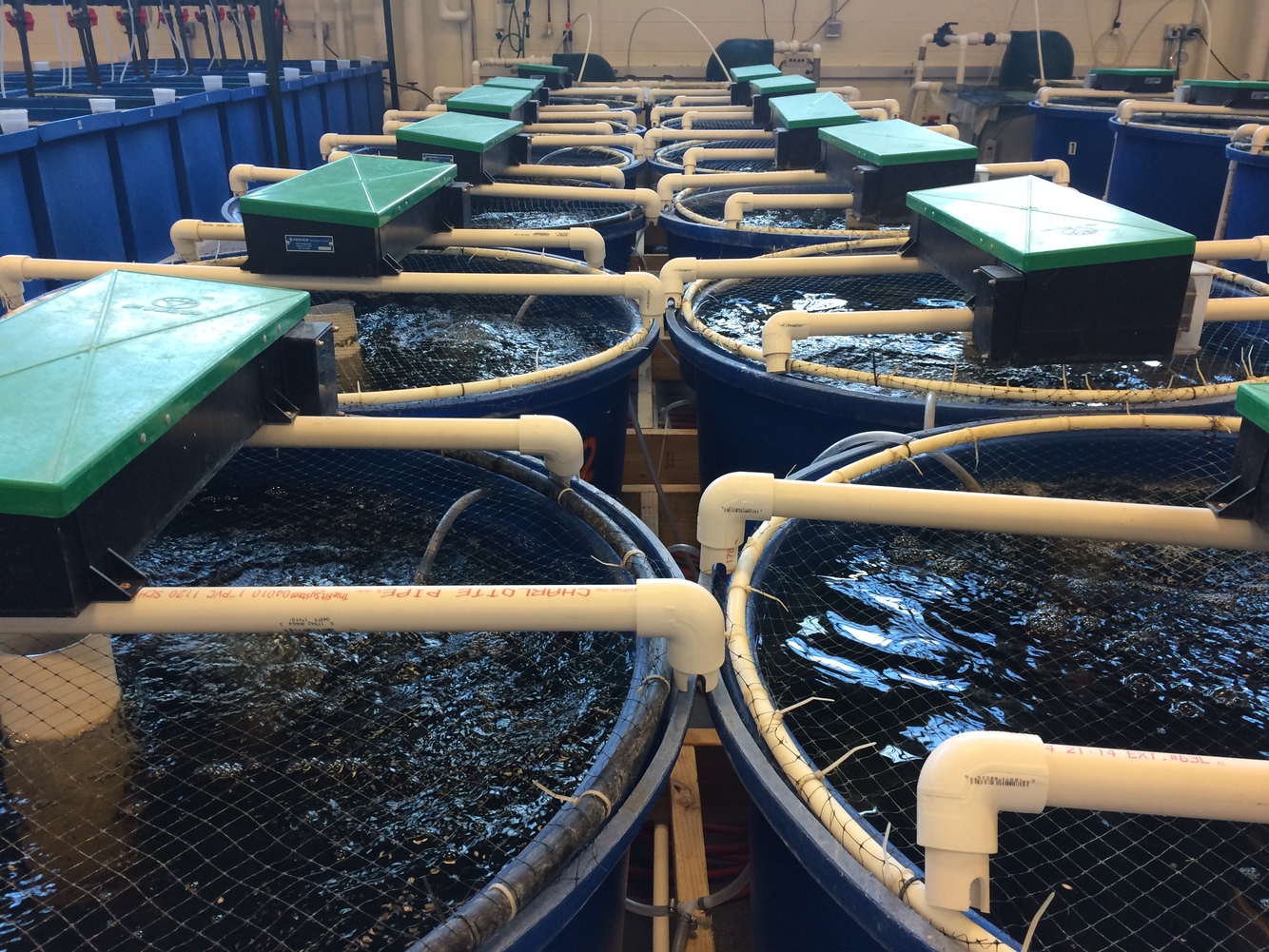
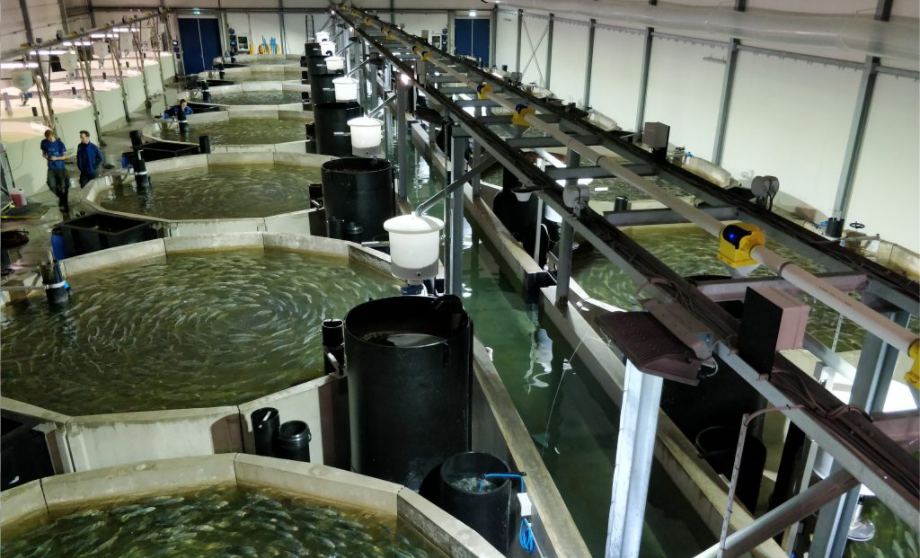
Recirculating systems raise fish in tanks in which water is treated and recycled through the system. Almost any finfish species such as striped bass, salmon and sturgeon can be raised in recirculating systems. Recirculating systems address many environmental concerns associated with fish farming—fish cannot escape, and wastewater is treated—but they are costly to operate and rely on electricity or other power sources.
Overfishing
When fish are caught faster than they can reproduce, making it hard to maintain healthy population number
Tilling
The act of mechanically breaking up the soil to prepare for planting. Plant roots need to be able to spread in the soil so it can’t be compact.
Slash and Burn Agriculture
Clearing out grassland or forest and burning the remaining brush. A layer of ash is left that provides nutrients to added crops. The nutrients from the ash only last for 1 or 2 years before they are depleted.
Salinization
Salinization can occur with any watering method. There are naturally occurring salts in irrigated water. When land is watered, and the water evaporates, the salts are left on the soil. Over time, the salts build up and make it difficult for plants to grow. The solution is flooding the land with water that has little to no salts so the water carries the salts away in runoff or deeper into the soil via leaching.
Aquifer
An aquifer is a layer of rock that contains water with the ability to flow. The only way for an aquifer to recharge is by surface water seeping into it. This process takes time. When there is a large amount of paving on the land surface, water runs off quickly to nearby lakes and streams, but is not able to seep into the deeper layers of rock.
Mulching
Mulch is simply a protective layer of a material that is spread on top of the soil. Mulches can either be organic – such as grass clippings, straw, bark chips, and similar materials – or inorganic – such as stones, brick chips, and plastic.
Water Holding Capacity (Porosity)
Description: This is the amount of water the soil can hold due to the amount of pore or air space. A physical soil test can be done to determine the soil’s porosity. Problem: if soil cannot retain water within the reach of plants’ roots, plants will need frequent rains or irrigation. Solution: mulching, tillage, adding gypsum aka green sand.
Gypsum AKA Green Sand
It improves water penetration (drainage) and aeration for packed-down and clayey soils by making the fine particles of clay stick together and neutralizing the salt in high-sodium soils without raising the pH as lime does.
Salt Removing Vegetation
Planting saltbush, barley, or oats can remove salts from the soil
Road Salt Alternative
Beet juice and sand are effective alternatives to using road salt
Ca2+ or Mg2+
This is the amount of calcium (Ca2+) or Magnesium (Mg2+) present in the soil, which can be determined by a chemical test for these elements.Problem: too little stunts growth. Too much is toxic. Solution: Add lime to increase the soil’s pH, making soil less acidic and more alkaline and increase the cations present in the soil (Ca2+ and Mg2+)
N (Nitrogen)
This is the amount of nitrogen (N) present in the soil, which can be determined by a chemical test for this elements. Problem: too little stunts growth. Too much is toxic. Solution: Legumes — beans, peas and non-edible relatives such as clovers — convert atmospheric nitrogen (N2) into ammonium nitrogen (NH4), which they release into the soil.
Soil pH
This is a measure of the hydrogen ions present in the soil. The amount of hydrogen ions present in the soil will determine the soil’s acidity or alkalinity. This can be determined by a chemical test. Adding lime/limestone or gypsum/green sand to neutralize the pH