4. Alkenes
No description yet. This curated deck is ready for daily study.
Card preview (6)
What is the general formula for alkenes?
CnH2n
What is the functional group for alkenes?
All alkenes contain a double carbon bond, which is shown as two lines between two of the carbon atoms i.e. C=C Alkenes are unsaturated hydrocarbons
What is the maximum number of bonds a carbon atom can make?
4 Bonds
Why are alkenes (C=C double bond) more reactive than alkanes?
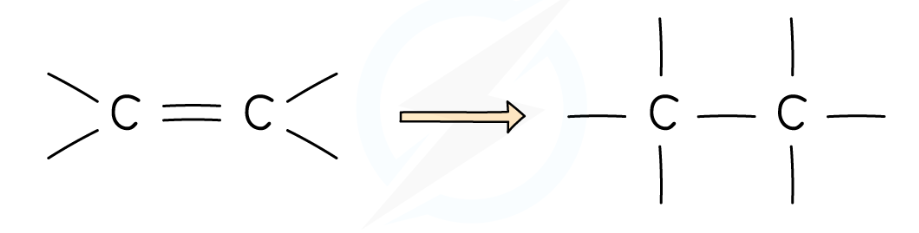
• The C=C double bond can open up, letting new atoms form single bonds with each carbon. • Each carbon then forms 4 single bonds (instead of 1 double + 2 single).
What happens when alkenes react with bromine, and why is this an example of an addition reaction?
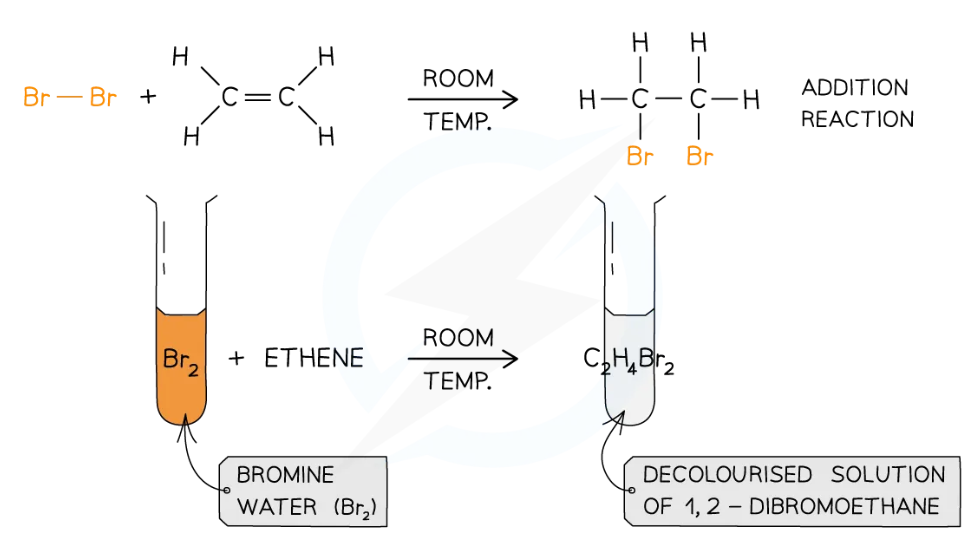
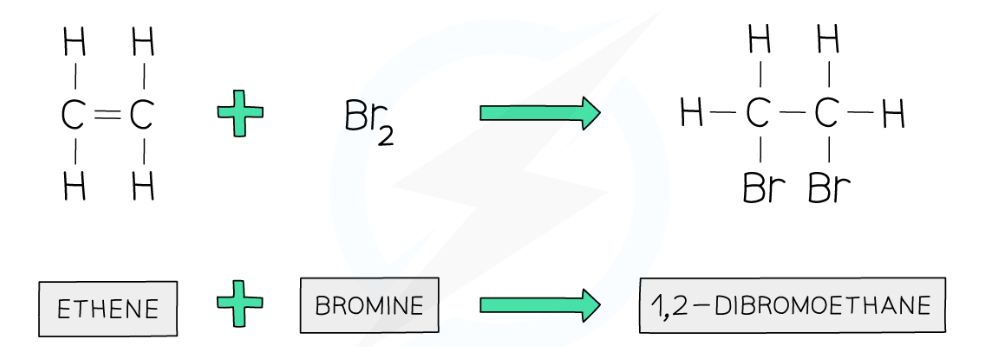
• Alkenes undergo addition reactions, where atoms add across the C=C double bond. • When bromine reacts with an alkene, a dibromoalkane is formed. • Example: ethene + bromine → dibromoethane. • The same process works with any halogen and any alkene, with halogen atoms always adding across the C=C bond. Dihaloalkane
How can you distinguish alkanes from alkenes using bromine water?
• Alkanes = saturated (no C=C) → bromine water stays orange. • Alkenes = unsaturated (C=C present) → bromine atoms add across double bond → solution decolourises (loses orange colour). *Bromine water is used because it is safer and easier to handle than bromine.