Lecture 7 : Biological Membranes
No description yet. This curated deck is ready for daily study.
Card preview (16)
Membranes
• Protect organelles from outside of cell • Composed of phospholipids, proteins, cholesterol • Lipids have hydrophobic tails and hydrophilic heads
Key functions of membranes
• Receive information • Importing and exporting molecules • Capacity for movement and expansion
phospholipids
• Hydrophobic tails face inwards towards each other • Hydrophilic heads face outwards towards fluids • Fatty acid chains determine fluidity of the membrane • Phospholipids are amphipathic (have both hydrophilic and hydrophobic parts) • It is the amphipathic nature of membranes which drives formation of the bilayer
There are 4 major phospholipids in the mammalian plasma membrane :
• phosphatidyl-ethanolamine • phosphatidyl-serine • phosphatidyl-choline • sphingomyelin
Note about layers of phospholipids
Inner and outer monolayers of phospholipids have different chemical compositions, which are important for the function of the membrane. For example, phosphatidylserine is concentrated on the cytosolic layer. This enables protein kinase C activity in the cytosol, so extracellular signals can be converted to intracellular signals. Cytosolic layer can translocate to outer membranes during cell apoptosis to signal neighboring cells to phagocytose cell.
Fluidity of membranes allow:
• Cell signalling (signalling lipids and membrane proteins to rapidly diffuse LATERALLY and interact with one another) • Membranes to be equally shared between daughter cells during cell division • Cell motility (cell can change shape) • Allows fusion with other membranes (eg. exocytosis)
What determines a membranes fluidity
The COMPOSITION of the membrane determines its fluidity. • Shorter fatty acid chain = More fluid • More unsaturation = More fluid
What does cholesterol do
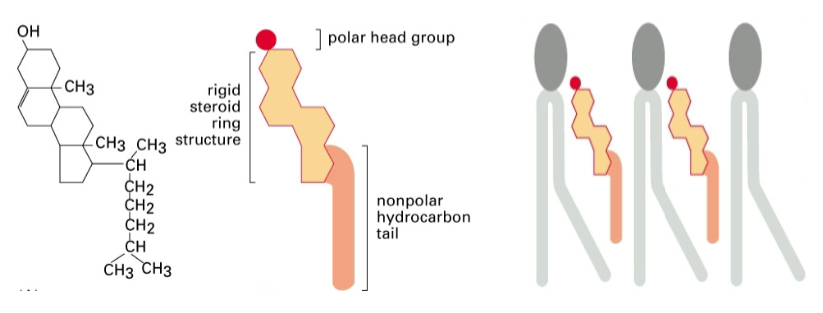
• Intercalates between membrane phospholipids • Tightens packing in bilayer, decreasing membrane permeability
Intracellular Signal Transduction Lipids
• Phosphatidylinositol • Diacylglycerol • Ceramide • Sphingosine-1-phosphate These are derived from lipids in the plasma membrane. They are rapidly generated and destroyed by enzymes in response to signalling. Spatially and temporally generated, so respond to / emit highly specific signals. They bind to specific conserved regions within proteins; once bound, induce conformational / localisation, and activity changes within these proteins.
Assembly of Lipid Bilayers
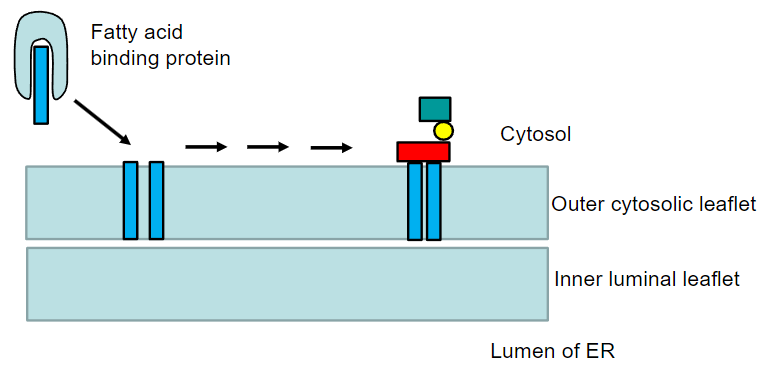
Fatty acids are embedded in the outer cytosolic leaflet (layer) of the SER and glycerol, phosphate and choline are added
Glycolipids
• Asymmetric • Contain sugar • Sphingosine based • Glycosylation occurs in lumen of golgi apparatus • Found exclusively on non-cytosolic monolayers of plasma membrane
Phospholipid synthesis
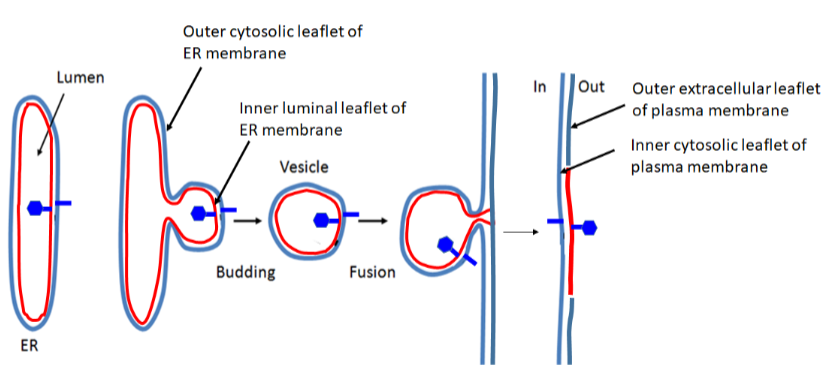
• Occurs in outer, cytosolic leaflet of ER membrane • ER enzyme SCRAMBLASE ‘flips’ (catalyses trans-bilayer movement) the newly synthesised phospholipids from the OUTER to the INNER leaflets of ER membrane • Now they are equally distributed between the two • Newly synthesised membrane is transported to the plasma membrane (and other organelles) in vesicles • FLIPPASE (plasma membrane enzyme which requires ATP) flips phospholipids from extracellular leaflet to cytosolic leaflet to create asymmetric bilayer at plasma membrane. . • This vesicle contains a newly synthesised phospholipid from the SER and is transported to the plasma membrane • The vesicle fuses with the plasma membrane, and the vesicle membrane, with the newly synthesised phospholipid, is incorporated into the plasma membrane
Membrane fusion
Integral and peripheral membrane proteins
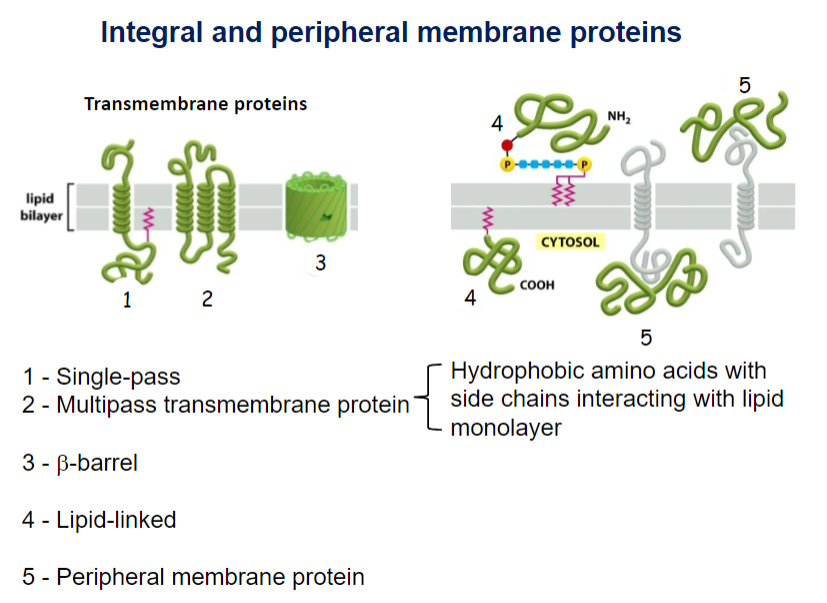
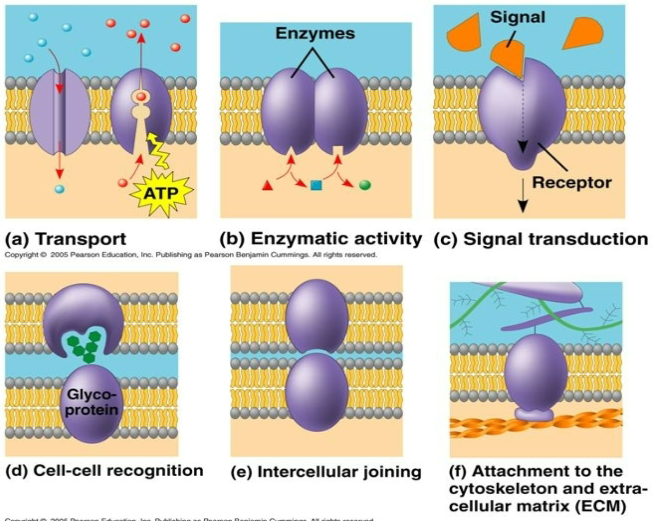
membrane protein funcctions
The Glycocalyx
• Carbohydrate rich layer surrounding cells • Composed of glycolipids and glycoproteins • Protects cells against chemical and mechanical damage