Alloys
No description yet. This curated deck is ready for daily study.
Card preview (24)
what is an alloy?
a combination of two or more metals or a metal(s) with a metalloid (Si, C)
what are the advantages of alloys?
• improved mechanical properties (EL, FS, hardness) • improved corrosion resistance • lower melting point than individual metal
what are some dental uses of alloys?
• steel - burs, instruments • gold alloy - inlays, crowns, bridges, partial dentures, wires • cobalt chrome - partial dentures • nickel-titanium - wires • nickel chromium - crowns, bridges, wires • amalgam - restorative material
what is the definition of a phase?
physically distinct homogenous structure (can have more than one somponent) individual grains of metal A and B - two phases

what is the definition of a solution?
a homogenous mixture at an atomic scale metals A and B in a homogenous mixture - one phase - solid solution
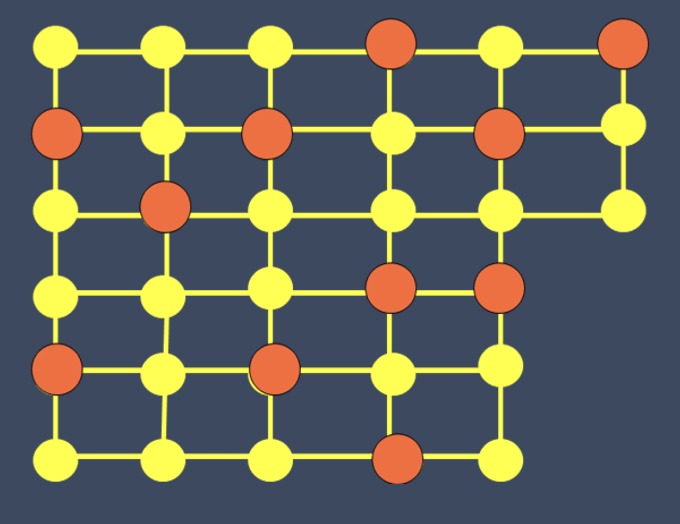
what can happen on crystallisation of two metals?
• be insoluble - no common lattice and exists as two separate phases • form an intermetallic compound with specific chemical formulation (e.g. Ag3Sn) • be soluble and form a solid solution - common lattice and exist as one phase
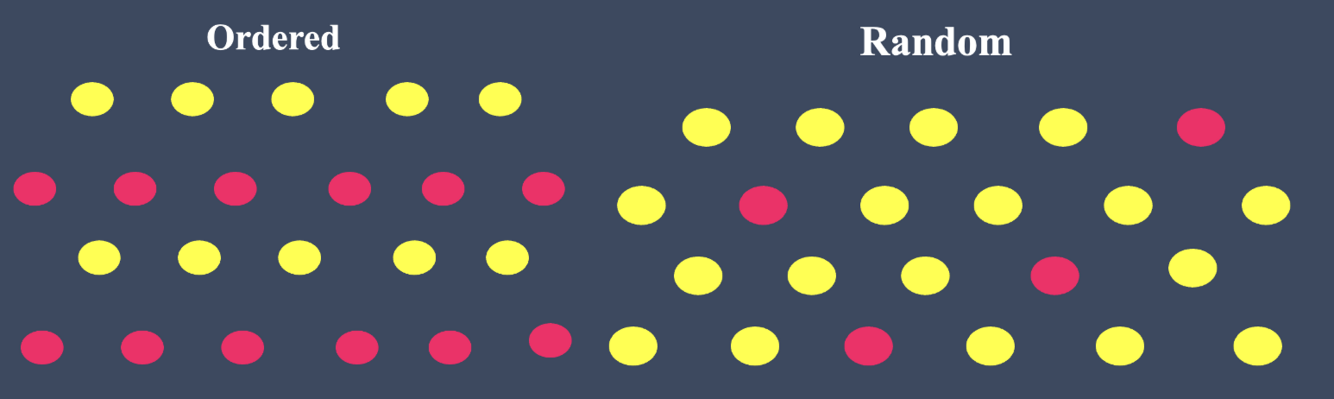
what is a substantial solid solution?
atoms of one metal replace the other metal in the crystal lattice/grain in a: * random way - requires atoms to be similar in size, valency and crystal structure * ordered way - in a regular lattice arrangement with similar size, valency and crystal structure
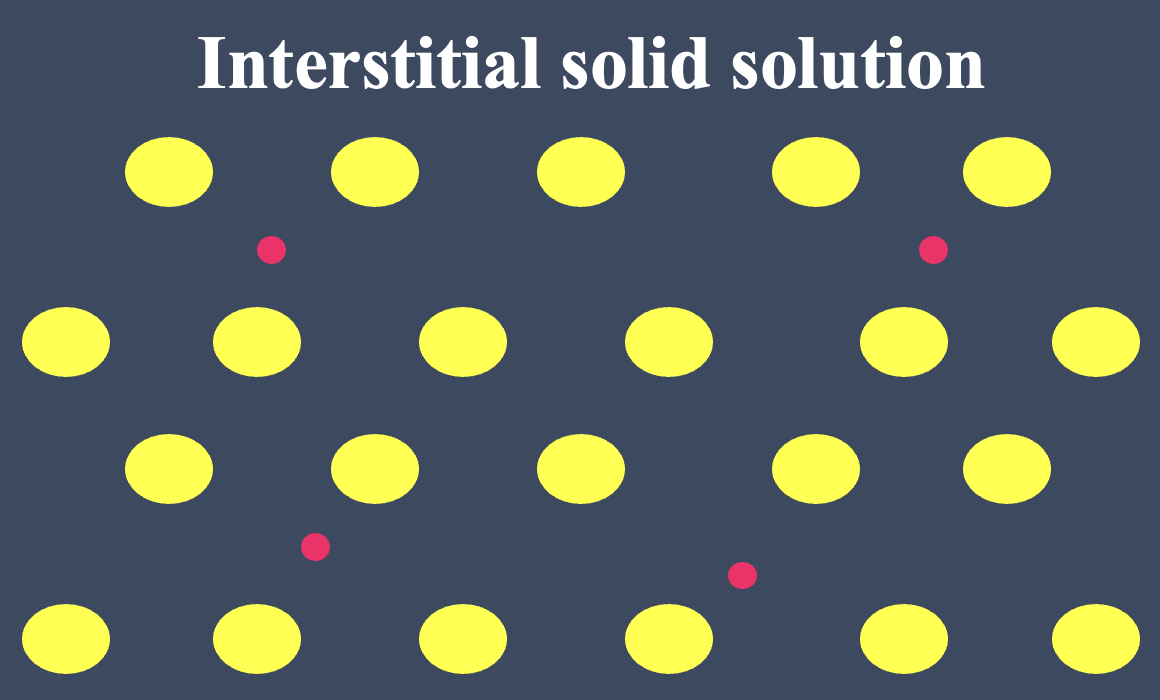
what is a interstitial solid solution?
atoms of remarkedly different sizes with smaller atoms located in spaces in the lattice/grain structure of larger atoms
describe the cooling curve of an alloy
• the alloy is cooled from its molten state where both metals are not in a lattice • crystallisation begins at TL • the first few metal atoms are cooled to form nuclei of crystallisation • the two metals have different melting points and crystallise when these are reached • there is a change of temperature when the alloy crystallises from TL to TS
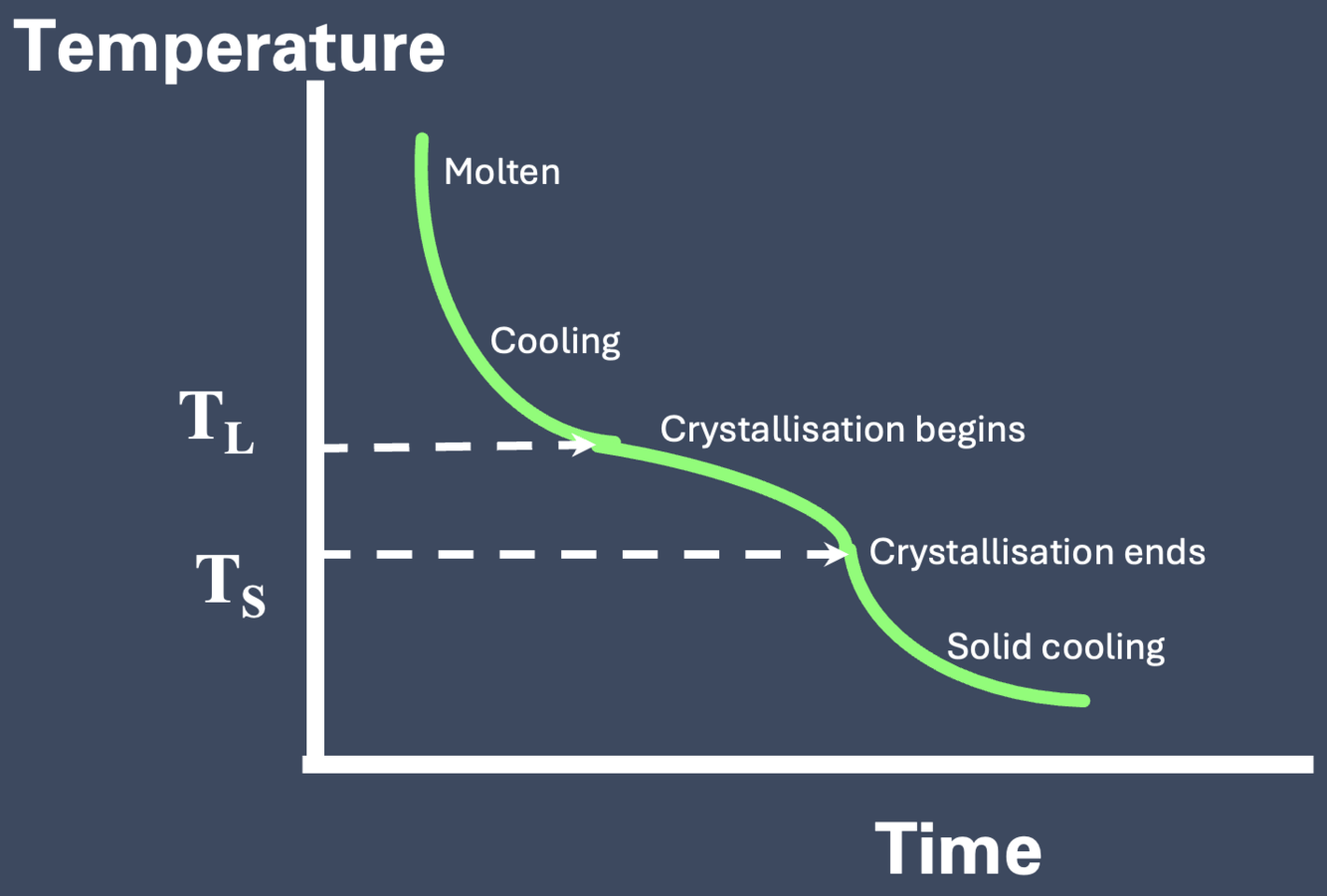
what is the difference in the crystallisation of a metal and alloy?
• metals crystallise at one temperature • alloys crystallise over a temperatre range
describe the cooling curve of AuPt
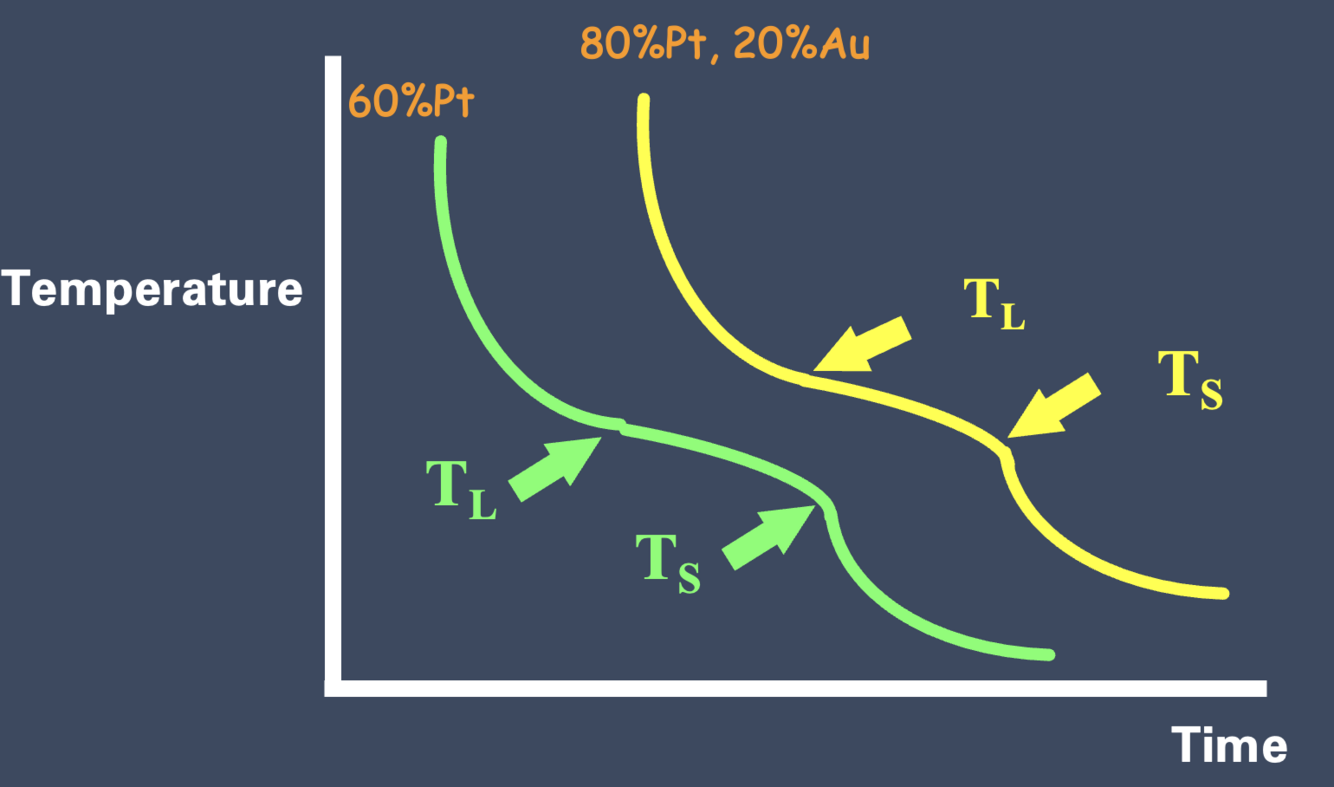
• the TL and TS values for each alloy are different • if you change the ratio of alloys, it produces different cooling curves due to their different melting points • platinum has a higher melting point than gold
what happens when slow cooling of molten alloys occurs?
• allows metal atoms to diffuse through lattice and find their equilibrium position • ensures the grain composition is homogenous • BUT results in large grains forming - undesirable
a complete solid solubilty diagram is a phase diagram joined together. describe the complete solubility diagram of AuPt
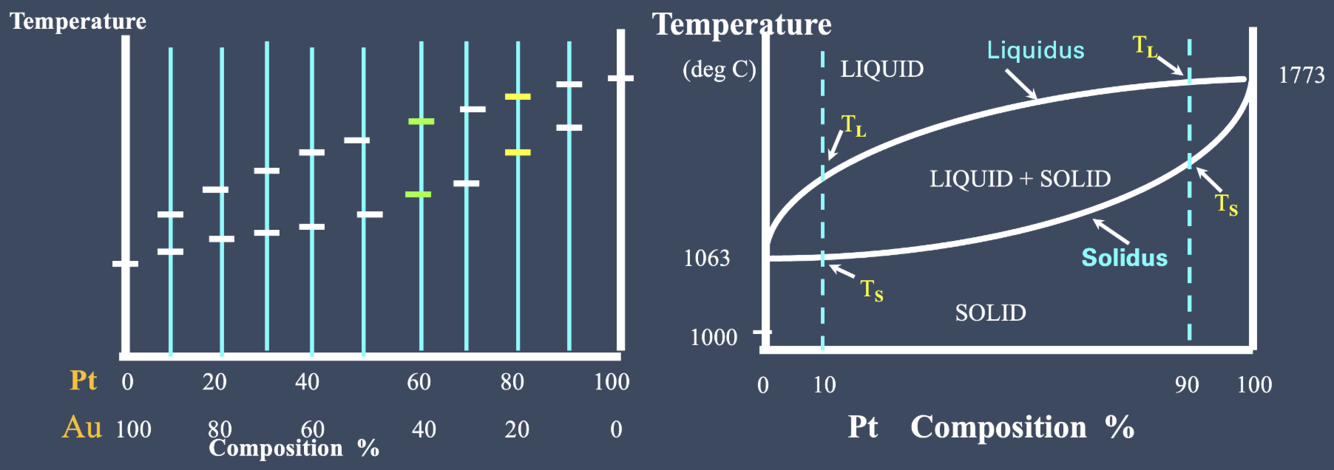
• each point on the liquidus represents the temperature that crystallisation started for the alloy • each point on the solidus represents the temperature that crystallisation ends for the alloy • liquidus: alloy in liquid state • solidus: alloy in solid state • between the curves, the solid is partly liquid and partly solid
what happens when rapid cooling (coring) of molten alloys occurs?
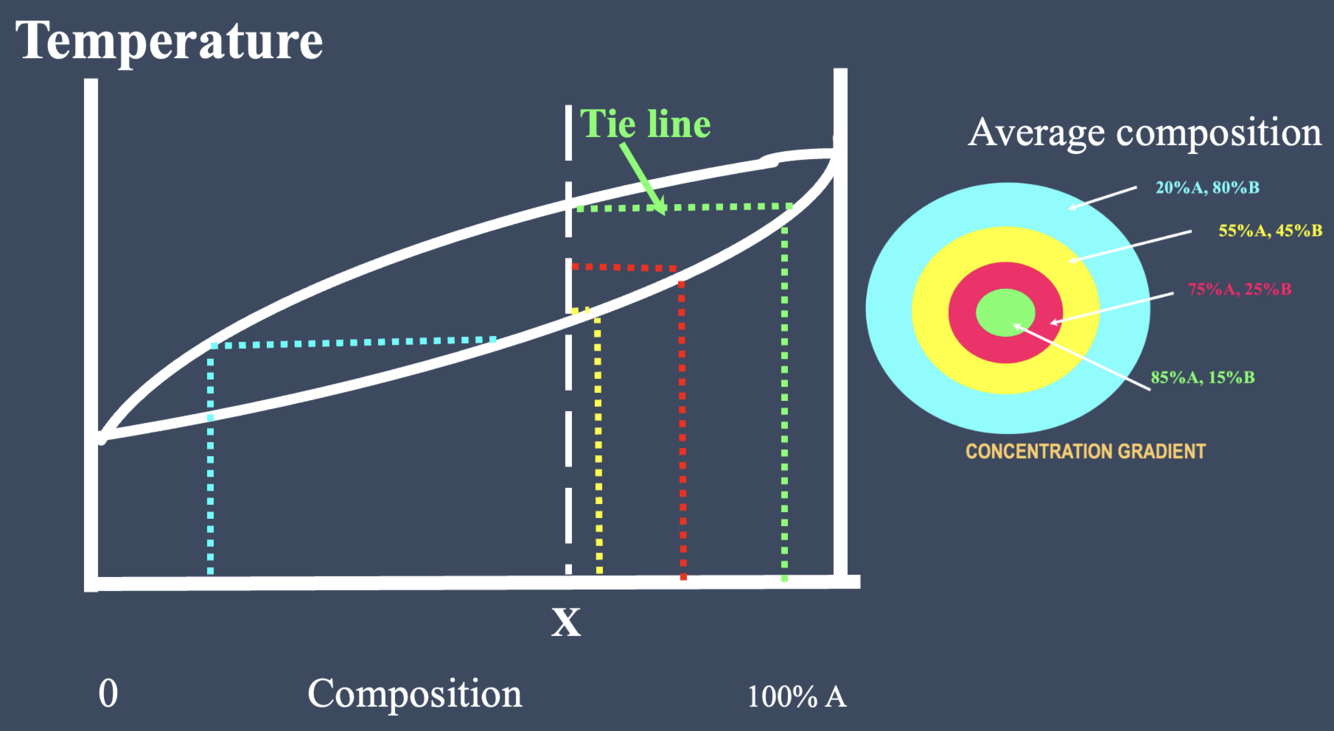
• ensures grains are small and that there are many grain boundaries which will impede dislocations • alloy with composition X begins to crystalise at TL and a tie line is drawn horizontally and vertically to find the first grain composition (85%A, 15%B) • when the temperature is dropped, the grain formed is composed of 75%A and 25%B • when the temperature is dropped again, the grain formed is composed of 65%A and 35%B • the temperature of the alloy X cools to the temperature of the solidus and the last grain to form is composed of 20%A and 80%B • rapid cooling/quenching results in non-homogeneous grains
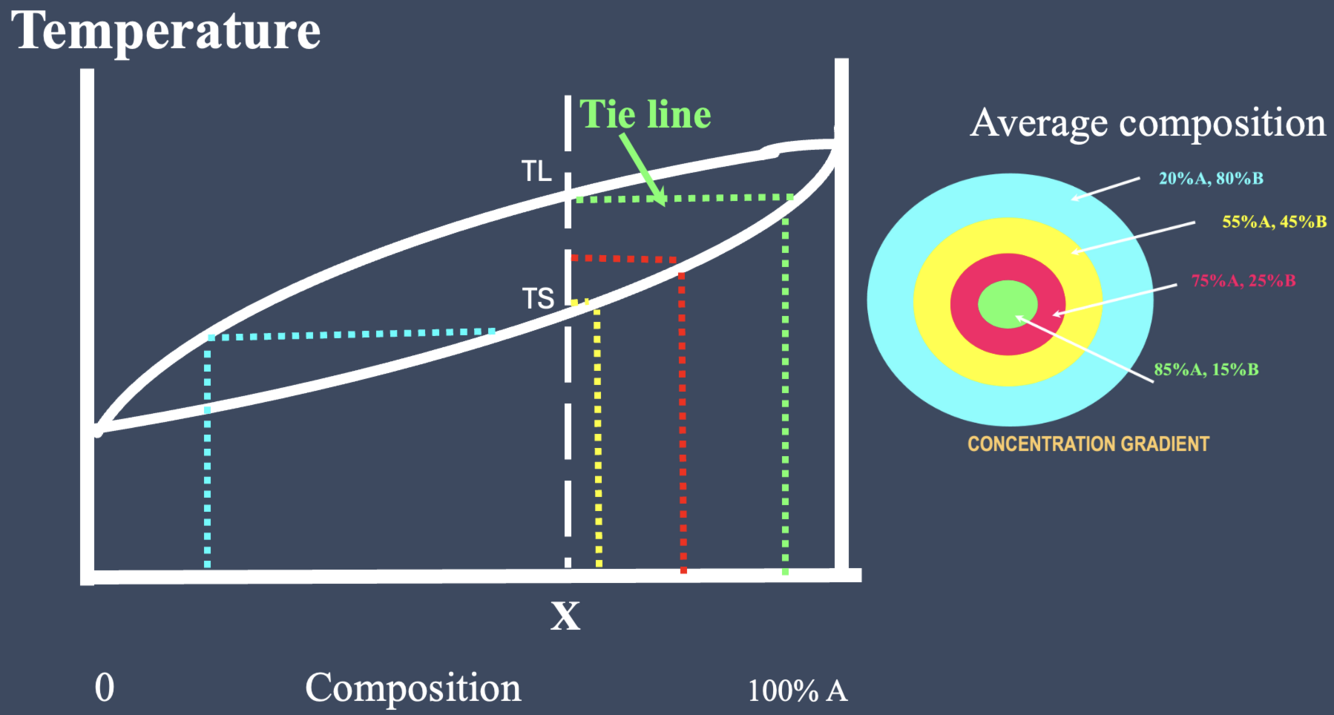
what does rapid cooling (coring) of a molten alloy result in?
• prevents atoms diffusing through lattice • causes coring as composition varies throughout grain • improves mechanical properties • may reduce corrosion resistance of solid form of alloy
what are the conditions required for coring?
• fast cooling of liquid state (drop into cold water) • liquidus and solidus must be separated and determines extent of coring
how would you overcome the non-homogenous grains formed from rapid cooling?
**homogenising anneal ** * reheat the non-homogenous solid to allow the metal atoms to diffuse and cause the grain composition to overcome the concentration gradient and homogenise * keep the alloy below its recrystallisation temperature, otherwise its grains will be altered
what is solution hardening?
• when alloys that form a solid solution consist of two or more metals of different atomic sizes arrange in a lattice, they have a distorted grain • the distorted lattice impedes dislocation movement so improves the mechanical properties (EL, UTS, hardness) • heat alloy below its recrystallisation temperature and cool slowly
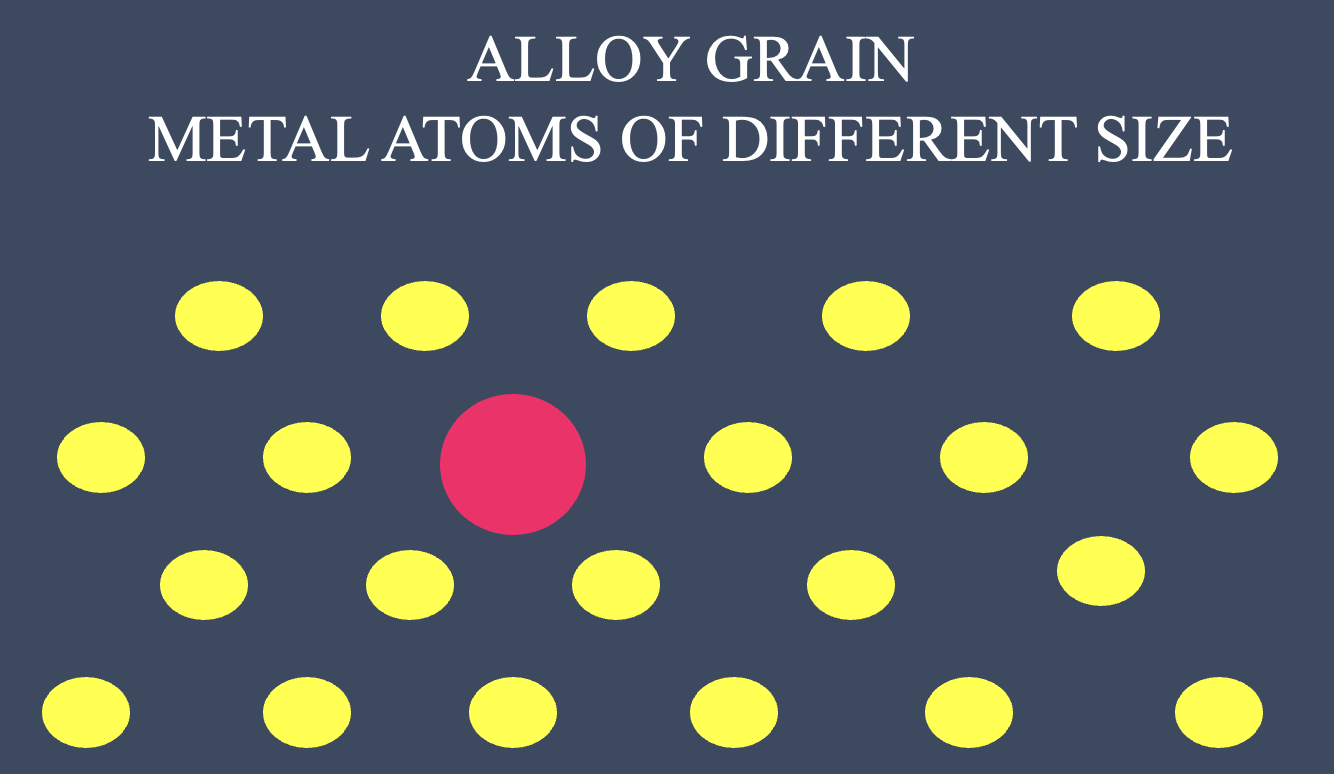
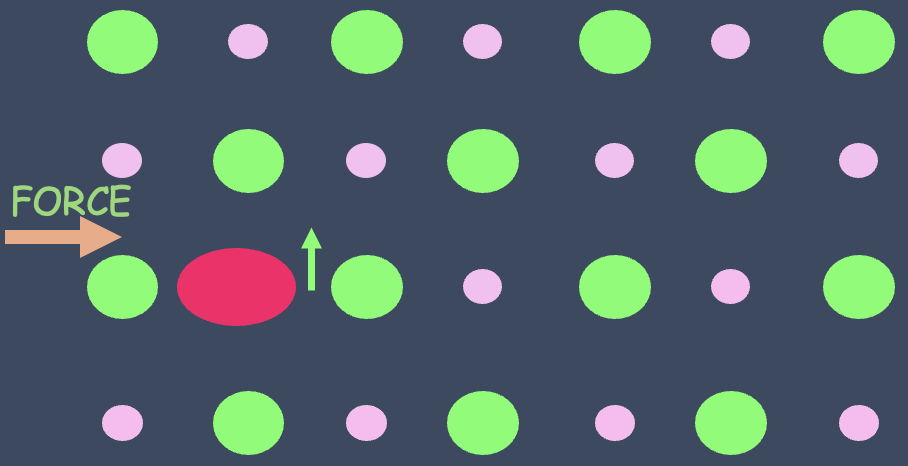
what is the difference between dislocation movement in a metal and an alloy?
• metal - defects roll over atoms with little energy to move along the slip plane until grain boundary • alloy - defects fall into spaces between large and small atom, requiring more energy to overcome different sized atoms until grain boundary (more fracture resistant as more energy needed)
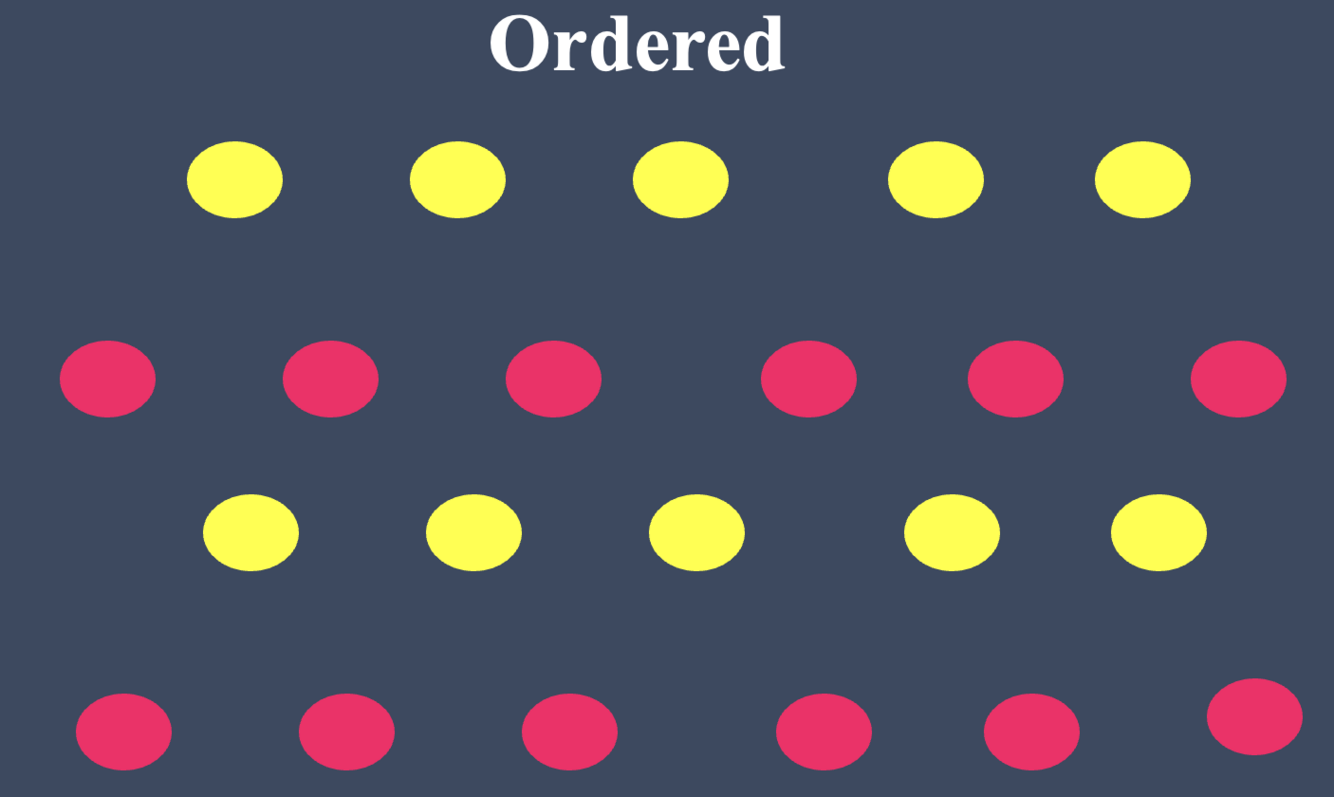
what is order hardening?
• alloys that form a ordered solid solution have metal atoms distributed in a regular lattice but still have a distorted grain structure as lattice impedes dislocation movement • the resistance to dislocation gives improved mechanical properties (EL, UTS, hardness) • heat alloy below its recrystallisation temperature and cool slowly
describe this graph showing the complete solid solubility of AuCu and order hardening
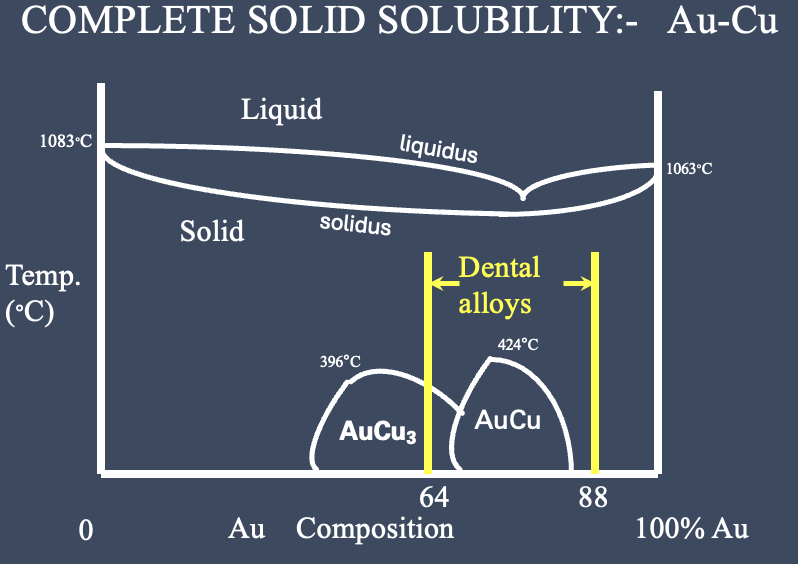
• the liquidus and solidus are quite close together so the extent of the coring is limited • not much of a concentration gradient when rapidly cooled (quenched) • the area under the graph shows that there are two possible ordered solutions - AuCu3 and AuCu • these ordered solutions need to be annealed to remove coring • heat alloy below its recrystallisation temperature (424 degrees) and cool slowly
what is an eutectic alloy?
a homogeneous mixture of two or more substances, that melts or solidifies at a single, sharp temperature, lower than the melting point of any individual constituent
describe the phase diagram of a eutectic alloy
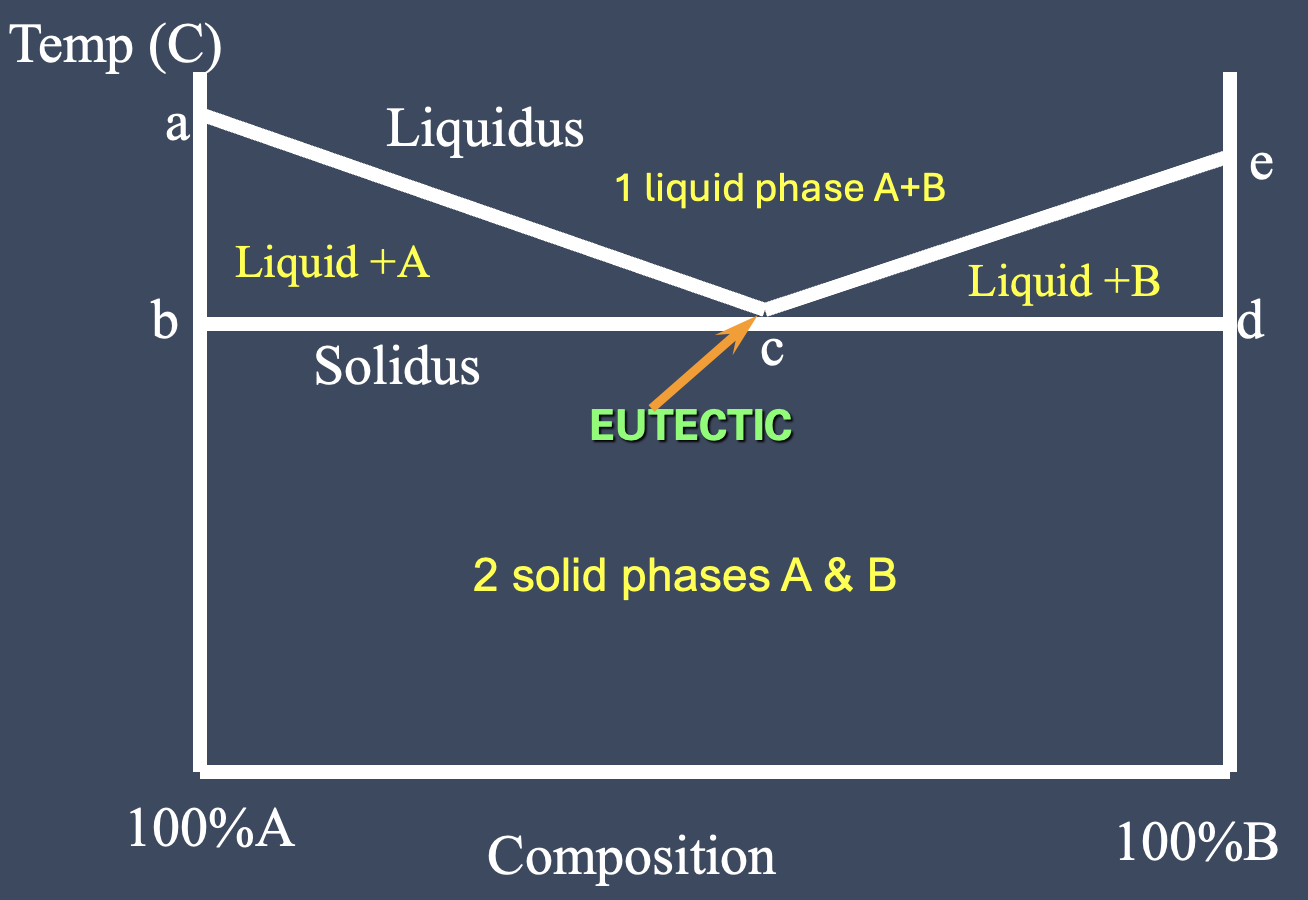
• liquidus is defined by point a, c, e • solidus is defined by point b, c, d • liquidus and solidus coincide at point c which is the eutectic point/composition where the crystallisation process occurs at a single temperature and grains of individual metals are formed simultaneously • on cooling rapidly, a eutectic alloy will form grains of individual metals (non-homogenous) in 2 phases
what is the lowest melting point used for in eutectic alloys?
soldering parts together