Glycolysis/Homolactic Fermentation
No description yet. This curated deck is ready for daily study.
Card preview (6)
What is Glycolysis?
The glycolytic pathway occurs almost all prokaryotic and eukaryotic cells. In eukaryotes, glycolysis occurs on the cytoplasm.
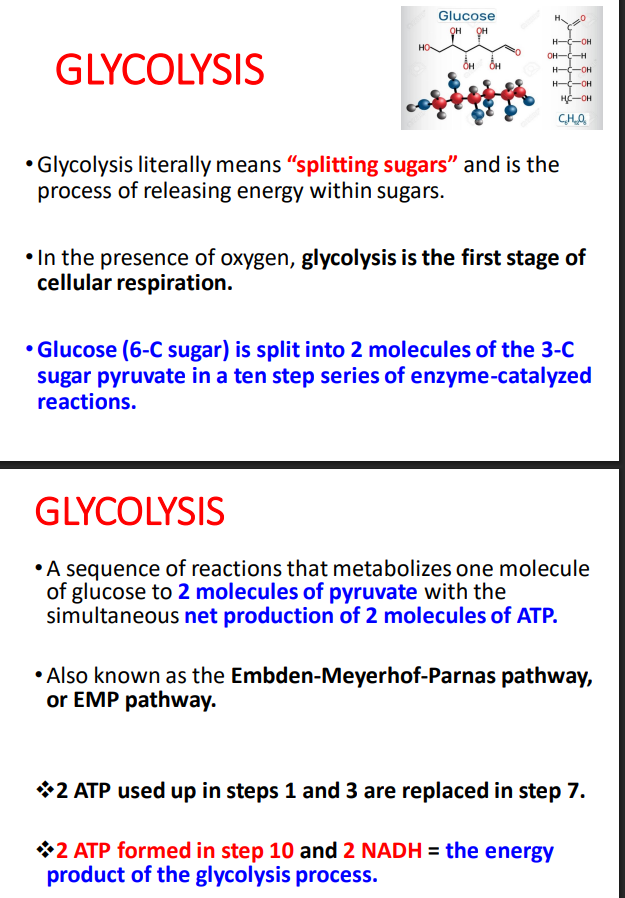
What are the steps in Phase I of glycolysis?
Phosphoglyceraldehyde (PGAL) = G3P
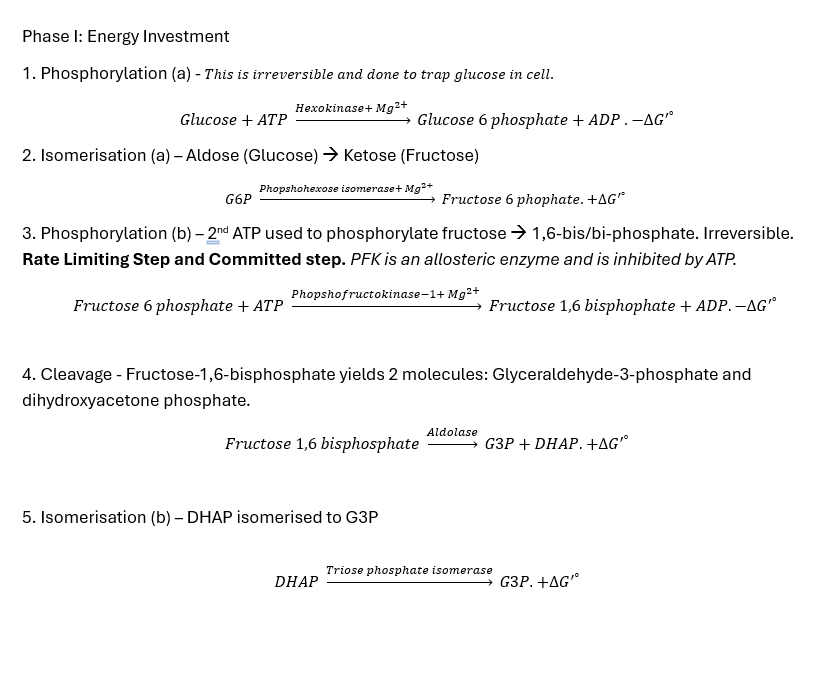
What are the steps in Phase II of Glycolysis?
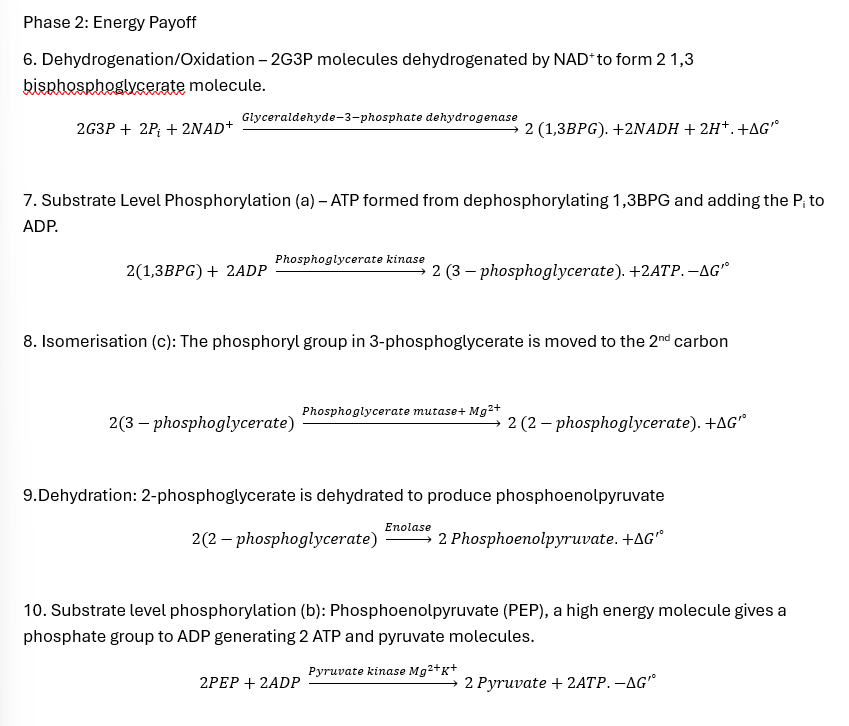
What is the net reaction of glycolysis?
The net reaction is the conversionn of glucose to pyruvate? Glucose + 2Pi + 2ADP +2NAD+ –> 2 pyruvate + 2ATP + 2NADH + 2H+ + 2H2O The net ATP gain for each glucose molecule is 2 moles as 4 moles of ATP are formed for each Fructose-1,6-bisphophate molecule split into pyruvic acid but 2 moles of ATP is required to form fructose -1,6-bisphposphate itself. (4-2=2).
Overview of Glucose Metabolism
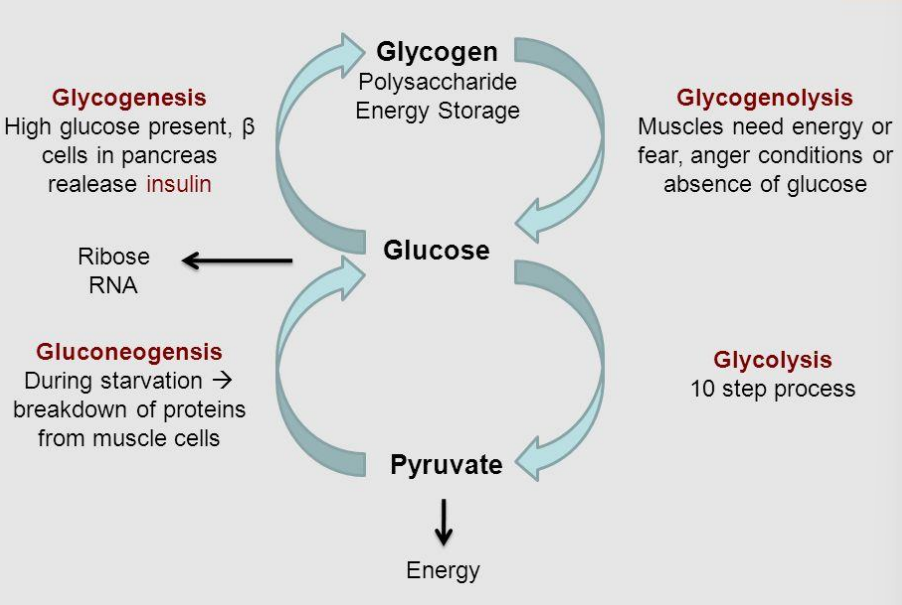
What are the possible fates of the pyruvate produced in glycolysis?
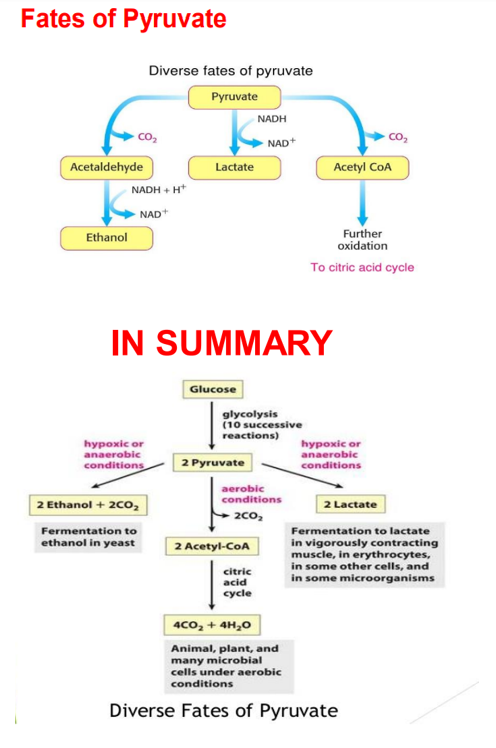
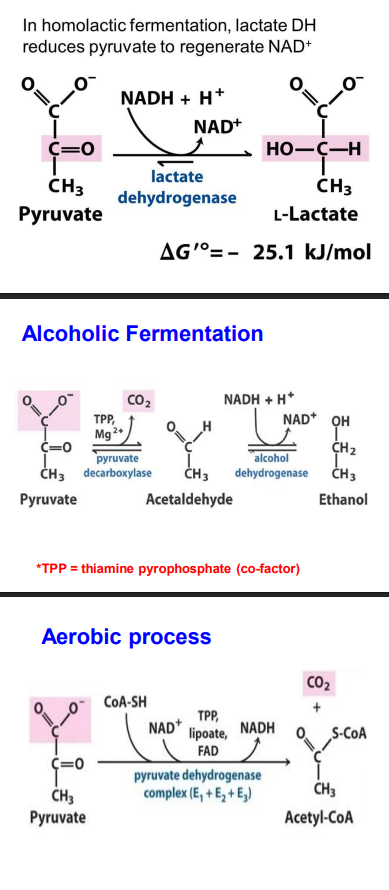
Pyruvate (in anaerobic conditions) will undergo anaerobic fermentation: uses endogenous organic electron acceptors (like pyruvate) to regenerate from NAD + from NADH (instead of ETC) which allows glycolysis to continue (needs NAD+ for dehydrogenation). Anaerobic fermentation can produce two compounds depending on organism • Lactate through homolactic fermentation : converts glucose –> pyruvate. Pyruvate is reduced to L-lactate through **lactate dehydrogenase **and produces NAD+. Occurs in cells lacking oxygen (or when oxygen is a limiting factor) and with little mitochondria. Eg. Intense exercise • Ethanol through ethanolic fermentation : converts glucose –> pyruvate. Pyruvate is decarboxylated to acetaldehyde through pyruvate decarboxylase with the help of thiamine pyrophosphate (TPP) and Mg2+ Acetaldehyde is reduced to ethanol through alcohol dehydrogenase with the help of NADH which produces** NAD+ for glycolysis. ** Pyruvate can also be used to produce CO2. This is an aerobic process where pyruvate is converted to CO2 and Acetyl-CoA (link reaction) and TCA cycle and H2O through the ETC. The enzyme used is the pyruvate dehydrogenase complex (3 enzymes). The cofactors are: CoA-SH, NAD+, TPP, lipoate and FAD.