Partial denture alloys
暂无描述。系统推荐的高质量记忆内容,适合每天坚持背诵学习。
卡片预览 (24 张)
what are the ideal properties of partial denture alloys?
• rigid (high YM) • strong (high UTS, EL) • hard • ductile • precise casting (shrinkagae) • melting point (investment material) • density
what are some partial denture alloys?
• ADA type IV gold • CoCr • white gold (AuPt) • titanium
what properties would a partial denture connector need?
• high YM (rigid) - to maintain shape in use • high EL - to avoid plastic deformation • thick material
what properties would a partial denture clasp need?
• low YM (ductile) - to allow flexture over the tooth • high EL - to maintain elasticity over a wide range of movement i.e. strain • thin material
describe the phase diagram of type IV gold alloy
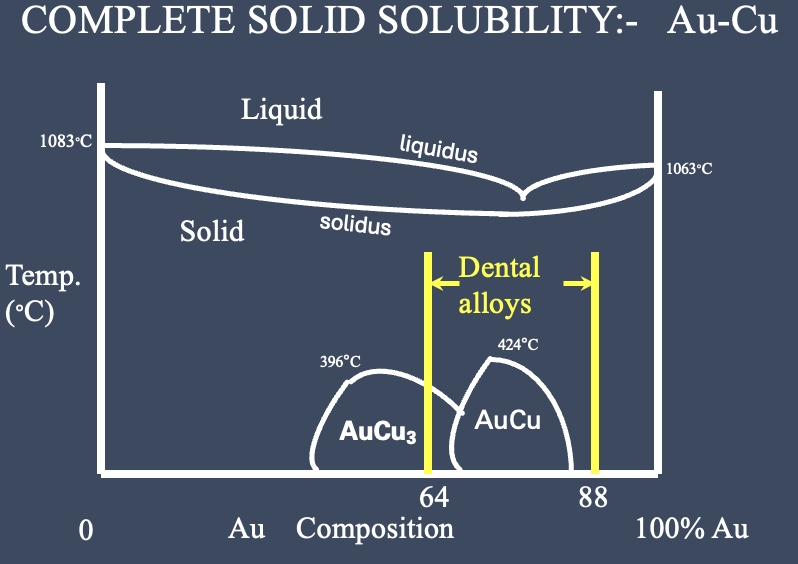
• liquidus and solidus are close together so there will be little coring when quenched • the area under the graph shows the two possible ordered solid solutions that can form after annealing (order hardening)
what is the composition of type IV gold?
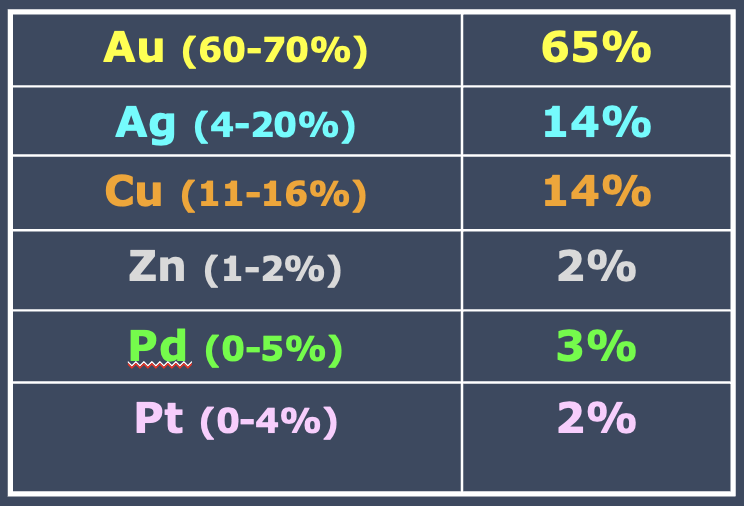
what is the effect of copper in type IV gold?
• solid solutions of all proportions possible - both metals are completely soluble in one another • benefits from solution hardening - forms common lattice to impede dislocations (increased EL, UTS, hardness) • benefits from order hardening - as long as 40-80% Au then ordered solution is created when quenched • reduced melting point • little/no coring - solidus close to liquidus • imparts red colour - if sufficient quantity added • reduces density • can cause corrosion if too much added
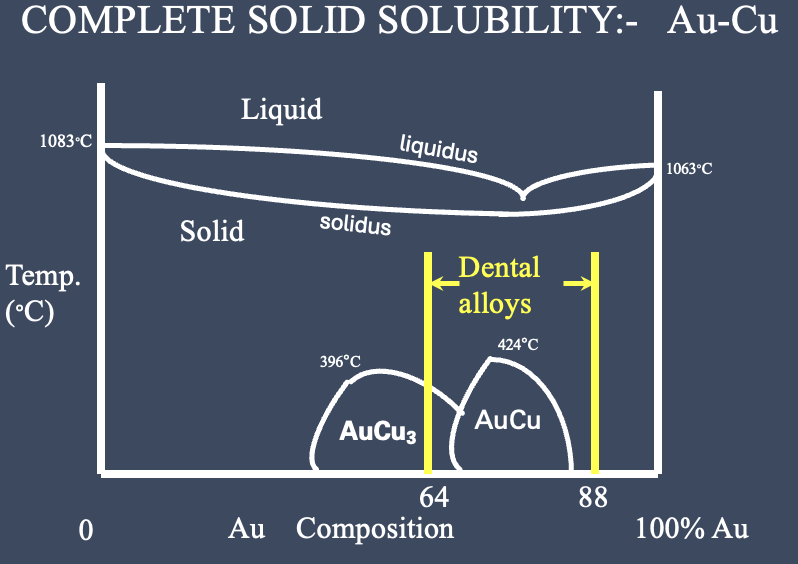
what is the effect of silver in type IV gold
• solid solutions of all proportions - both completely soluble in one another • benefits from solution hardening • benefits from precipitation hardening with copper - after annealing as Ag and Cu are partially soluble • can allow tarnishing • molten silver absorbs gas - care when casting or alloy may become porous and less robust • whitens the alloy - compensates for the redness α-grains (high Ag%) β-grains (high Cu%)
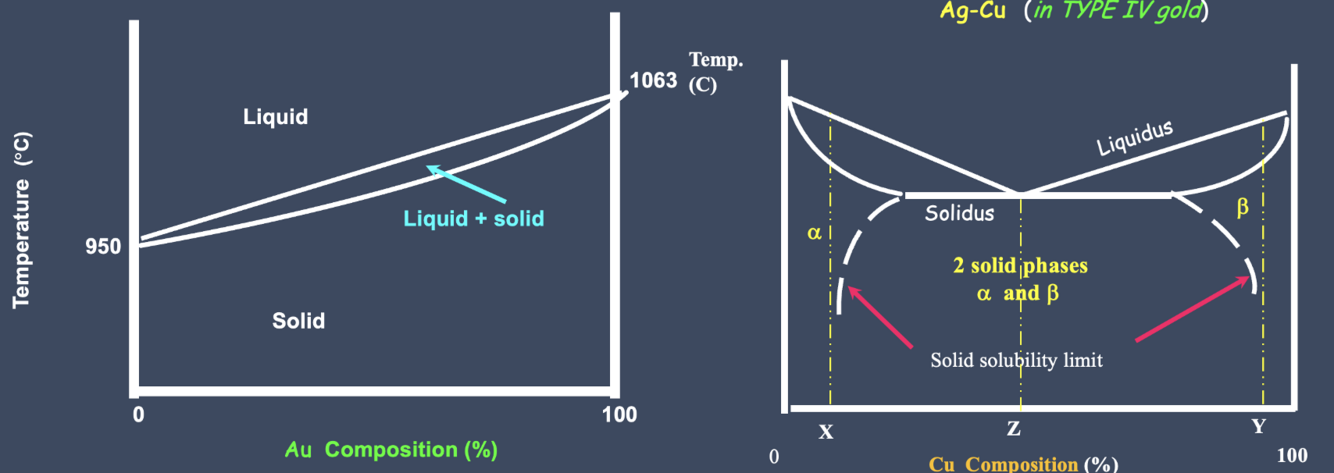
what is the effect of platinum in type IV gold?
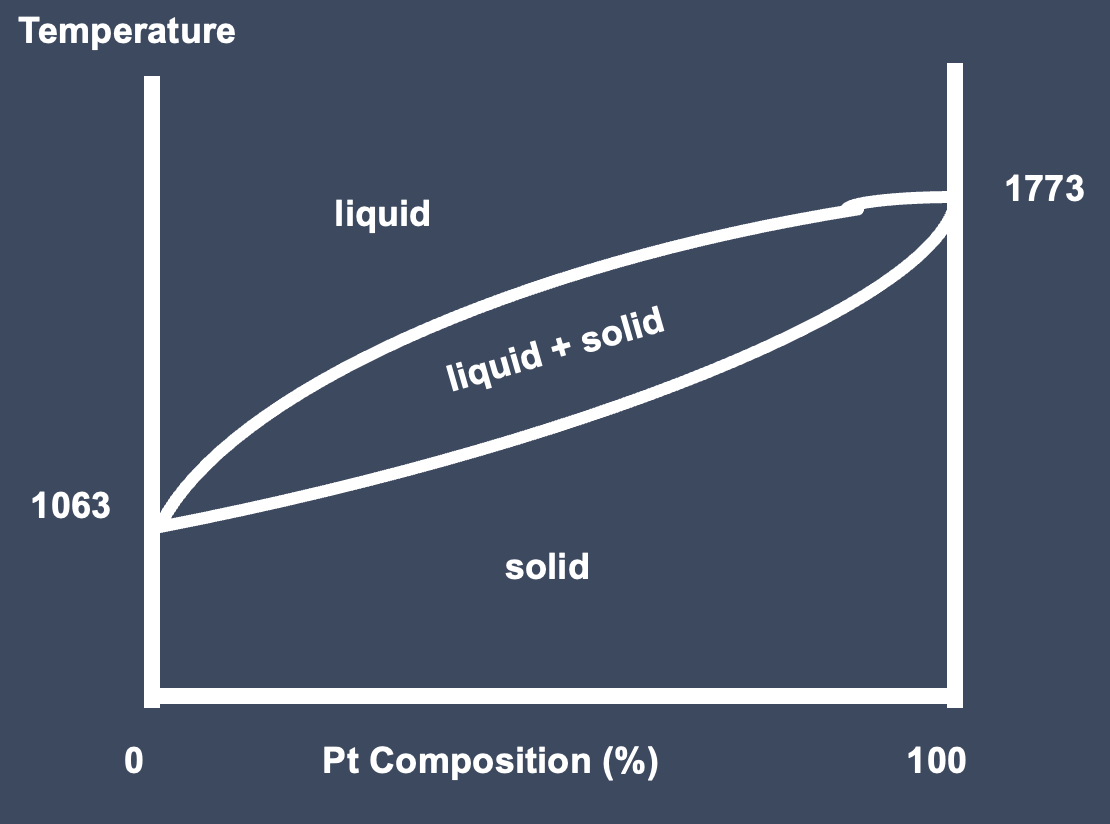
• solid solution of all proportions - both completely soluble in each other • benefits from solution hardening • fine grain structure • coring can occur - big difference between liquidus and solidus
what is the effect of palladium on type IV gold?
• similar to Pt but less expensive • less coring than Pt • coarser, large grains than with Pt • absorbs gases when molten - care when casting as alloy may become porous
what is the effect of zinc, nickel and indium in type IV gold?
• zinc: acts as scavenger, oxidising during the process • nickel: increases hardness and strength • indium: encourages smaller/finer grains
what are the heat treatments applied to type IV gold alloys?
• quenching after casting - causes coring of AuPt and AuCu (fine grains produced) • homogenous anneal - eliminates coring by removing the concentration gradient (700degrees, 10 mins) • cold working - pushes dislocations to grain boundaries but induces residual stress within the alloy • stress-relieving annealing - alleviates residual stress • order hardening between Au and Cu • precipitation hardening between Ag and Cu • heated to 450 degrees then cooled slowly to 200 degrees then quenched * all increases alloy’s strength and hardness so is more robust (EL, UTS, hardness)
what are the uses of cobalt chrome in dentistry?
• wires • surgical implants • casat partial dentures
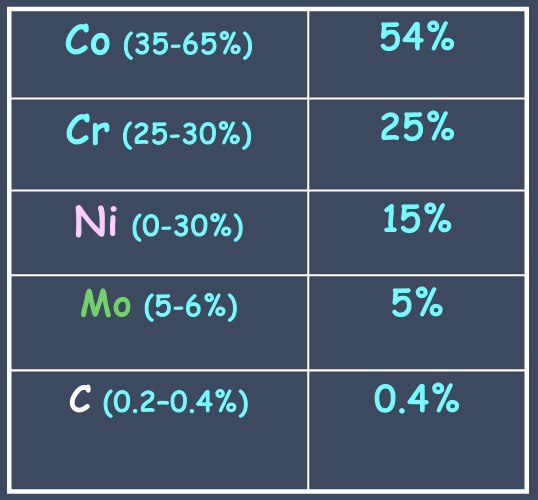
what is the composition of CoCr?
what is the effect of cobalt in CoCr?
• forms solid solution with Cr - both co-exist in same lattice network • increases strength, hardness and rigidity • allows coring
what is the effect of chromium in CoCr?
• forms solid solution with Co - both co-exist in same lattice network • increases strength, hardness and rigidity • allows coring • forms a passive layer on the alloy on the alloy surface - increases corrosion resistance
what is the effect of nickel in CoCr?
• replaces some Co • improves ductility • slight reduction in strength • patients may have allergic reaction
how does carbon, molybdenum, tungsten and aluminium effect CoCr?
• carbon: small quantities - too much can make the alloy extremely brittle • molybdenum: reduces grain size, increases strength • tungsten: increases strength • aluminium: increases PL - Polymer Laminate
what are the techniques used with CoCr when making partial dentures?
• investment material used when casting CoCr has to cope with** high temperatures: 1200-1400 degrees** • melting the alloy can be done by electric conduction or oxyacetylene • casting requires centrifugal force - avoid overheating (coarse grains) and cooling too fast or slow may induce carbides and make framework brittle
what are some finishing methods for CoCr?
• sandblast • electroplate • abrasive wheel • polishing buff
what are the properties of CoCr?
• hard - resists wear in mouth • low ductility • work hardens rapidly
what are the uses of titanium in dentistry?
• implants • crown and bridge (cast) • maxillo-facial skull plates • partial dentures (cast)
what are the advantages of titanium?
• good biocompatability • good corrosion resistance (passive oxide layer) • parts can be joined by laser welding
what are the disadvantages of titanium?
• required electric arc melting • absorbs gases so needs specialised investment and casting equipment