2. Chemical Tests
No description yet. This curated deck is ready for daily study.
Card preview (24)
Ammonia Test
• Warm the test solution slightly. • Ammonia turns damp red litmus paper blue.
Carbon Dioxide Test
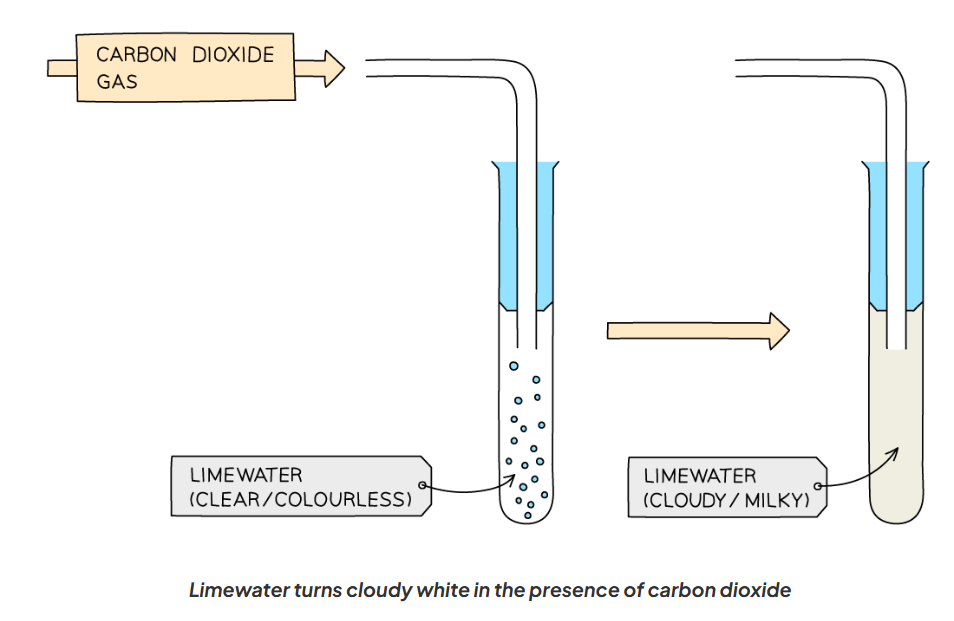
• Bubbling the gas through an aqueous solution of limewater (calcium hydroxide) using a delivery tube. • If the gas is carbon dioxide, the limewater turns cloudy white due to the formation of insoluble calcium carbonate
Chlorine Test
If chlorine gas is present, damp blue litmus paper will turn red and then be bleached white.
Hydrogen Test
• Holding a lit splint at the open end of a test tube of gas. • If the gas is hydrogen it burns with a loud “squeaky pop” which is the result of the rapid combustion of hydrogen with oxygen to produce water.
Oxygen Test
• The test for oxygen consists of placing a glowing splint inside a test tube of gas • If the gas is oxygen, the splint will relight
Why is the flame test used?
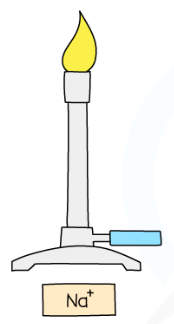
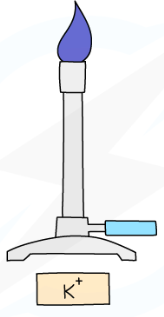
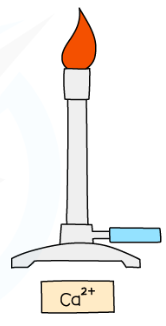
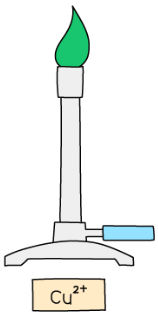
The flame test is used to identify the positive metal ion (cations) by the colour of the flame they produce
Li+ (Lithium)
Red
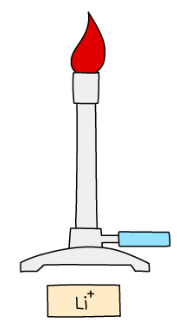
Na+ (Sodium)
Yellow
K+ (Potassium)
Lilac
Ca 2+ (Calcium)
Orange - Red
Cu 2+ (Copper)
Blue - Green
How to test for metal cations other than the flame test?
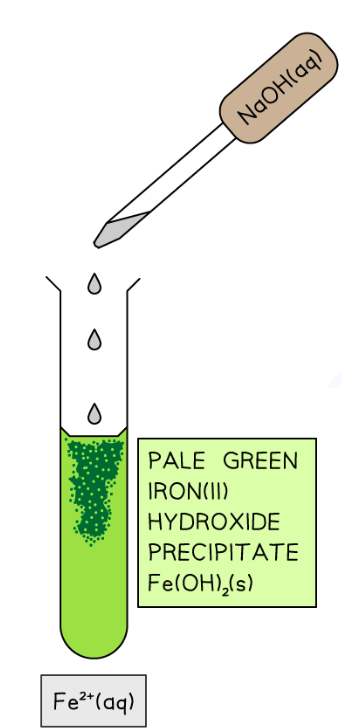
Metal cations in aqueous solution can be identified by the colour of the precipitate formed when sodium hydroxide (NaOH) is added.
When does a metal hydroxide precipitate form when sodium hydroxide is added to a metal?
• A metal hydroxide precipitate typically forms if the hydroxide is insoluble in water • If no precipitate forms, the hydroxide may be soluble or there may not be enough of the metal ion present
Iron (II), Fe 2+ Colour and Equation for cation test with sodium hydroxide (NaOH)
• Pale green precipitate • Fe2+ (aq) + 2OH– (aq) → Fe(OH)2 (s)
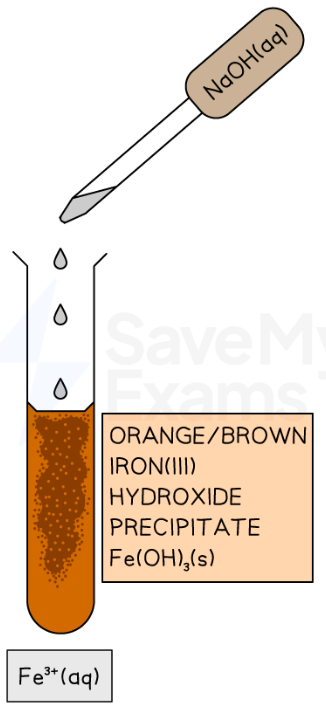
Iron (III), Fe 3+ Colour and Equation for cation test with sodium hydroxide (NaOH)
• Orange / brown precipitate • Fe3+ (aq) + 3OH– (aq) → Fe(OH)3 (s)
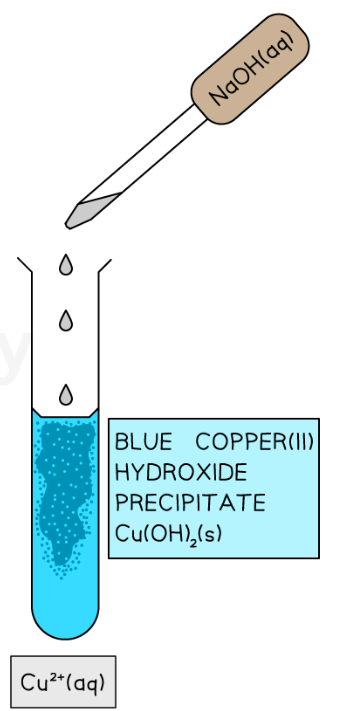
Copper (II), Cu 2+ Colour and Equation for cation test with sodium hydroxide (NaOH)
• Light Blue precipitate • Cu2+ (aq) + 2OH– (aq) → Cu(OH)2 (s)
How to test for Ammonium ion, (NH4+)
• Add NaOH and warm the mixture • Observation with NaOH: Ammonia gas is released (colourless) • NH4+ (aq) + OH- (aq) → NH3 (g) + H2O (l) • Test for ammonia gas: Ammonia turns damp red litmus paper blue
Test for Carbonate Ions (CO3 2-)
• Add dilute hydrochloric acid • Bubble the gas released through limewater • Limewater turns cloudy if the carbonate ion is present
Test for Halide Anions (Cl– , Br– , I– )
• Acidify the sample with nitric acid • Add silver nitrate solution, AgNO3, • A silver halide precipitate forms if a halide ion is present • The precipitate is indicated by the state symbol (s)
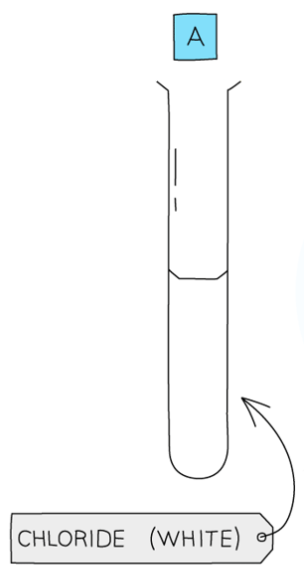
Chloride Ion Colour After Test with acidified silver nitrate solution With example equation
The chloride ion forms a white precipitate of silver chloride. potassium chloride + silver nitrate → potassium nitrate + silver chloride KCl (aq) + AgNO3 (aq) → KNO3 (aq) + AgCl (s)
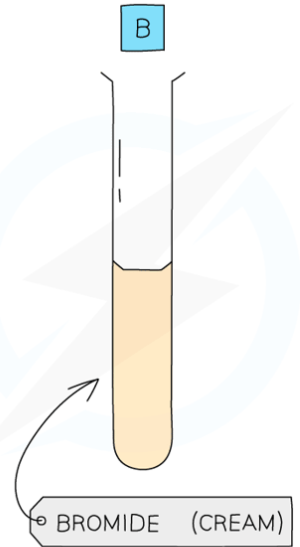
Bromide Ion Colour After Test with acidified silver nitrate solution With example equation
The bromide ion forms a cream precipitate of silver bromide. potassium bromide + silver nitrate → potassium nitrate + silver bromide KBr (aq) + AgNO3 (aq) → KNO3 (aq) + AgBr (s)
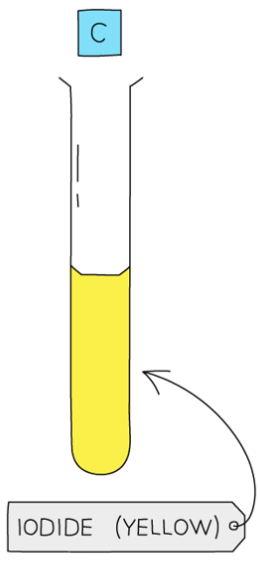
Iodine Ion Colour After Test with acidified silver nitrate solution With example equation
The iodide ions forms a yellow precipitate of silver iodide. potassium iodide + silver nitrate → potassium nitrate + silver iodide KI (aq) + AgNO3 (aq) → KNO3 (aq) + AgI (s)
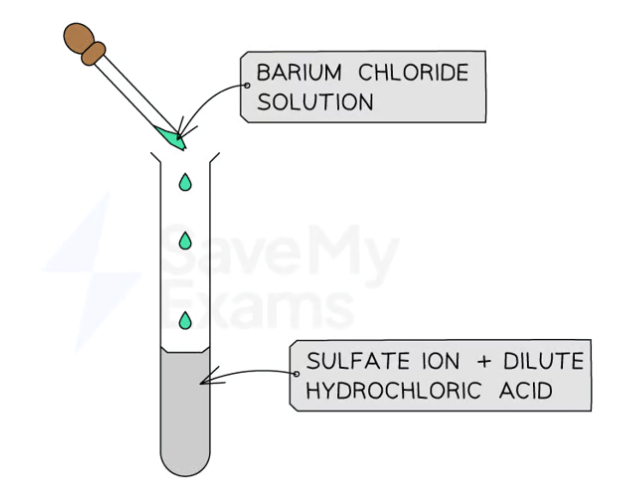
Test for Sulfate Ions (SO4 2-) Ba2+ (aq) + SO42- (aq) → BaSO4 (s)
• Acidify the sample with dilute hydrochloric acid • Add a few drops of barium chloride/nitrate solution • A white precipitate of barium sulfate is formed, if the sulfate ion is present
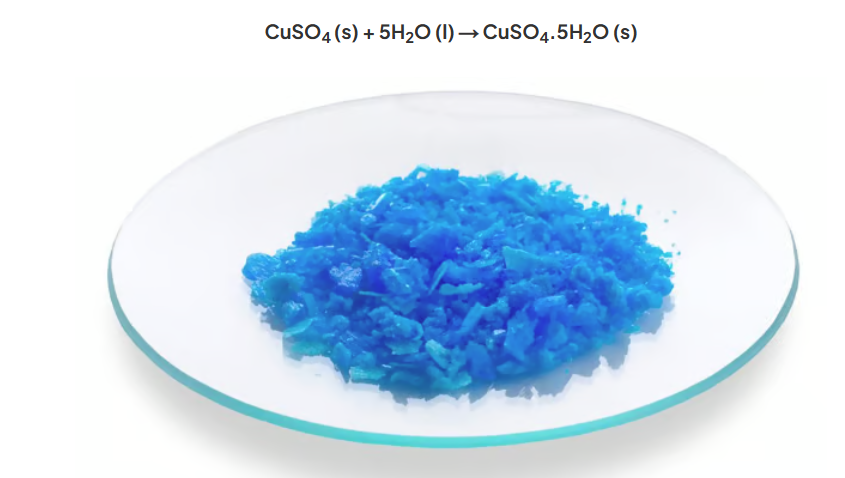
Describe a test for the presence of water using anhydrous copper(II) sulfate (chemical).
• Anhydrous copper(II) sulfate turns from white to blue on the addition of water