C3 Equations
No description yet. This curated deck is ready for daily study.
Card preview (23)
what does the Group number represent?
#electrons in the outer shell (Column)
what does the Period number represent?
#shells (Rows)
why do elements in the same group have similar properties?
same #electrons in outer shell
what happens to the reactivity of ALKALI METALS (g1) as you go down the group? why?
increases • outermost electrons get FURTHER from nucleus • weaker electrostatic force of attraction • electrons are LOST MORE EASILY
what happens to the reactivity of HALOGENS (g7) as you go down the group? why?
decreases • MORE SHIELDING of the nucleus • weaker electrostatic force of attraction • electrons are GAINED LESS EASILY
what happens to the HARDNESS of the alkali metals (g1) as you go down the group?
decreases
in what forms do HALOGENS exist?
diatomic molecules
in what forms do NOBLE GASES exist?
monoatomic
why are noble gases UNREACTIVE?
full outer shells → don’t need to react with others to get full outer shell
how are noble gases used? what are some examples?
creating an INERT ATMOSPHERE e.g. argon in lamps, helium in ballons
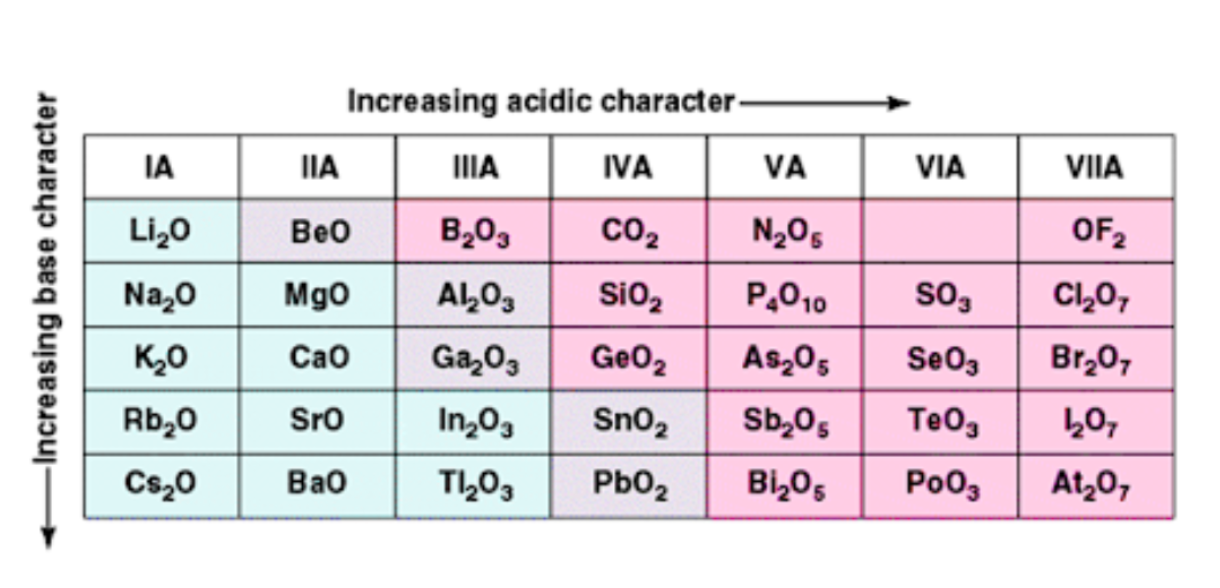
what happens to the oxides as you go down the group?
increasing base character
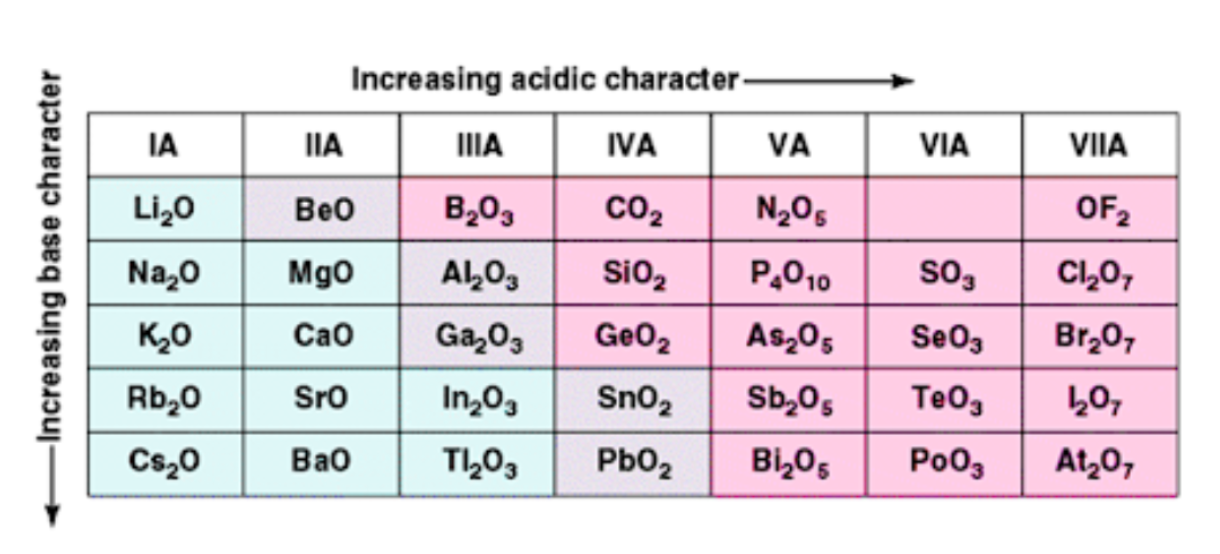
what happens to the oxides as you go down the period?
increasing acidic character
what substances are ALWAYS SOLUBLE?
Nitrate Acids Group 1 Ammonium
what substances are SOLUBLE MOST OF THE TIMES? what are the expceptions?
Sulfates (except when reacting with Pb, Hg, Ag, Ca, Sr, Ba) Group 7 (except when reacting with Pb, Hg, Ag)
how many ATOMS are in ONE MOLE of a substance? what is the number called?
6.02 x 10^23 avogadro’s constant
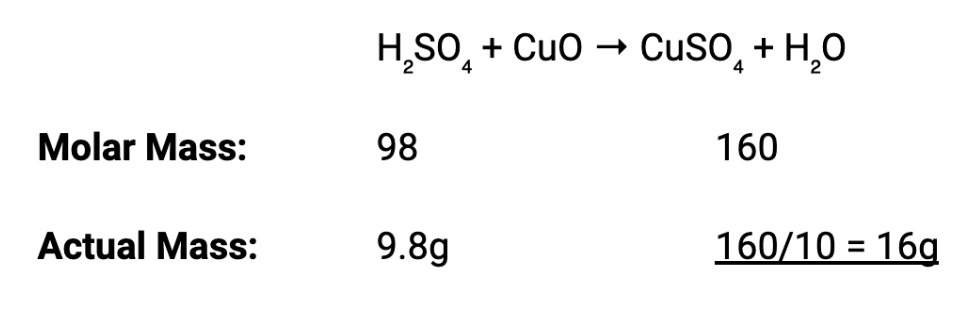
how do you calculate mass?
mass = molar mass x number of moles
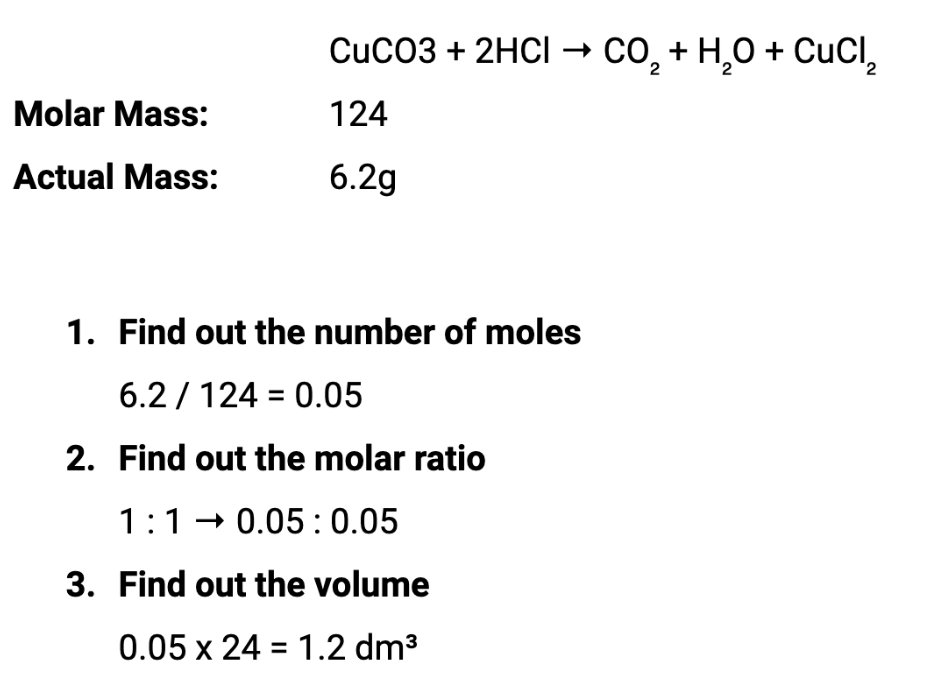
how do you know the molar ratio?
from the big numbers in front of the symbols
write the IONIC EQUATION

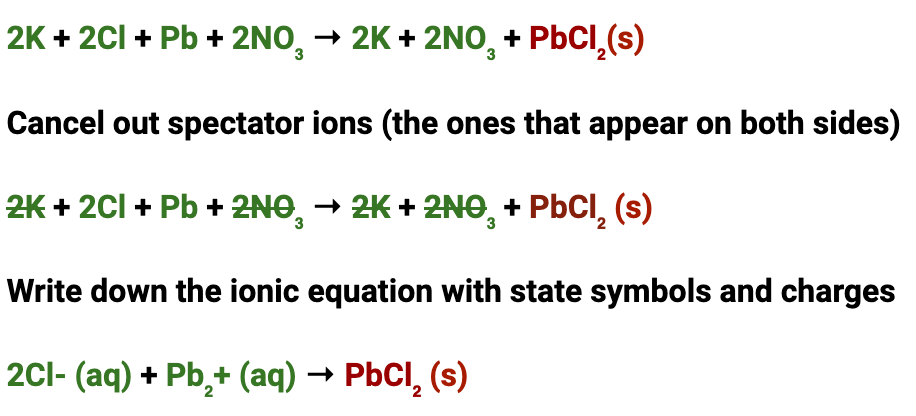

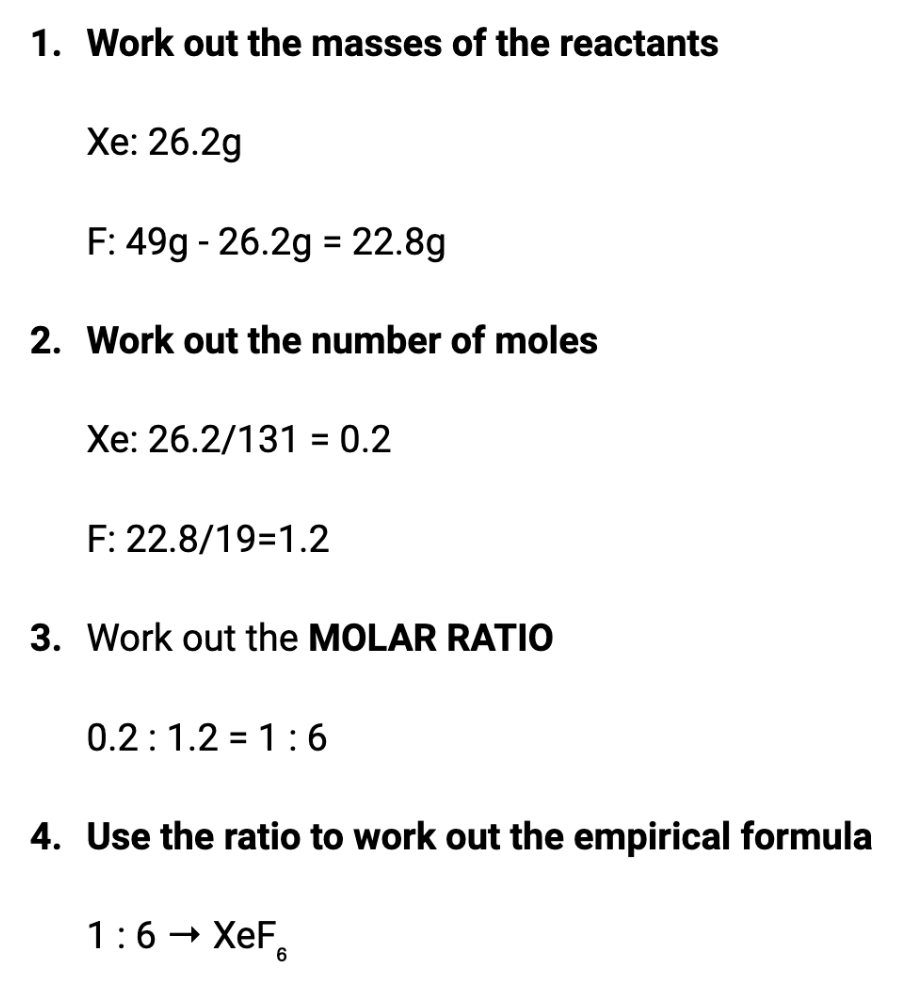
The empirical formula is all about MOLAR RATIO!
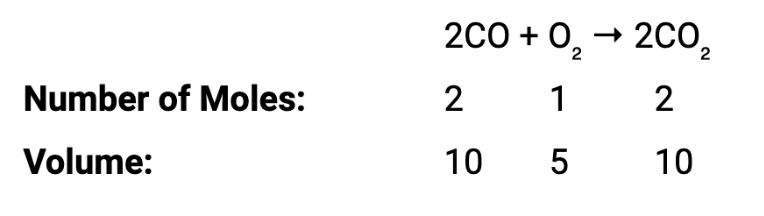
what is the rule for reacting volume?
equal moles = equal volume (one mole of any gas under room temp. and pressure → volume of 24dm)