Acid and bases
No description yet. This curated deck is ready for daily study.
Card preview (23)
Theory of acid and bases
• Arhennius theory • Bronsted-lowry theory • Lewis theory
Arhennius theory
• Acid produces H+/H3O+ ions • Bases produces OH- ions
Bronsted-lowry theory
• An acid is a proton (hydrogen ion) donor. • A base is a proton (hydrogen ion) acceptor.
Lewis theory
• An acid is an electron pair acceptor. • A base is an electron pair donor.
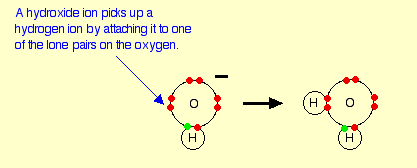
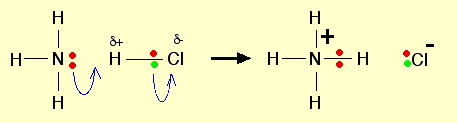
There isn’t an empty orbital anywhere on the HCl which can accept a pair of electrons. Why, then, is the HCl a Lewis acid?
• HCl is polar. Chlorine is more electronegative than hydrogen, leaving the hydrogen slightly positive and the chlorine slightly negative. • Lone pair on the nitrogen of an ammonia molecule is attracted to the slightly positive hydrogen atom • e- are slowly pushed towards chlorine, HCl bond breaks and dative/coordinate bond is formed
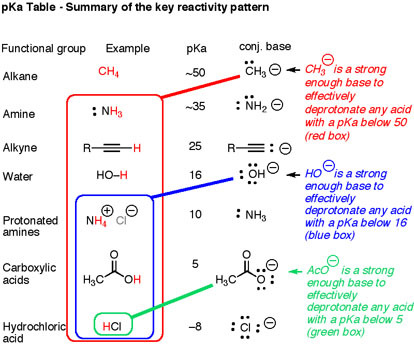
pKa table
Acid-Base reaction overview
• • The species which loses H+ is the acid • The species which gains H+ is the base • The conjugate base is what becomes of the acid after it loses H+ • The conjugate acid is what becomes of the base after it gains H+
What determines acidity?
• any factor which stabilizes the conjugate base will increase the acidity. • any factor which destabilizes the conjugate base will decrease the acidity. • a roughly equivalent word for “stability” is “basicity
What determines basicity?
• Stabilizing a lone pair lowers the basicity; • Destabilizing the lone pair increases basicity.
Acidity trend • the lesser the charge, the better the acidity
All else being equal, the lower the charge density, the more stable a species is.
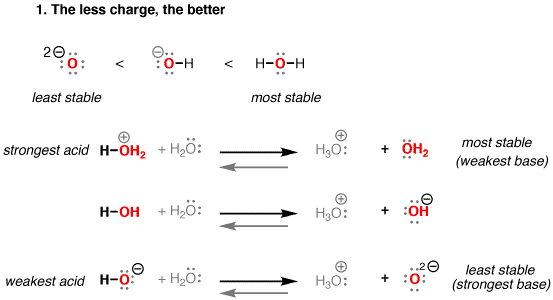
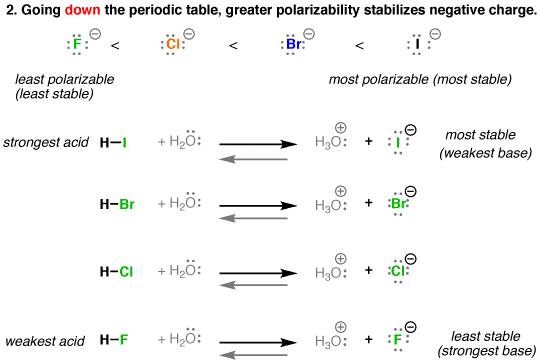
Acidity trend Polarizability
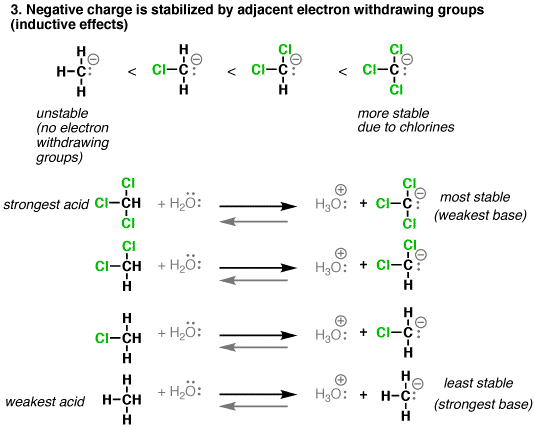
Acidity trends • Electron withdrawing groups
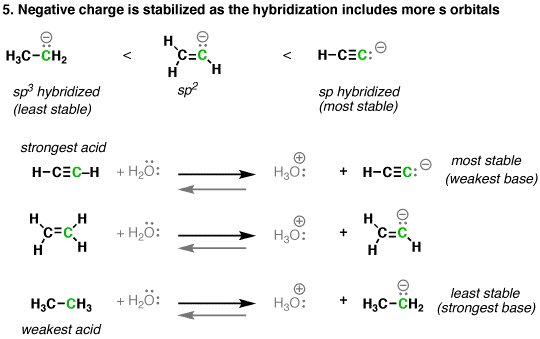
orbitals
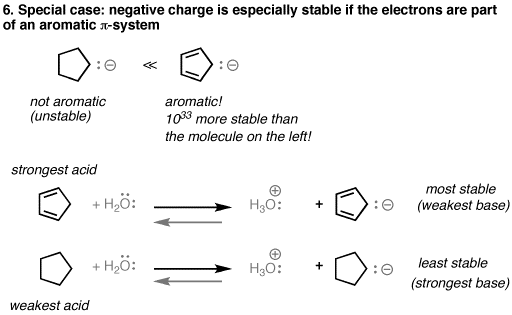
Acidity trend aromacity
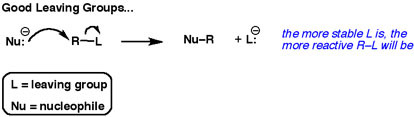
What makes a good leaving group?
Good leaving groups are weak bases.
How do we know which are weak bases?
• The stronger the acid, the weaker the conjugate base • the weaker the conjugate base, the better the leaving group

pka table, handy guide to leaving group
A leaving group is a nucleophile in reverse
OH- is a bad leaving group
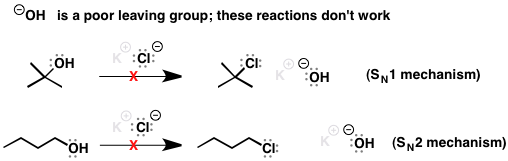
OH- IN sn1 example
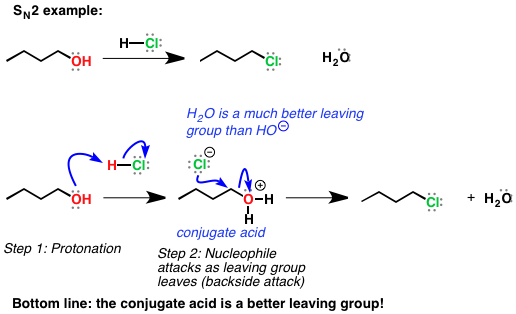
OH- in SN2 example
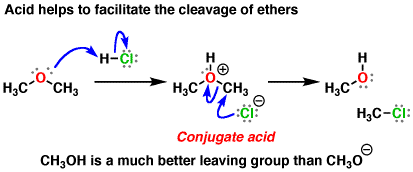
conjugate acid will always be a better leaving group.
Acids helps facillitates cleavage of ether