PAGs
No description yet. This curated deck is ready for daily study.
Card preview (24)
Describe equipment and method for PAG1- Reactivity trends
Equipment: Spotting tile, dropping pipettes, strips of metal, metal solutions Methods: 1. Using dropping pipettes put solutions in spotting tiles 2. Place a strip of metals in liquids 3. Not if reaction took place / solution formed (fizzing) 2. Repeat for all others, using a fresh dropper for each one Safety: goggle
Describe equipment and method for PAG2 -electrolysis
Safety: Copper (II) chloride solution- irritant Oxygen gas Hydrogen gas , extremely flammable Chlorine gas - toxic Sodium hydroxide solution is corrosive Equipment: Beaker 2 carbon electrodes 2 crocodile clips , 2 wires Voltage lab lack Methods: 1. Connect wires to lab voltage pack and then added crocodile clips to the carbon electrodes 2. The positive
What is a hazard
Anything that threatens life, health or the environment
What is a risk
The probability of the hazard occurring
How do scientists communicate?
Peer review Conferences Telling journalists and doctors
What is a hypothesis?
A statement made on observation and backup up by scientific knowledge (comes first)
What is a prediction?
What you think will happen on basis of a hypothesis
What are the different types of variables?
🟢independent (deliberately changed, what is measured) 🟢dependant (the one you measure ) 🟢control ( can affect the outcome of the results)
How can you make data more accurate? (closer to the real value)
🟢repeating measurements and calculating the mean 🟢repeating measurements with a different instrument and seeing if the results are the same 🟢using the instrument more properly
How do you make data more precise?
Instruments with a high resolution
How do you conclude graphs?
🟢description of pattern 🟢scientific explanation linking to the pattern
What are random errors?
Caused by unknown and unpredictable conditions Reduce by repeating measurements and calculating a mean
What are systematic errors?
Things like zero errors. Reduce the effect by using different peices of equipment
What is an uncertainty
Caused because of the instrument The interval within which the true value can be expected to lie
How do you measure the reactivity (known if it’s more reactive)?
The higher the reactivity the greater the rate of hydrogen produced, If change observes then metal has been displaced
How do you collect and test hydrogen?
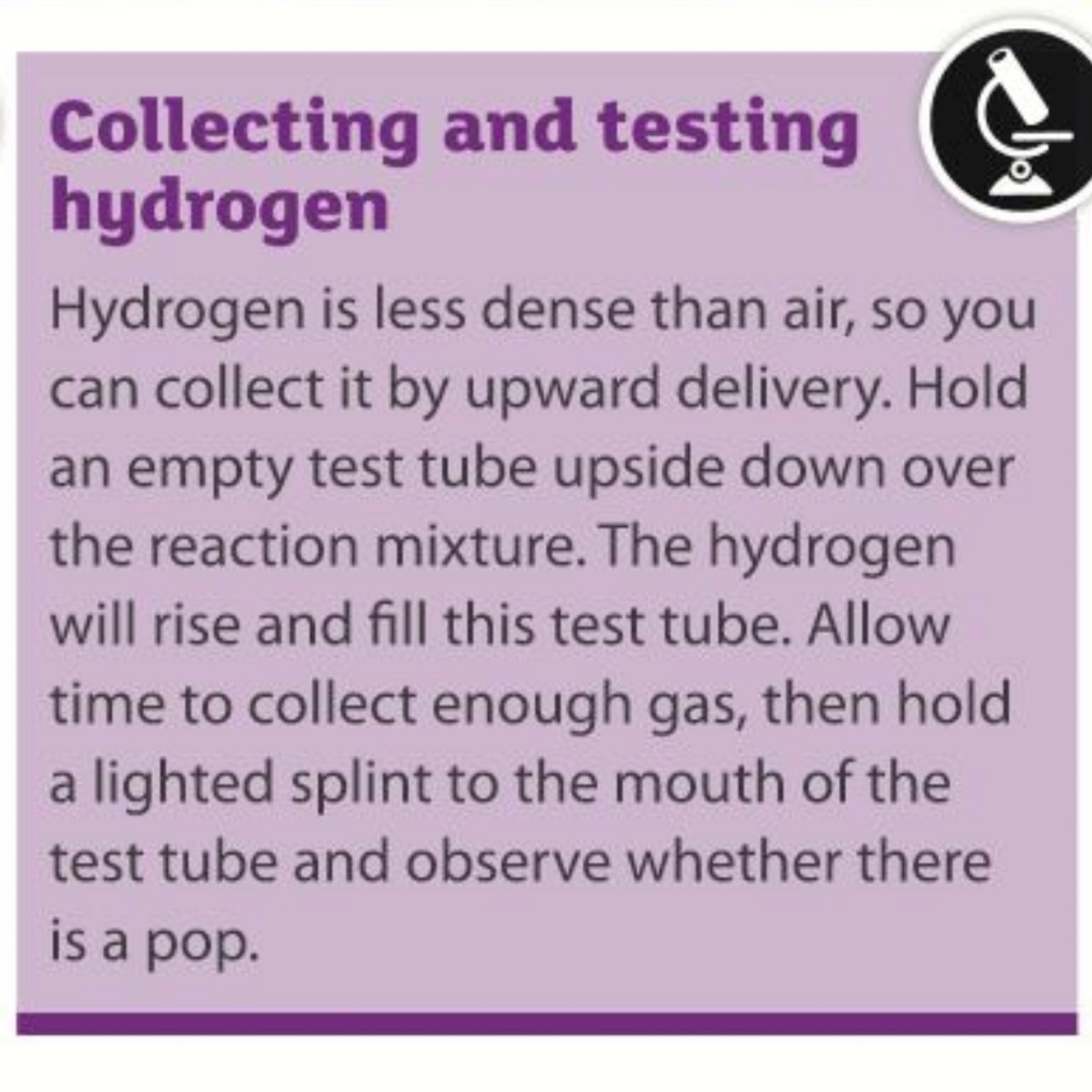
How do you heat safely with a Bunsen burner?
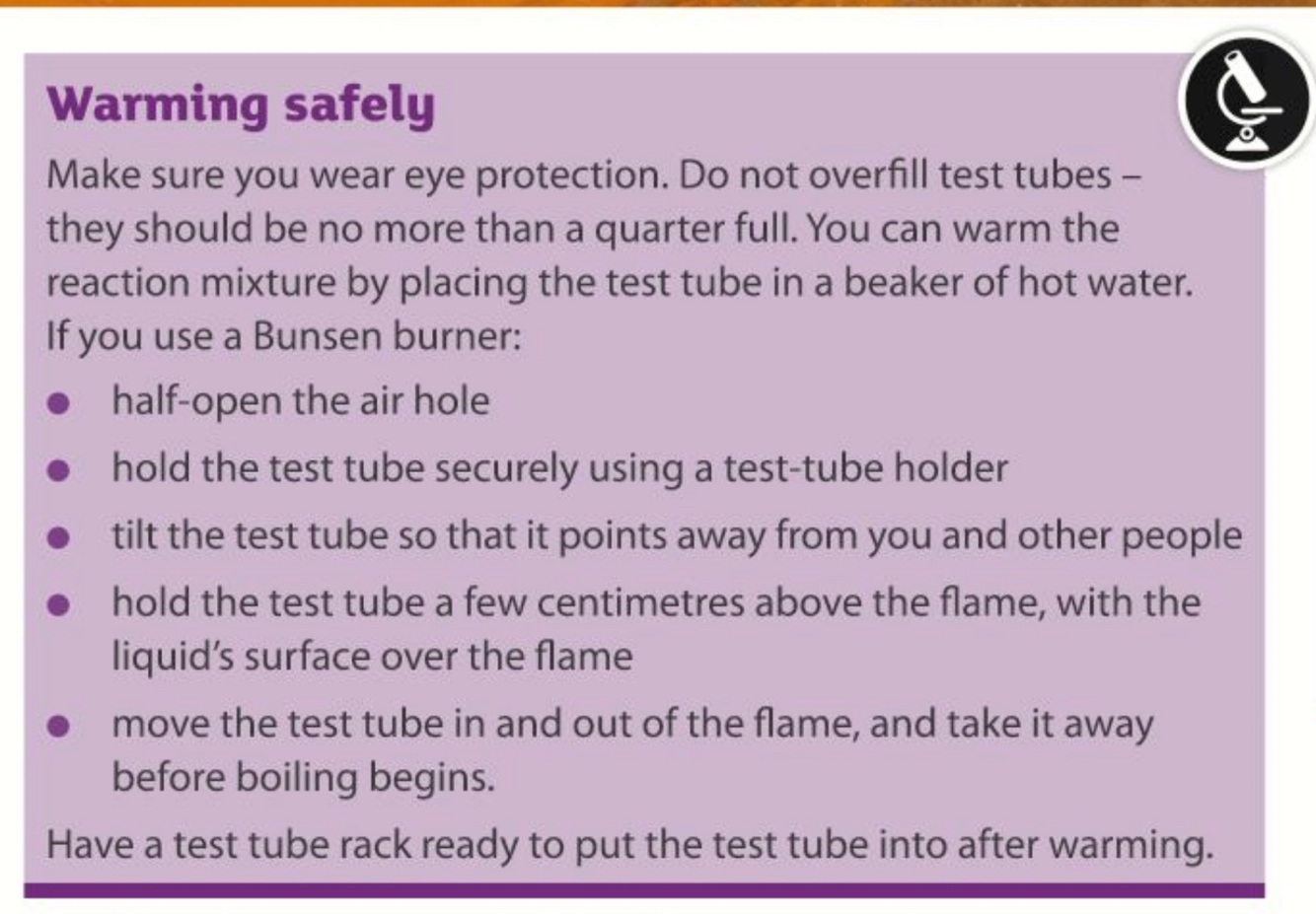
Describe a water bath
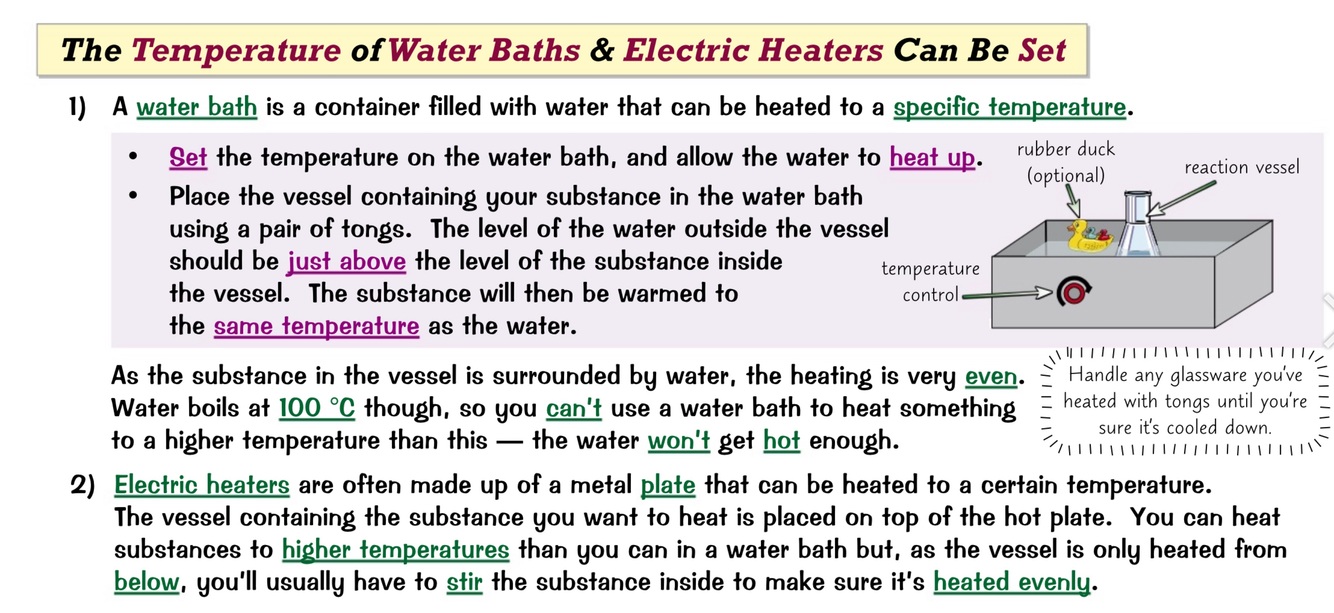
How do you fix electrical connections?
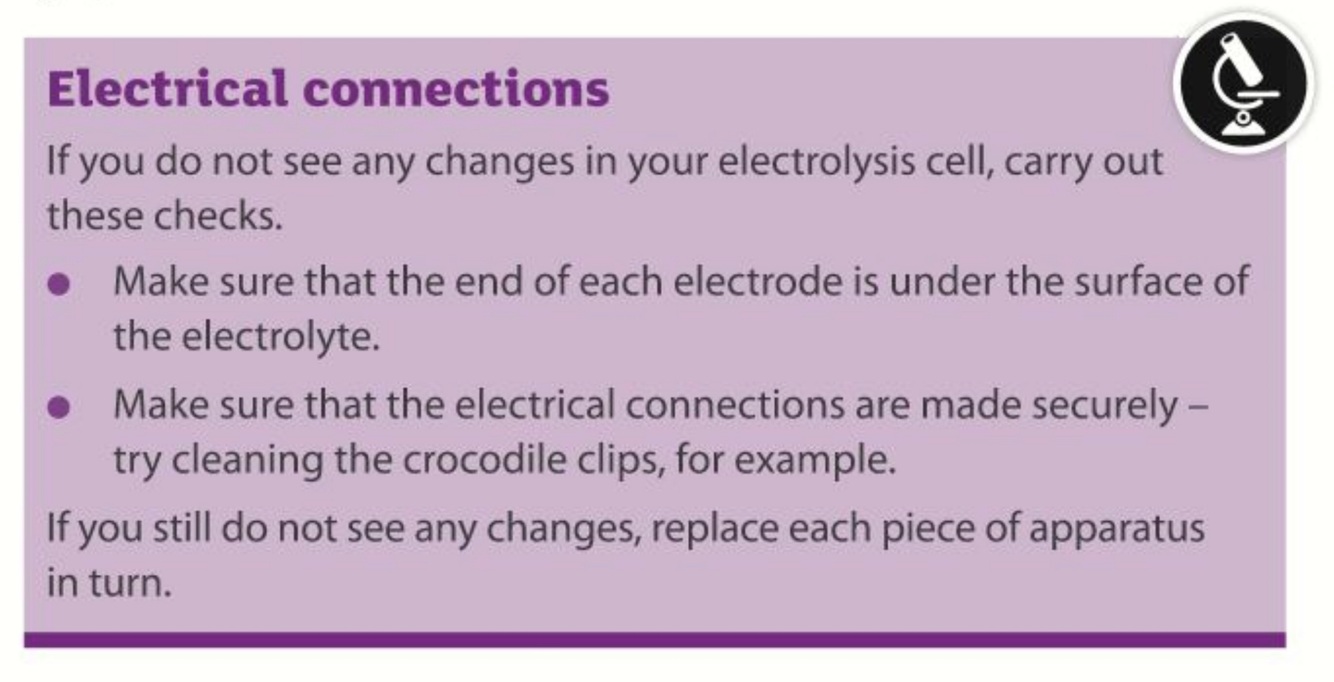
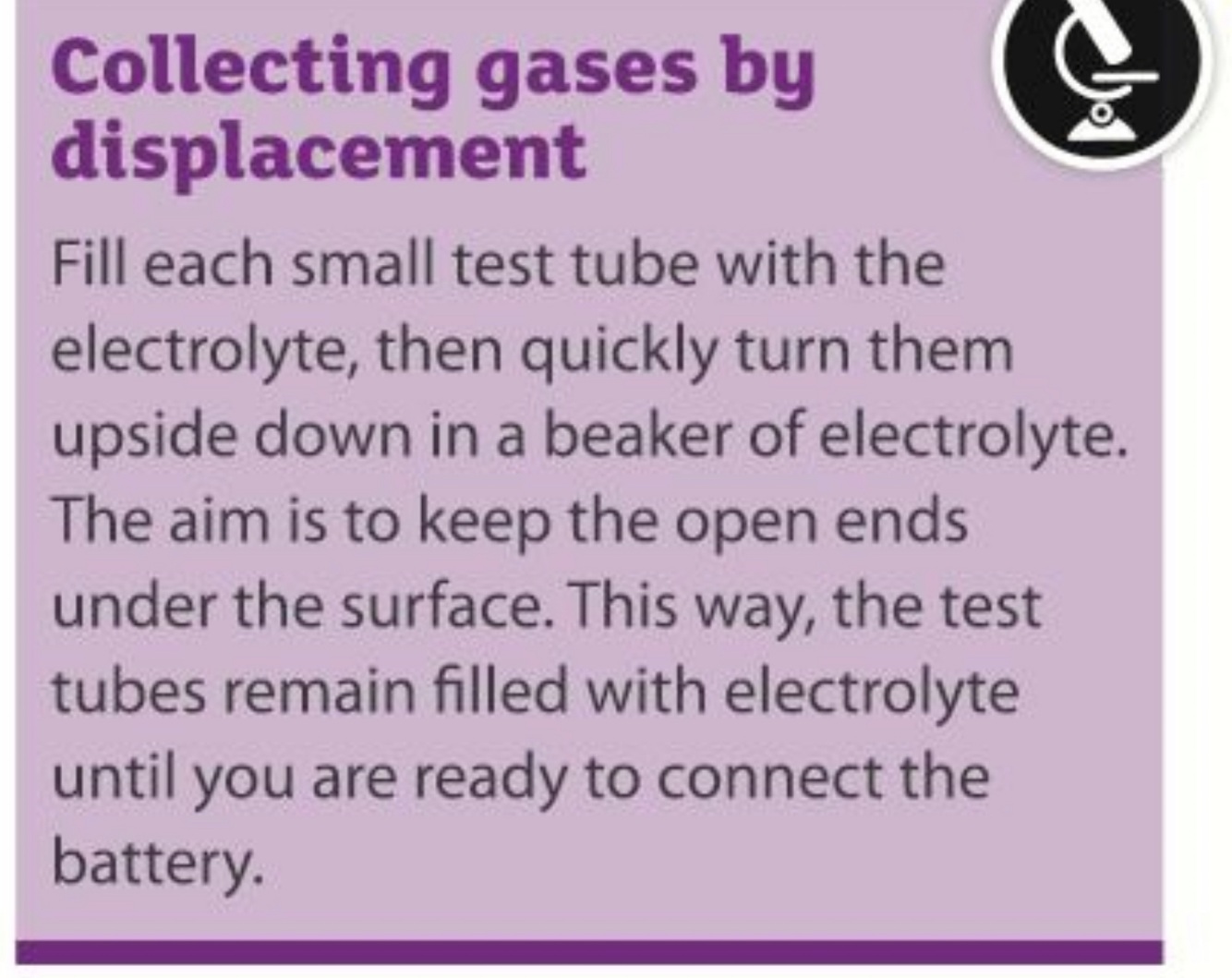
How do you collect gases by displacement?
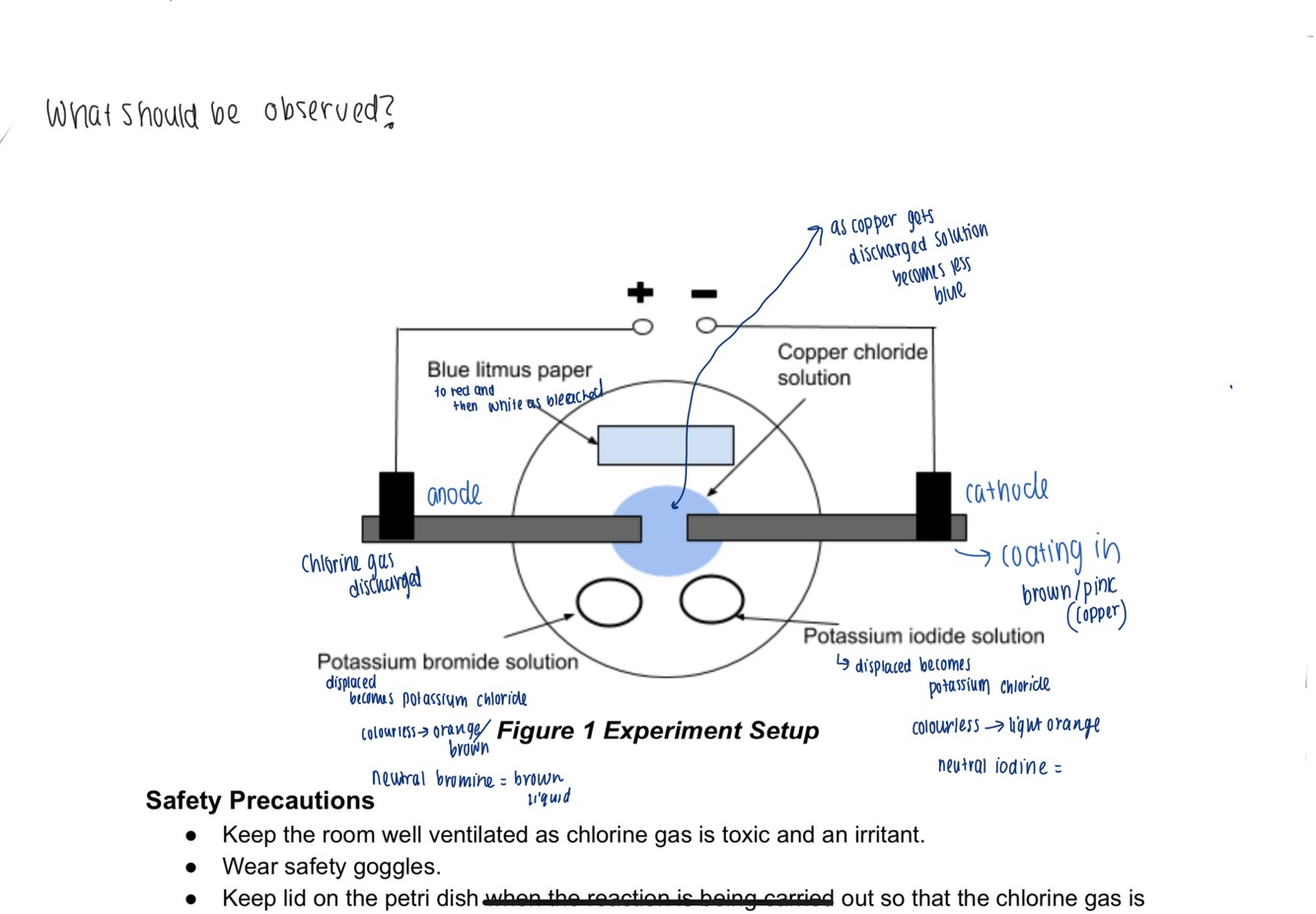
Describe the set up of electrolysis in a Petri dish
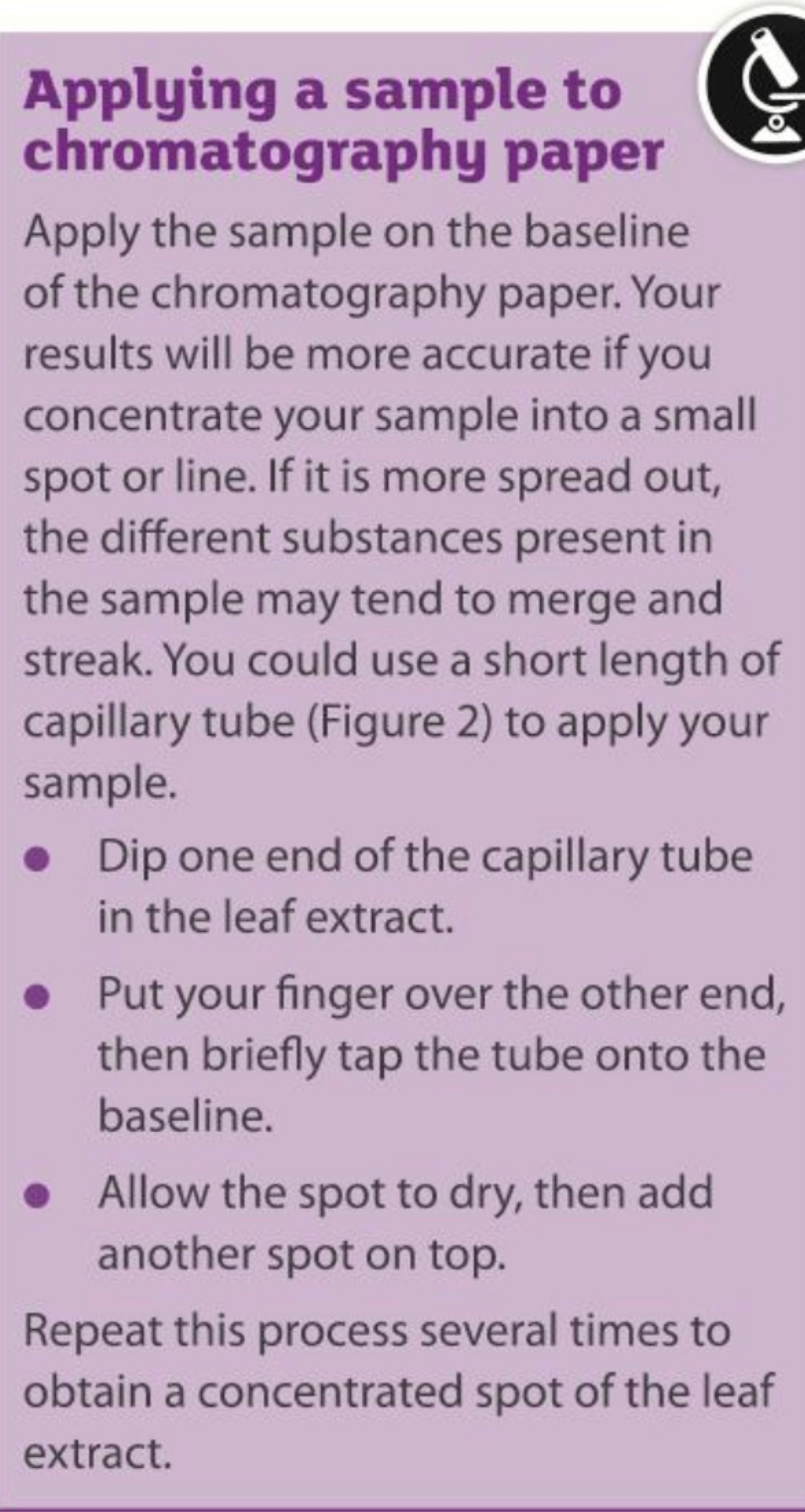
How do you apply a sample to a chromatography paper
Why use a pencil line?
It is insoluble in water, and so will not affect the results
What is the mobile phrase when separating a leaf extract?
Propanone (highly flammable and irritant)