C7 Metals
No description yet. This curated deck is ready for daily study.
Card preview (24)
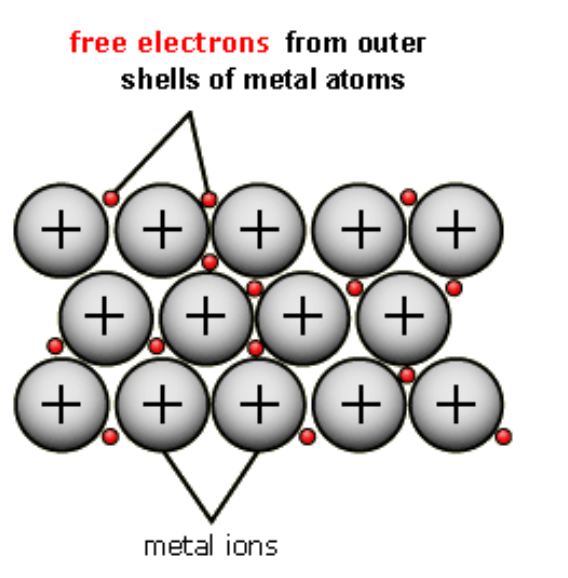
what is METALLIC BONDING?
lattice of cations in a sea of delocalized electrons
properties of METALS?
good conductor of heat and electricity high m/b point malleable and ductile
why do metals conduct heat and electricity?
delocalized electrons
why do metals have high m/b points?
strong force of attraction between metal ions and delocalized electrons → more energy needed to break the bonds
why are metals malleable and ductile?
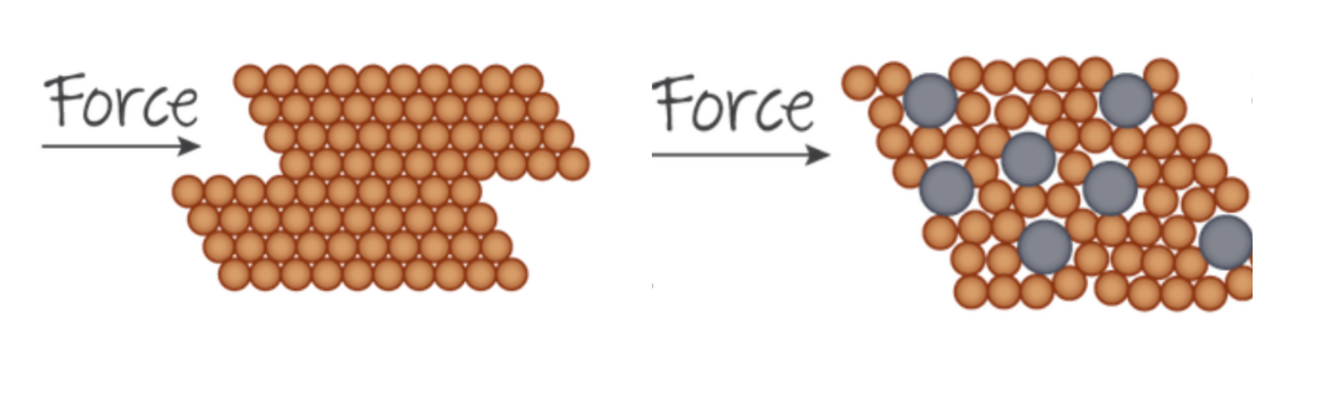
LAYERS OF ION in lattice structure SLIDE PAST one another due to delocalized electrons
properties of TRANSITION METALS?
high density high melting point form colored compounds
why do transition metals have high melting points?
each atom is bonded to electrons each ion is bonded to other ions → more energy to break the bonds
what are transition metals often used as?
catalysts e.g. Fe in haber process to make NH3
what are ALLOYS?
mixtures of metals
why do alloys have different properties from the metals they contain? what are the different properties?
• difference atoms distort regular lattice structure • harder for layers to slide past one another → stronger, less flexible
properties and uses of ALUMINUM?
resistant to corrosion + strong + light → aircraft conduct heat + non-toxic → saucepan
properties and uses of ZINC?
cheap, reactive → coating iron (galvinizing)
properties and uses of COPPER?
conduct electricity → electrical wires
properties and uses of BRONZE?
doesn’t corrode → medals
properties and uses of BRASS?
doesn’t corrode → music instruments
composition, properties and uses of STEEL?
Fe+C very hard → cutting tool
properties and uses of MILD STEEL
easily shaped → car body
properties and uses of DURIRON?
not affected by acid → pipes in chemical factories
properties and uses of STAINLESS STEEL?
doesn’t rust → car parts, cutlery
what is REDOX reaction?
loss/gain of electrons (oxidation, reduction)
an element is oxidized when it … electrons?
loses electrons OIL - Oxidation Is Loss of electrons
an element is reduced when it … electrons?
gains electrons RIG - Reduction Is Gain of electrons
what can more reactive metals do to less reactive metals?
DISPLACE them from their salt solution
write the 1. SYMBOL EQUATION 2. HALF EQUATION for copper reacting w/ silver nitrate
Cu (s) + 2AgNO3 (aq) → Cu(NO3)2 (aq) + 2Ag (s) Cu(s) → Cu2+ (aq) + 2eˉ Ag+ (aq)+ 1eˉ →Ag(s)