DAT Booster Biology Practice Exam 5
No description yet. This curated deck is ready for daily study.
Card preview (24)
In contrast to a prokaryotic organism, which of the following is unique to eukaryotic gene expression? A. Presence of a promoter region B. Use of RNA polymerase C. Polyadenylation of RNA D. Presence of nucleotides E. Simultaneous transcription and translation
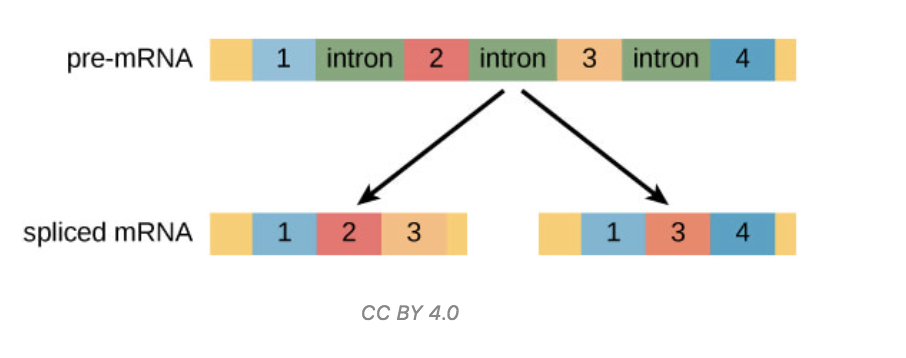
C Generally speaking, prokaryotes do not perform post-transcriptional modification, including the addition of a 5′ cap or a polyA tail to their RNA transcript. Furthermore, prokaryotes do not contain introns in their mRNA. Eukaryotic pre-mRNA must undergo several modifications before leaving the nucleus. To stabilize their mRNA, eukaryotes add a 5′ GTP cap and also perform polyadenylation to add a series of Adenine nucleotides to the end of the RNA transcript. Further, splicing is an mRNA processing event unique to eukaryotes and their subsequent gene expression. Splicing is a process in which the spliceosome removes introns from pre-mRNA and splices the exons, resulting in an mRNA that is ready to leave the nucleus – this process is visualized below.
do prokaryotes perform post-transcriptional modification
generally speaking, they do not.
prokaryotes do not contain
introns in their mRNA
eukaryotic pre-mRNA must undergo
several modifications before leaving the nucleus.
To stabilize their mRNA, eukaryotes add a
5’ GTP cap and perform polyadenylation
polyadenylation
add a series of adenine nucleotides to the end of RNA transcript
splicing
an mRNA processing event unique to eukaryotes and their gene expression spliceosome removes introns from pre-mRNA and splices the exons, resulting in an mRNA that is ready to leave the nucleus
promoter region
eukaryotes and prokaryotes both have this for transcription In prokaryotes = Pribnow box In eukaryotes = TATA box
nucleotides are common to both
prokaryotes and eukaryotes as their form of genetic material.
simultaneous transcription and translation are a characteristic unique to
prokaryotes
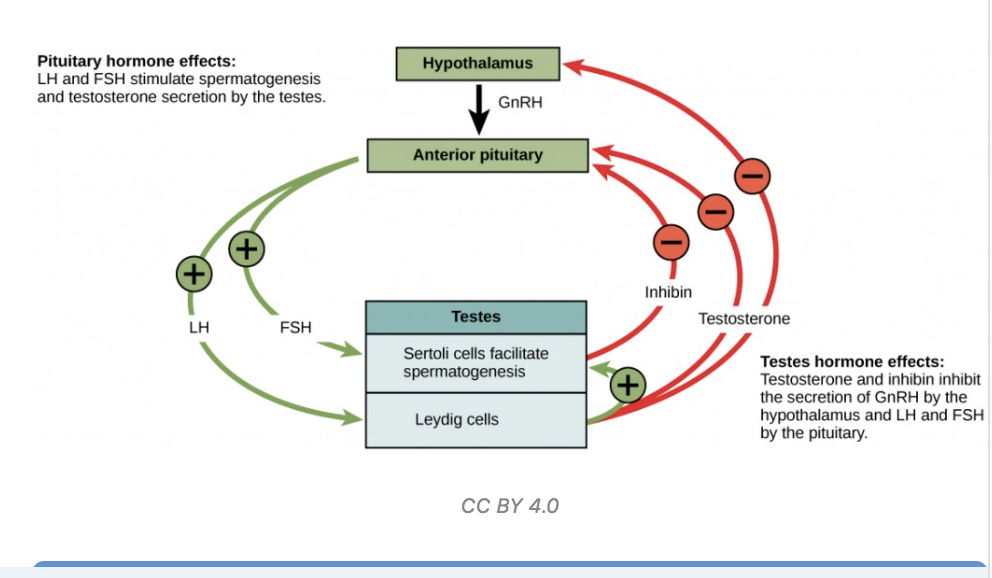
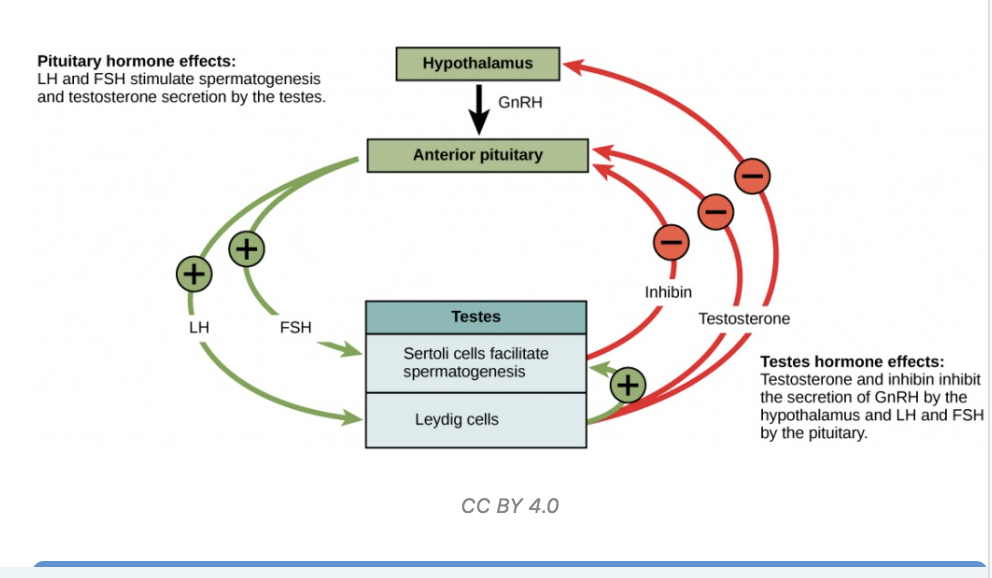
LH stimulates
Leydig cells to produce testosterone. In turn, testosterone, but not LH directly, helps promote spermatogenesis.
estrogen is involved in the menstrual cycle and in the development of
secondary sex characteristics in females.
triiodothyronine (T3) is one of the thyroid hormones responsible for the
growth and neurological development in children and increasing basal metabolic rate.
FSH directly stimulates
Sertoli cells, facilitating spermatogenesis stimulates the sertoli cells to promote the maturation of seminiferous tubules and spermatogenesis.
Blood is filtered in the glomerulus by
high hydrostatic pressure, which forces excess fluid and waste products into Bowman’s space.
Circulating blood enters the glomerulus through the
afferent arteriole and exits through the efferent arteriole.
juxtaglomerular cells in the kidney are located next to
the glomerulus (juxta = near/beside) are derived from the smooth muscle cells of the afferent arteriole
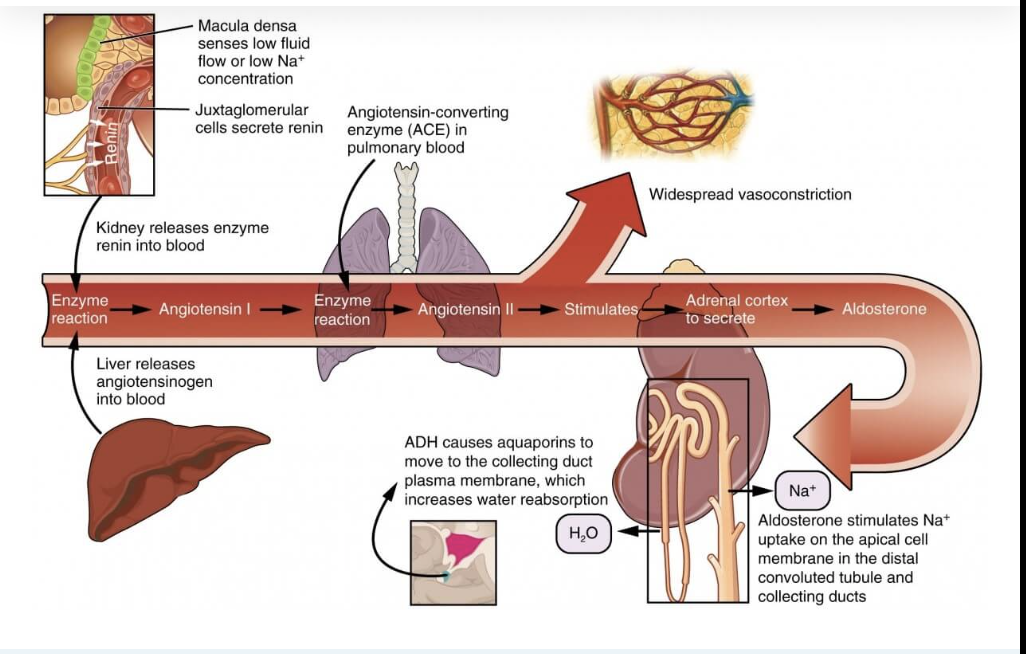
When pressure is low in the afferent arteriole (due to a drop in blood pressure of the body), the juxtaglomerular cells respond by releasing
renin
Renin activates the renin-angiotensin-aldosterone system which restores
blood pressure through the mechanism as shown in the image below.
Without the activation of the renin-angiotensin-aldosterone system, it is more difficult for the body to
recover from a drop in blood pressure, and thus chronic hypotension may manifest.
kidney stones form as a result of
calcium and oxalate levels being high enough that they precipitate out of the filtrate, or urine, to form crystals known as kidney stones.
What molecule is regenerated during the Calvin Cycle?
RuBP
The Calvin cycle is the set of chemical reactions that take place during photosynthesis in
chloroplasts
Calvin cycle is a
This is a light-independent cycle as it takes place after the energy has been captured from sunlight during the light-dependent phase of photosynthesis.