Lipids Structures and Functions
No description yet. This curated deck is ready for daily study.
Card preview (24)
Lipid Structure
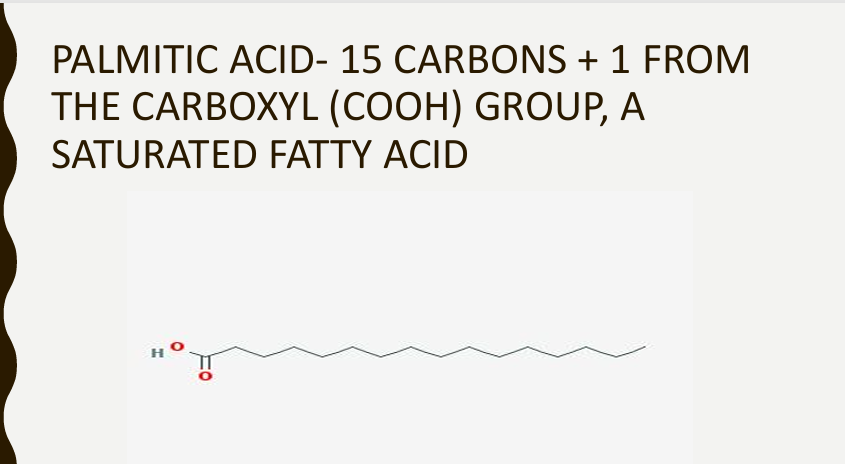
• Lipids– water insoluble, organic, greasy/oily substances 2.Major component of cells and tissues • Made up of fatty acids chains– the building blocks of lipids. • These fatty acids chains may range from 14 - 24 carbon atoms in length, but 16-18 carbons are most common. • Fatty acids have a long hydrocarbon tail which you will remember from CXC confers its oily/greasy properties.
Fatty Acids
• Classified as either saturated (alkanes) or unsaturated (alkenes/alkynes). • Unsaturated fatty acids have one or more double bonds. • The first double bond always appears between carbon 9 and 10. • The other double bonds appear towards the methyl end (away from the carboxyl group) • Saturated fatty acids have no double bonds; they are solid, waxy substances and can cause hardening of arteries (atherosclerosis) with the help of cholesterol.
Saturated Fatty Acids and Atherosclerosis
• Saturated fatty acids because of their waxy solid nature can form lipid deposits in the arteries (blood vessels of highest pressure). • The most common examples of these are the coronary arteries, the internal carotid arteries and the renal arteries. • This leads to occlusion (blockage) of the arteries and a reduction in the lumen. • Thus there is a loss/reduction of ‘food and fuel’ (nutrients and oxygen) getting to the tissue and necrosis (death) often results. • Burning in the chest reported of by patients with heart problems is often caused by a reduction in oxygen getting to the cardiac tissue. • A myocardial (heart muscle) infarction (area of dead tissue) occurs if the blood supply is not enough to support the tissue and necrosis results. -> Heart Attack • The building up of plaque in the arteries is called atherosclerosis. • In the brain, if this happens in the internal carotid arteries, a thrombotic stroke may result (from a blood clot). Fatty deposits will cause a non-bleeding stroke. • In the kidneys, ischaemia (shortage of blood supply) can lead to higher blood pressure (because the arteries are narrowed). This is called asnehpric or renal ischaemia.
Source of Fatty Acids
Saturated: Animal Fats - Red meat Polyunsaturated fatty acids: plant, fish and chicken. Vegetarians are less likely to develop heart disease. • Polyunsaturated FAs are oily lipids and do not calcify as easily to form plaque in the arteries. • These tend to be found twice as much in nature than their saturated counterparts, and are associated with better cardiovascular health.
Unsaturated Fatty Acids
• The hydrogens around the double bond are always in the CIS conformation (same side). • This produces a visible kink in the chains and has important bearing on the way FAs are packed in the membrane, and thus its fluidity. • This produces a visible kink in the chains and has important bearing on the way FAs are packed in the membrane, and thus its fluidity
Triglyceride Properties (FATS)
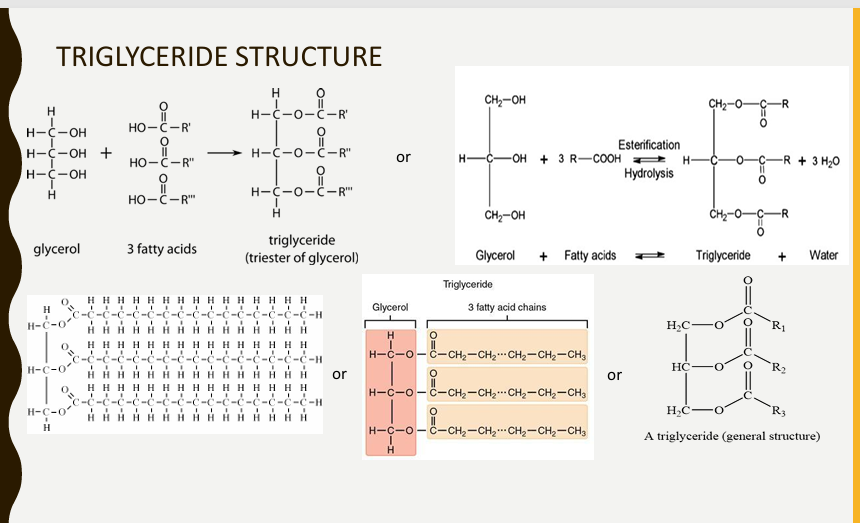
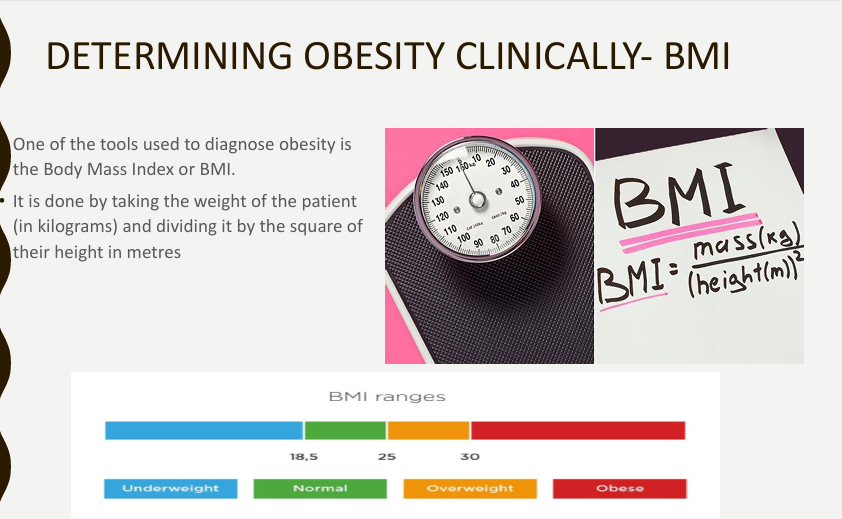
Energy storage compounds and are the lipid counterpart to glycogen (carbs). • They are stored as oily droplets in adipose tissue and are found most commonly in the breasts, abdomen/greater omentum and under the skin (subdermally). • They tend to store better than glycogen, pack more neatly, tightly and have more energy gram per gram. They are also lighter being unhydrated, thus more suitable for storing energy. • Of the energy derived from tri-acylglycerols, 95% is from the 3 FA residues, and 5% from the glycerol. • To get energy from the triglycerides, they must be broken down (hydrolyzed) by enzymes called lipases. • Too much fats in the body as we know, will lead to a person becoming obese, making them increasingly susceptible to other diseases. It is important then to decide who is obese, and what caused it.
BMI
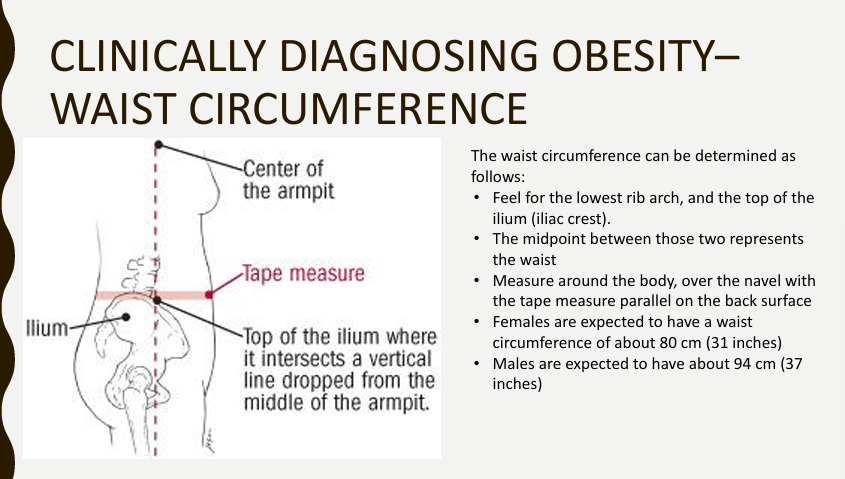
How to determine the waist circumfrence
Predisposing Factors to Obesity
• Increased Calorie Intake - excess stored as triglycerides. • Decreased futile cycling - burning energy without doing useful work and this occurs normally in the body to produce heat etc. These cycles (e.g., in glucose/fatty acid metabolism or creatine use) are crucial for rapid metabolic control, fine-tuning energy homeostasis, and thermogenesis. If decreased, the person will burn less energy and store it as fat. • Hypothyroidism: If it is underactive, (not enough thyroxine) the metabolic rate drops, and more energy is stored rather than utilized. Another example of hormone induced risk factors for obesity is an oedema. • Drug Induced: anabolic steroids to build muscles and have them retain water to look bulky. Even after steroid use stops, muscles are still able to take up extra water and eventually obesity may ensue. Some patients may need to take steroids such as those with Systemic Lupus Erythematosus (SLE) or those taking oral contraceptives. • Good clinicians should know when to cease administration of a steroid to give the body rest and prevent secondary conditions. Impaired movement (non-ambulatory patients): could be due to surgery. Physical therapy or some degree of mobilization is necessary to prevent these patients from becoming overweight.
Pathological Consequences of Obesity
• Type II Diabetes: Insulin is produced by beta cells in the pancreas and travels in the blood to bind to receptors on the target tissue such as the liver, adipose tissue or skeletal muscle. When an individual becomes obese, the receptors become less susceptible to insulin either due to reduced surface area of the tissue or decreased affinity for insulin (resistance). Saturated fat may also interfere with the receptor. In type 2 diabetes, there is insulin resistance accompanying hyperglycaemia. • Increased blood pressure: due to hyperlipidemia causing atherosclerosis followed by vasoconstriction and hypervolemia (too much fluid; may be due to Na intake)🡪 hypertension. Those with obesity tend to have hyperlipidemia (high lipid content in the blood) and these can deposit in the arteries causing strokes (brain), coronary heart disease (heart), or renal ischaemia (kidneys). These depositions can result in (1) generalized narrowing of blood vessels (vasoconstriction) and (2) increased blood volume (hypervolemia). Together these can cause hypertension (persistent high blood pressure).
Managing Obesity
• Lipids are essential to human homeostasis and understanding their role, function and the associated pathologies are necessary to effectively treat them. • One of the major methods used to manage obesity is to control lipid metabolism through: ▪ Lifestyle ▪ Exercise ▪ Drugs ▪ Surgery In that order.
Phospholipids
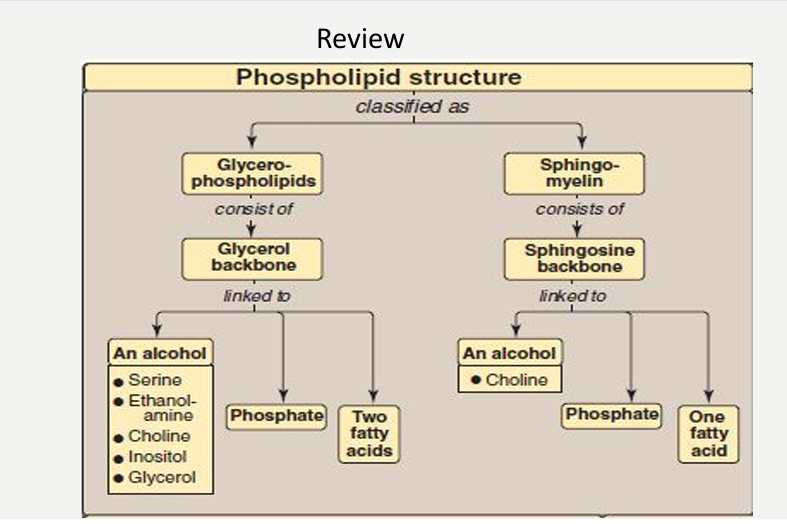
These are structural elements of the cell membrane and are the most abundant types of lipids in the cell membrane. In their simplest form, they are lipids with phosphate groups attached. The basic structure of a phospholipid is similar to that of the triglycerides. Except one of the three (3) fatty acid residues is replaced with a phosphate group. This is called a phosphatidate molecule (the ester of phosphatidic acid). The phospholipid has the glycerol backbone, 2 fatty acid residues and a phosphte group. It can also be considered as di acyl glycerol with a polar phosphate head.
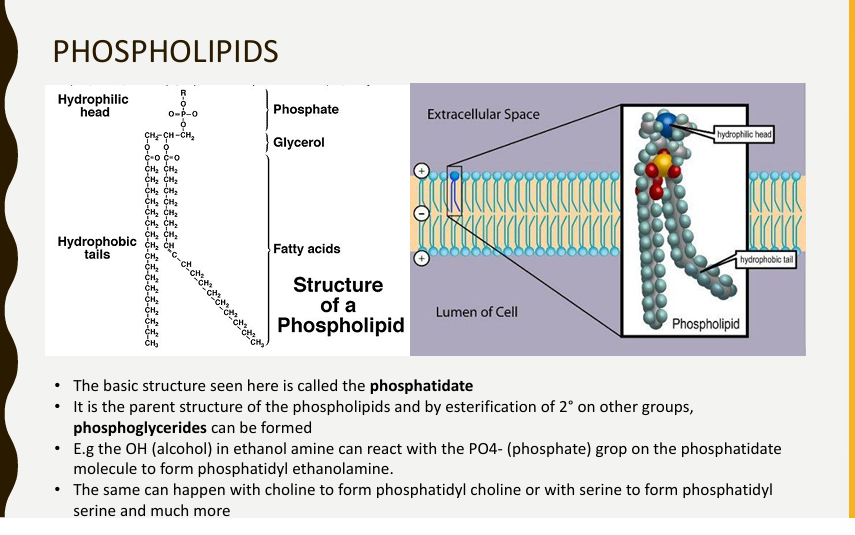
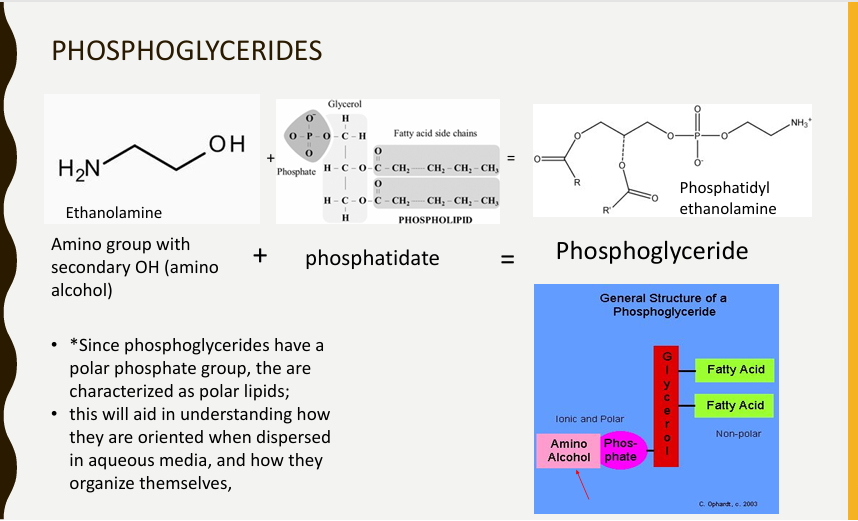
What are Phosphoglycerides
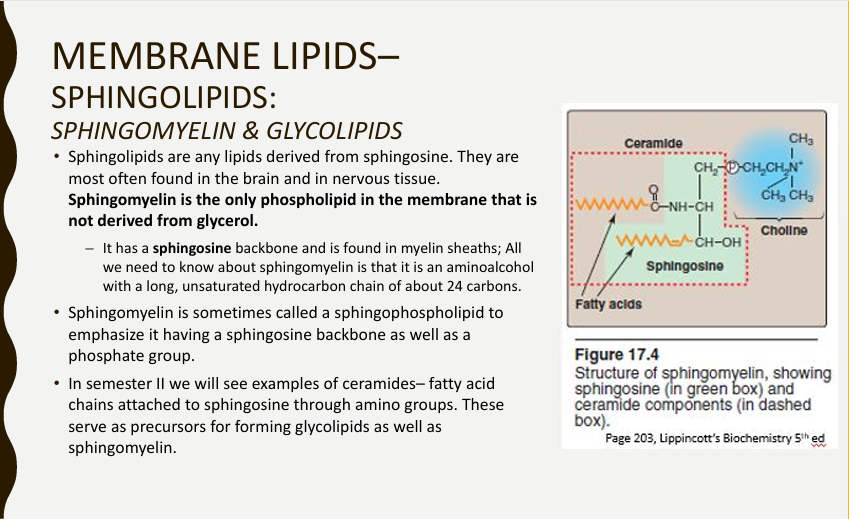
Sphingolipids
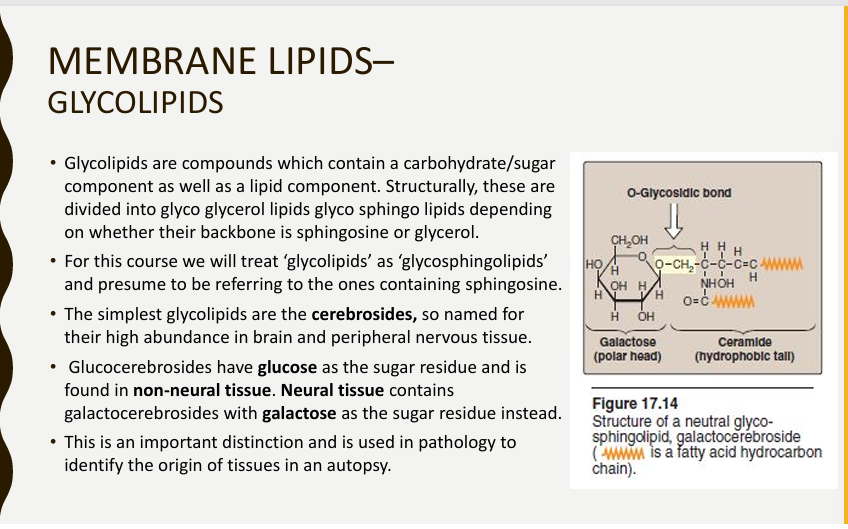
What are Glycolipids?
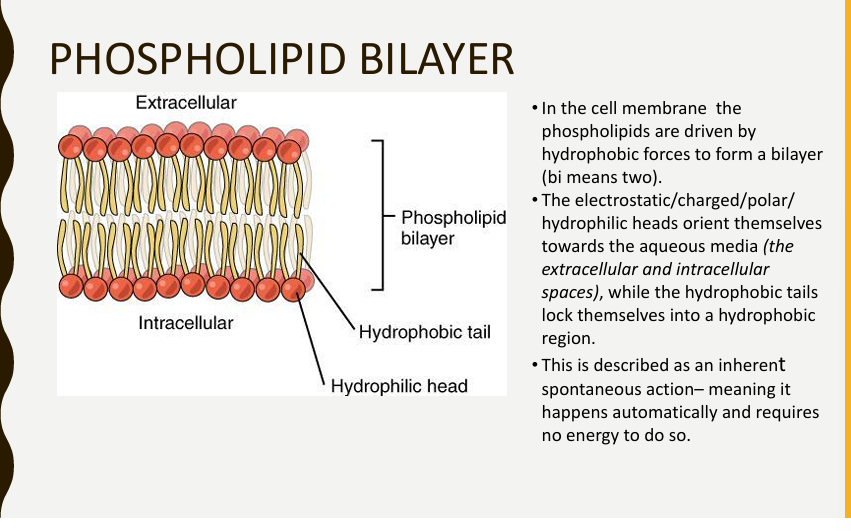
Phospholipid bilayer
Energetics of Cell Membrane
2nd law of thermodynamics - the total entropy (disorder) of an isolated system can only increase over time.
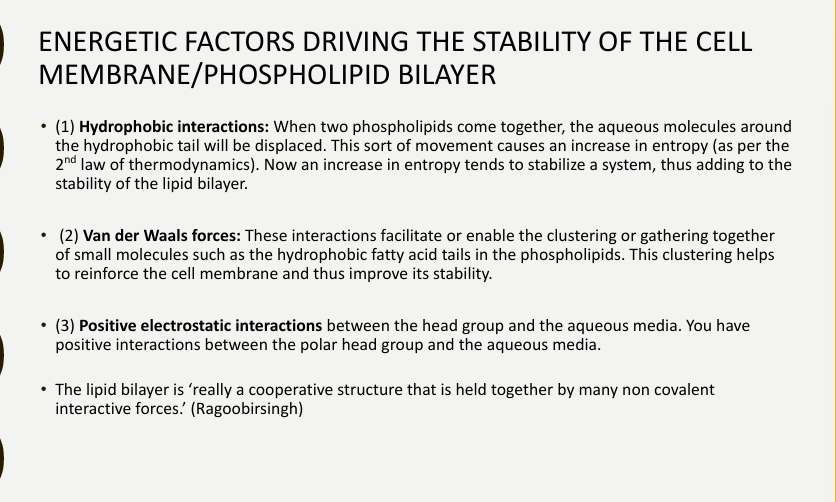
Features of the Cell Membrane due to its Energetics
Protein Components of Cell Membrane
Proteins differ in quantity and function based on their locale. E.g the myelin sheaths which insulate the nerves have only 18% protein. In mitochondria, there is a high proportion of proteins due to the many enzymes needed for the various metabolic pathways occurring on the internal membrane. In the cell membrane however, the ratio of proteins to lipids is roughly the same (50-50). Proteins generally fall into two broad categories: Peripheral/extrinsic and intrinsic/integral - permanently embedded within a cell’s phospholipid bilayer, interacting with the hydrophobic core: usually transmembrane) proteins. • They mediate distinctive functions and are found as receptors ( e.g insulin), gates, pumps (sodium/potassium) and a plethora of enzymes.
Extrinsic and Intrinsic Proteins
Extrinsic proteins tend to have hydrophilic R groups, as they must interact with the polar groups on the outside of the lipid bilayer. Intrinsic (integral) proteins help to ramify the membrane and will have hydrophobic R groups. Thus the hydrophobic region of the bilayer can act like a solvent, allowing the integral proteins to dissolve, and aid them to assume whichever conformation is needed to best carry out its function. • There are also specific interactions with certain integral proteins that also facilitate their function. • Lastly: Membrane proteins move laterally (as opposed to side to side); this enables the membrane to maintain its asymmetry and remain stable.
Cellular Transport Processes
• The transport processes occurring taking substances from inside to outside and vice versa in the membrane will affect the functions and activities of the membrane. • Enzyme activity– it affects this by regulating cell volume and maintaining the pH and ionic concentration within a narrow range that aids optimum activity. • Nutritional activity– by extracting and concentrating metabolic fuel (carbs) and building blocks (proteins, lipids etc) from the environment within the cell, while also getting rid of (extruding) toxic substances. • Muscular and nervous activity: It aids both of these by maintaining the ionic gradient needed to excite muscles and nerves. This is covered more in lectures on muscle and nervous tissue.
Membrane Fluidity
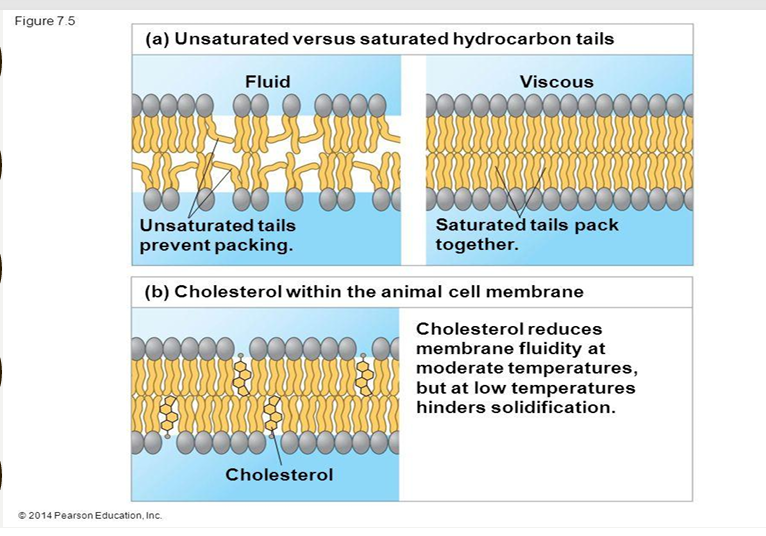
The cell membrane is a fluid, continuous and inflexible structure. • Saturated fatty acids pack very tightly, and thus decrease fluidity of the membrane. • Unsaturated fatty acids have at least one double bond (where?) and the hydrogens in the cis configuration leave a kink in the FA chain, making them harder to pack tightly, and actually increase membrane fluidity. • Cholesterol is a modulator of fluidity– it can either increase or decrease it. • When it is in the upper region it prevents large motion of adjacent tails of FAs and thus reduces fluidity. • On the other hand, it can prevent two tails from coming together and crystalizing, which would increase fluidity. • So the modulating effect of cholesterol is based on where it is located.
What are Prostaglandins?
• These are a family of lipid soluble organic acids with 5C rings. • First isolated from prostate gland, thought to influence sexual activity; later found throughout body in many organs. • Derived from essential fatty acids like linoleic acid • Precursor is arachidonic acid– a polyunsaturated cyclic acid , about 20 C long, derived from linoleic acid. • Prostaglandin synthase– inhibited by analgesics such as those in aspirin– decrease in prostaglandins leads to a decrease in pain so prostaglandins important in pain perception. • Also responsible for fight or flight response: stimulate/enhance adenyl cyclase, responsible for hydrolyzing ATP to cyclic AMP to produce energy needed for the fight or flight response.
Prostaglandins 2
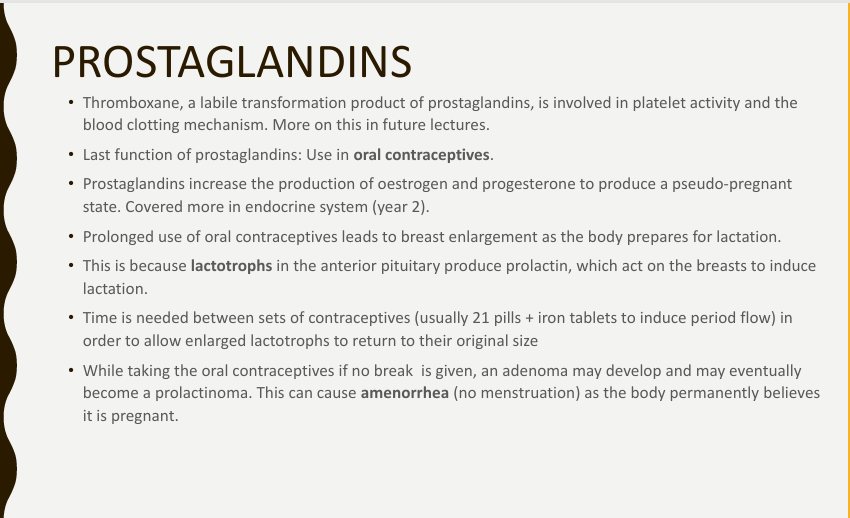
• Pain perception • Fight or flight response • Blood clotting • Therapeutic agents (e.g oral contraceptives)