Chapter 5: Alcohols
No description yet. This curated deck is ready for daily study.
Card preview (24)
How are alcohols named in the IUPAC system?
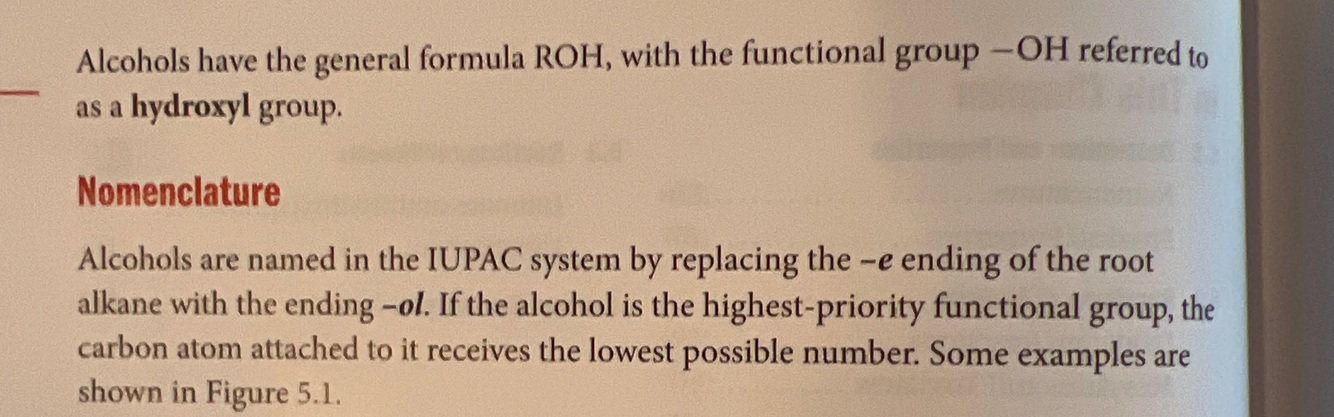
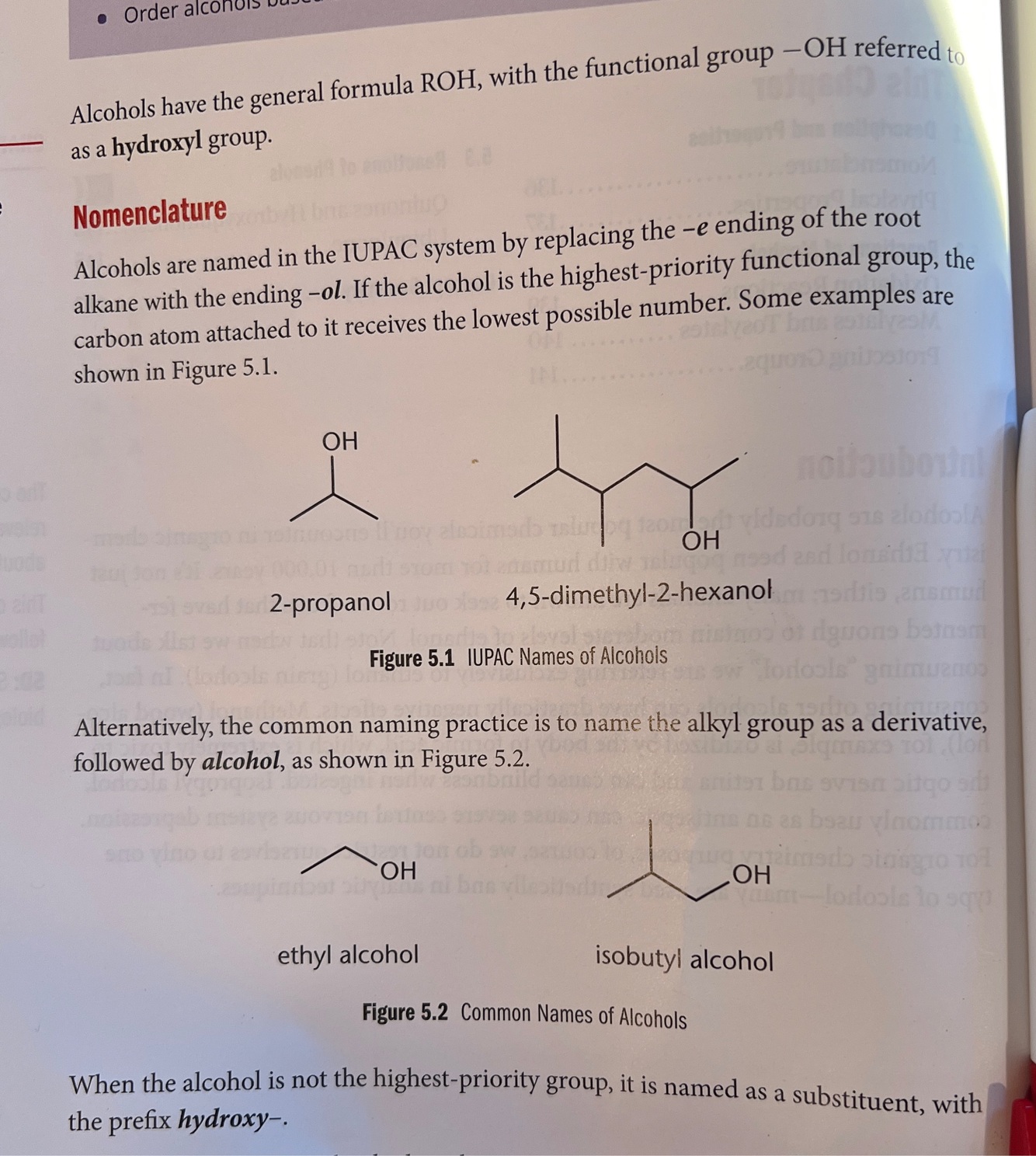
What is the alternative common naming practice for alcohols?
When the alcohol is not the highest priority group, it is named as a substituent with the prefix ___________.
Hydroxy-
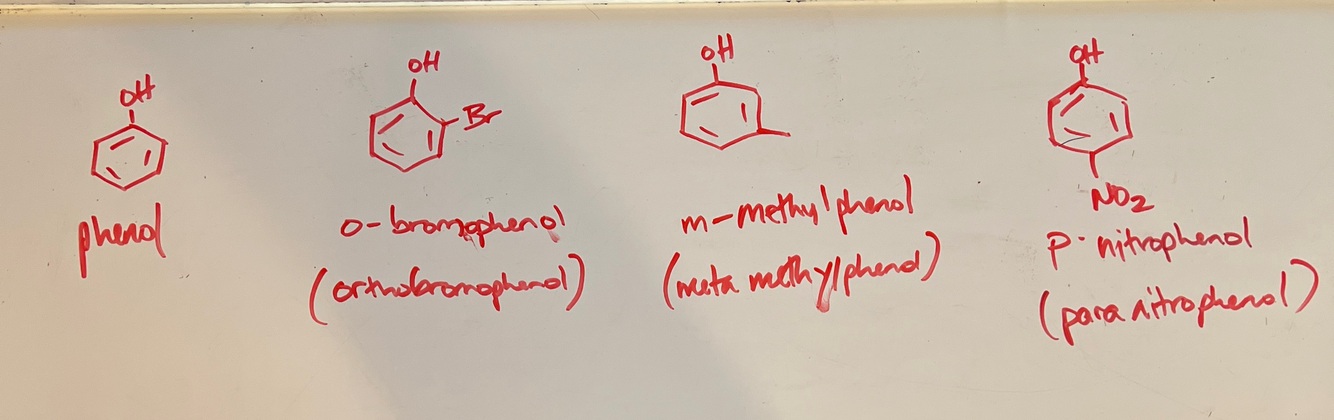
Hydroxy groups can be attached to aromatic rings. What are they called? Draw phenol, o-bromophenol, m-methylphenol (m-cresol), and p-nitrophenol. What is ortho (or o), meta (or m), para (or p)?
Phenols. Ortho, o: adjacent carbons Meta, m: separated by two groups Para, p: groups on opposite side of ring
What is one of the prominent properties of alcohols?
Alcohols are capable of intermolecular hydrogen bonding, resulting in higher melting and boiling point than those of analogous hydrocarbons. Molecules with more than one hydroxy Group show greater degree of hydrogen bonding, which is evident from the boiling points in the image.
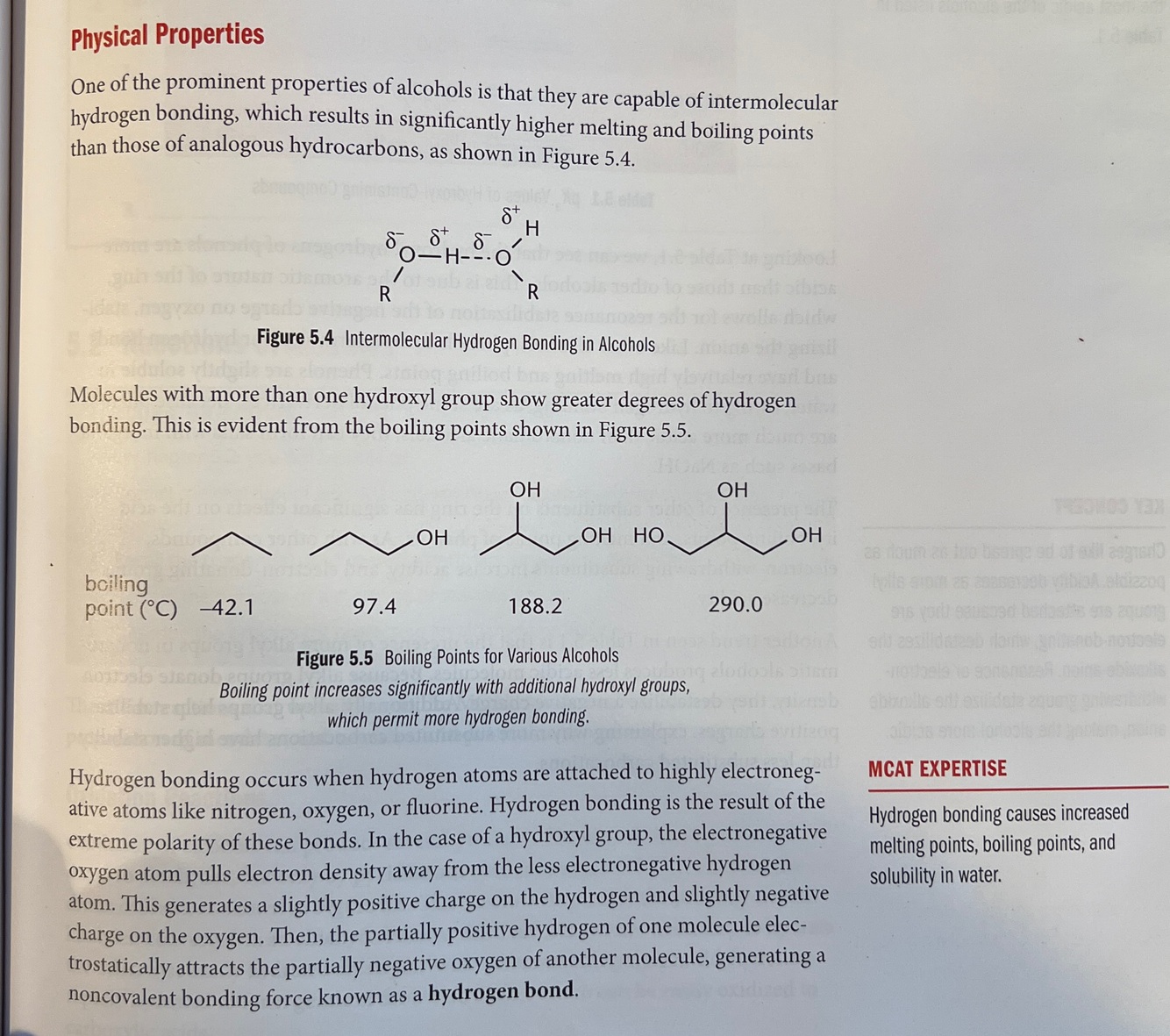
What does hydrogen bonding cause, regarding physical properties?
Hydrogen bonding causes increased melting points, boiling points, and solubility and water.
Are hydroxy hydrogen’s acidic?
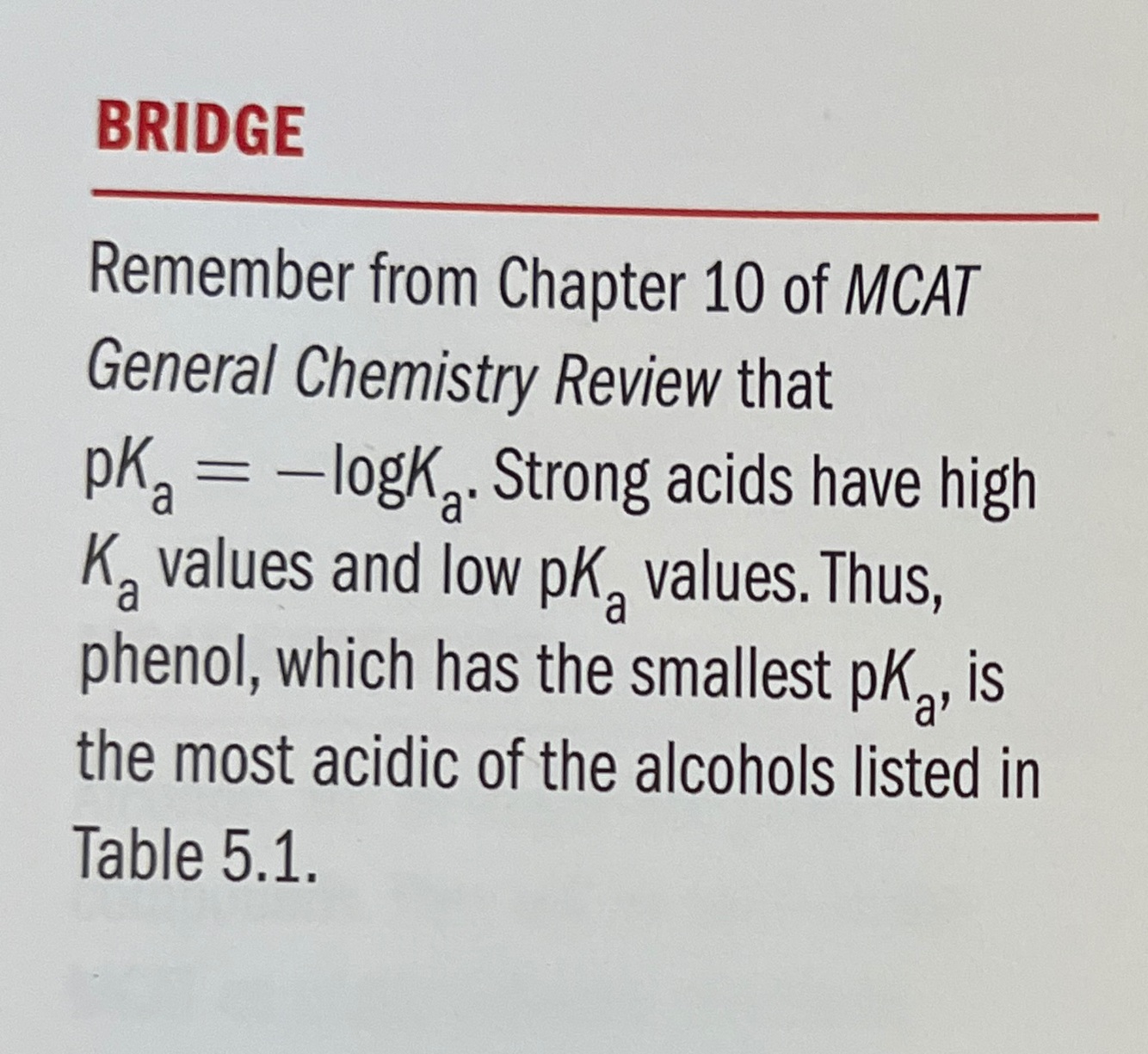
The hydroxyl hydrogen is weekly acidic, and alcohols can dissociate into protons and alkoxide ions in the same way that water dissociates into protons and hydroxide ions. Recall that a high Ka means strong acid and a low pKa (-2 and under) is a strong acid. Low Ka and high pKa are weak acids.
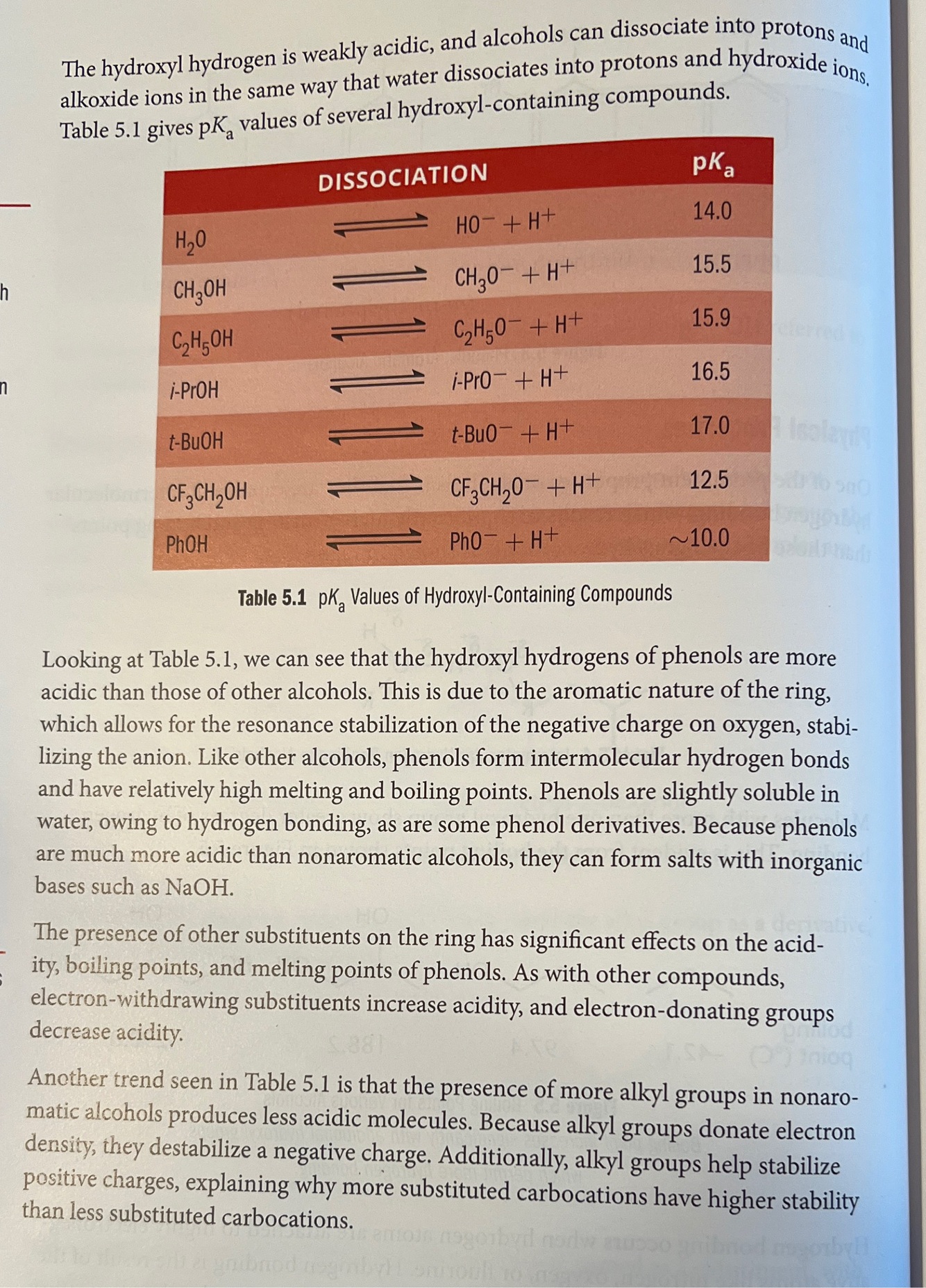
Ka and pKa
What is the strongest acid on this table?
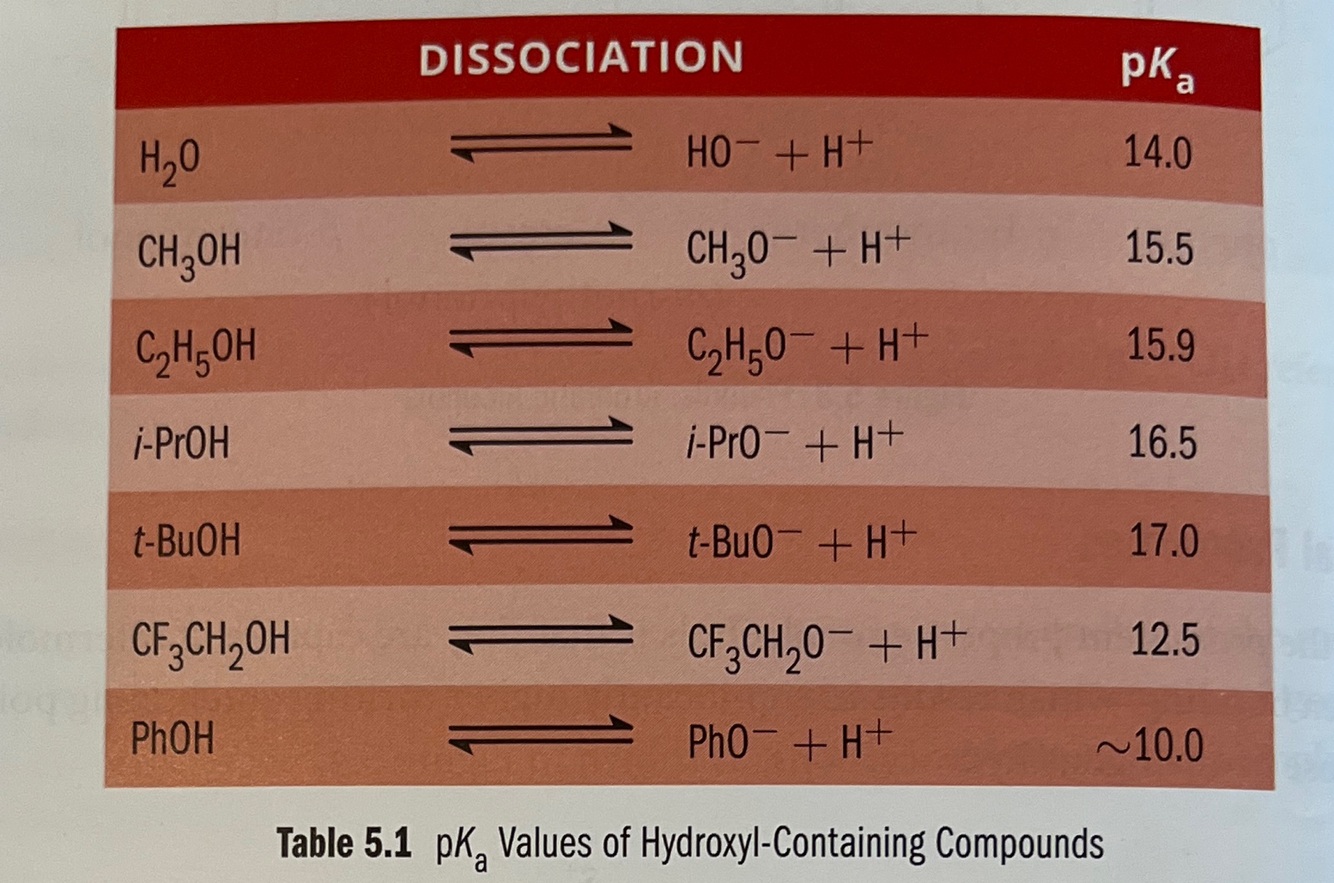
Phenol, at the bottom, has the lowest pKa and is thus the strongest acid on that table.
What is the trend for acidity of alcohols?
Aromatic rings, such as phenol, allow for resonance stabilization of the negative charge of oxygen, stabilizing the anion, and thus producing a stronger acid. As with other compounds, electron withdrawing substituent increase acidity, and electron donating groups decrease acidity (acidity decreases as more alkyl groups are attached because they are electron donating, which destabilizes the alkoxide ion. The presence of more alkyl groups in non-aromatic alcohols produce less acidic molecules. Alkyl groups donate electron density, destabilizing the negative charge. Additionally, alkyl groups helped stabilize positive charges, explaining why more substituted carbocations have higher stability than less substituted carbocations. (For example: methanol is more acidic than hexanol due to the increased stability of the conjugate base)
Do alkyl groups stabilize carbocations?
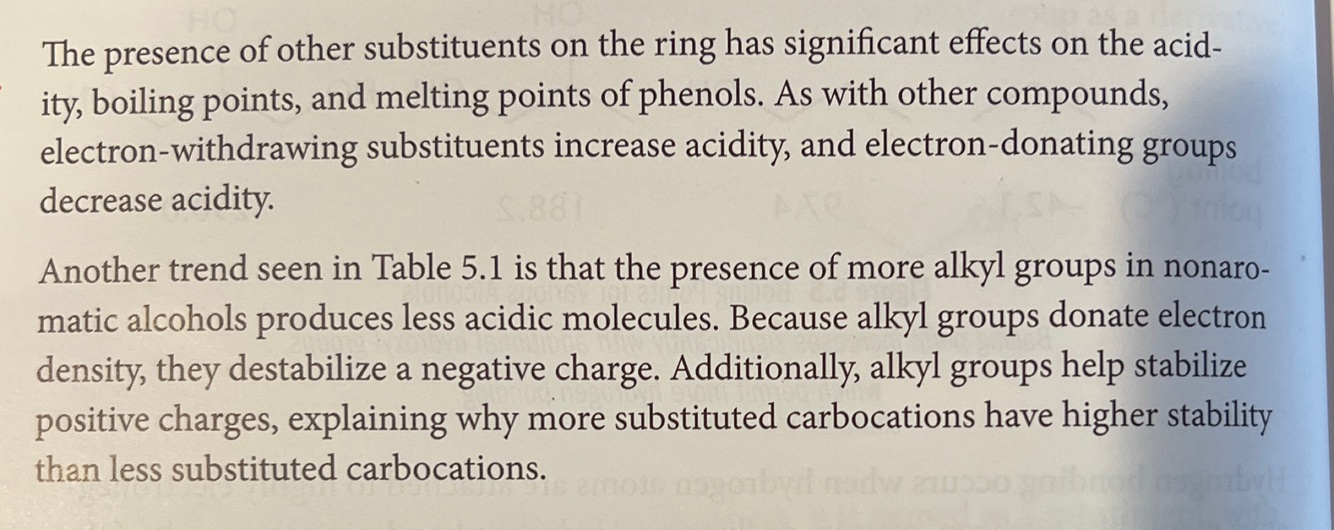
Concept check 5.1
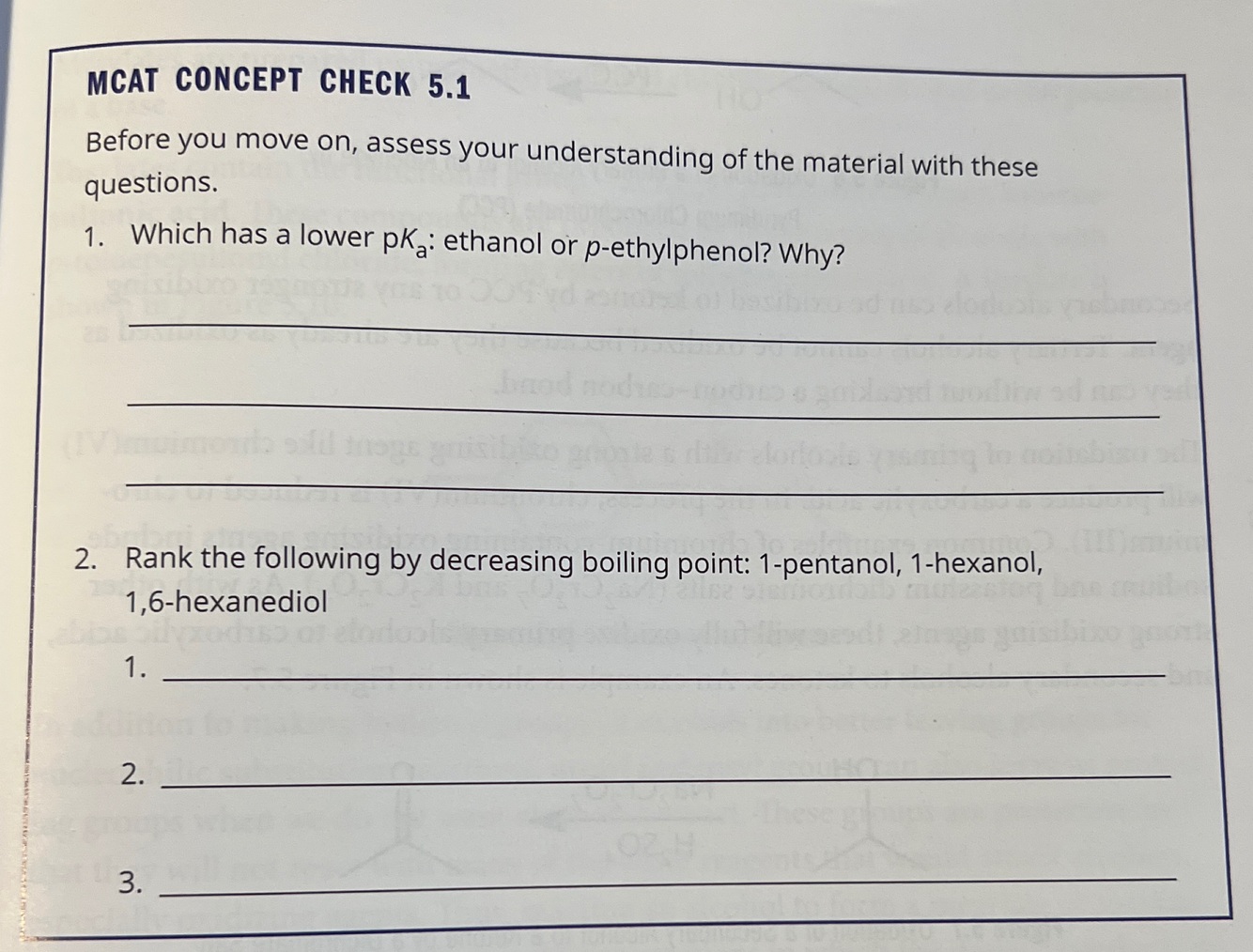
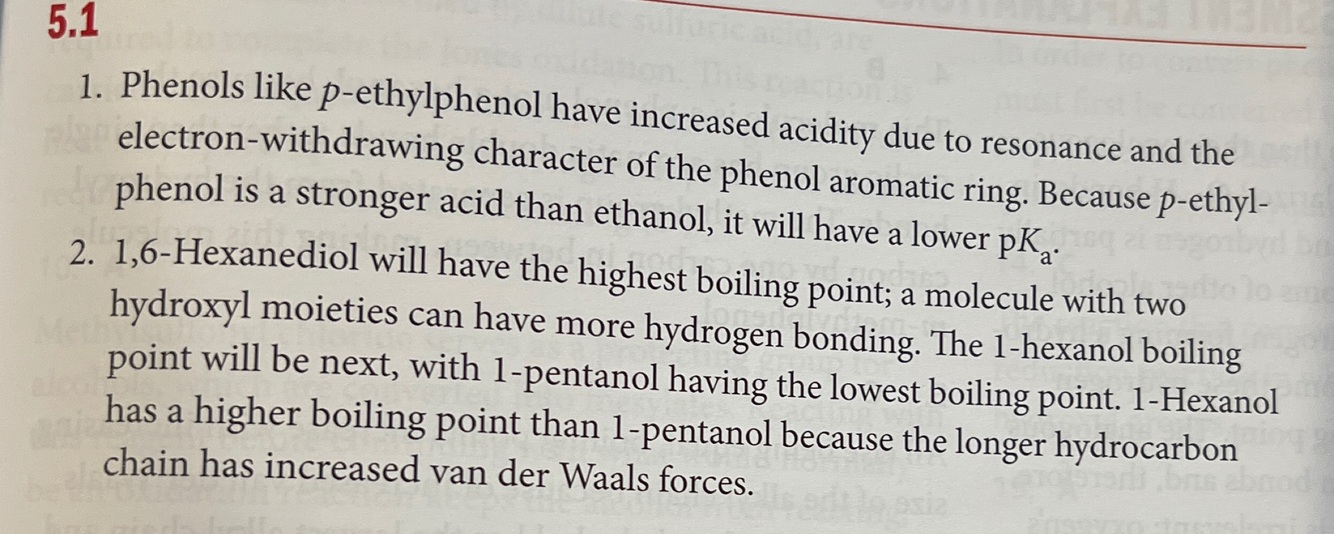
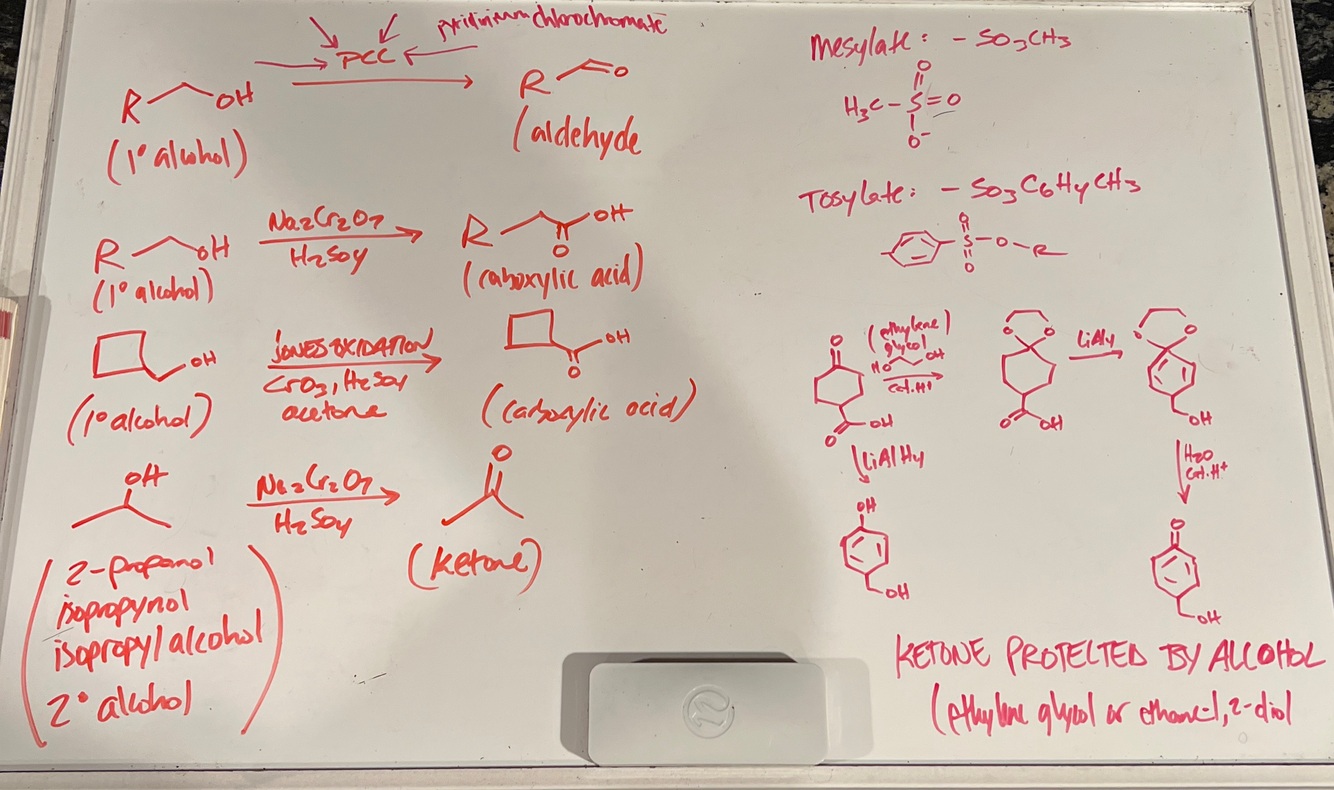
The main reactions that we will see on the MCAT for alcohols include oxidation, preparation of mesylates and tosylates, and protection of carbonyls by alcohols.
That it. That’s the card. Rate it high if you know what those are.
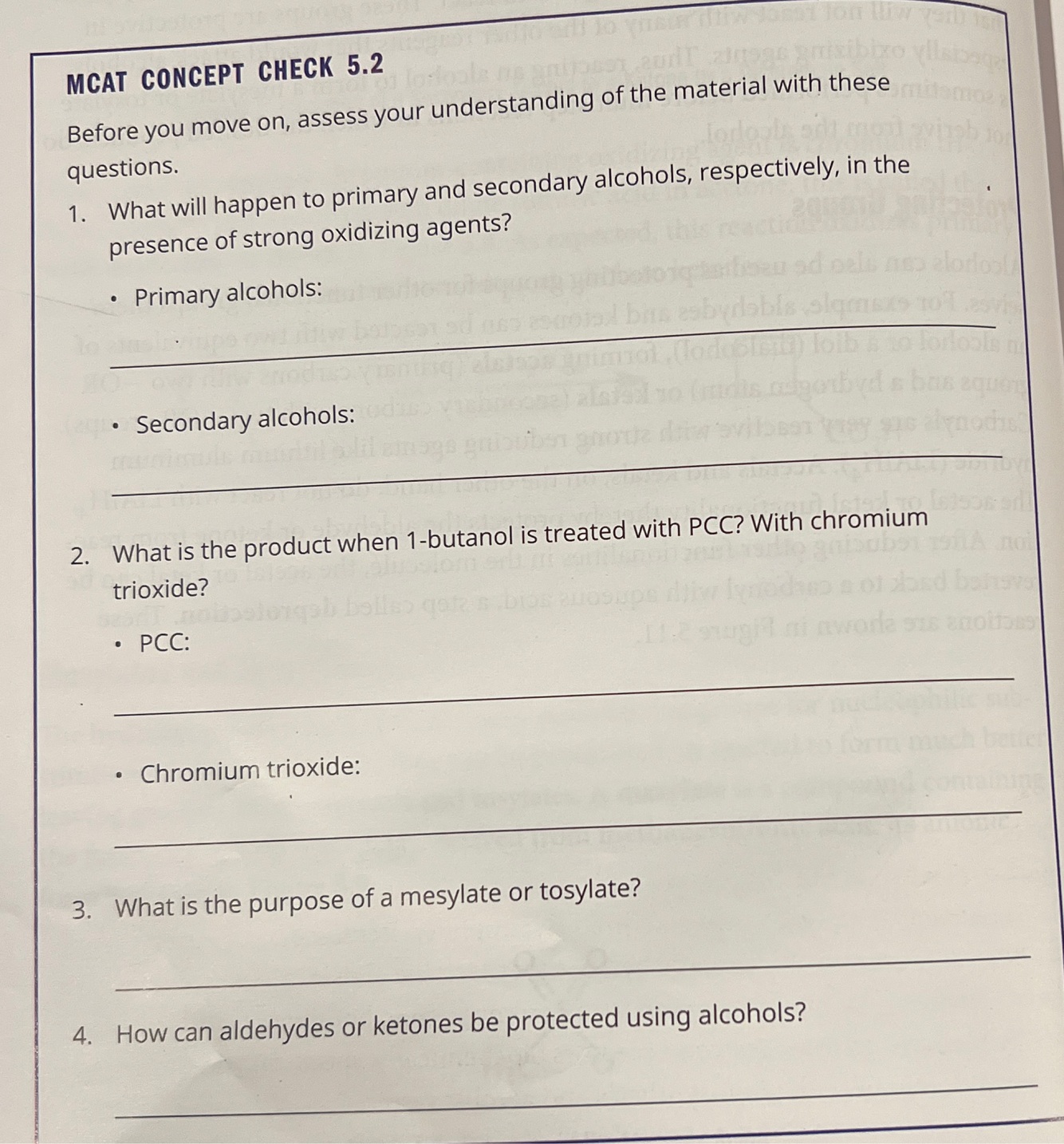
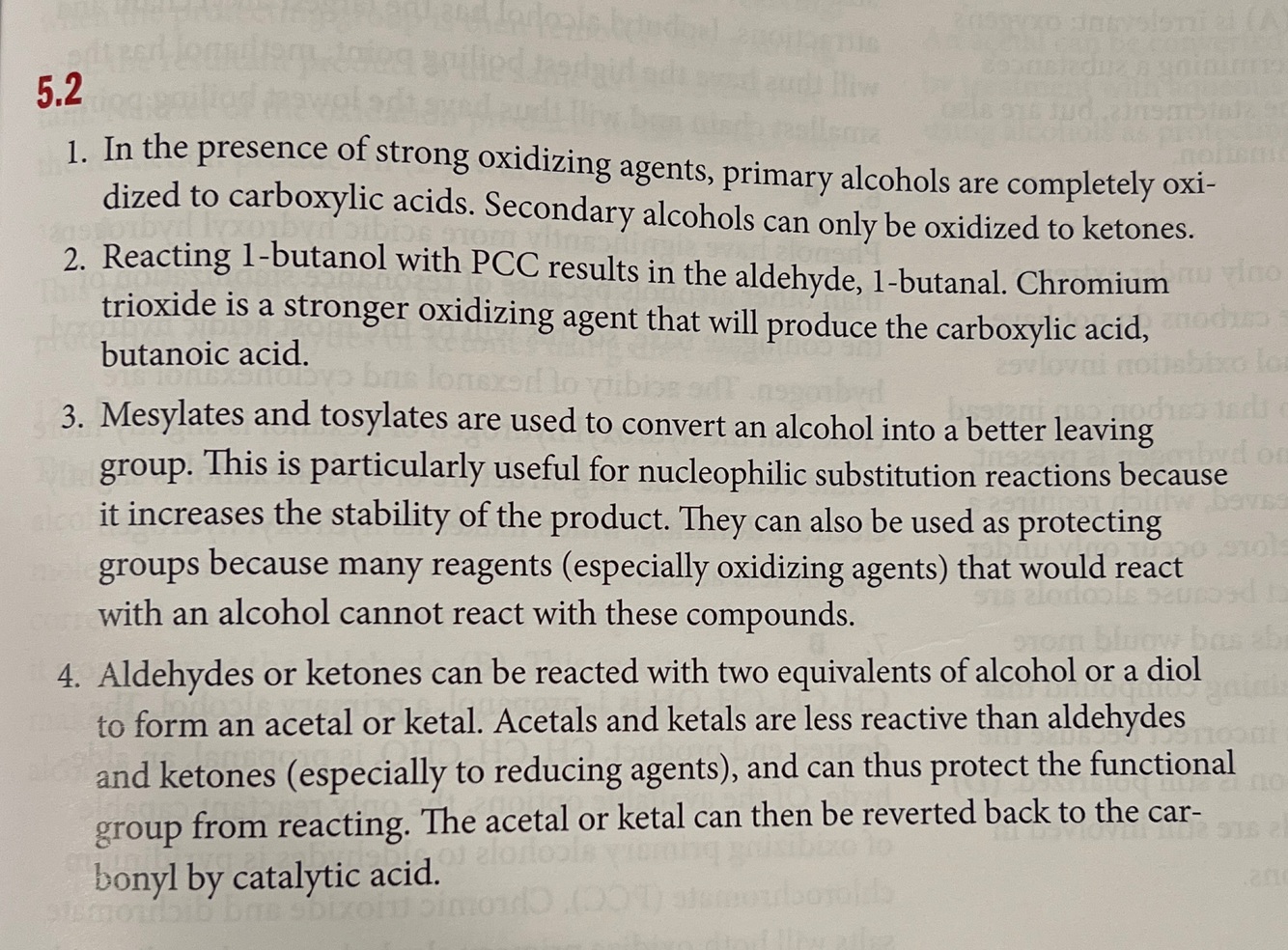
Alcohols are readily oxidized to carboxylic acids by any oxidizing agent other than which one and what will it make?
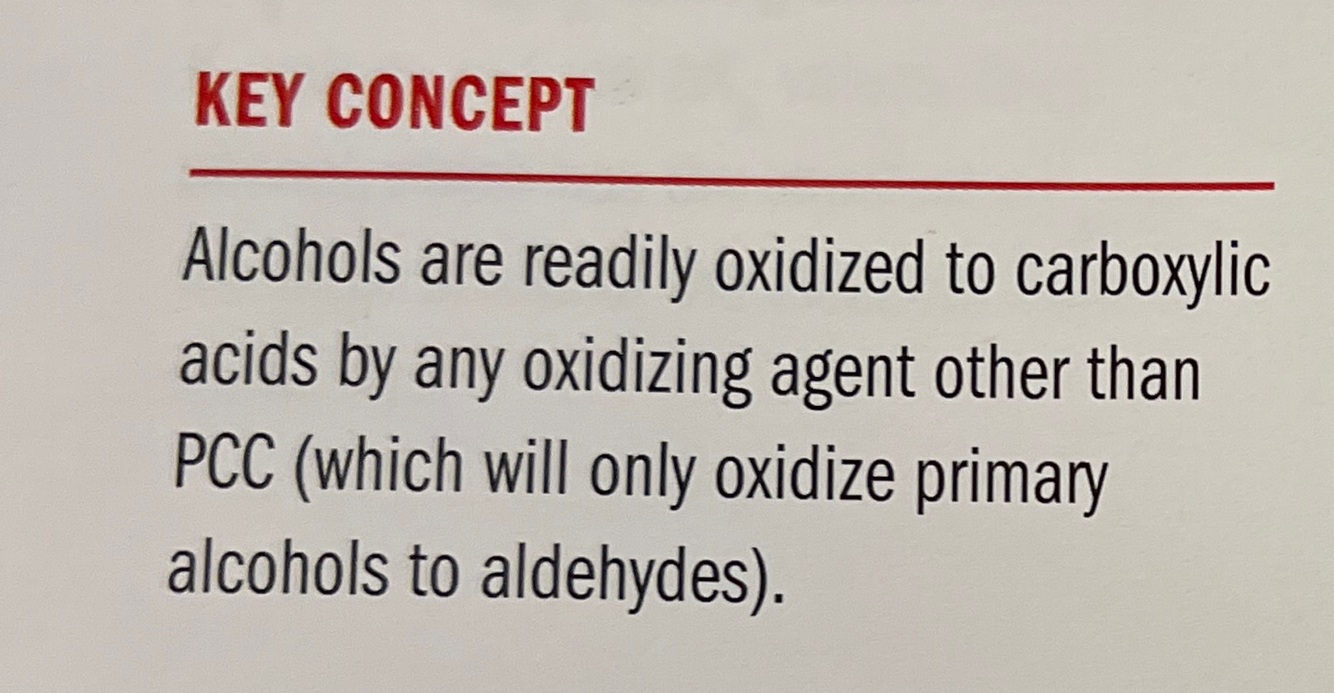
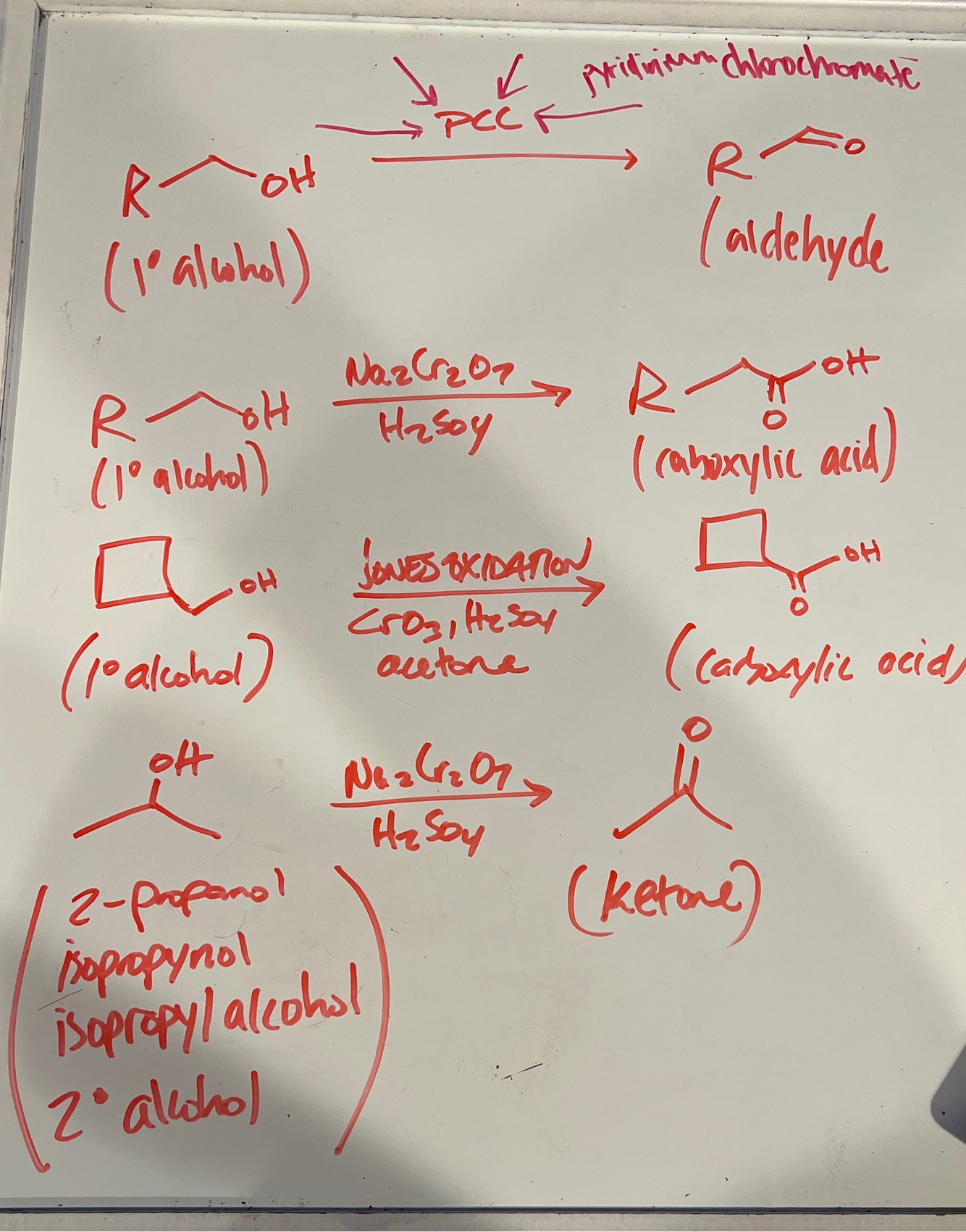
Oxidation of alcohols can produce several products. What can primary alcohols be oxidized to? Secondary alcohols? Tertiary alcohols?
Primary alcohols can oxidize to aldehydes (with pyridinium chlorochroamte) and carboxylic acids (with stronger oxidizing agents like dichromate). Secondary alcohols can be oxidized to ketones. Tertiary alcohols do not typically oxidize.
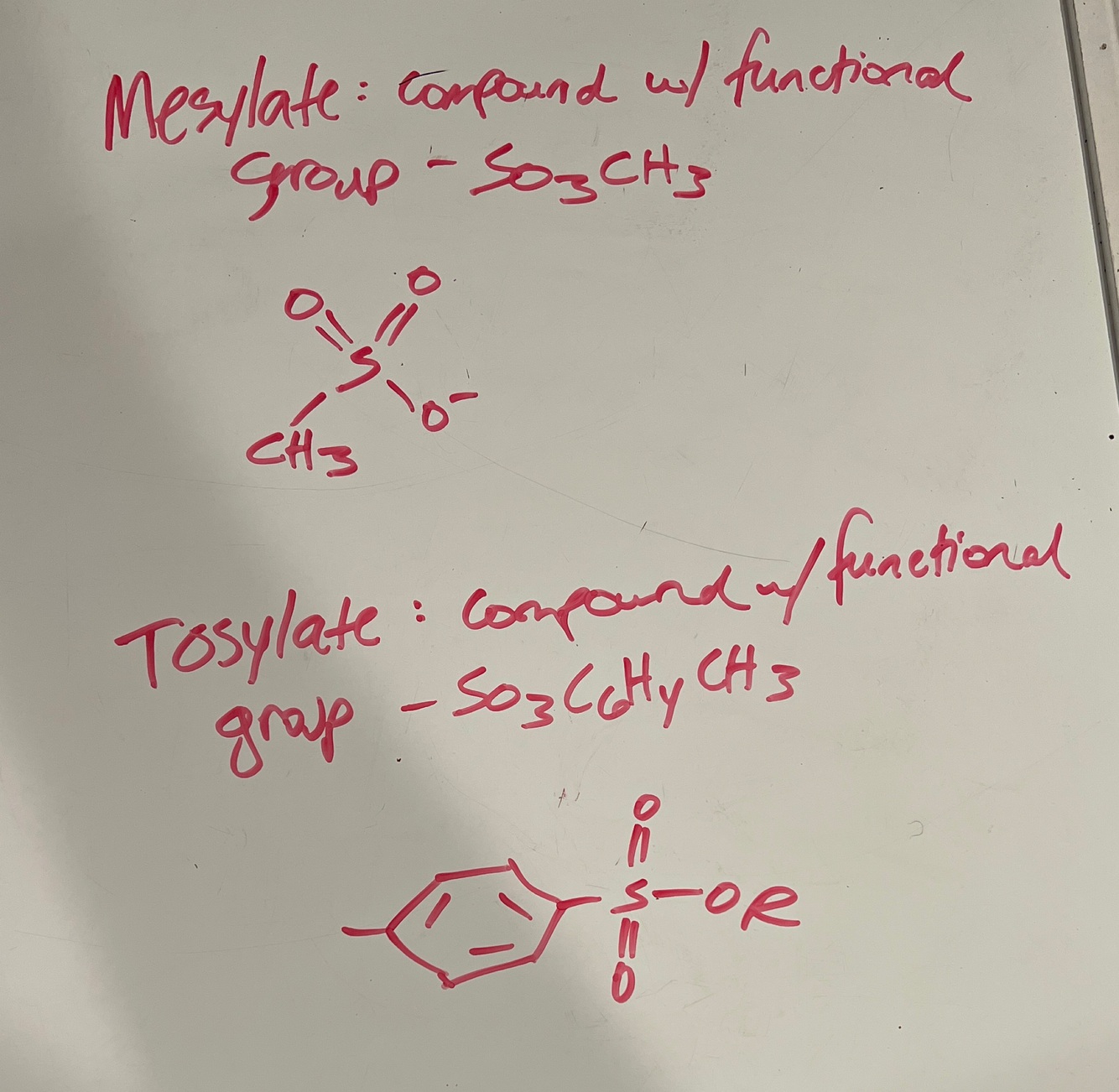
What are mesylates and tosylates?
The hydroxyl group of alcohols are fairly poor leaving groups for nucleophilic substitution reactions. However, they can be protonated, or reacted to form much better leaving groups called mesylates and tosylates. Mesyl and tosyl groups can also serve as protecting groups when we do not want alcohols to react.
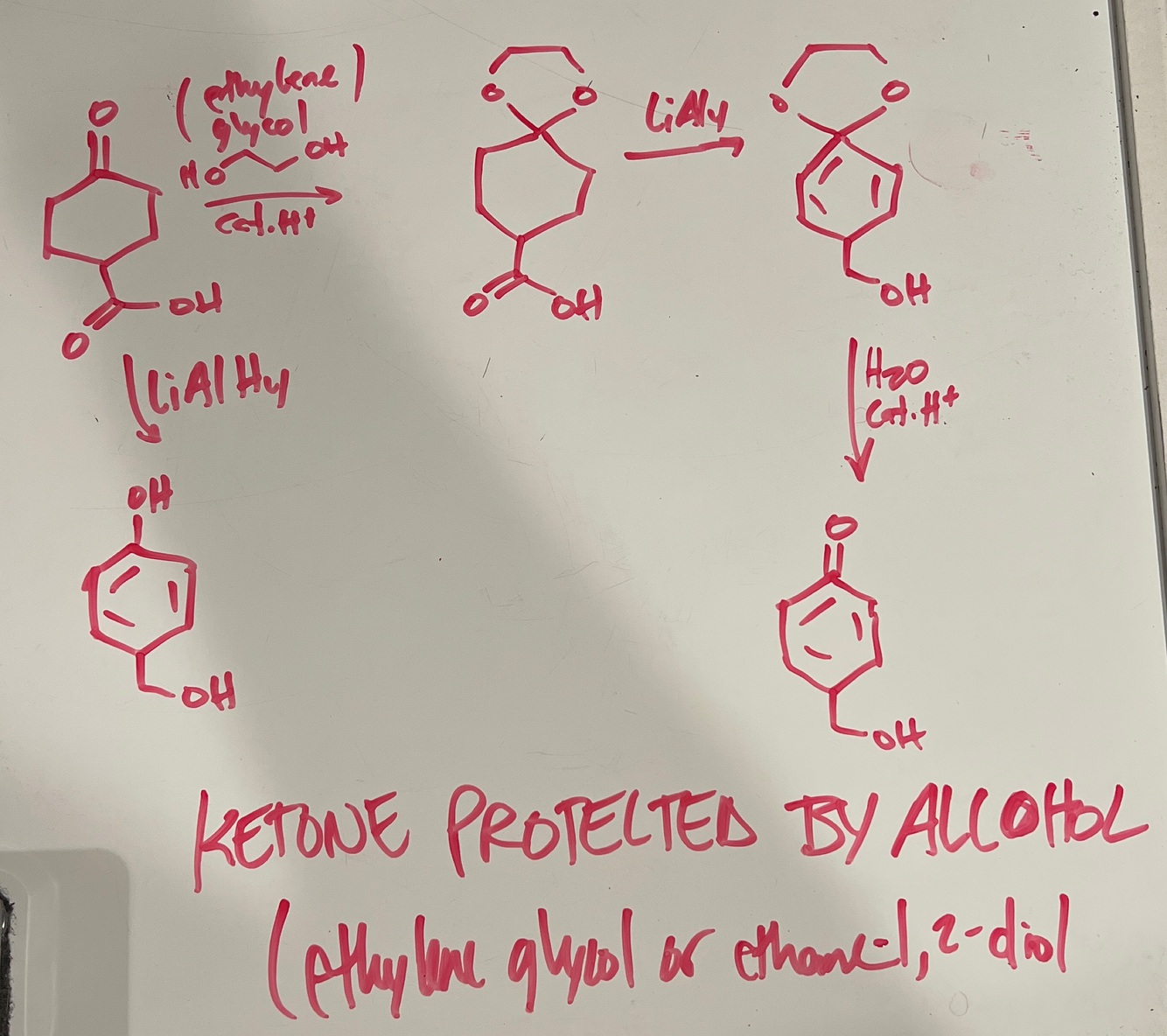
How can alcohols be used as protecting groups for other functional groups?
Aldehydes and ketones can be reacted with two equivalent of an alcohol or diol forming acetals (primary carbons with two -OR groups) or ketals (secondary carbons with two -OR groups). Carbonyls are very reactive with strong reducing agents (like LiAlH4), whereas acetals and ketals do not react with LiAlH4. The acetal and ketal protects the aldehyde or ketone from reaction. After reducing other functionalities in the molecule, the acetal or ketal can be reverted back to a carbonyl with aqueous acid, a step called deprotection.
Fun notes from 5.2. Can you recognize what’s being spelled out here? Three things.
Concept check 5.2
Reactions of phenols proceed in similar fashion to reaction of alcohols. How do they differ?
The hydrogen in the hydroxyl group of phenols is particularly acidic because the oxygen containing anion is resonance stabilized by the ring.
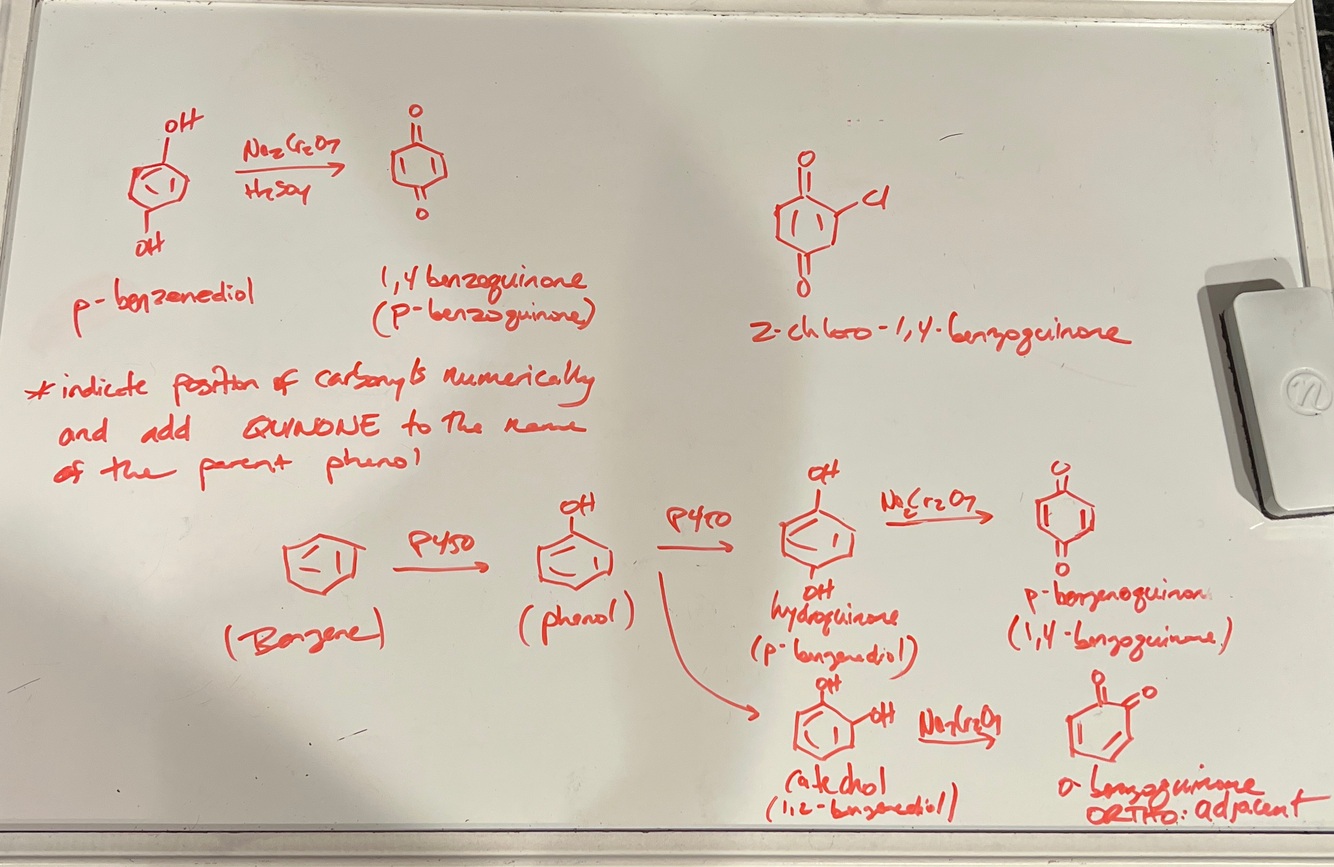
What does treatment of phenols with oxidizing agents produce?
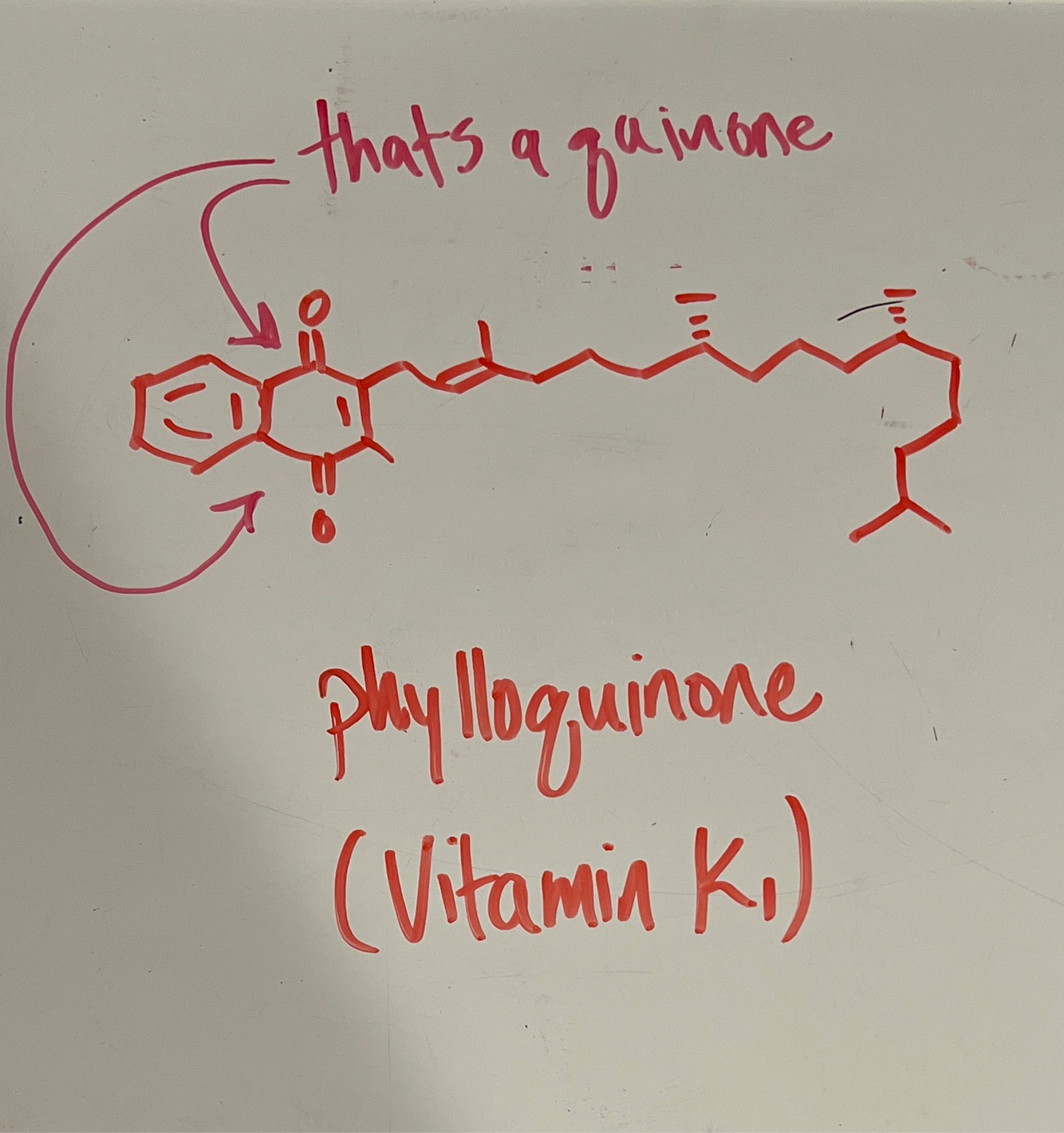
Treatment of phenols with oxidizing agents produces quinones (2,5-cyclohexadiene-1,4-diones)
Can quinones be further oxidized?
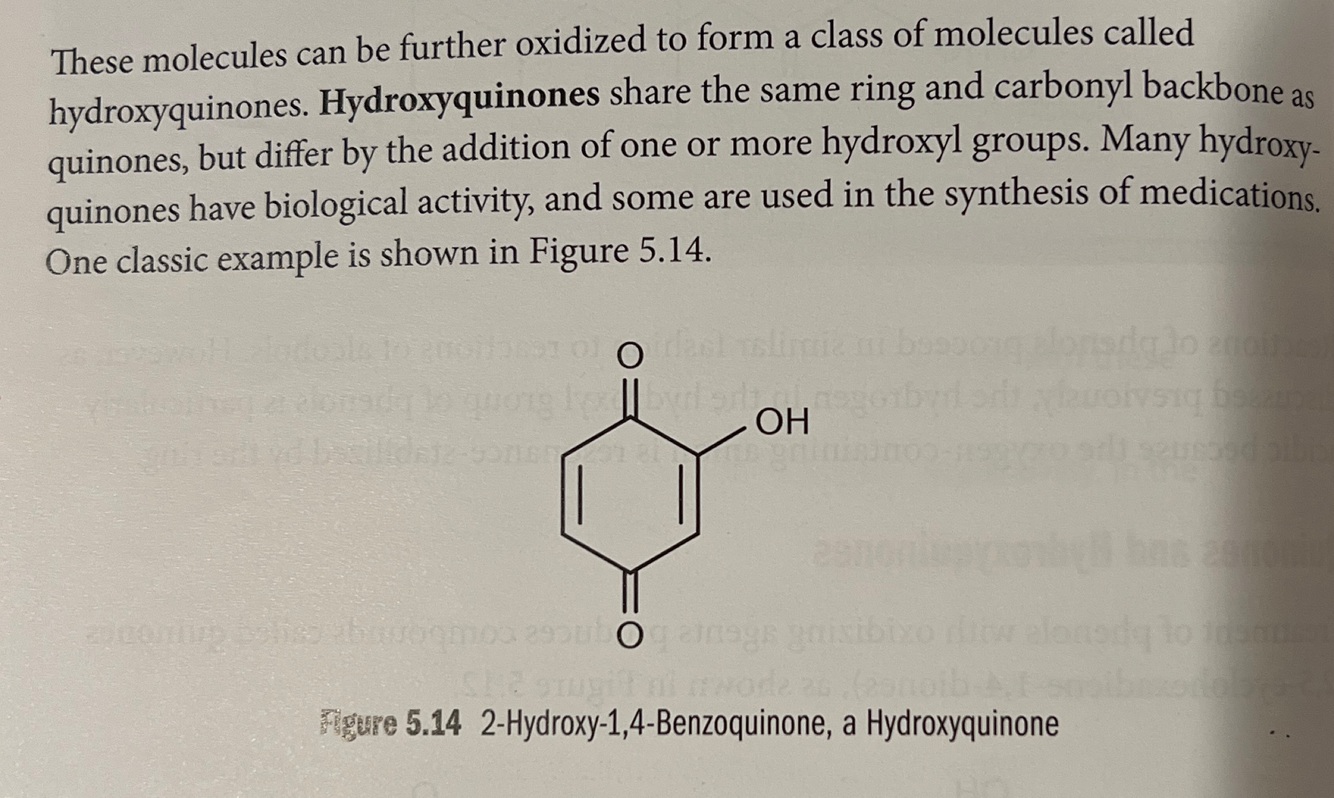
Yep. Into hydroxyquinones. Hydroxyquinones have biological activity. Some are used to synthesize medications.
Name a biologically relevant quinone. Hint: vitamin.
Vitamins K1 (phylloquinone) and K2 (menaquinone). Fat soluble vitamins that play a role in carboxylation of clotting factors.
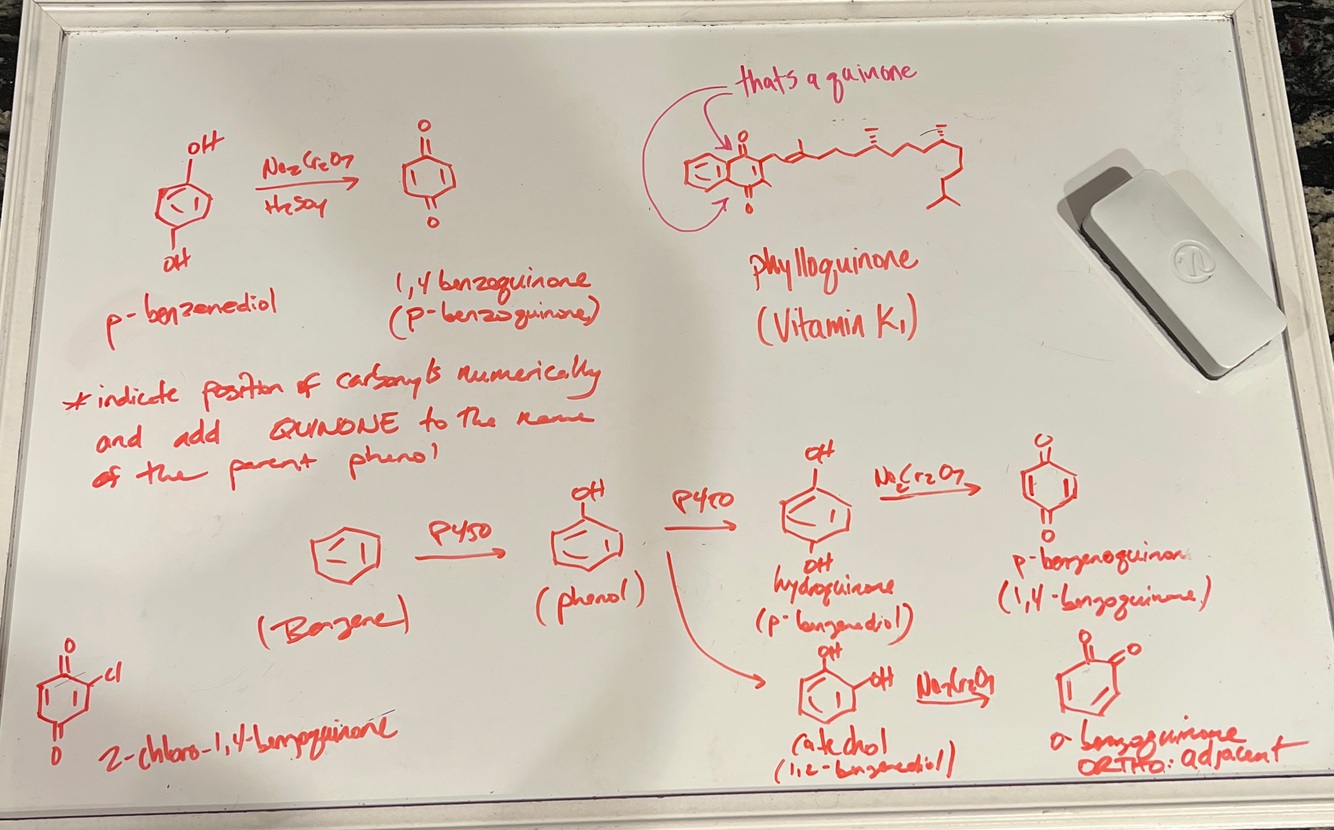
What is a phylloquinone? Two things it important.
Photosynthesis and carboxylation of clotting factors in blood.