Chapter 4 (Pt. 1)
No description yet. This curated deck is ready for daily study.
Card preview (24)
What are the fundamental building blocks of all computer systems?
• Binary Represenation • Boolean Logic • Gates • Circuits
How are numeric and textual information represented?
Two types of information representation • External Represenation • Internal Represenation Binary represenation is a base-2 positional numbering system.
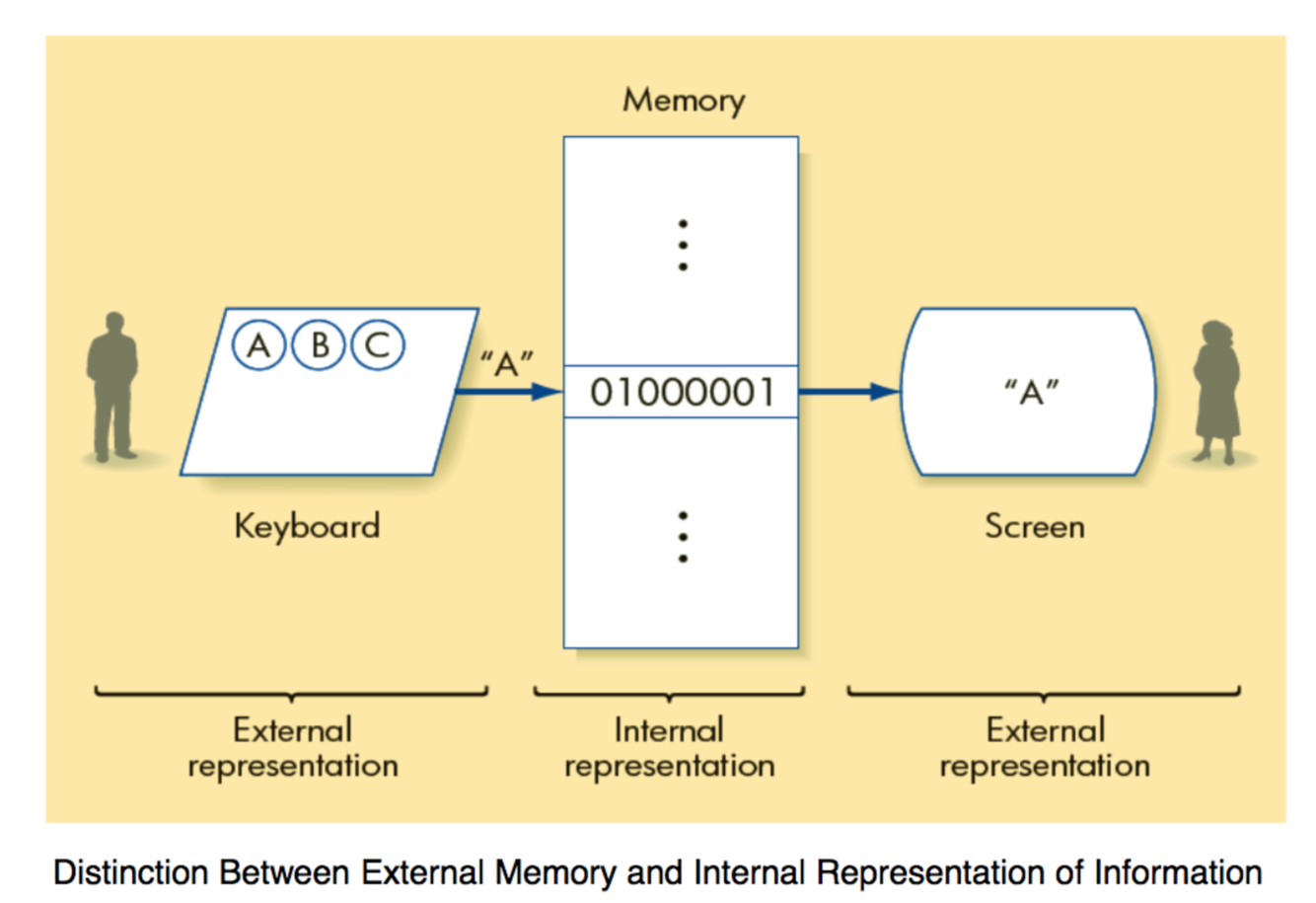
How do we convert from binary-to-decimal?
• Whenever there is a 1 in a column, add the positional value of that column to a running sum • Whenever there is a 0 in a column, add nothing • The final sum is the decimal value of this binary number.
What are the preset limiations to binary storage?
Maximum number of binary digits that can be used to store integers: 16, 32, or 64 bits.
Define: Arithmetic Overflow
Operation that produces an unasigned value greater than 65,535; 16 bit system.
What is the alternative name to the base 8 system?
Octal Numbering Sytem
How do you convert from binary to base eight (vice versa)? from base ten to eight (vice versa)?
To covert from binary to base eight: group in threes. To convert from eight to binary: expand in threes. From ten to eight: use binary as the intermediate.
What is the alternative name for base sixteen?
Hexadecimal Numbering System
How do you convert from binary to base sixteen (vice versa)? from ten to base sixteen (vice verse?
To convert from binary to base sixteen: group in fours. To convert from base sixteen to binary: expand in fours. To convert from base ten to sixteen use binary as an intermediate.
How are fractional numbers represented in binary?
Can be represented in binary by using signed integer techniques; assigned a specific bit(s) as indicators for decimal or cutoff. Normalize the number • First significant digit is immediately to the right of the binary point
How is scientific notation represented in binary?
• ±M x B±E • M is the mantissa, B is the exponent base (usually 2), and E is the exponent
How is textual information encoded in binary?
Code mapping • Assigning each printable letter or symbol in our alphabet a unique number ASCII • International standard for representing textual information in the majority of computers • Uses 8 bits to represent each character.
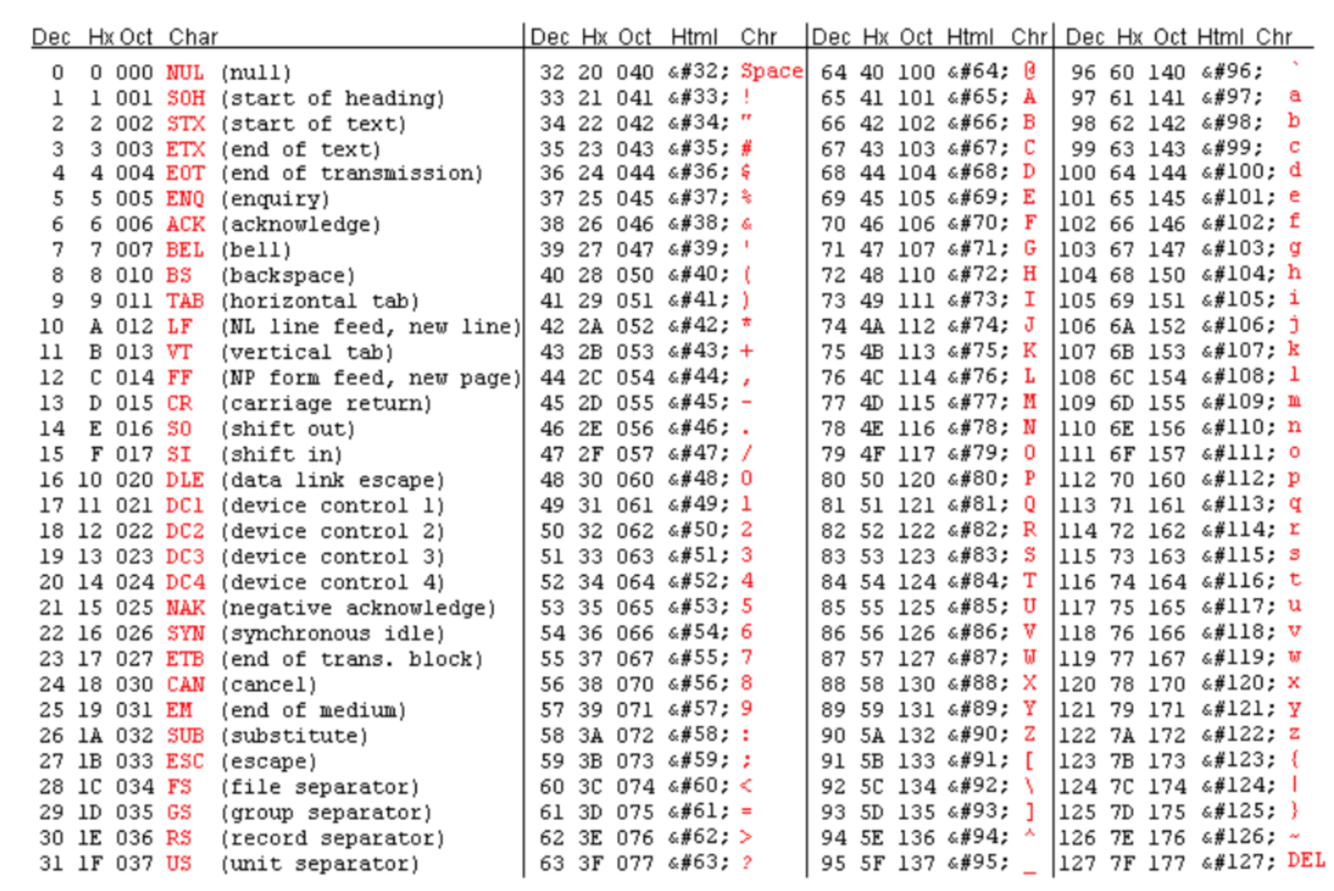
Describe encoding systems.
• Encoding systems are used to assign a number for each letter or character • There are many possible encoding systems, with each one using its own assignment
What are certain pitfalls of different enconding systems?
• Any given computer needs to support different encodings • When data is passed between different encodings or platforms, the data runs th risk of corruption.
Define: Unicode
• An international encoding standard for use with different languages and scripts. • Each letter, digit, or symbol is assigned a unique numeric value that applies across different platforms, program and languages.
Why is unicode so beneficial?
• Unicode standard has been adopted by industry leaders • Unicode enables a single software product or website to be targeted across multiple platforms, languages and countries without re-engineering. • The Unicode consortium was founded to develop, extend and promote the use of the Unicode Standard.
What are the different types of encoding?
UTF - 8 • Variable byte representation • 1 byte to 4 bytes per code point • First 128 characters are encoded just like ASCII UTF - 16 • Variable byte representation • 2 bytes to 4 bytes per code point • Optimized for languages residing in the 2 bytes character range UTF - 32 • Fixed width byte representation • 4 bytes per code point
How are characters assigned numbers in unicode?
Characters are assigned a number written in the U+XXX form. • Called a Code Point • Example: U+0041 • The numbers are hexadecimal • Listed on the Unicode website • Hellow is represented by a list of points • U+0048 | U+0065 | U+006C | U+006F
What are the differences in enconding between different versions of python?
Python 2 • Enconding is ASCII • Not all python 2 internal supports Unicode Python 3 • ”< type ‘str’ >” is a Unicode Object • All built-in modules support Unicode • Default enconding is UTF-8, not ASCII
Define: Digital Representation
Values for a given object are drown from a finite set.
Define: Analog Representation
Object can take on any value
What does amplitude measure?
It measures loudness • Units: Electrical Voltage
What does period measures?
Time it takes for the wave to make on complete cycle • Units: Time (Seconds)
What does frequency measure?
Total number of cycles per unit time • Units: Hertz (Hz)