NB1-2 - Organization of the Nervous System 2
No description yet. This curated deck is ready for daily study.
Card preview (24)
List the lobes of the cerebral cortex and say how many there are.
Each lobe is paired Frontal, Parietal, Temporal, Occipital, Insular, Limbic
In a very general sense, what does each lobe of the brain do?
Frontal - motor control Parietal - somatosensory Temporal - auditory function Occipital - vision Insular - interoception and many other functions Limbic - emotions and memory
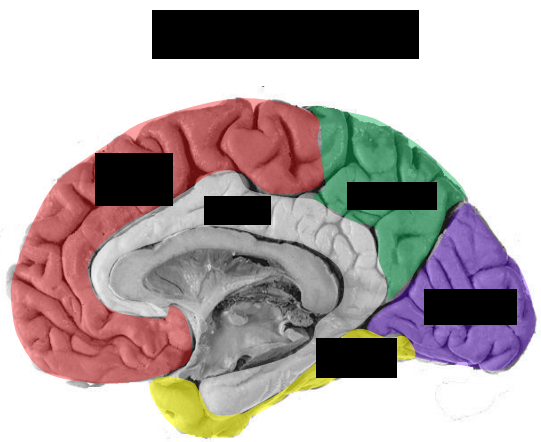
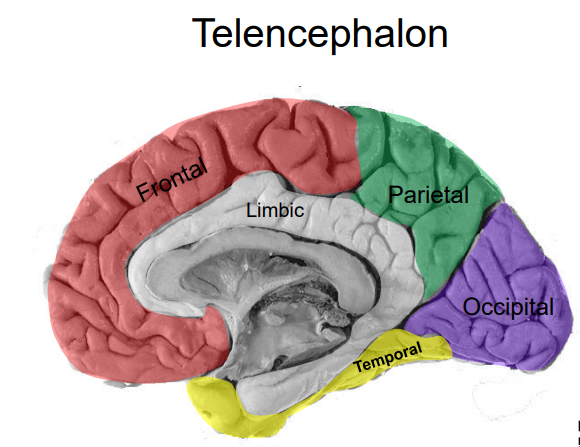
What is highlighted in these images?
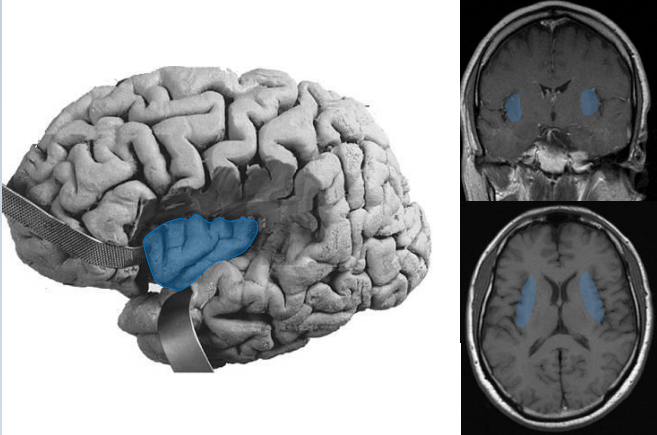
The insular lobe
In the telencephalon, is the grey matter or white matter more superficial?
The grey matter is more superficial
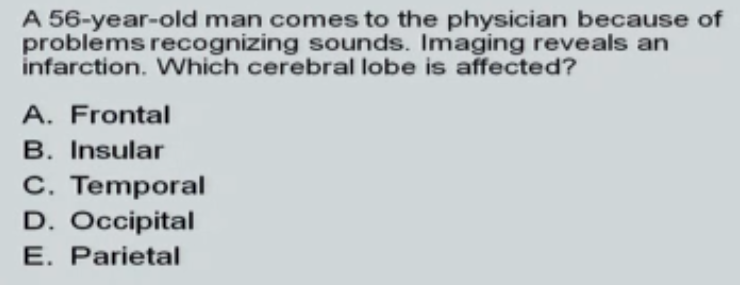
C
What structures compose the deep cerebral nuclei? How can the general location of these structures be found on a cadaver.
The deep cerebral nuclei consists of the caudate nucleus, putamen, globus pallidus internal, globus pallidus external, hippocampus, amygala, and thalamus The cerebrum, from the superficial to deep, consists of grey matter, then white matter, the grey matter again. That third layer of grey matter are the deep cerebral nuclei
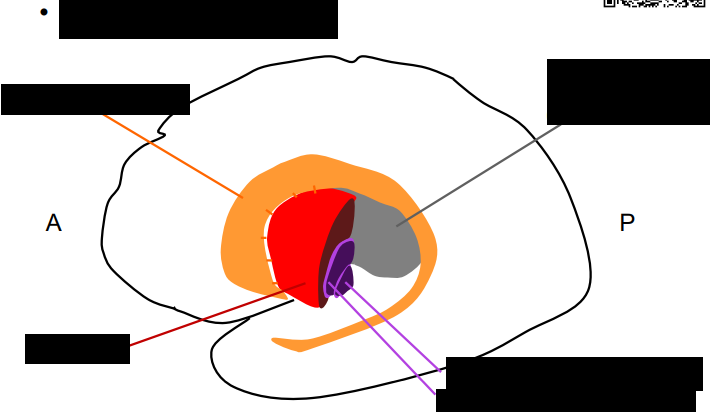
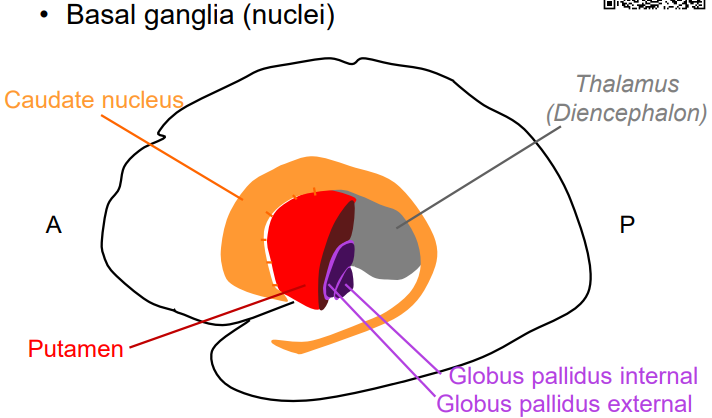
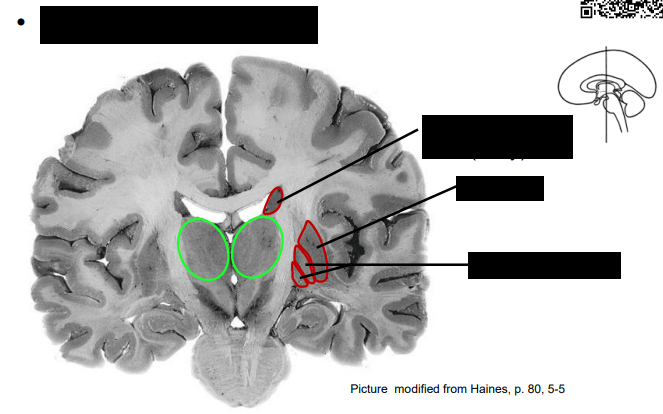
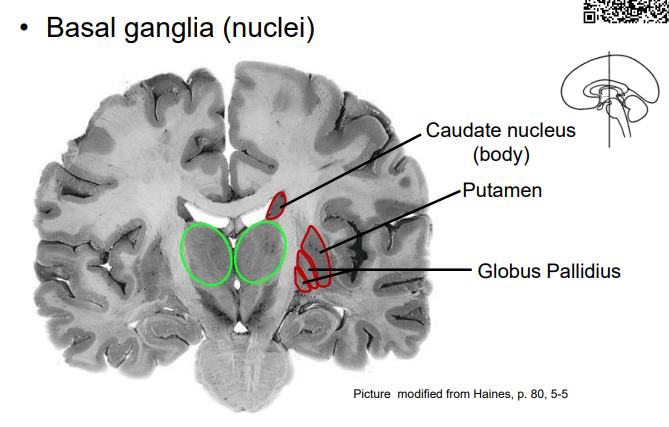
What structures compose the basal ganglia? What is the function of these structures?
The caudate nucleus, putamen, and globus pallidus These structures function to initiate and organize movement and regulate cortical motor activity via the thalamus
What are the striatum and lentiform nuclei?
Striatum = caudate + putamen Lentiform Nucleus = putamen + globus pallidus
What structure is this image highlighting?
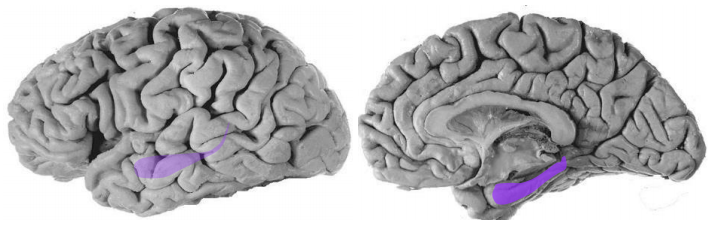
The hippocampus
What structure is this image highlighting?
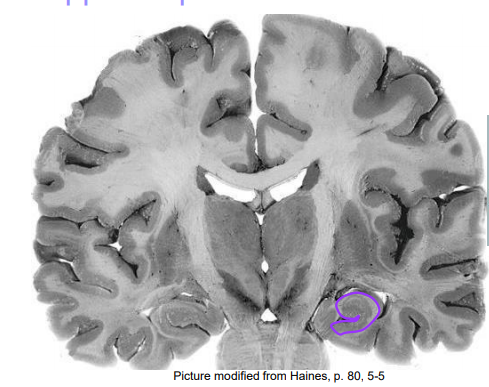
hippocampus
Describe the location of the amygdala.
It is situated on the rostral tip of the hippocampus
What is the function of the hippocampus?
It processes information destined for long-term storage within cortical circuitry
What is the function of the amygdala?
Regulation of emotional behaviour. Possibly assigns emotional valence to memory
What structures are these images highlighting?
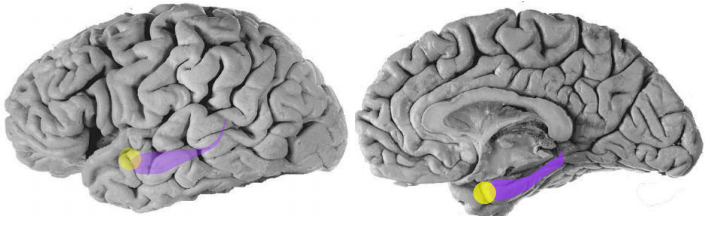
Purple is hippocampus Yellow is amygala
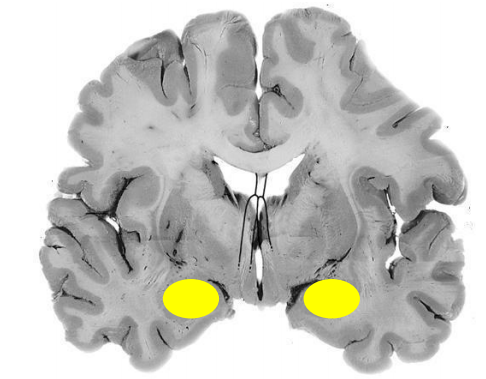
Amygdala
Describe the location of the thalamus.
Just ventral (inferior) to the lateral ventricles
What are the functions of the thalamus?
Modulate and relay virtually all sensory input to cortices (except olfaction) Processes output from basal ganglia and cerebellum to regulate motor cortex and hence, movement.
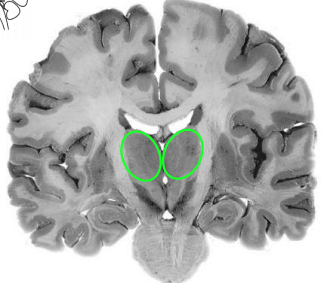
Thalamus
List the types of cerebral white matter tracts and provide a major example of each.
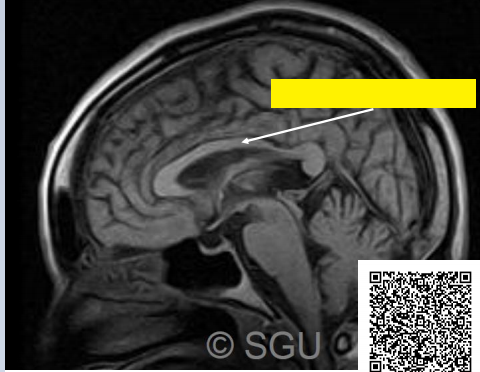
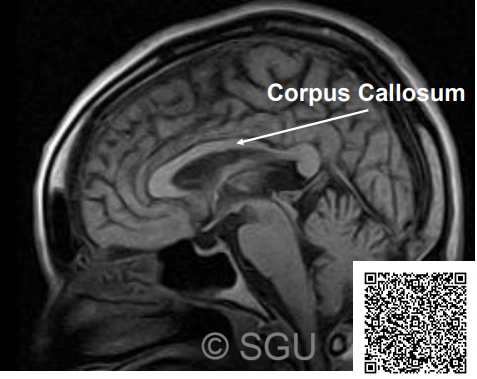
• Association fibres connect two regions within the same hemisphere (ie - arcuate fasciculus connect temporal/parietal lobes to the frontal lobe with the same hemisphere) • Commissural fibres connect one brain hemisphere with another (ie - corpus callosum) • Projection fibres connect higher and lower centres of the CNS (ie - corona radiata)