Chapter 13 (Alkenes)
No description yet. This curated deck is ready for daily study.
Card preview (22)
What is the reactivity of alkenes ? relative to alkanes and why
• more reactive than alkanes due to pi bond • C=C is made up of a sigma and a pi bond
What happens in alkene addition reactions ?
small molecule added across the double bond, pi bond breaks, new bond forms
What happens in the hydrogenation of alkenes ?
• Alkene + hydrogen + (nickel catalyst) -> Alkane
What happens in halogenation ?
• Br2 or Cl2 is added to alkene to form haloalkane • F2 is too reactive
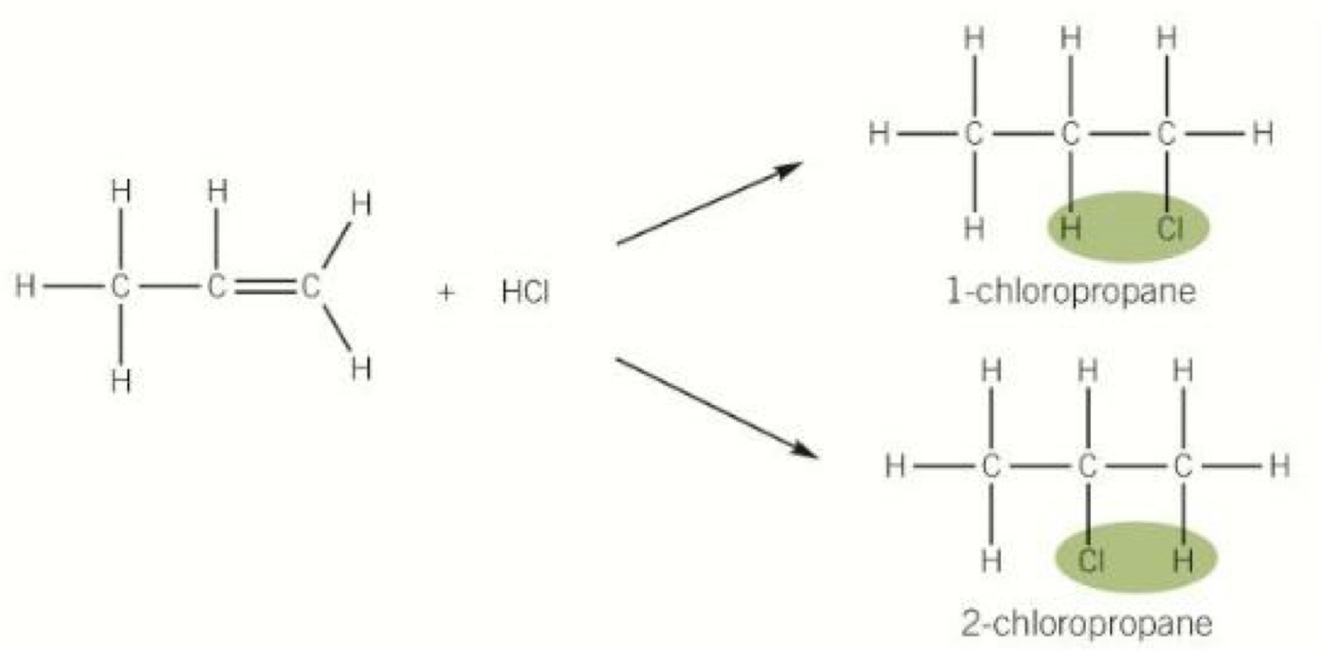
What happens in the addition of hydrogen halides to alkene ?
• alkenes reacts with hydrogen halide dissolved in water to also form haloalkane • if alkene is liquid then hydrogen halide is bubbled through
What is the differences between symmetrical and unsymmetrical products ?
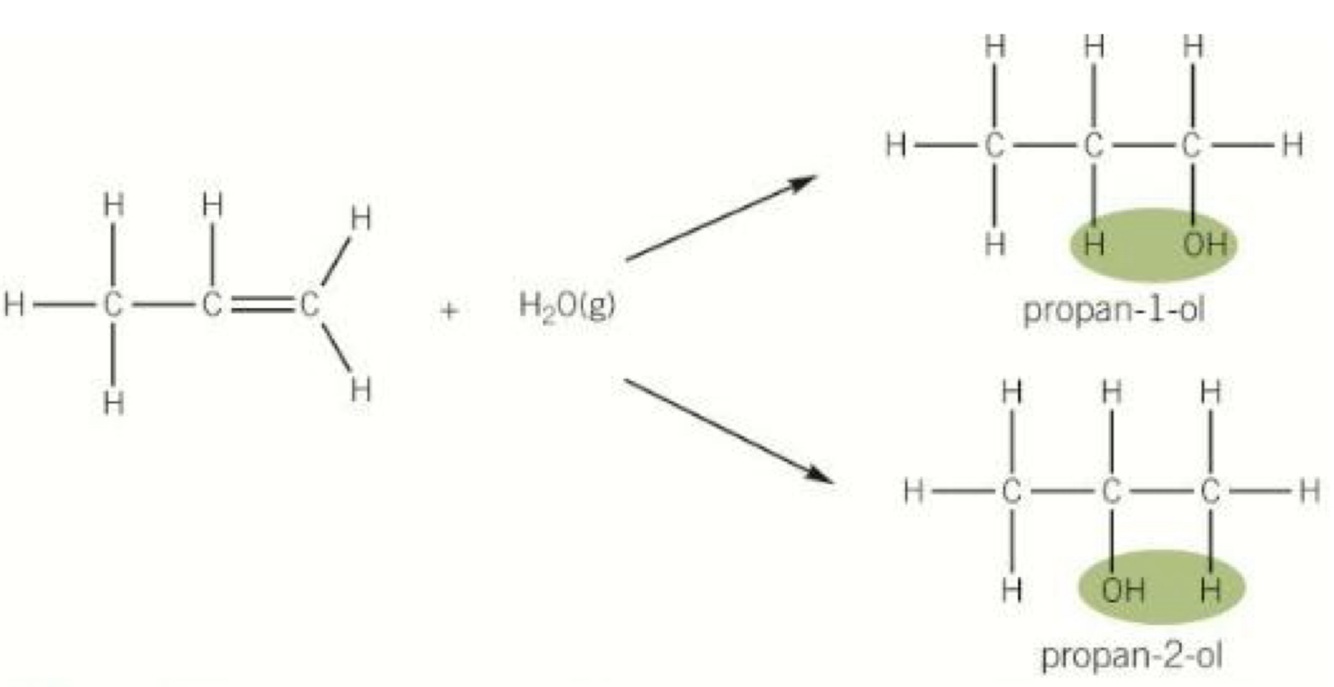
What happens in the hydration of alkenes ?
• alkene + water(steam) + (phosphoric acid) -> alcohol • this can form symmetrical and unsymmetrical products.
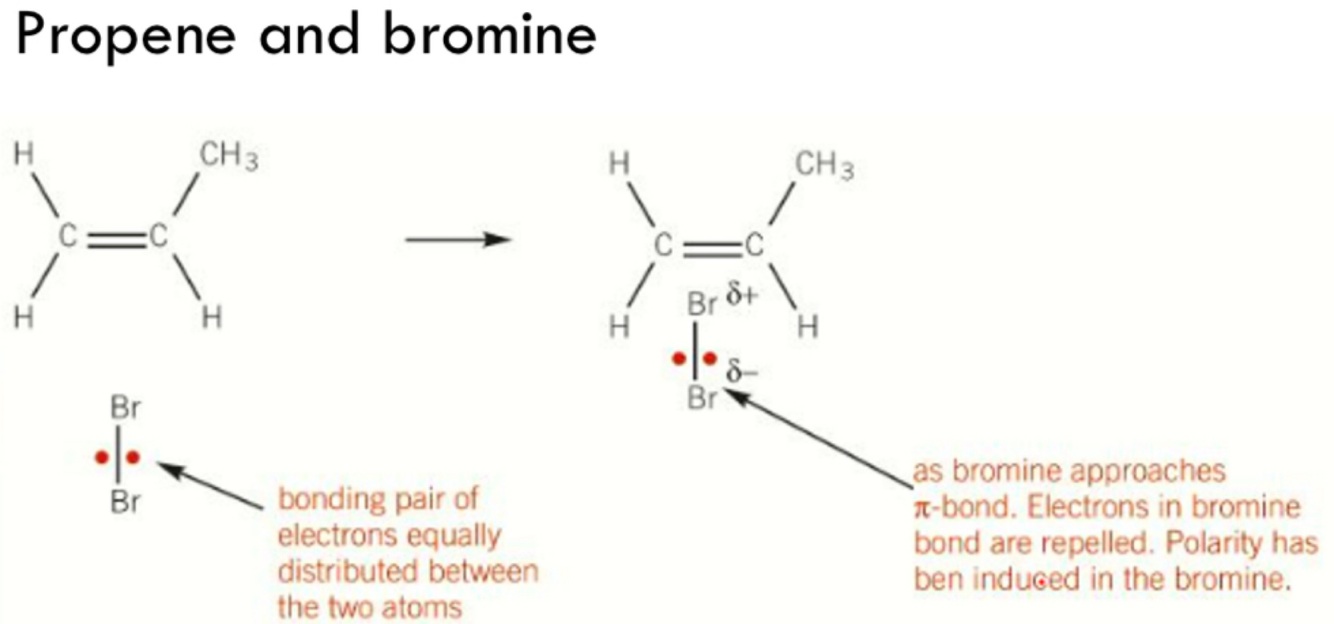
What is an electrophilic addition reaction ?
• the double bond in an alkene represents a region of high electron density due to pi electrons • high electron density attracts electrophiles • electrophile - an atom that is attracted to an electron rich centre and accepts an electron pair
What does the mechanism of electrophilic addition look like ?
• the + carbon is a carbocation
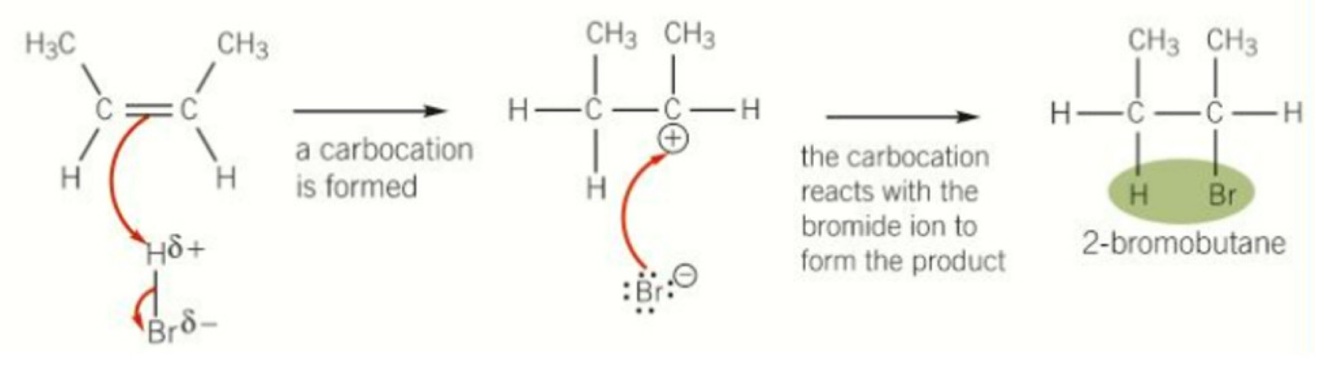
What is the mechanism for bromination ?
What is an addition polymer ?
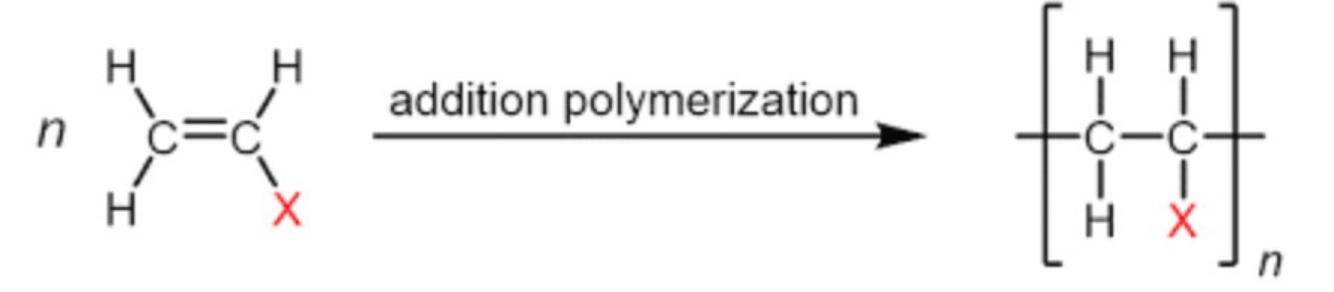
These are composed of a repeating pattern of a single monomer, no other products are produced in the reaction
What type of monomers does addition polymerisation use ?
-unsaturated alkenes undergo addition polymerisation - produces long saturated chains containing, NO double bonds - carried out at high temperatures and high pressure - ethane -> poly(ethene)
How do you represent addition polymers ?
• the repeated unit is written in square brackets • after the bracket write a n to show a large number of repeats
What is the difference between HDPE and LDPE ?
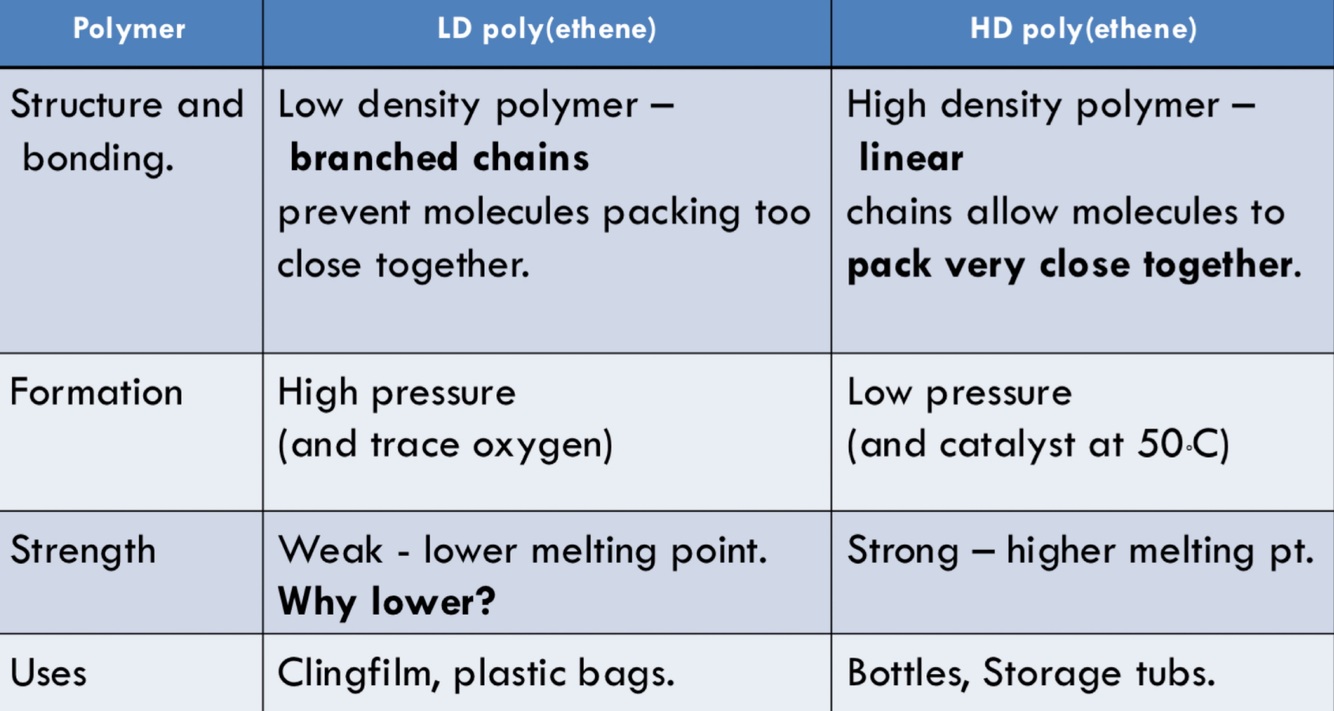
• HDPE have less branching meaning they can get closer to each other meaning there are stronger london forces, meaning they have relatively high melting and boiling points • LDPE have lots of branching so can’t get closer to each to each other meaning weaker London forces
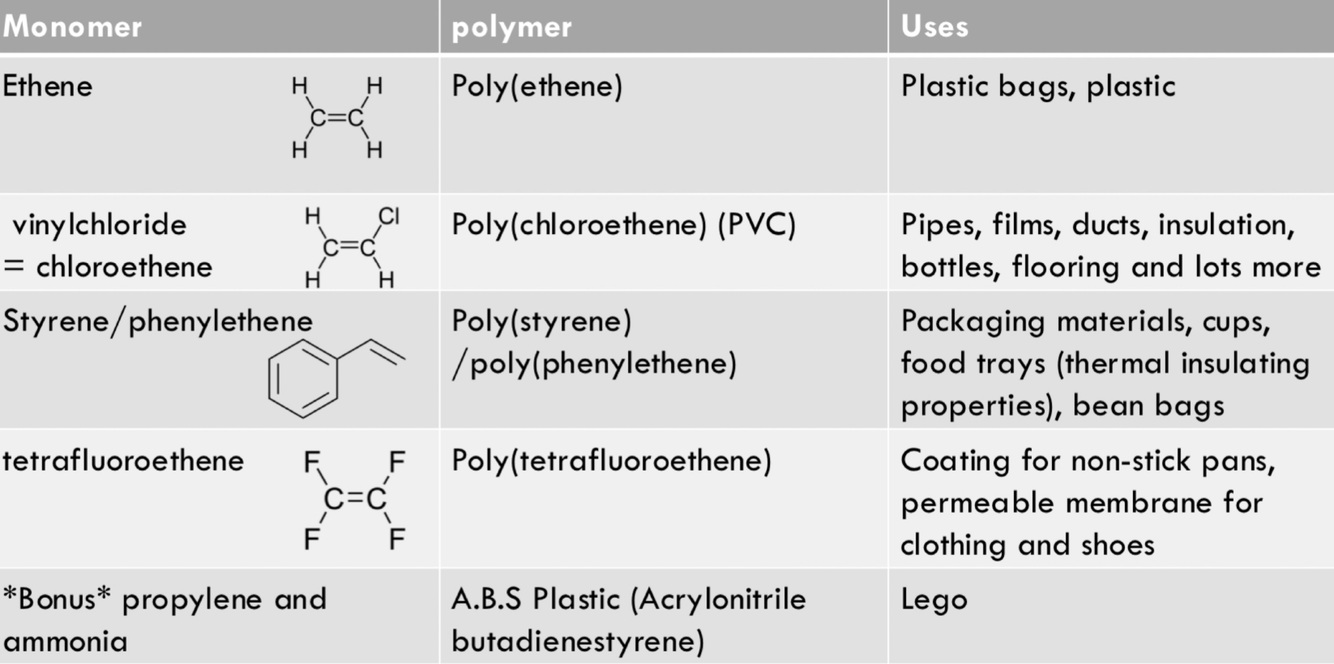
What are the uses of polymers ?
What are the environmental impact of polymers ?
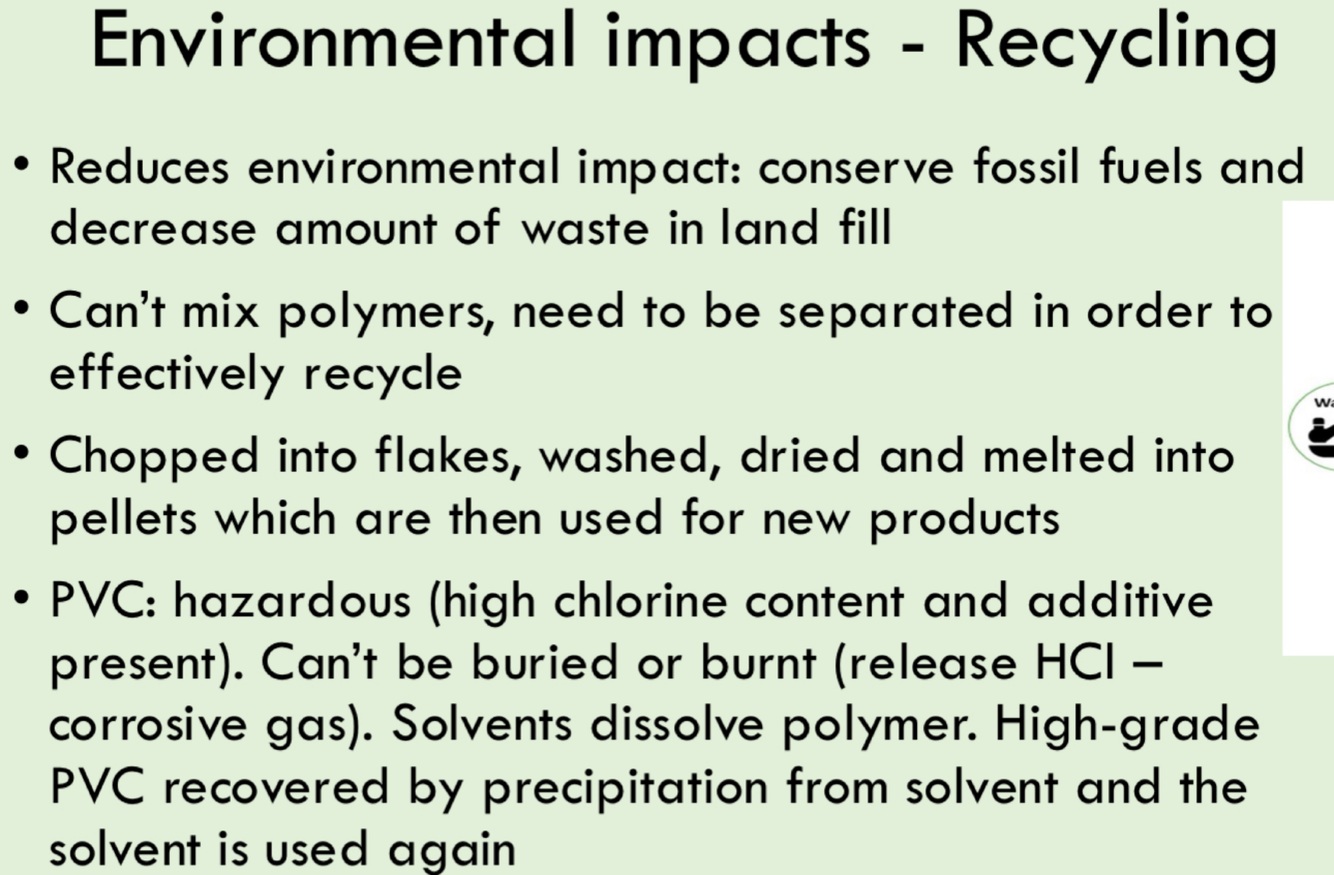
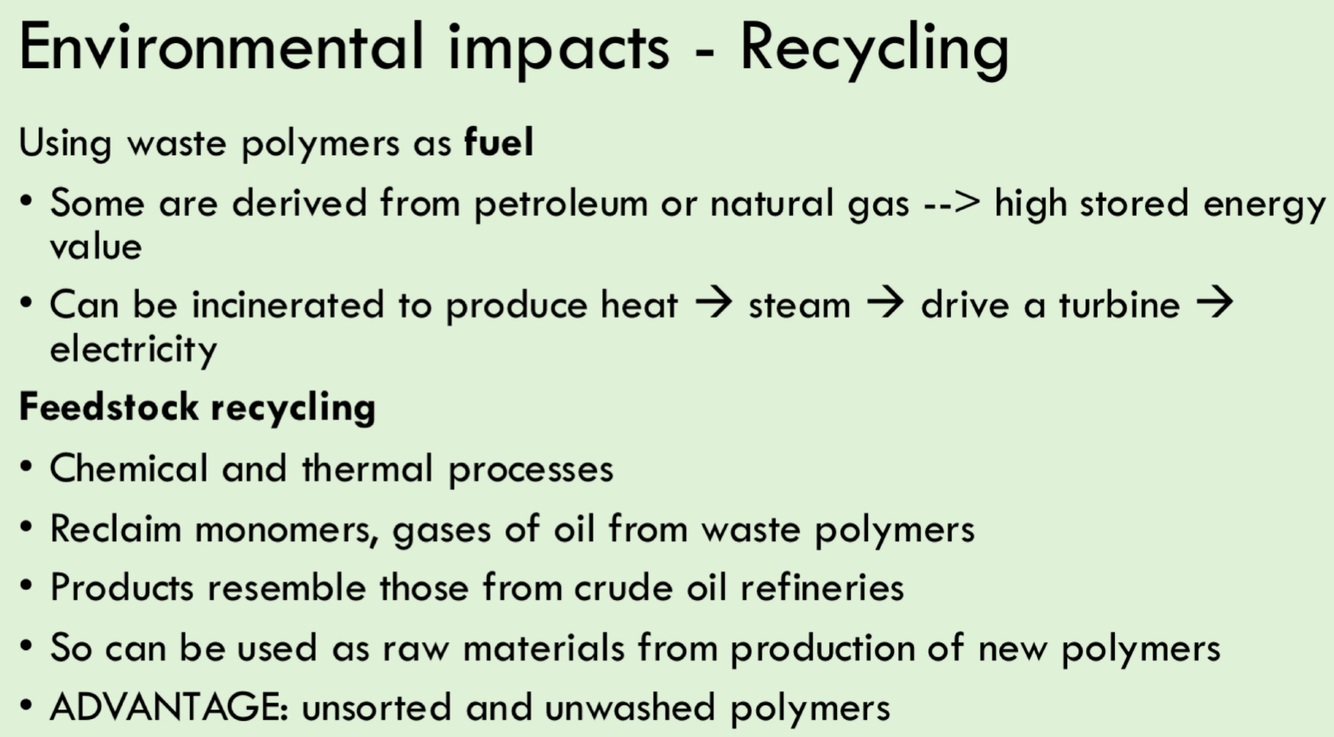
How can polymers be used as fuels ?
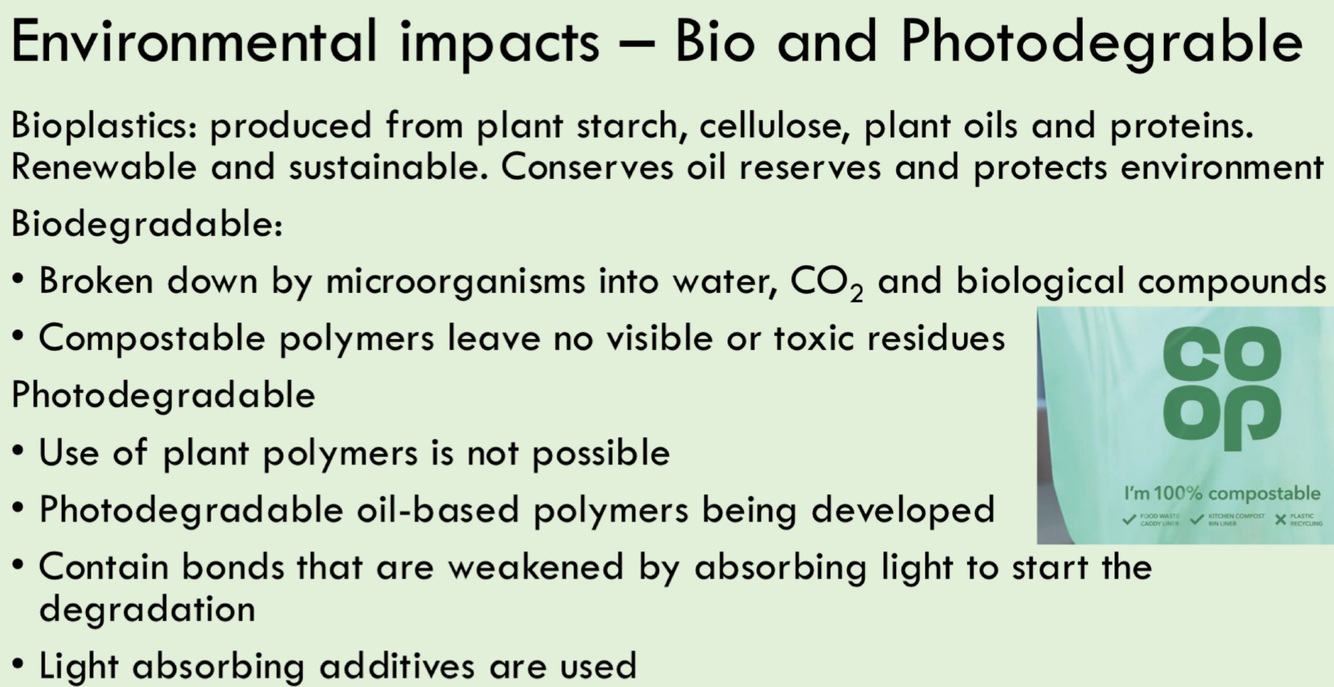
What are biodegradable and photodegradable polymers ?
why do alkenes display stereoisomerism ?
• the functional groups are attatched to the C=C meaning the carbons remain fixed in their position, this is because free rotation of the bonds about C=C is not possible due to the presence of a π bond
what is cis/trans isomerism ?
• cis-trans isomerism is a special case of E/Z isomerism • 1 of the attatched groups on each C=C must be hydrogen • Cis: H atoms on the same side (Z) • trans: H atoms diagonally oposite(E)
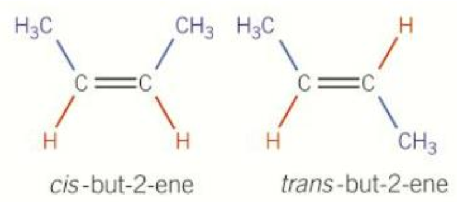
what is EZ isomerism ?
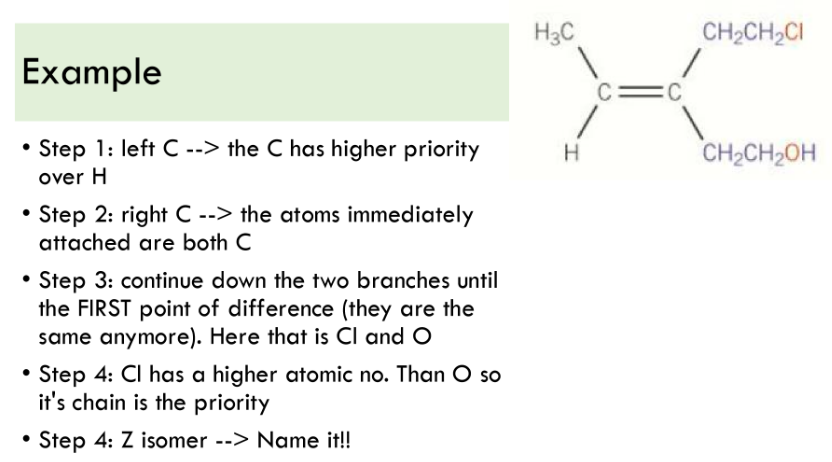
• atoms / groups are given prority based on their atomic number • if the groups with higher priority are on the same side of the C=C then it is a Z-isomer • if the groups of higher priority are at a diagonal acrros the C=C then it is an E-isomer
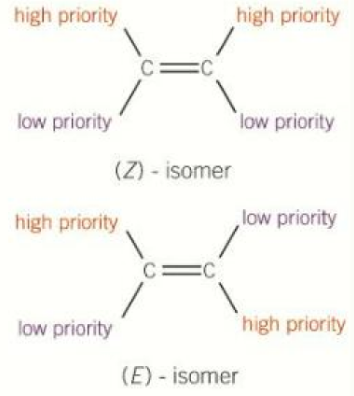
what is an example of working out E/Z isomerism ?