Exam COPY
No description yet. This curated deck is ready for daily study.
Card preview (24)
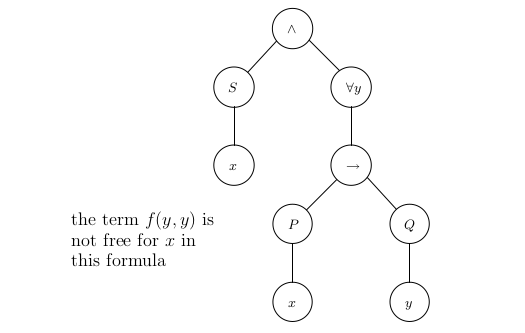
t is free for x in φ
if no free x leaf in φ occurs in the scope of ∀y or ∃y for any variable y occurring in t.
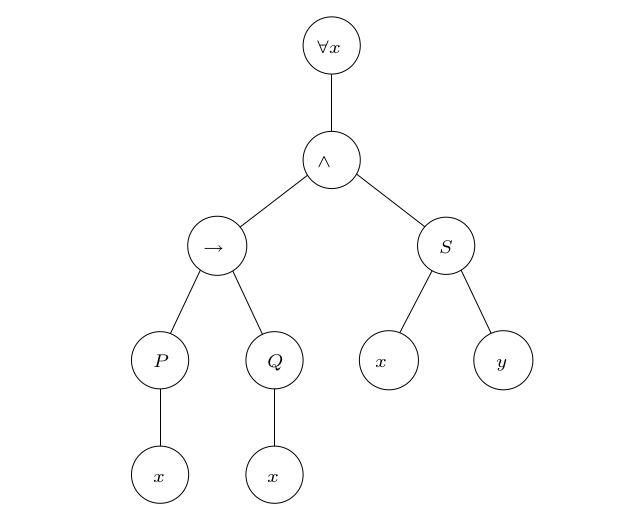
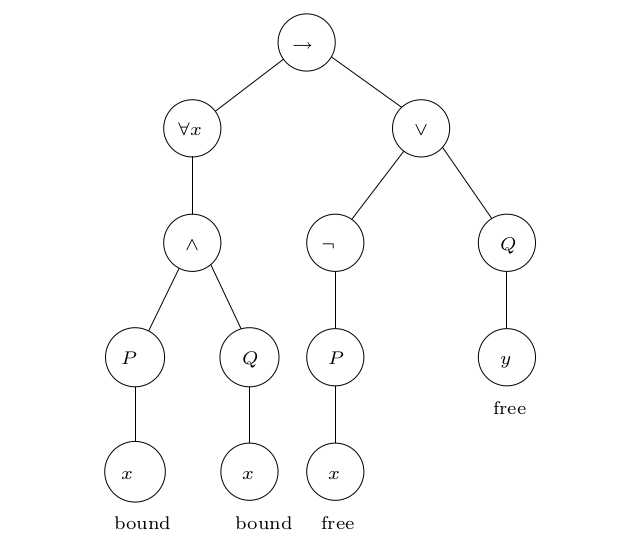
Draw parse tree of following formula and give which variabels are bound or free ∀x ((P (x) → Q(x)) ∧ S(x, y))
What is the meaning of following notation φ[t/x]
replacing all free occurrences of x in φ by t

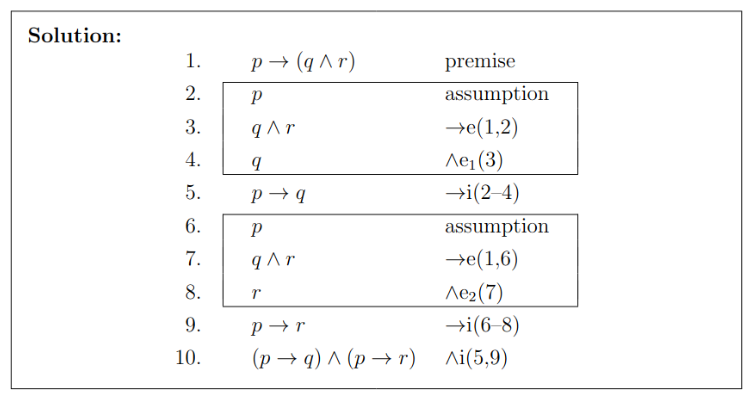
2017 - 1b





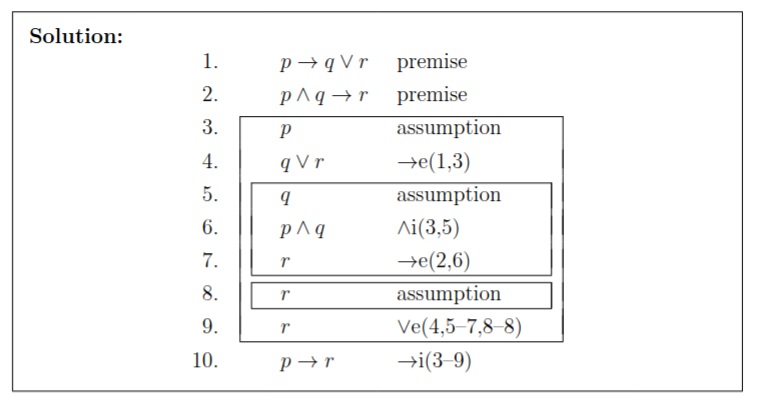

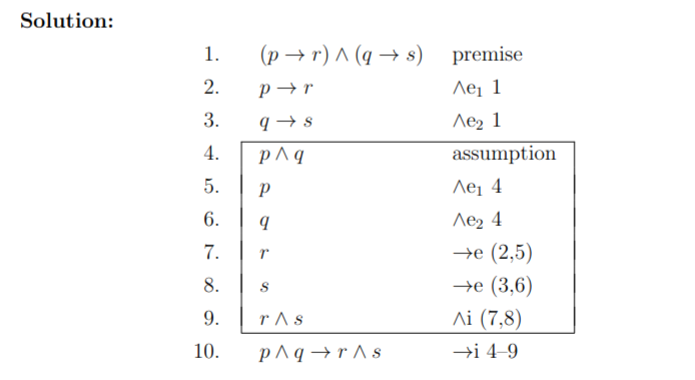

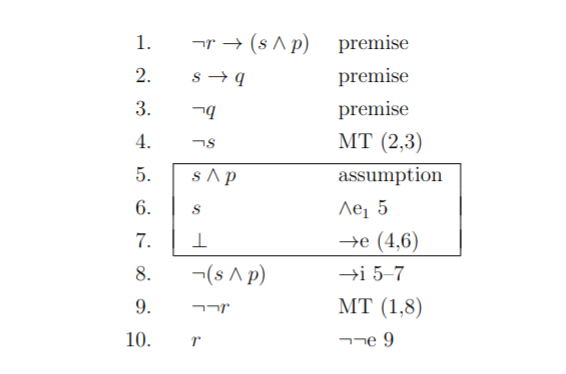

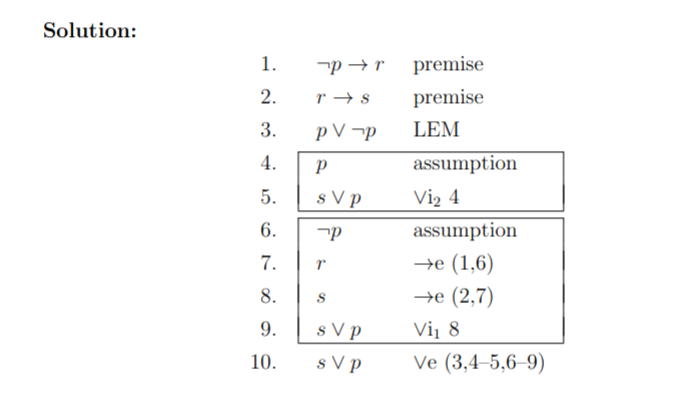

Free and bound variable ∀x ((P (x) → Q(x)) ∧ S(x, y))
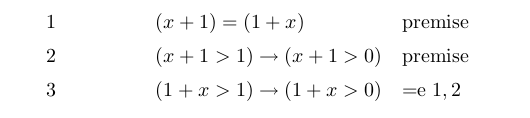
establishing the validity of the sequent Premiss x + 1 = 1 + x Premiss (x + 1 > 1) → (x + 1 > 0) Conclusion (1 + x) > 1 → (1 + x) > 0
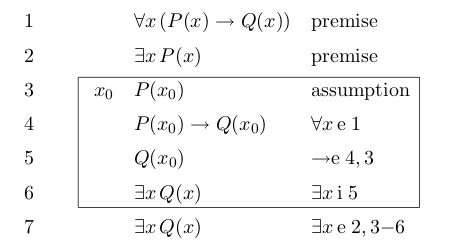
Premiss ∀x (P (x) → Q(x)) Premiss ∃x P (x) Conc. ∃x Q(x)
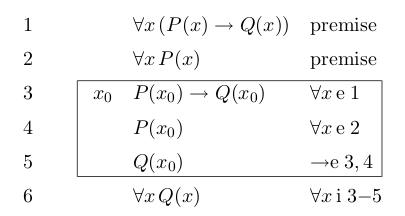
Prove folowing sequent Premiss ∀x (P (x) → Q(x)) Premiss ∀x P (x) Conc. ∀x Q(x)
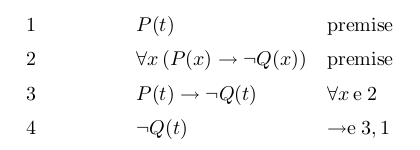
Prove following sequent Premiss P (t) Premiss ∀x (P (x) → ¬Q(x)) Conc. ¬Q(t)
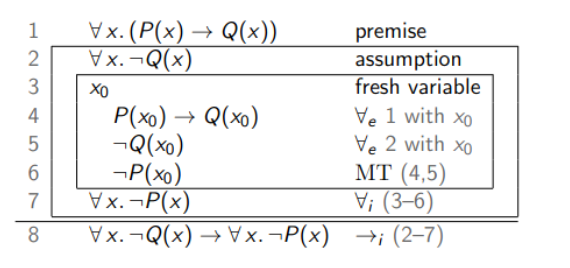
Prove the following sequent Premiss ∀x .(P (x ) →Q (x )) Conc. ∀x .¬Q (x ) →∀x .¬P (x )
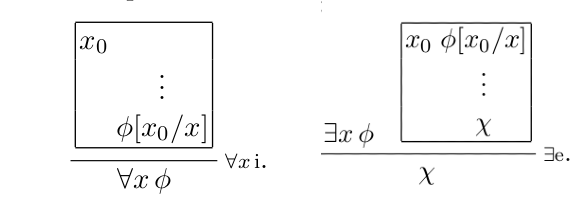
Show general proof for • For all introduction • For all elimination
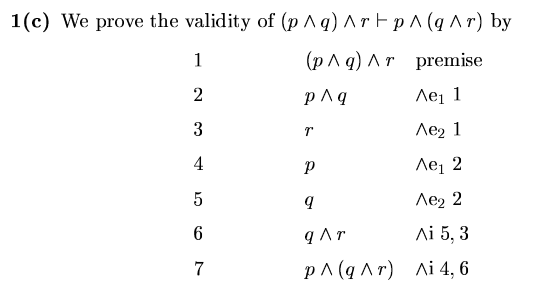
Exercise 1.2.1 - c Premiss (p ∧ q) ∧ r Conc p ∧ (q ∧ r)
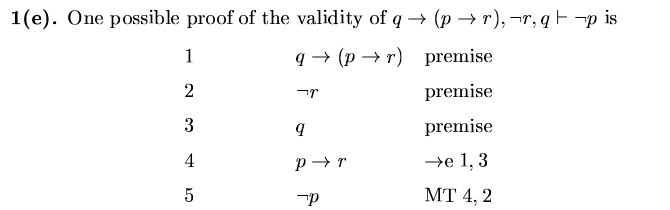
Exercise 1.2.1 - e Premiss q → (p → r) Premiss ¬r Premiss q Conc. ¬p
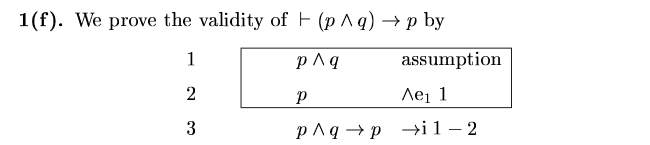
Exercise 1.2.1 - f Conc (p ∧ q) → p
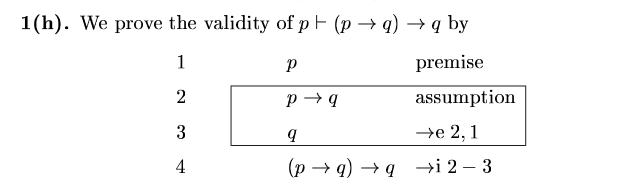
Exercise 1.2.1 - h Premiss p Conc. (p → q) → q