Chapter 13: Ethers and Thiols
No description yet. This curated deck is ready for daily study.
Card preview (21)
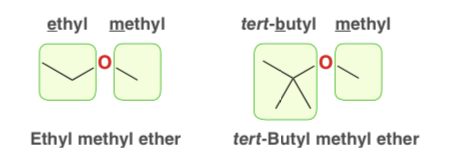
Common naming of ethers
Common name is constructed by: • Identifying each R group • Arrange them in alphabetical order • Add the word ether to the end of the word
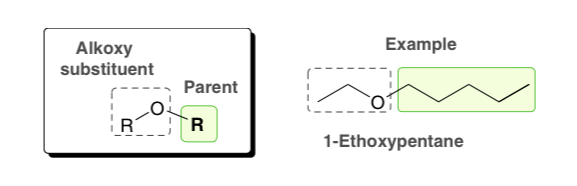
Systematic naming of ethers
Systematic name is constructed by: • Identify the larger group as the parent chain • Name the smaller group as an alkoxy substituent • Locants are assigned so as to give the lowest possible numbers
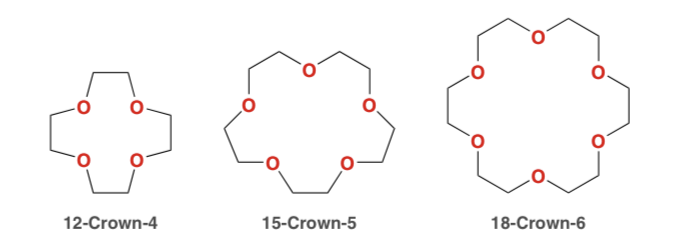
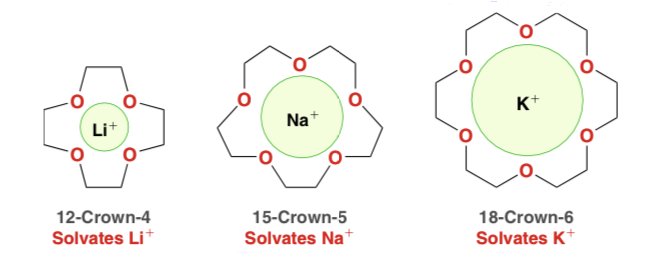
Naming of crown ethers
Use the formula X-crown-Y • X indicates the total number of atoms in the ring • Y represents the number of oxygen atoms
Crown ether solvable ions
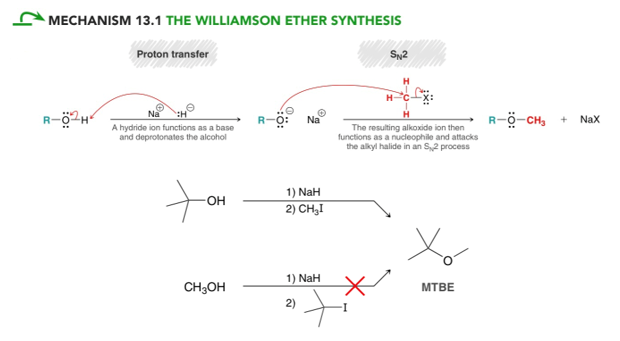
Williamson synthesis Ethers
Reagents • NaH (sodium hydride) • RX Mechanism Starting with an alcohol as substrate, the hydride ion deprotonates the hydroxyl group with the alkyl halide subsequently attacking the negatively charged oxygen Alkyl halide must be a methyl or primary alkyl halide to favor SN2 reaction
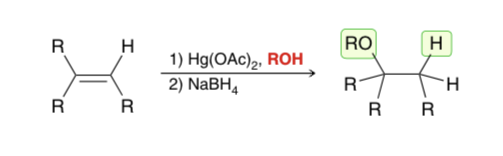
Alkoxymercuration-Demurcuration
Reagents • Hg(OAc)2 (mercuric acetate) & ROH • NaBH4 (sodium borohydride) Mechanism Markovnikov addition of an alcohol (RO and H) across an alkene; RO alkoxy substituent added to the more substituted vinylic carbon
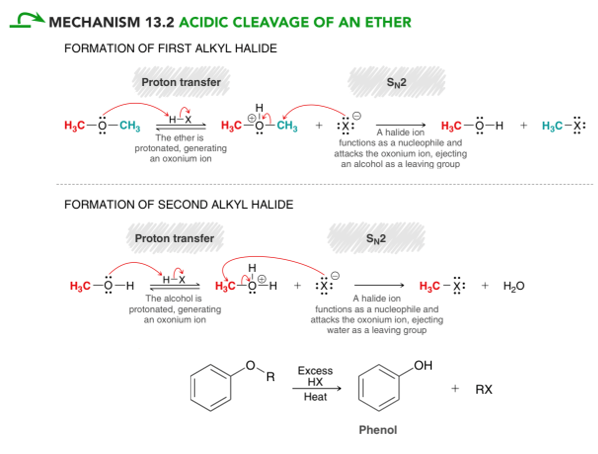
Acidic cleavage Ether
Reagents excess HX (hydrogen halide) & heat Mechanism Ether is converted into two alkyl halides When a phenyl ether is cleaved under acidic conditions the products are an phenol and an ether; only applies to phenyls, NOT cyclic alkanes
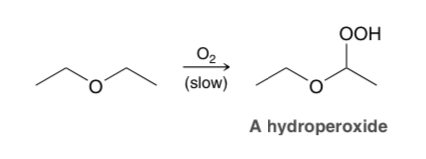
Autooxidation Ether
Ethers undergo autooxidation in the presence of atmospheric oxygen to form hydroperoxides
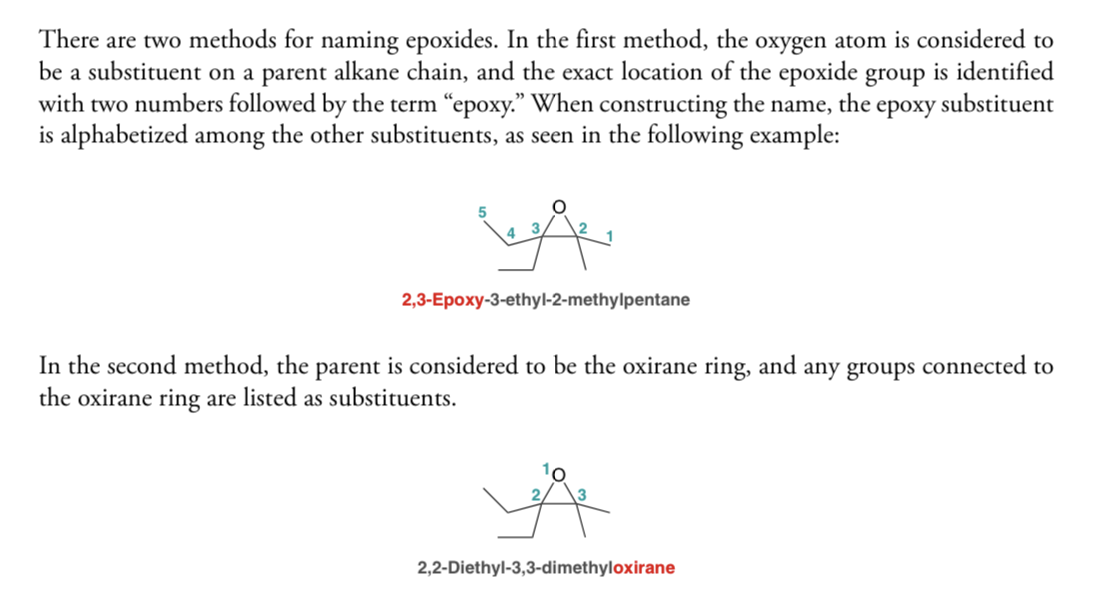
Naming of epoxides
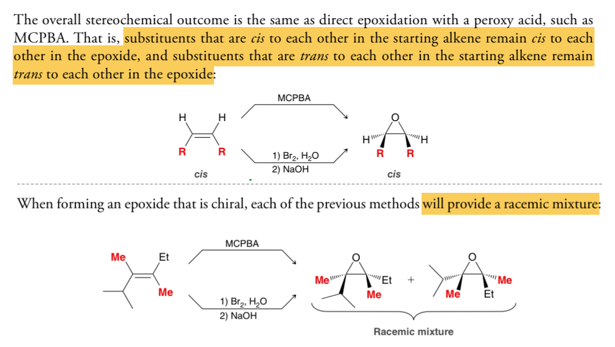
Preparation of epoxides
Reagents RCO3H (peroxy acid) MCPBA or • Br2 & H2O • NaOH Mechanism Epoxides can be prepared using an alkene as a substrate upon treatment with a peroxy acid such as MCPBA or through a halohydrin intermediate
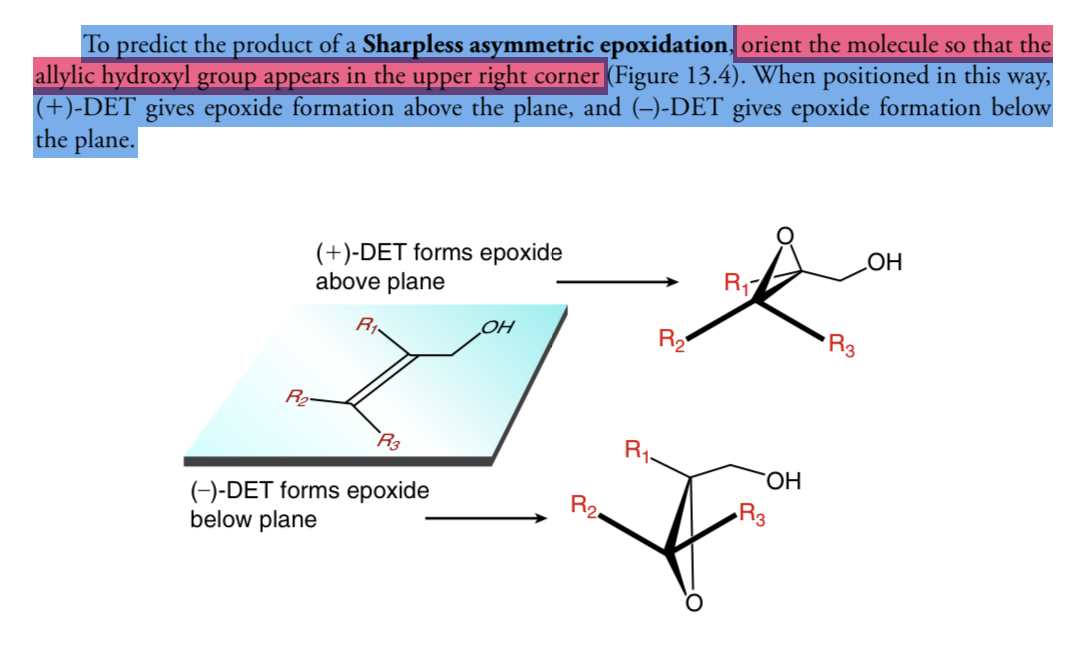
Sharpless asymmetric epoxidation
Reagents tBuOOH (tert-Butyl hydroperoxide) Ti[OCH(CH3)2]4 (titanium tetraisopropoxide) (+)-DET or (−)-DET Mechanism Enantioselective epoxidation process that produces only one enatiomer
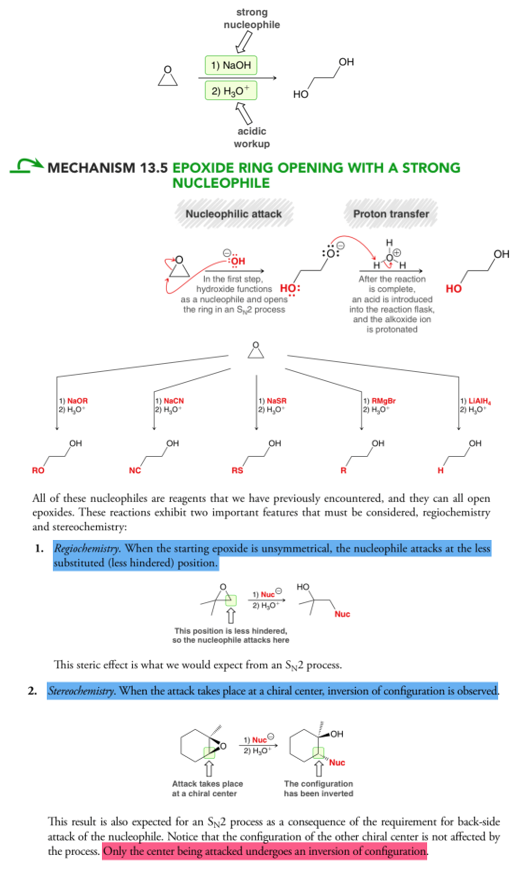
Ring-opening reaction of an epoxide Strong nucleophile
Reagents • Stong Nuc • H3O+
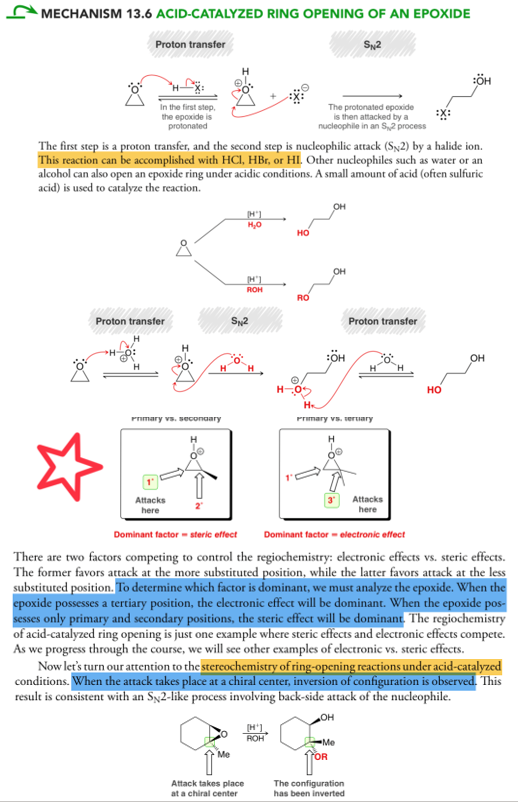
Ring-opening reaction of an epoxide Acid-catalyzed
Reagents HX (hydrogen halide) or H3O+ & H2O or H3O+ & ROH
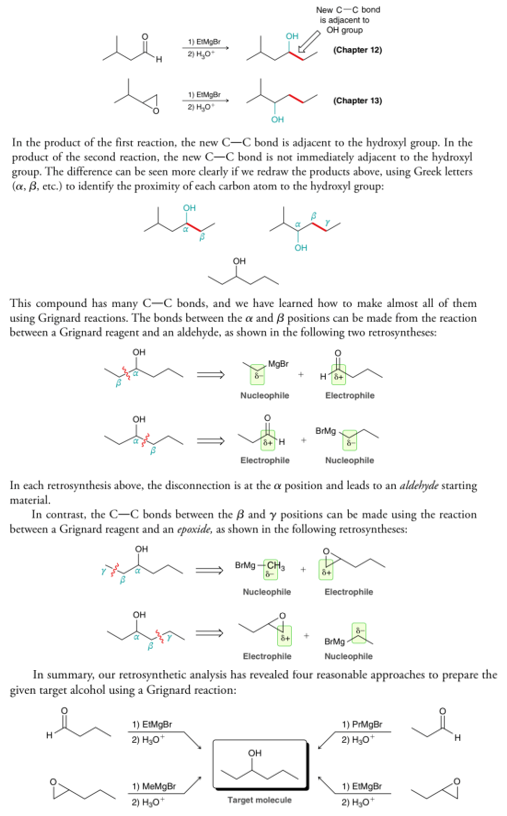
Controlling the location of a functional group addition Grignard reagents
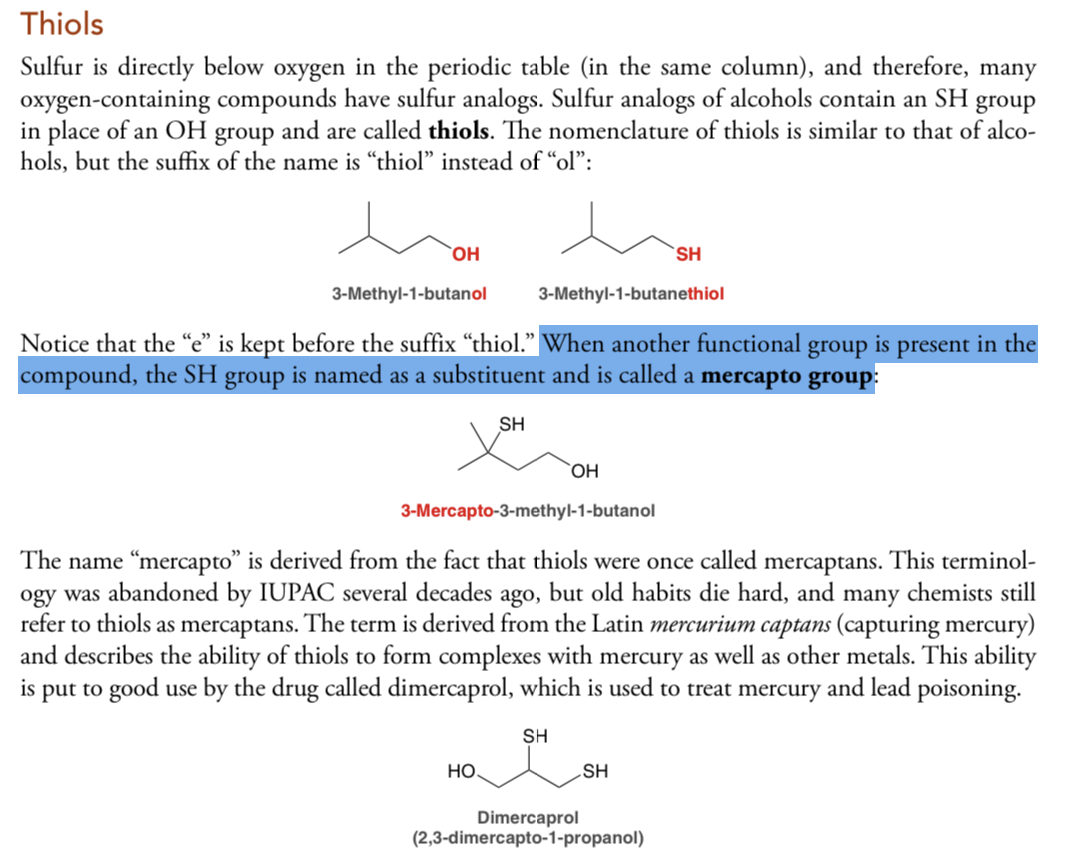
Naming thiols
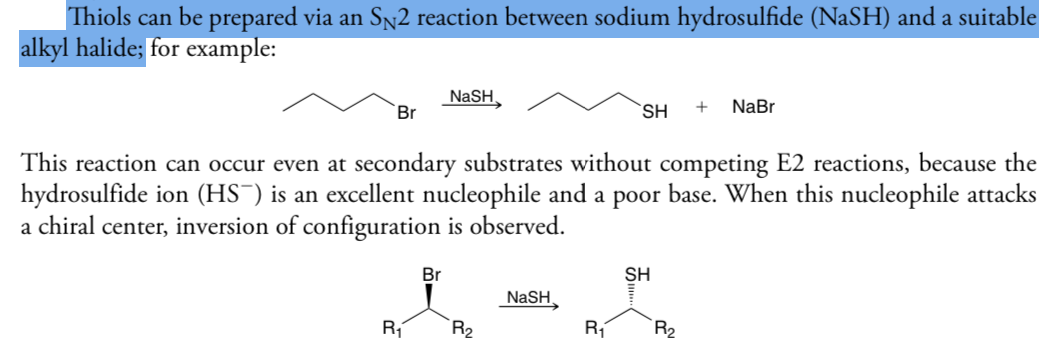
Preparation of thiols
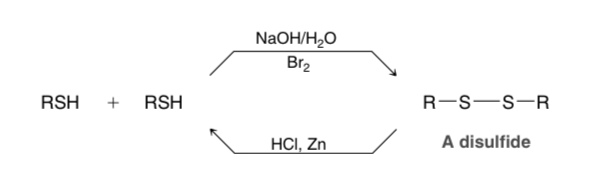
Converting between disulfides and thiols
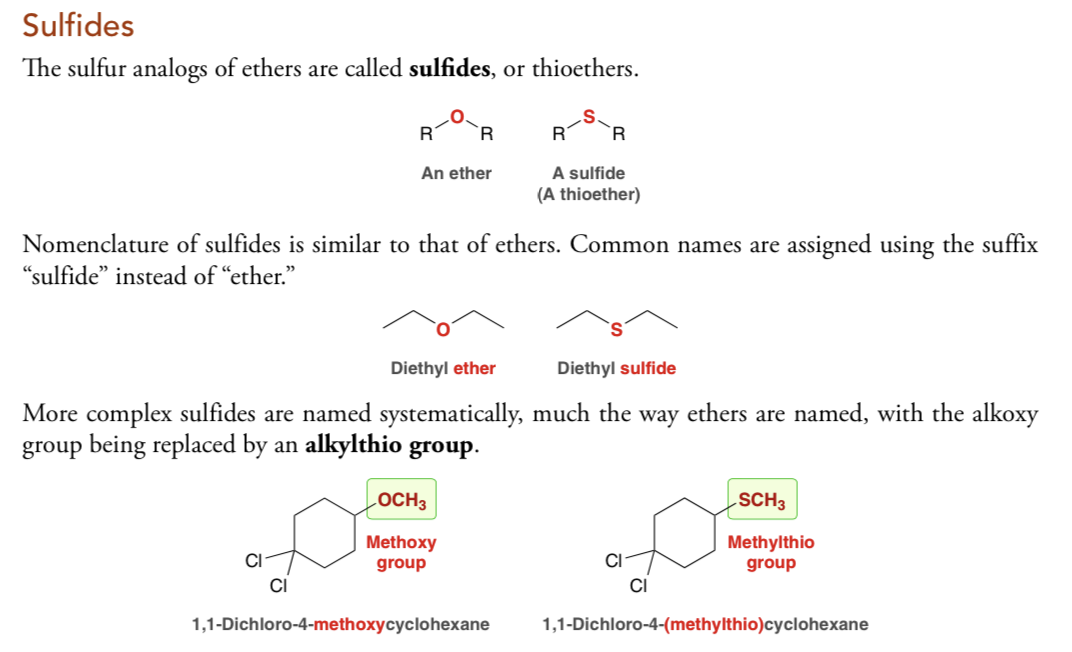
Naming of sulfides
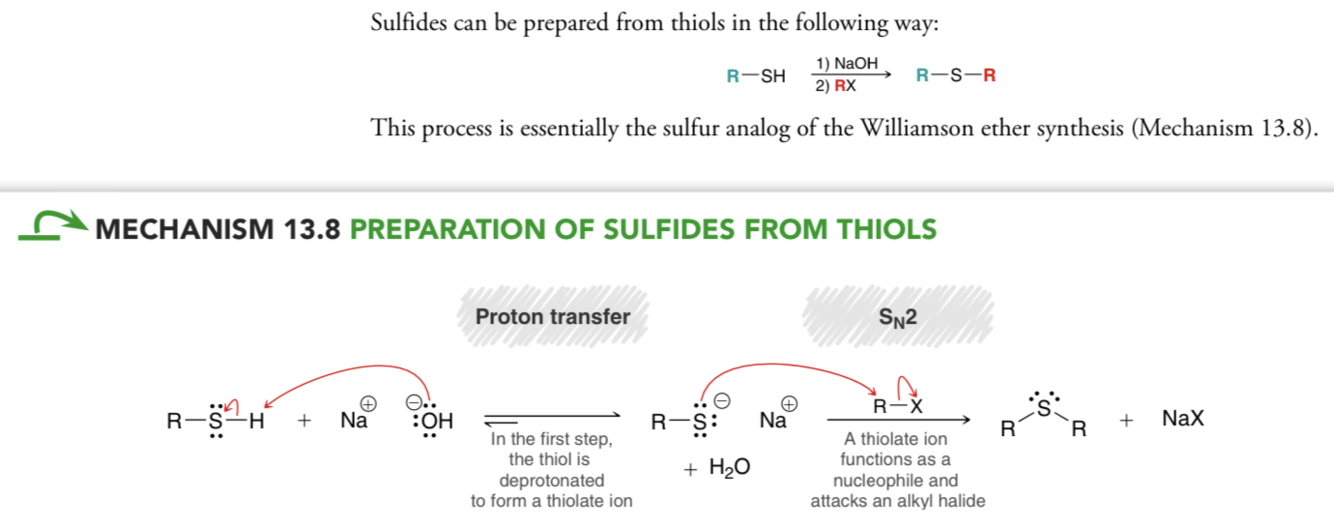
Preparation of sulfides
Sulfide addition
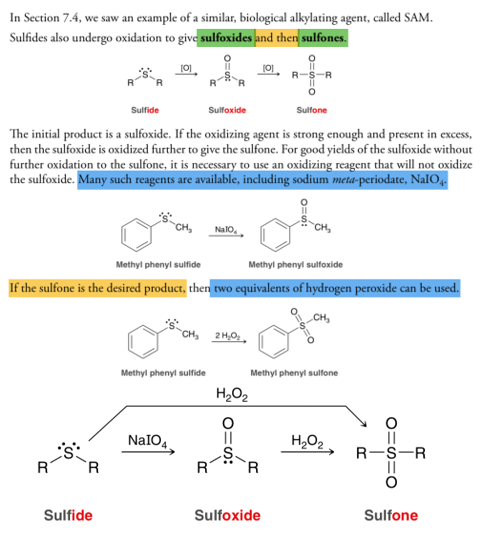
Oxidation of sulfides