Year 13 CAP 2
No description yet. This curated deck is ready for daily study.
Card preview (8)
Amines E, F and G are weak bases. Explain the difference in base strength of the three amines and give the order of increasing base strength.
• Order of base strength: E, G, F • In E, lone pair of electrons on n is delocalised into the pi ring, therefore it is less able to accept H+ • In F, the alkyl group has a positive inductive effect on the N increasing the electron density. Lone pair on N is more able to accept H+ • G has a combination of increasing electron density from alkyl group and delocalised into pi ring
Describe how you Describe how you would distinguish between separate samples of the two stereoisomers of CH3CH2CH2CH2CH(OH)CN
• plane polarised light would be rotated in opposite directions by the two enantiomers
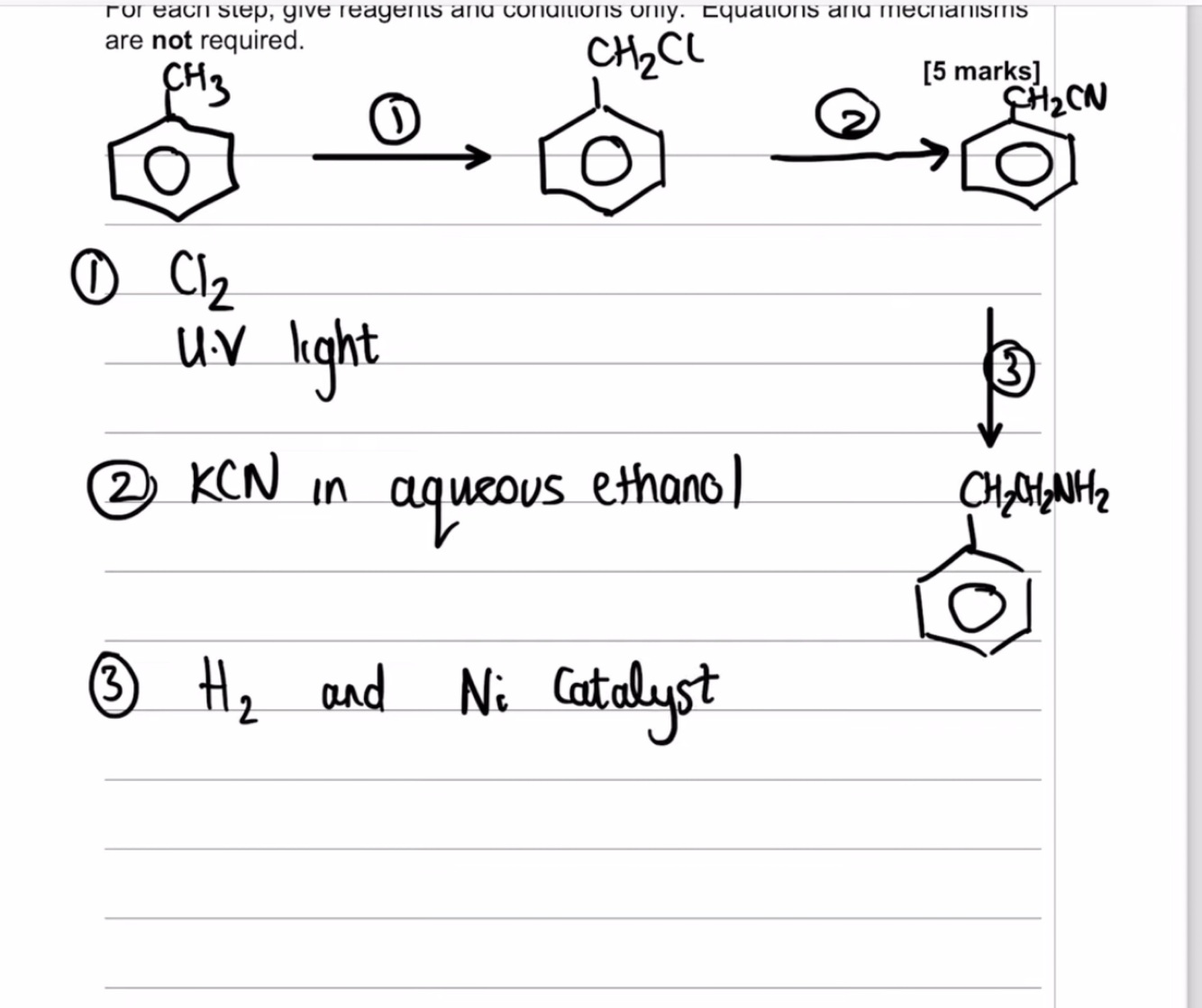
Anime F can be prepared in a three step synthesis starting from methylbenzene. Suggest the structures of the two intermediate compounds. For each step give reagents and conditions only. Equations and mechanisms are not required
Explain why the reaction produces a racemic mixture
• The planar carbonyl group can be attacked from either side with equal probability / producing equal amounts of the two isomers
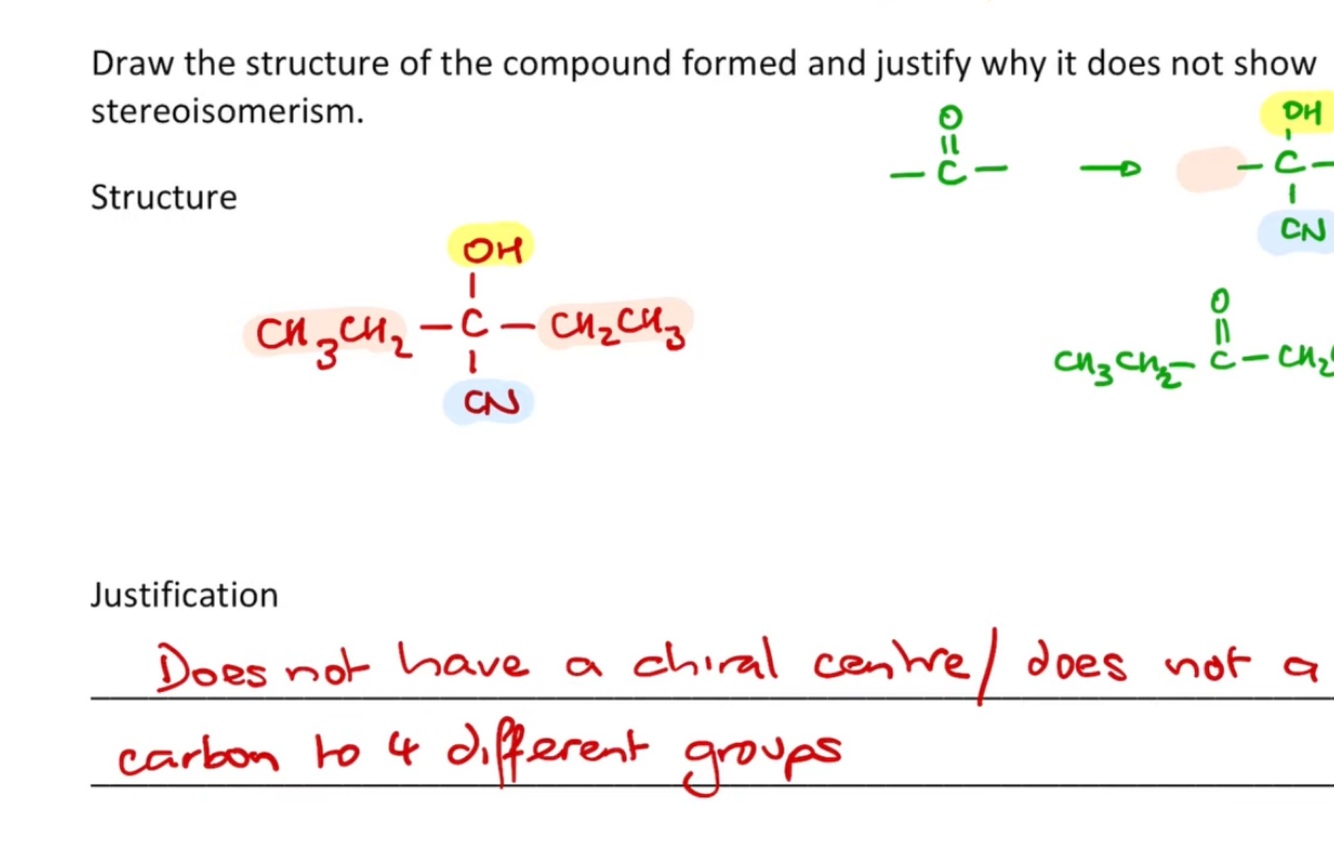
An isomer of CH3CH2CH2CH2CHO reacts with KCN followed by dilute acid to form a compound that does not show stereoisomerism. Draw the structure of the compound formed and justify why it does not show stereoisomerism
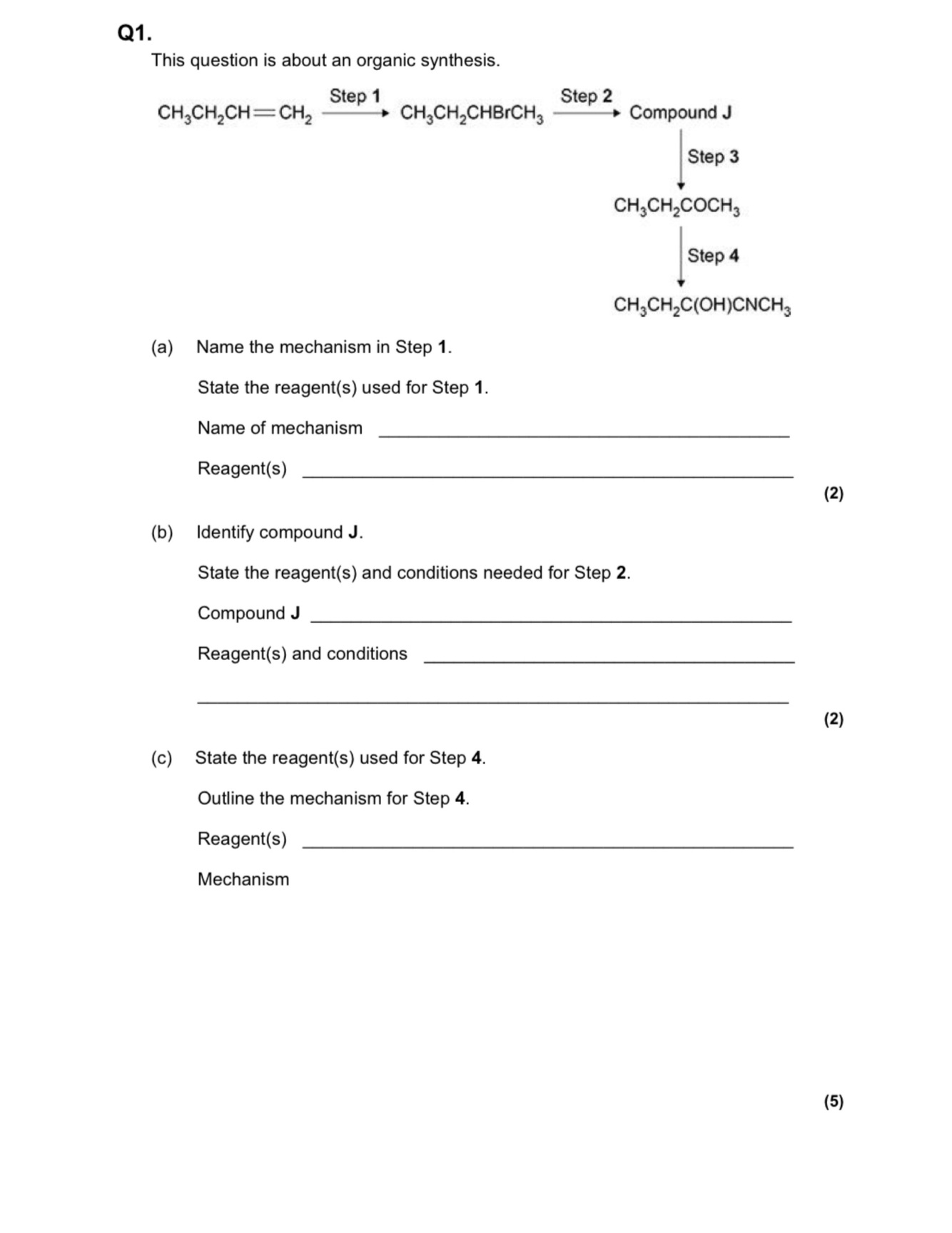
a) electrophilic addition reagent: HBr b) butan-2-ol, NaOH and warm c) KCN
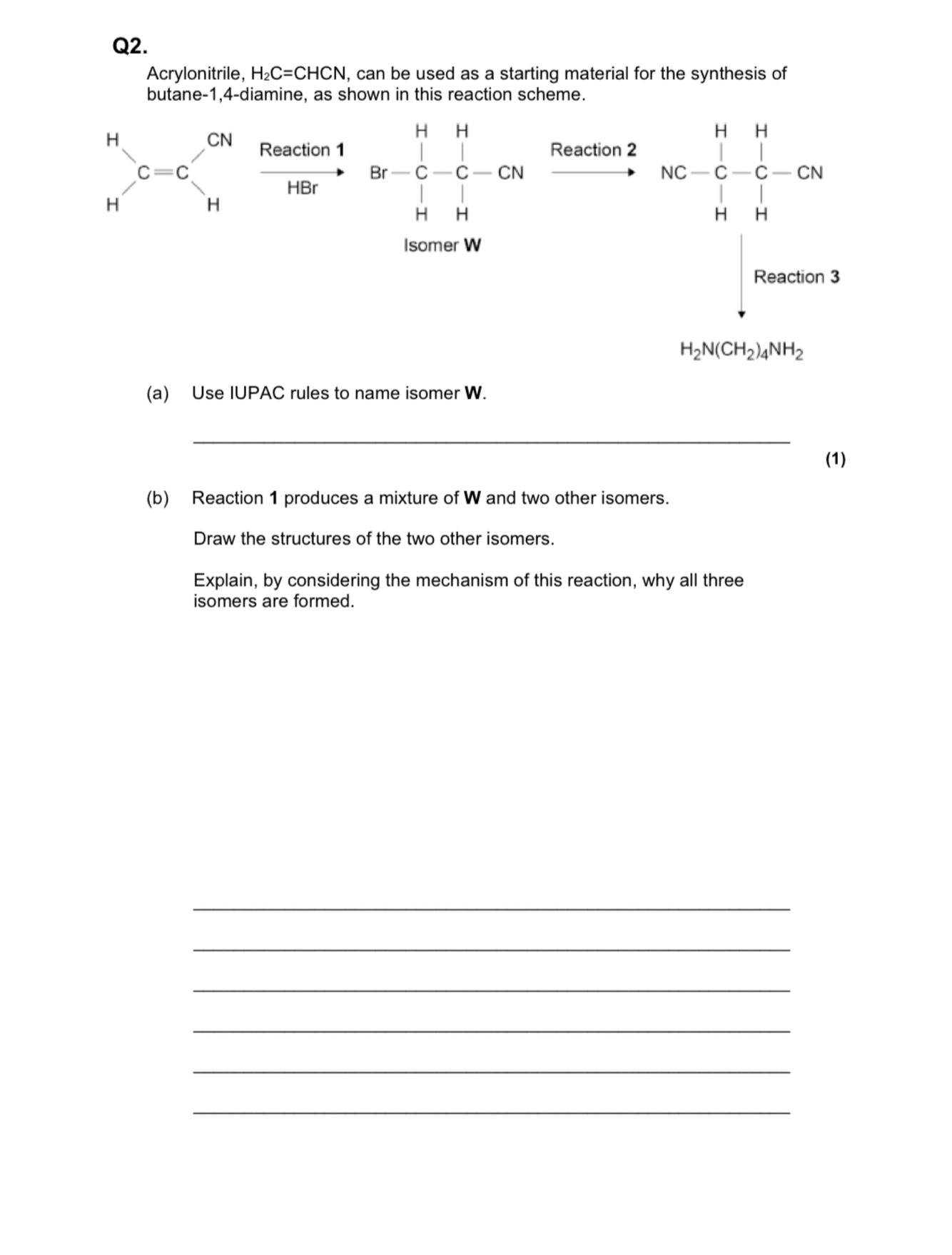
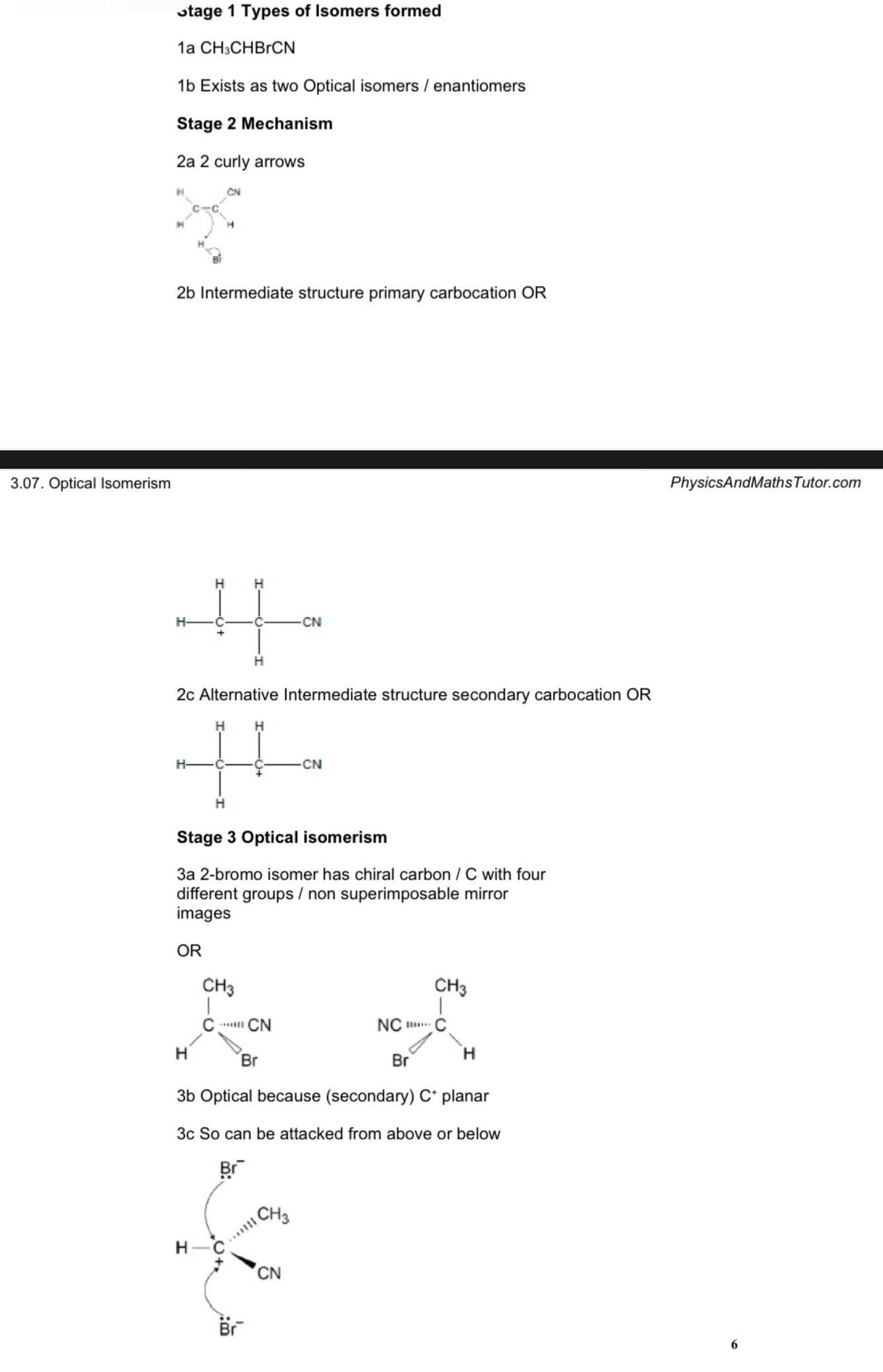
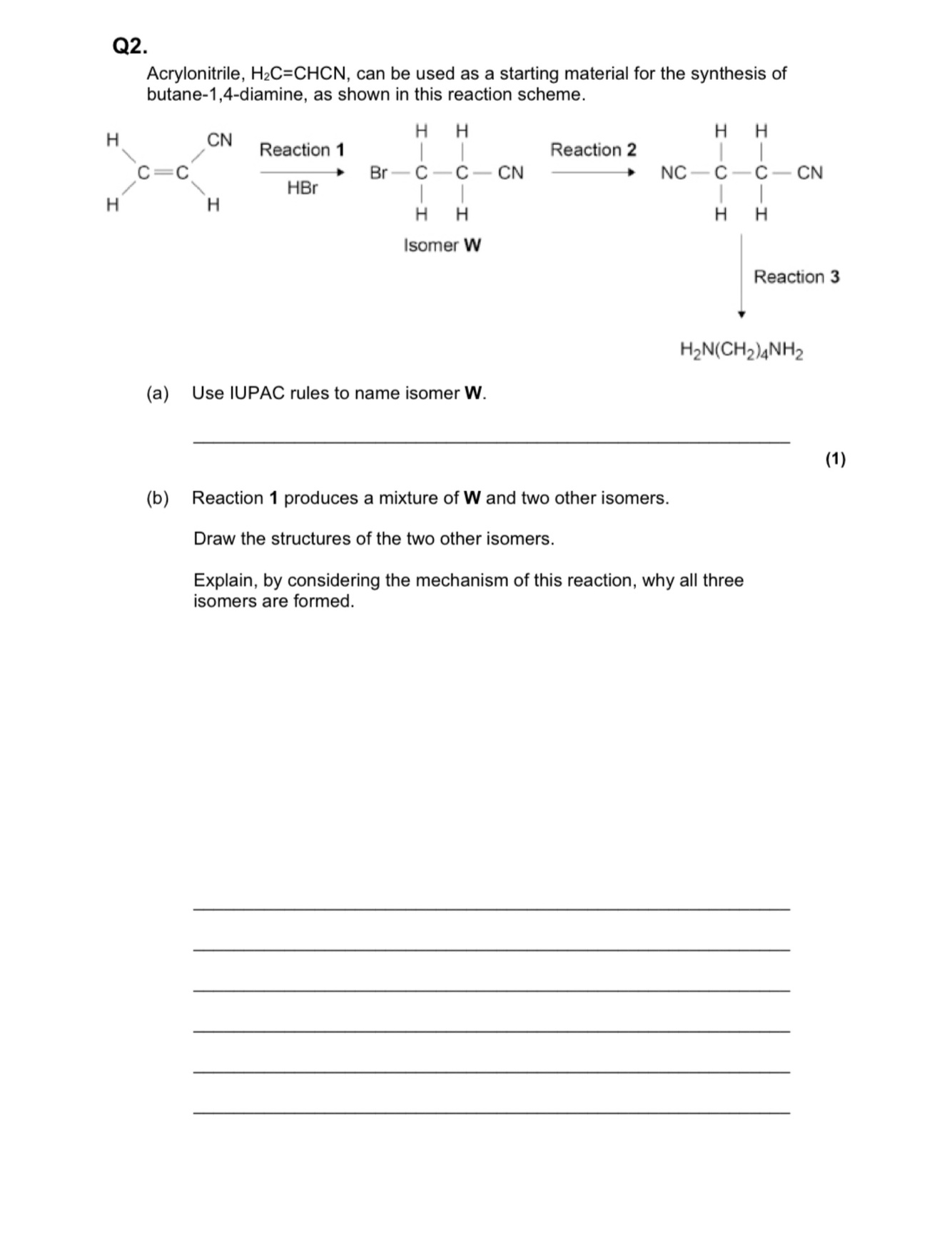
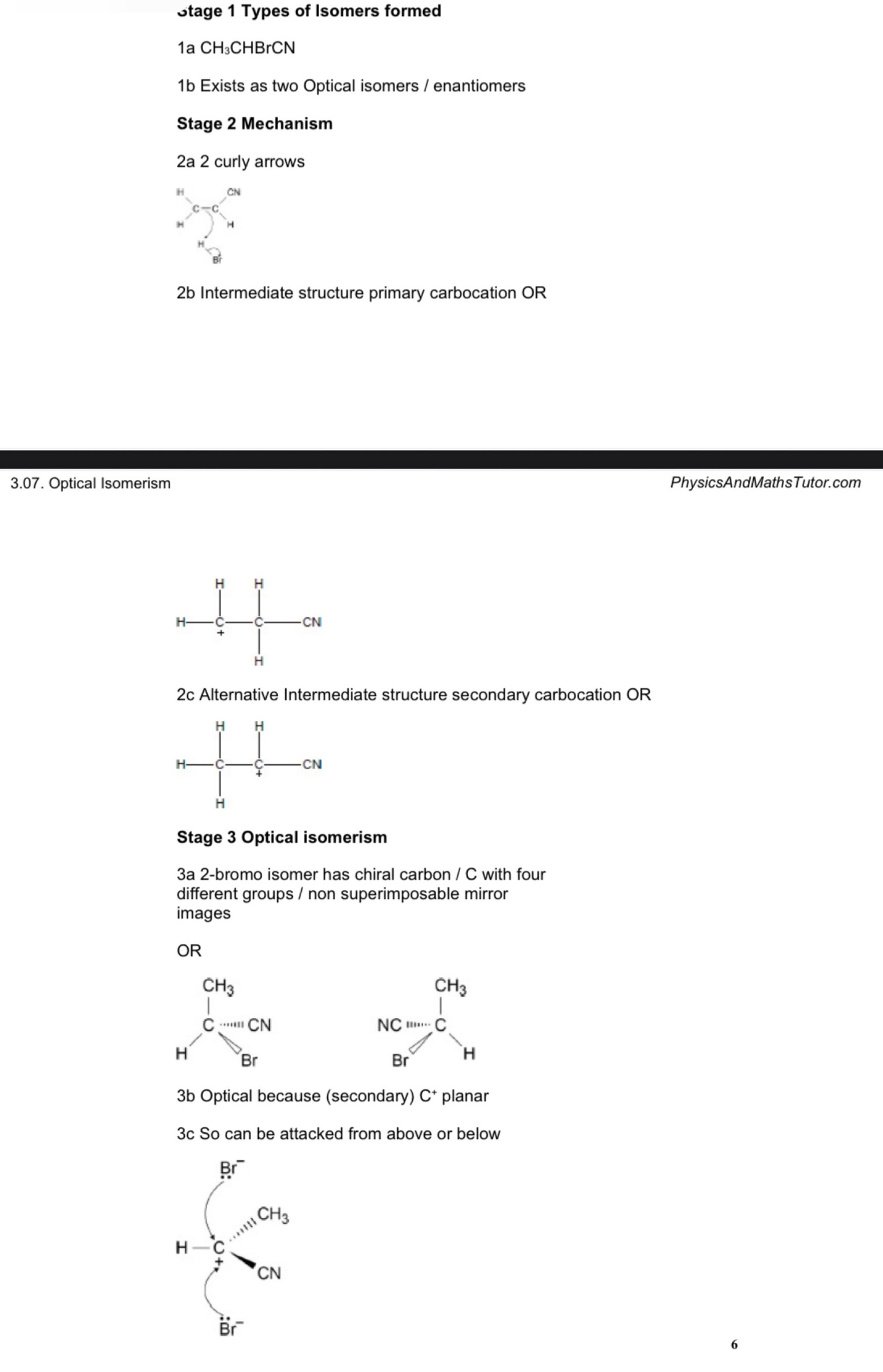
• In the electrophilic addition mechanism there are 2 possible carbocation intermediates • A primary carbocation intermediate and a secondary carbocation intermediate • 2-bromopropanenstrile has a chiral C so has 2 optical isomers. These can both form in equal quantities as Br can attack the planar carbocation intermediate from above or below