Chapter 24: Carbohydrates
No description yet. This curated deck is ready for daily study.
Card preview (24)
Natural configuration of carbohydrates
Natural sugars are D-sugars Determined by examining the chiral center furthest from the most oxidized carbon

Naming carbohydrates
• Use the prefix aldo or keto to indicate whether the compound is an aldehydy or a ketone • Next add the term designating the cumber of carbon atoms: tri-, tetra-, pent-, hex- • Use the suffix -ose to indicate that it is a carbohydrate • Assign (D) or (L) to indicate the configuration of the sugar
Cyclization of monosaccharides
Under acidic conditions, monosaccharides cyclize- aldehydes react with alcohols to form hemiacetals Equilibrium prefers the cyclic form New chiral center is formed at the anomeric carbon; formerly the carbonyl carbon • α anomer- the anomeric –OH group is trans to the –CH2OH group • β anomer- the anomeric –OH is cis to the –CH2OH group The term mutorotation refers to the alternating nature of carbohydrate rings between the α and β forms, although one form will usually be favored
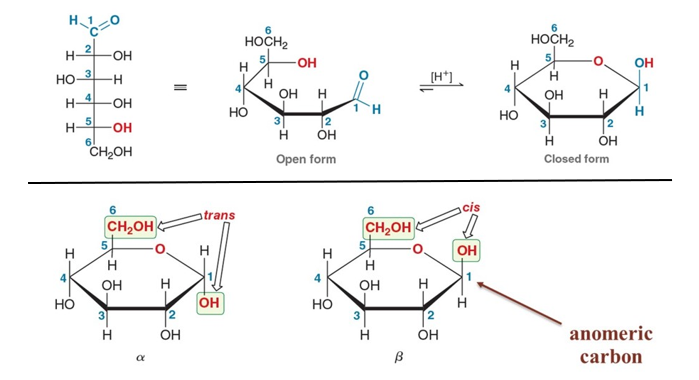
Ring nomenclature based on number of members
A furanose ring has 5 members A pyranose ring has 6 members
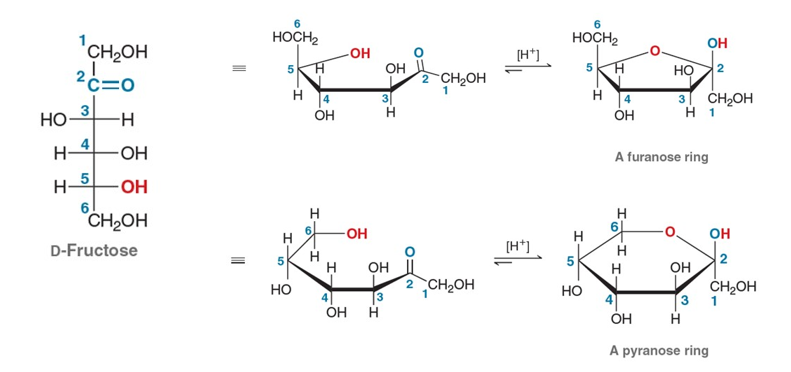
Drawing a Haworth projection form a Fischer projection
• Draw the skeleton ring of the Haworth projetion; convention places the oxygen at the back right position with carbons numbered in a clockwise fashion • Draw the CH2OH group up connected to the last carbon in the ring • Draw the hydroxy group at the anomeric position up or down based of the configuration of the ring • Draw the remaining hydroxy groups up or down based off the Fischer projection; -OH groups on the left are oriented above the ring, while -OH groups of the right are oriented below the ring
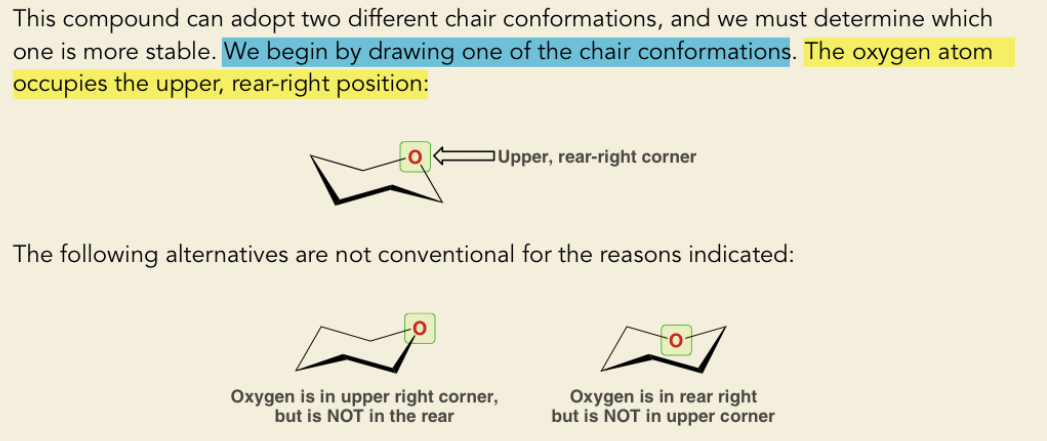
Drawing the more stable chair conformation of a pyranose ring
• Draw the Haworth projection • Draw the skeleton of the chair conformation with the oxygen at the upper, rear-right corner • Draw all groups up or down as indicated • Analyze each possible chair configuration: the most stable configuration will have the largerst group (CH2OH) occupying an equatorial position
Ester formation of monosaccharides
Reagents Excess Ac2O & Pyridine Acetic anhydride or acid chloride Mechanism Installs acetyl groups at the location of each hydroxyl group Hydroxy groups of a monosaccharide can be converted to esters to improve their solubility in organic solvents

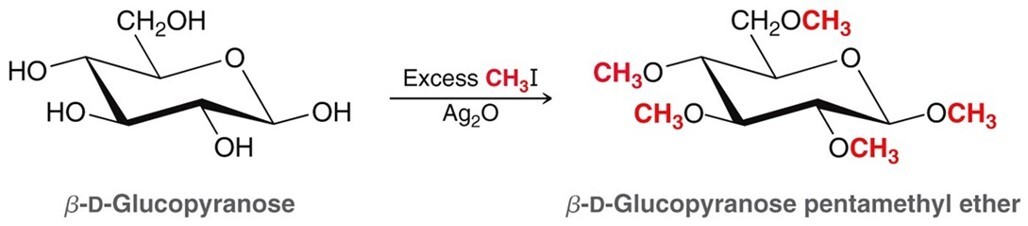
Williamson ether synthesis of monosaccharides
Reagents Excess CH3I (iodomethane) & Ag2O Mechanism Installs methyl ether groups at the location of each hydroxyl group
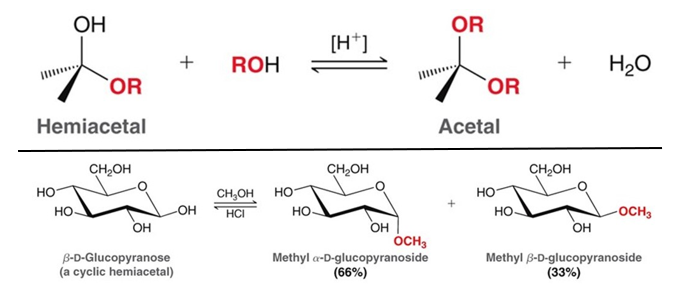
Glycoside formation
Reagents ROH & [H+] Mechanism Cyclic hemiacetal of a sugar can react with an alcohol under acidic conditions to form an acetal • Formed through a resonance stabilized carbocation intermediate and thus can result in a mixture of α and β enantiomers • Only the anomeric hydroxyl group is replaced Glycosides are named by placing the alkyl group as a prefix and replacing the suffix -ose with -oside
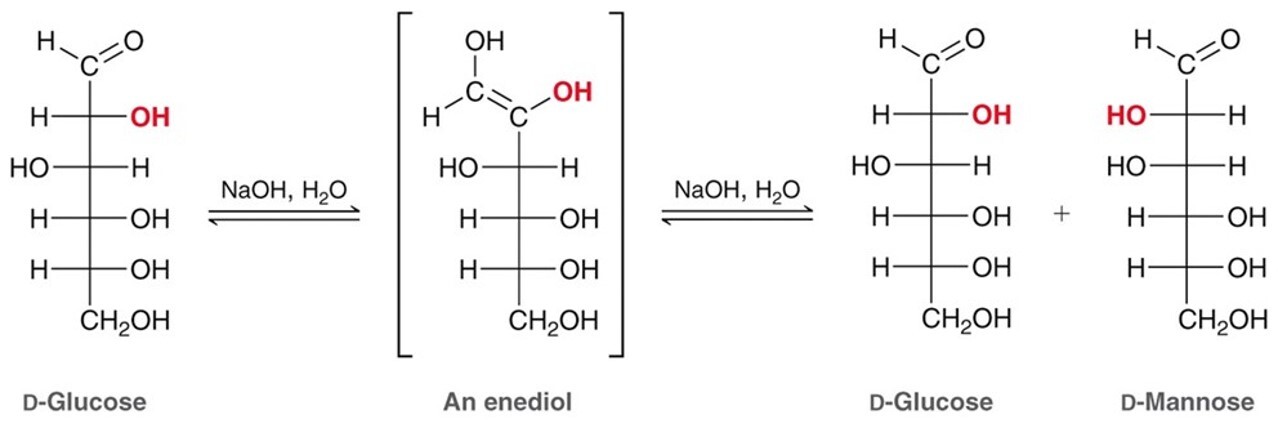
Epimerization
Reagents NaOH, H2O Mechanism Under strongly basic conditions, aldoses undergo epimerization at C2 via an enediol intermediate Forms a mixture of the two products
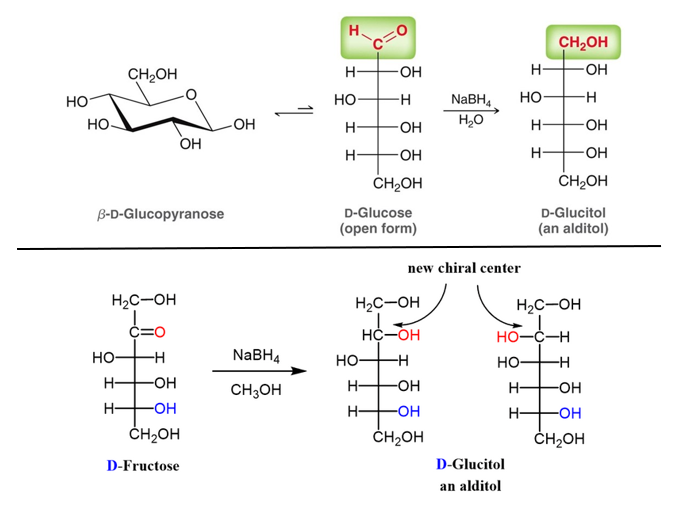
Reduction of monosaccharides
Reagents NaBH4, H2O Mechanism The carbonyl group of an aldose can be reduced to yield a product called an alditol The carbonyl group of an ketose can be reduced to a secondary alcohol
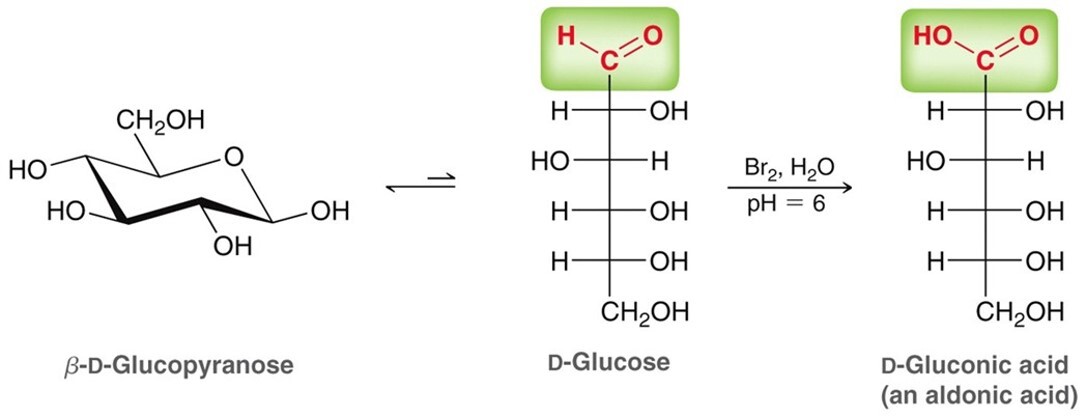
Oxidation of monosaccharides Mild oxidant
Reagents Br2, H2O & pH = 6 Mechanism The small amount of open-chain molecules that form are oxidized at the carbonyl carbon forming an aldonic acid • Named by replacine the “-ose” suffix with -onic acid A mild oxidizing agent is used so as to not oxidize all of the hydroxyl groups and only the carbonyl carbon • Mild oxidizing agents can only oxidize aldoses
Oxidation of monosaccharides Stron oxidant
Reagents HNO3, H2O & heat Mechanism A stronger oxidant will oxidize the aldehyde and 1° alcohol of an aldose, forming an aldaric acid
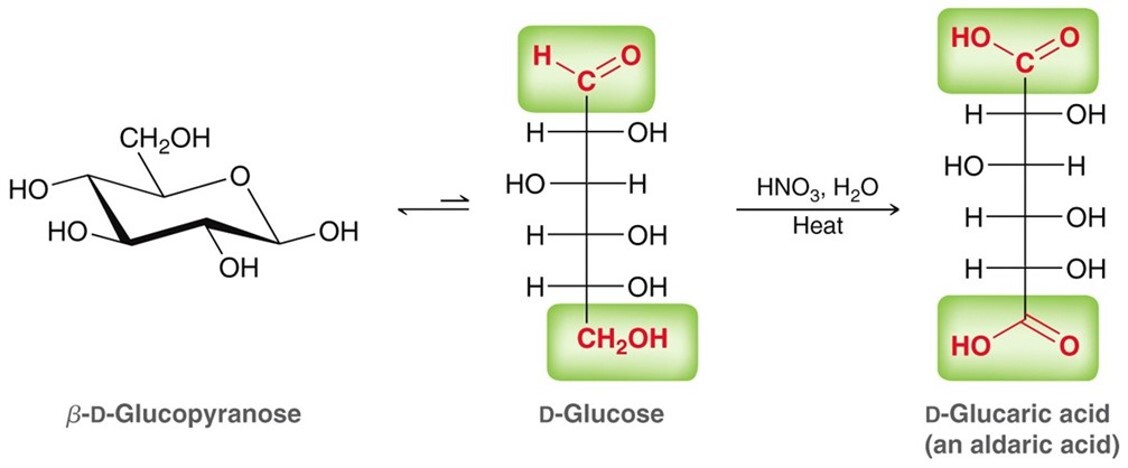
Selective oxidation
A chemical test that is used to distinguish between aldoses and ketoses • Bromine water test • Tollen’s reagent- Ag+ in aqueous ammonia
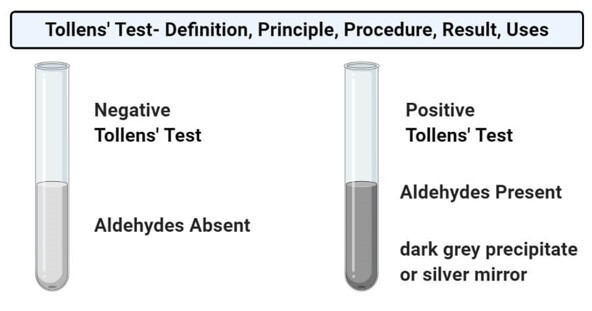
Identifying a reducing sugar Chemical tests
Glycosides (acetals) are NOT reducing sugars and not oxidized Oxidation tests detect the presence of reducing sugars • Fehling’s reagent- Cu2+ in aqueous sodium tartate • Benedict’s reagent- Cu2+ in aqueous sodium citrate
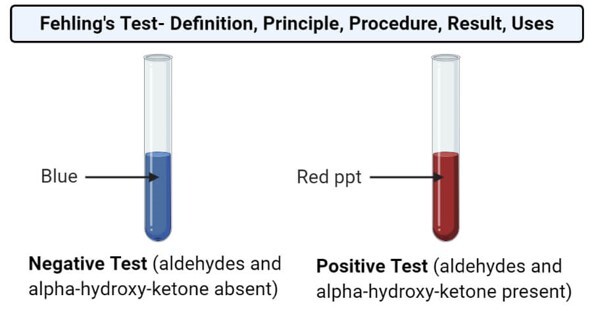
Identifying a reducing sugar Based on structure
Glycosides (acetals) are NOT reducing sugars and not oxidized • Identify the anomeric position • Determine if the group at the anomeric positon is a hydroxy of an alkoxy gourp • A hydroxy group is a hemiacetal and IS a reducing sugar • An alkoxy group is an acetal and will NOT be a reducing sugar
Kiliani-Fischer sythesis
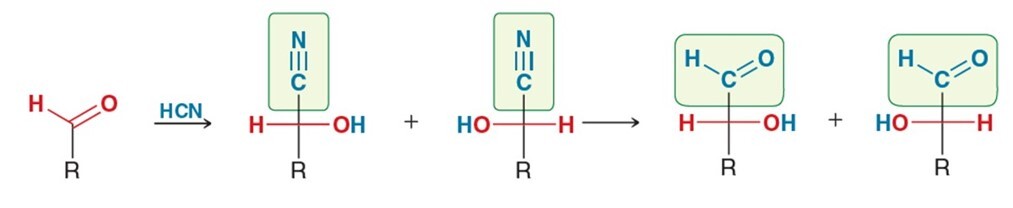
Reagents • HCN • H2, Pd/BaSO4 Mechanim A cyanohydrin is first fromed and then subsequently hydrogenated to result in the overall addition of one carbon atom to the chain Produces a mixture of product about the previously carbonyl carbon
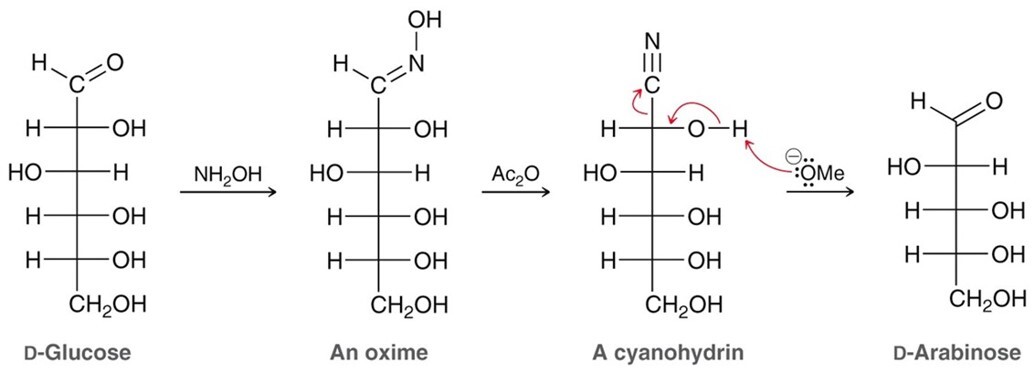
Wohl degredation
Reagents • NH2OH (hydroxylamine) • Ac2O Acetic anhydride or acid chloride • NaOMe Mechanism Shortens the carbon chain by one carbon via the conversion to a cyanhydrin followed by the loss of HCN
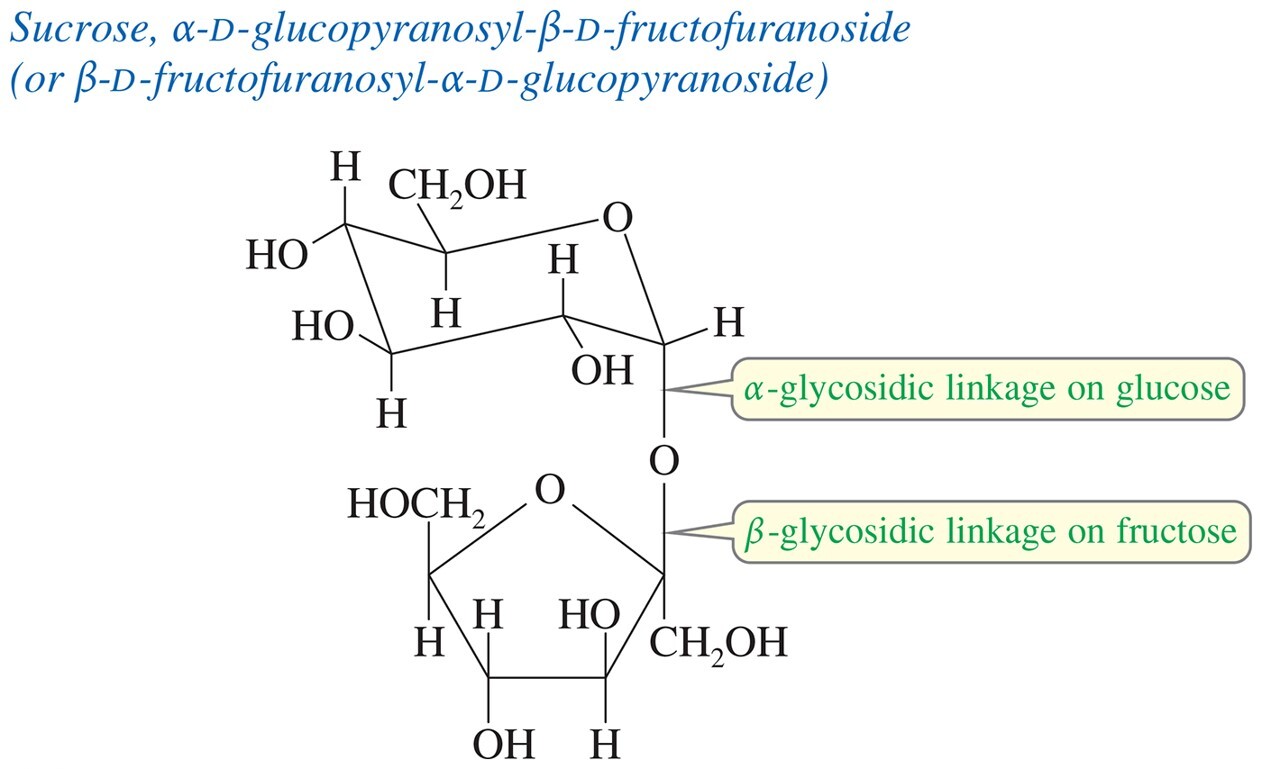
Glycosidic bonds
Can be an O-glycosidic bond or an N-glycosidic bond Can be an α-glycosidic bond or a β-glycosidic bond • α-glycosidic- oxygen attached to the anomeric carbon is oriented DOWN • β-glycosidic- oxygen attached to the anomeric carbon is oriented UP
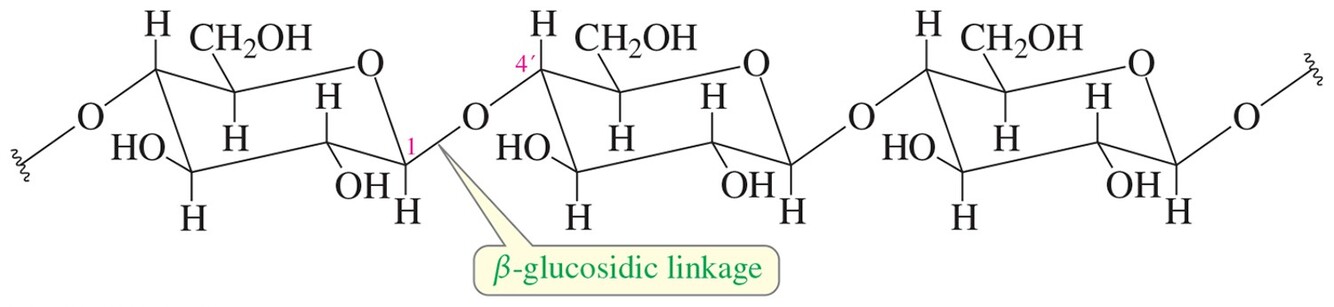
Cellulose
Polysaccharide composed of glucose monomers liked by β-1,4- glycosidic bonds
Amylose
Polysaccharide also known as starch composed of glucose monomers liked by α-1,4- glycosidic bonds
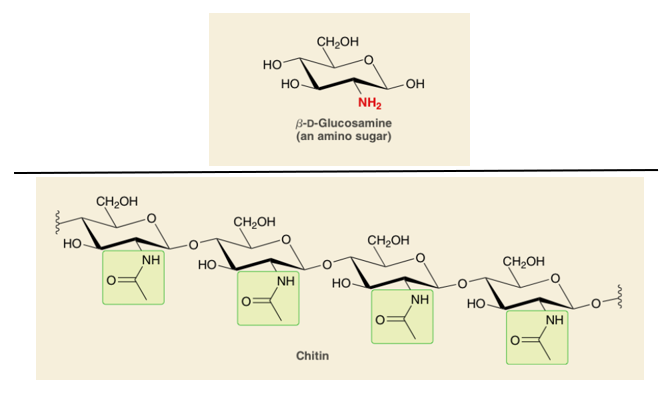
Chitin
Polysacchardie composed of glucosamine monomers that have an N-acyl group installed in place of the -OH group on carbon-2 The N-acyl group allows for even stronger H-bonding between neighboring chains than cellulose
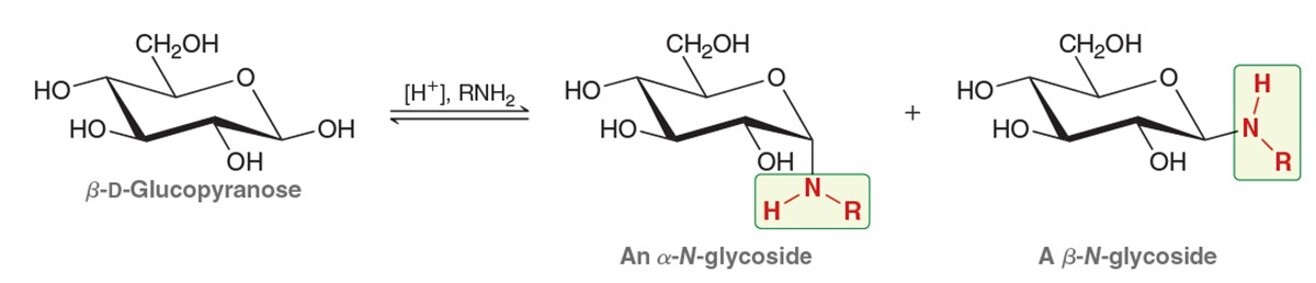
N-glycoside formation
Reagents [H+], RNH2 The nitrogenous base pairs in DNA are connected to the deoxyribose units via β-N-glycosidic linkages, forming a nucleoside
Blood types
Red blood cells have a protective coat of sugars around them attached to proteins and lipids ABO glycosyltransferase is the protein involved in ABO blood types • O ends in fucose • A ends in N-acetylgalactosamine • B ends in galactose