Module 2: Foundations AS
No description yet. This curated deck is ready for daily study.
Card preview (24)
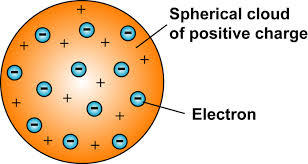
What did J.J Thompson’s “Plum-pudding atom” model suggest?
Atoms are made up of negative electrons moving around in a ‘sea’ of positive charge. This means the overall charge is neutral with equal (+) and (-) charges.
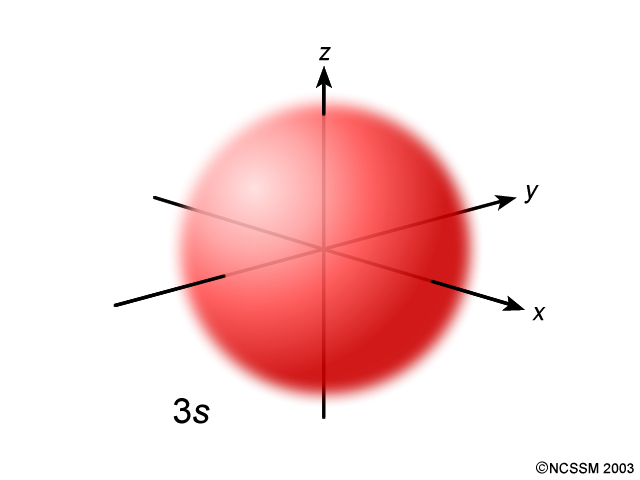
What is the shape of an S- orbital?
Spherical
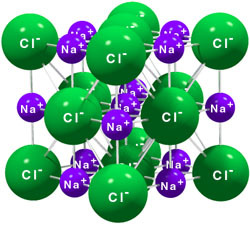
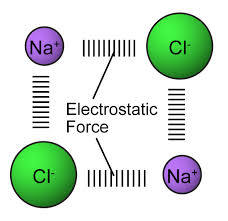
Why do ionic compounds have high melting and boiling points?
A large amount of energy is needed to break the strong electrostatic bonds that hold the oppositely charged ions together
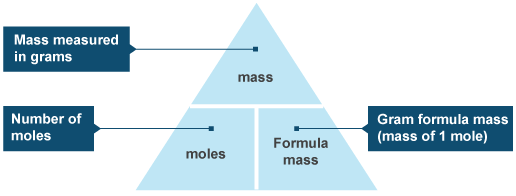
How do you work out the number of moles from a volume of gas?
moles= V(dm3) 24.0 OR moles = V(cm3) 24000 NB: Only works at standard atmospheric pressure.
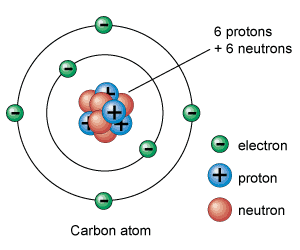
What is the Modern day interpretation of the atom?
Negatively charged electrons (-) orbit a nucleus which consists of positively charged protons (+) and neutons which have no charge (neutral/0). Electrons orbit the nucleus on shells. The overall charge of the atom is 0 (Neutral) as the charges of each sub atomic particle (protons, neutrons and electrons) balance/cancel eachother out.
What is the relative mass of a single electron?
approximately 1/2000 (Compared to a proton or neutron)
What are the different isotopes of Carbon?
126C (approx 99% abundance) 136C (approx 1%) 146C (v low; radioactive, formed from cosmic rays bombarding atmospheric Nitrogen)
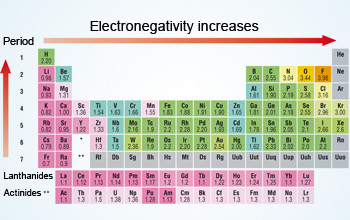
What happens with the electronegativity of elements as we move across the periodic table to Group 7?
Increases (Elements to right of periodic table need fewer electrons to fill outer shell, so attract electrons more strongly)
What volume does one mole of gas occupy at room temperature and pressure?
24.0 dm3
What does Electronegativity mean?
The measurment of attraction of a bonded atom for the pair of electrons in a covalent bond.
What differences and similarities do isotopes of the same element have?
• Different mases • The same number of protons and electrons • Different numbers of neutons in the nucleus • Undergo the same chemical reactions • Have (slightly) different physical properties
What is the difference between hydrated and anhydrous crystals?
Hydrated crystals contain water whereas anhydrous contain no water eg CuSO4.5H2O(s) {blue solid} vs CuSO4(s) {white solid}
Define the term: Non-Polar
When the electrons in a bond are evenly distributed between the atoms that make up the bond; Mainly takes place in covalent bonds between identical atoms (E.g. H-H).
What is oxidation?
The GAIN of oxygen and the LOSS of electrons. This means the compound would be able to give electrons to a reducing substance.
What is the oxidation number of combined flourine?
-1 always (eg NaF or ClF, both have F as -1)
What is an oxyanion?
Negative ions that contain an element along with oxygen eg: Carbonate: CO32- Manganate(VII): MnO4-
Define the term: Polar
When the electrons in a bond are not evenly distributed between bonding atoms (due to one atom being more electronegative/greater attraction); Mainly takes place in covalent bonds between two different atoms.
What is elecronegativity?
A measure of the attraction of an electron in a covalent bond
What happens when a substance is reduced?
Oxygen is LOST and electrons are GAINED. The reducing substance gains the electrons from the oxidised substance.
What are Intermolecular forces?
Forces which occur between molecules. Applies ONLY to simple covalent molecules. 3 Types: • van der Waals / London / Dispersion / instantaneous dipole-induced dipole • Permanent dipole-permanent dipole • Hydrogen bonding If these forces are small, the substance will be a gas at room temperature and pressure. The greater the forces, the higher the Melting and Boiling Points.
How is electronegativity meassured?
Using the Pauling scale. This meassures the attraction of a bonded atom for the shared pair of electrons.
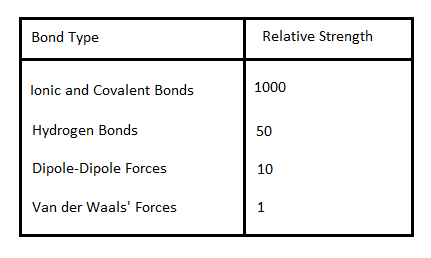
What are the three main types of intermolecular force?
• Hydrogen Bonding • Van Der Waals’ forces • Dipole-Dipole attractions
What did Dalton’s atomic theory state?
Atoms are tiny particles that make up elements Atoms connot be divided All atoms of a given element are the same Atoms of an element are different to every other element
Do all types of bonds have the same relative strength?
NO!!! Different types of bond all have different relative strengths…