vascular system
暂无描述。系统推荐的高质量记忆内容,适合每天坚持背诵学习。
卡片预览 (21 张)
where is vascular tissue in
dicots
tissues in vascular bundle
xylem phloem sclerenchyma collenchyma parenchyma
function of sclerenchyma
support and structure thickened with lignin an cellulose strengthen stems and leaf midribs
function of collenchyma
found by epidermis involved in growth thick cellular walls, give strength flexible support, wind resistance
function of parenchyma
soft packing tissue, fills spaces between other tissue in roots, store starch in leaves, have chloroplast and photosynthesise aquatic, air spaces, keep plant buoyand
function of xylem
support, water/mineral transport up from root to shoot structurally support plant
adaptations of xylem vessels
cell content decay, do not contain any cytoplasm/organelles, long hollow tube end plates break down, unimpended flow of water cell walls thicker than usual, withstand water pressure lignified cell wall (spiral,rings/broken rings), waterproof, add strength, keep vessel open, allow flexibility bordered pits, allow mineral ions and water to move laterally between xylem
stucture of xylem
made of dead cells vessles, parenchyma,fibres several columns of cells fusing together end to end, water and mineral transported in this tube
what are bordered pits
small non-lignified regions of xylem vessel walls
parenchyma in xylem
packed around xylem, store food, contain tanin deposit
transport of xylem
moves upward, transpiration, evaporation, pulling force, drawing water up xylen
function of phloem
translocation transport of assimilates from sources to sinks, dissolved in water to form sap up and down plant
structure of phloem
mostly sieve tube elements and companion cells have parenchyma, storage, strengthen fibre mature, contain living cells
sieve tube elements
line up end to end alive transport assimilates around plant
adaptations of sieve tube elements
elongated no nucleus little cytoplasm tonoplast and other organelles break down
sieve tubes cannot keep themselves alive, how are they
companion cells
how is companion cells and sieve tube linked
plasmodesmata
function of companion cells
carry out metabolic process, needed to load assimilates into sieve tube
adaptations of companion cells
large nucleus dense cytoplasm many mitochondria, provide ATP many infoldings in cell surface membrane, increase SA for AT
transport in phloem
translocation in sieve tube elements
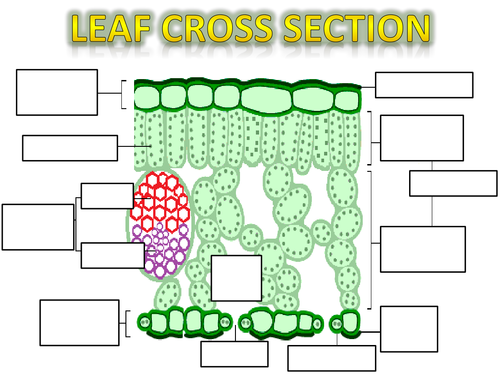
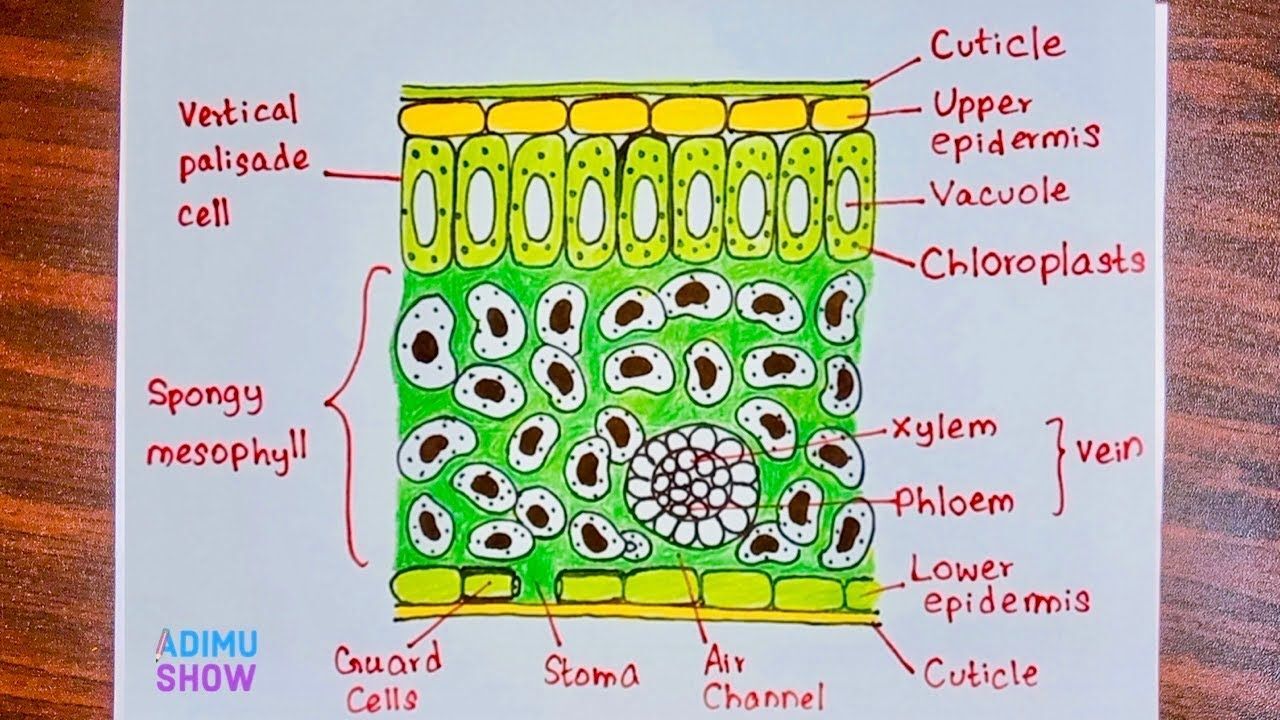
label a leaf