Lecture 12- Nucleophilic substitution
No description yet. This curated deck is ready for daily study.
Card preview (18)
What is a nucleophile? (Nu)
A region of high electron density Has a lone pair of electrons/-ive charge
What is an electrophile?
A region of low electron density. Eg a partially positive carbon bonded to a partially negative atom.
What do curly arrows show?
show a movement of a pair of electrons
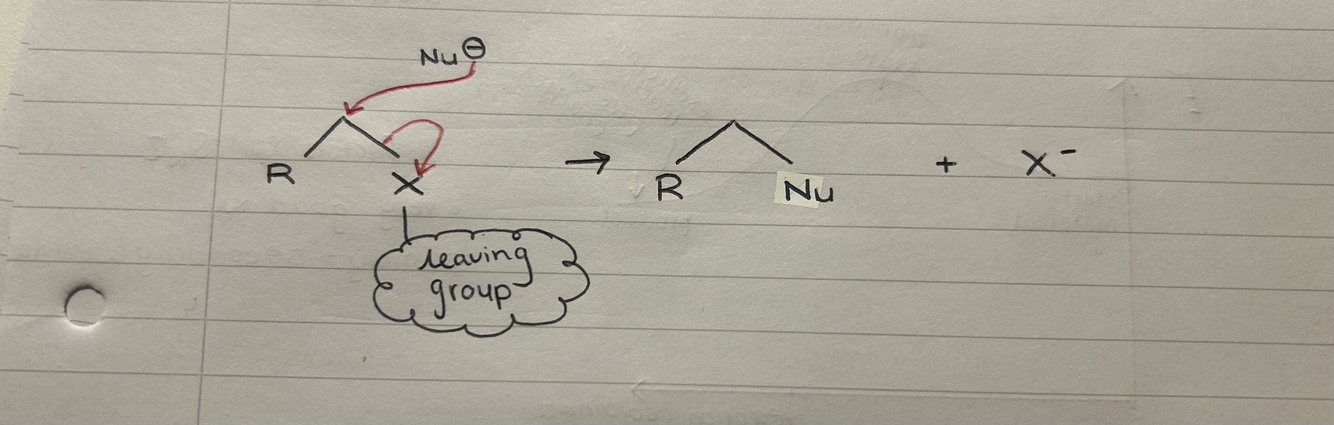
Draw the mechanism for a nucleophile and R-X . What are the products? What does the X represent?
Give the equation for HCl and water. Label the conjugate acid-base pairs. What is the pKa of HCl? Why is it such a good acid?
pKa of HCl is -7. HCl is such a good acid because Cl- is a stable conjugate base. A good leaving group is able to stabilise the negative charge. So….. HCl is a good acid and RCL is a good leaving group because Cl- is stabilised

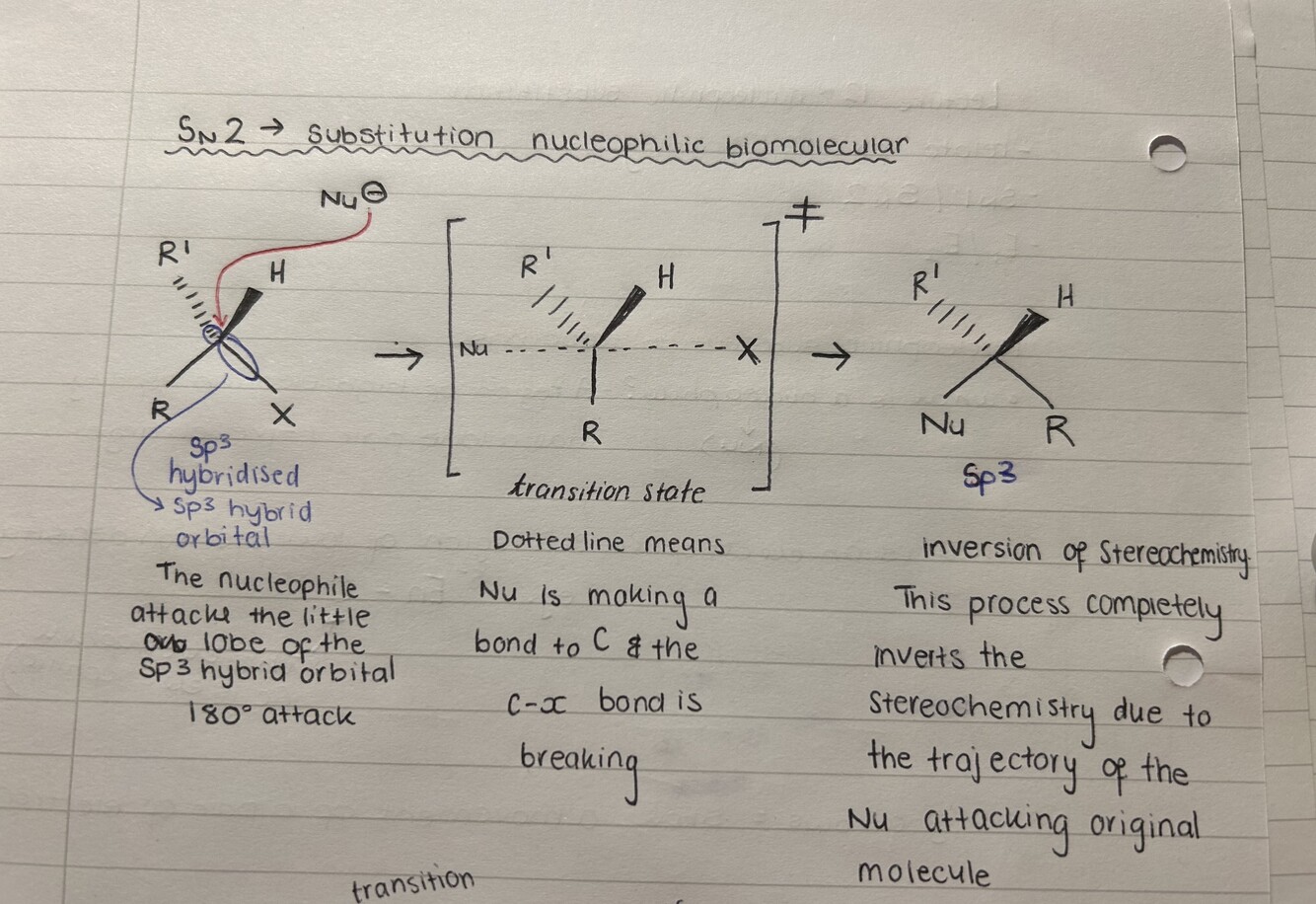
What does Sn2 stand for?
substitution nucleophilic biomolecular.
Outline the general mechanism for an Sn2 reaction. What does the dashed line in the transition state representing? Why does the process invert the stereochemistry of the molecule?
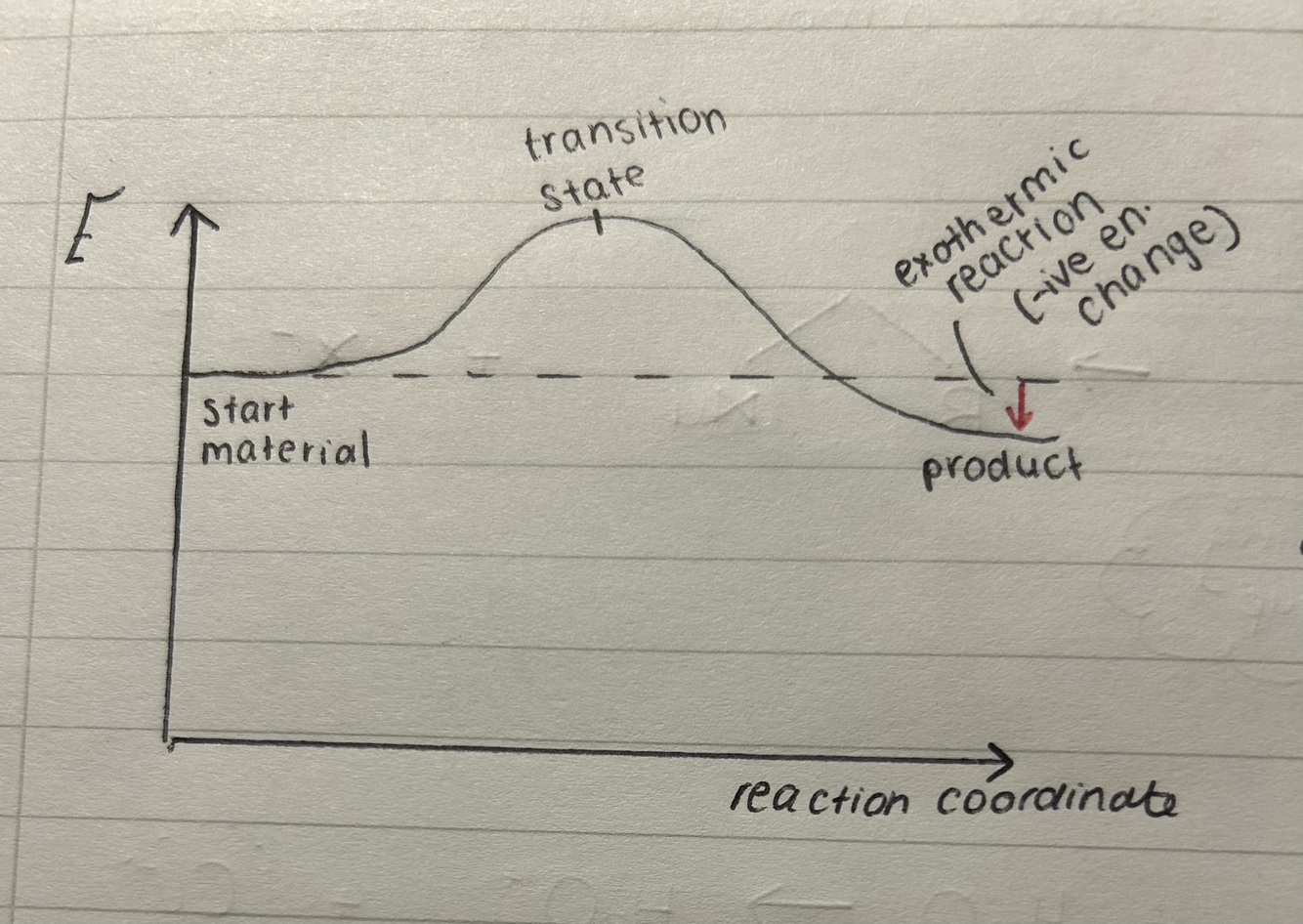
Draw the reaction profile for an Sn2 reaction.
2 factors of Sn2 reactions
very good nucleophiles primary and secondary substrates
What does Sn1 stand for?
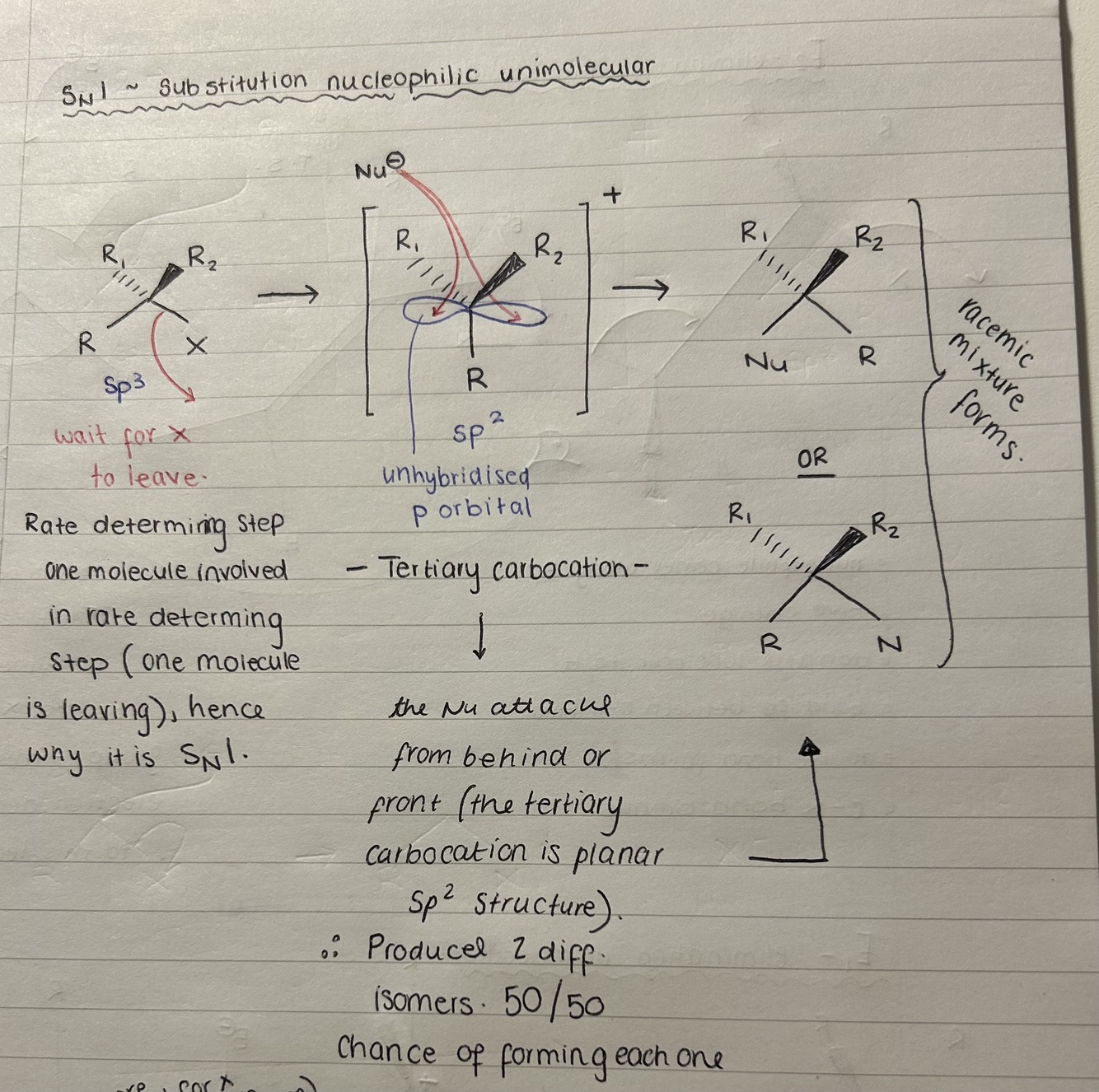
substitution nucleophilic unimolecular
Draw the mechanism for Sn1 reactions. Why are they called Sn1 reactions? Why is a racemic mixture formed?
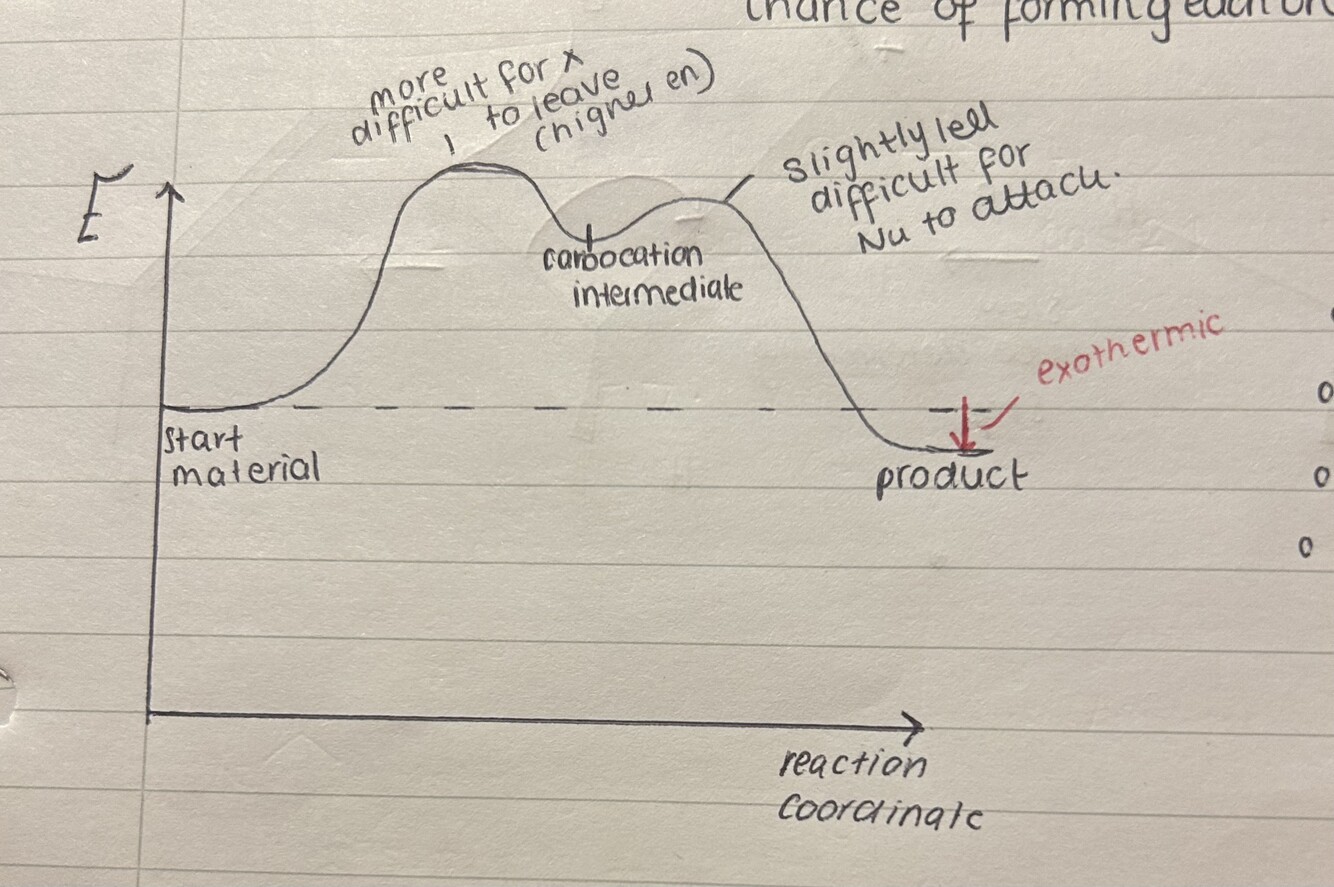
Draw the reaction profile for Sn1 reactions. Why are there two humps? What do they represent and why is one higher than the other?
Factors of Sn1 reactions
very good leaving group weak nucleophile large Nu stabilised carbocation- makes leaving group really good
E2 mechanism stands for?
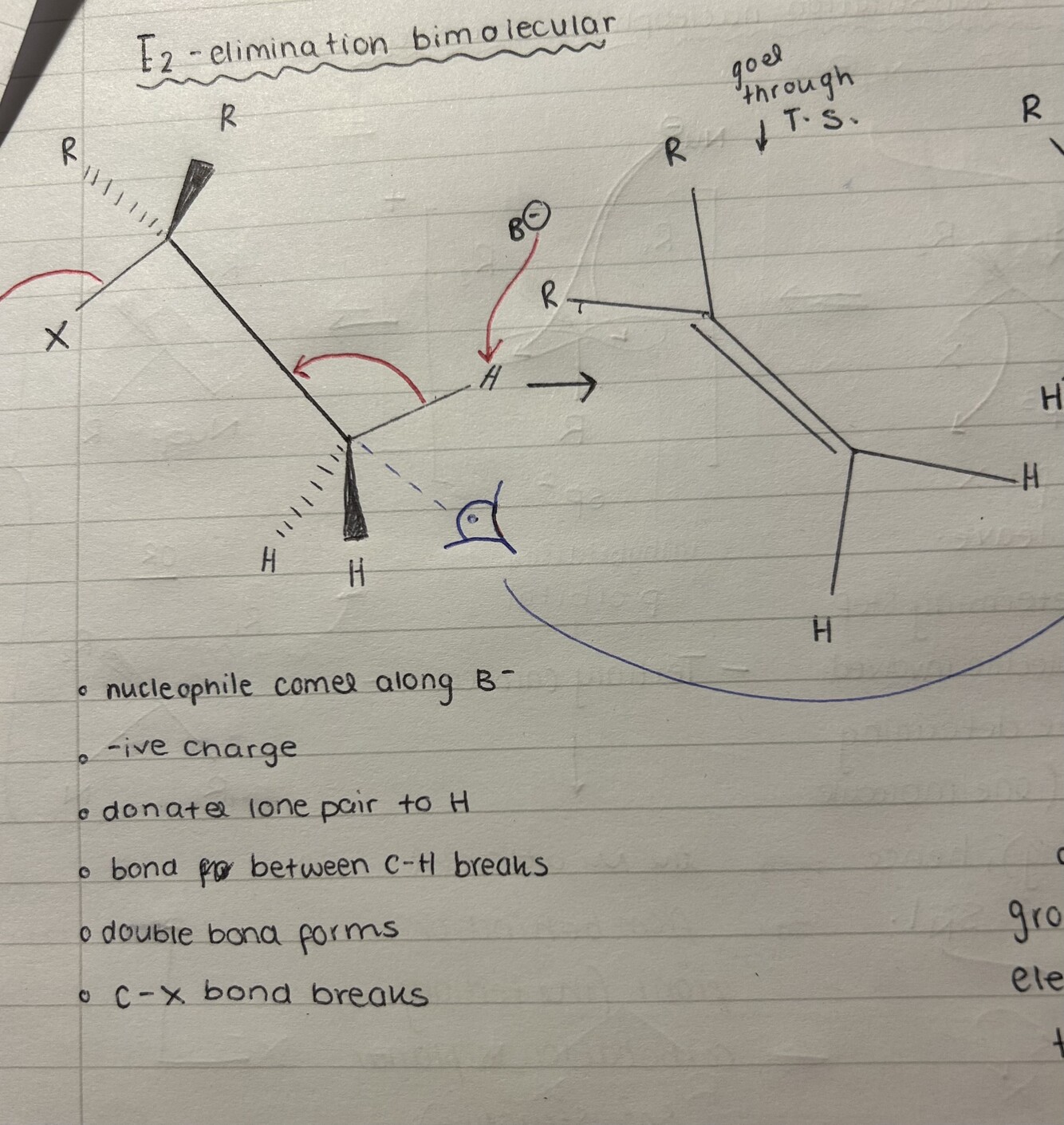
elimination bimolecular
Draw the general equation for e2 mechanism.
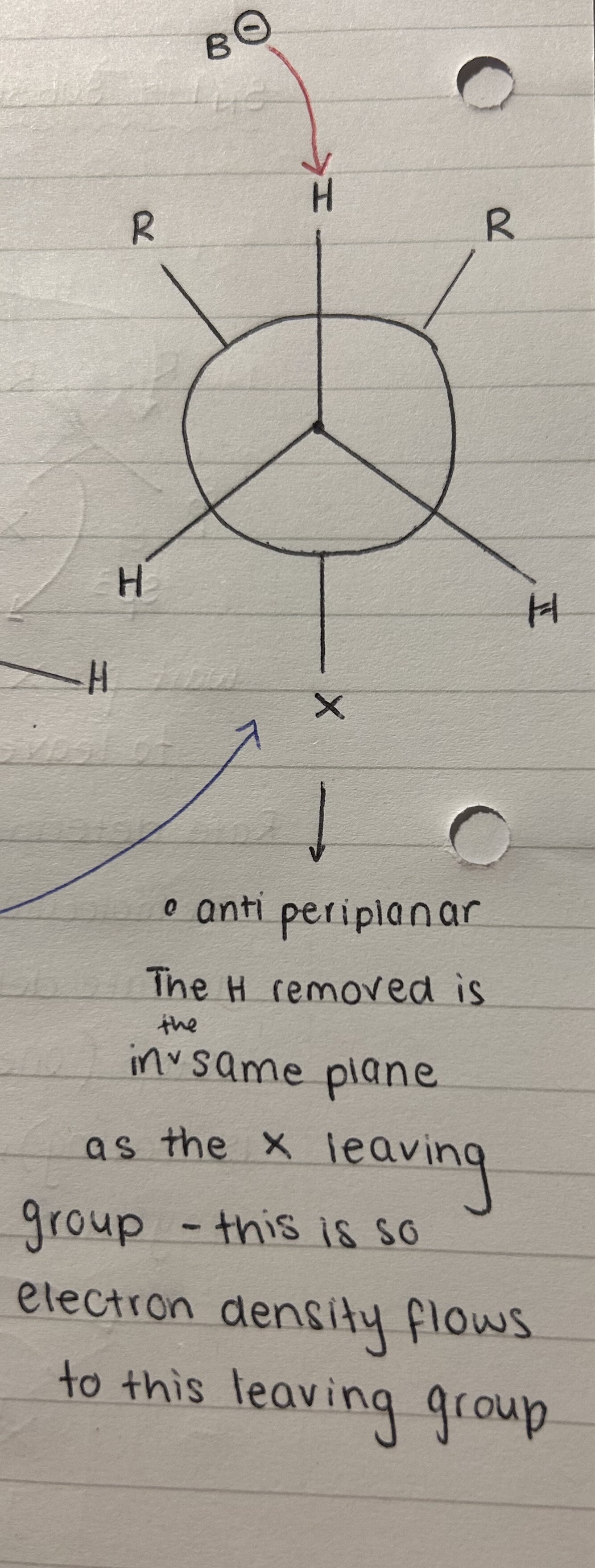
Using a Newman projection, explain why in E2 mechanism the X group leaves when H is eliminated.
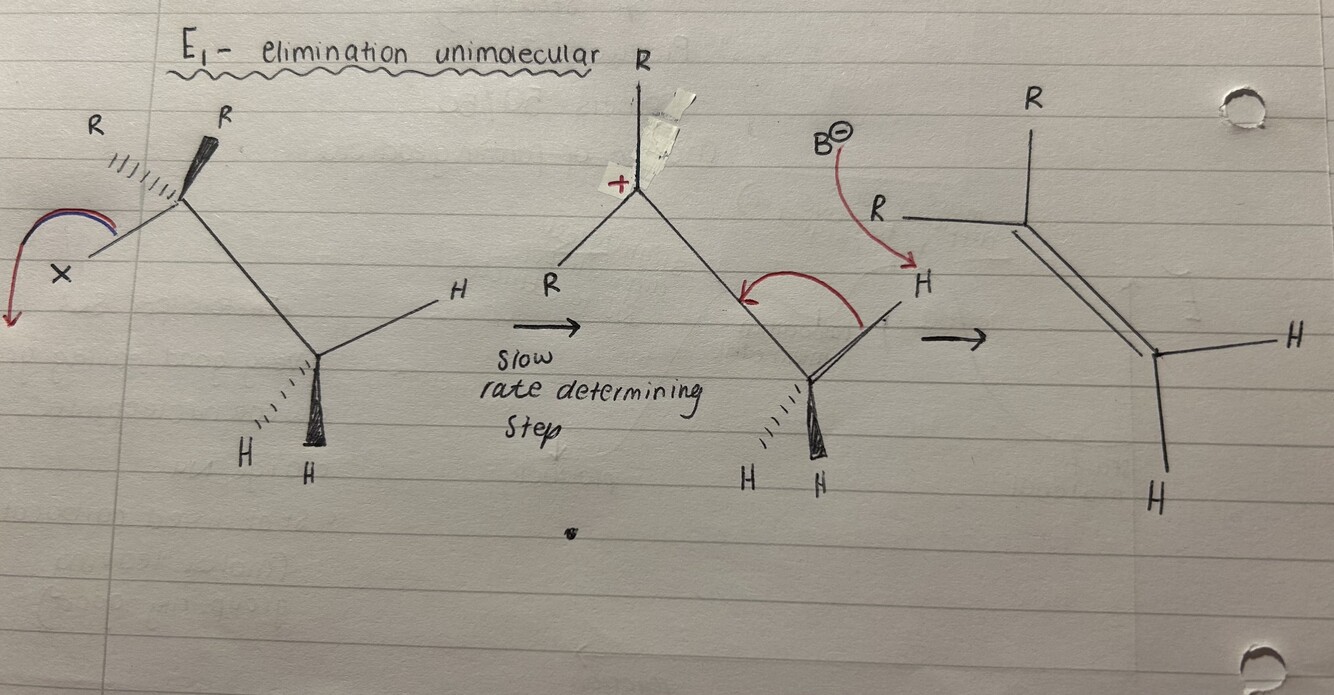
What does E1 stand for?
elimination unimolecular
Draw general E1 mechanism