12 - PERICYCLIC REACTIONS
No description yet. This curated deck is ready for daily study.
Card preview (20)
things to keep in mind about resonance:
only electrons are moved charges must be conserved resonance isomers which have an octet around all atoms are more stable
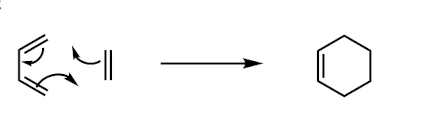
what is the core process of a diels-alder reaction?
diene+dienophile the dienophile can also be an alkyne
examples of synthesis where diels-alder reactions were used
RB Woodward’s synthesis of cortisone and gibberellic acid synthesis or paraquinonic acid synthesis
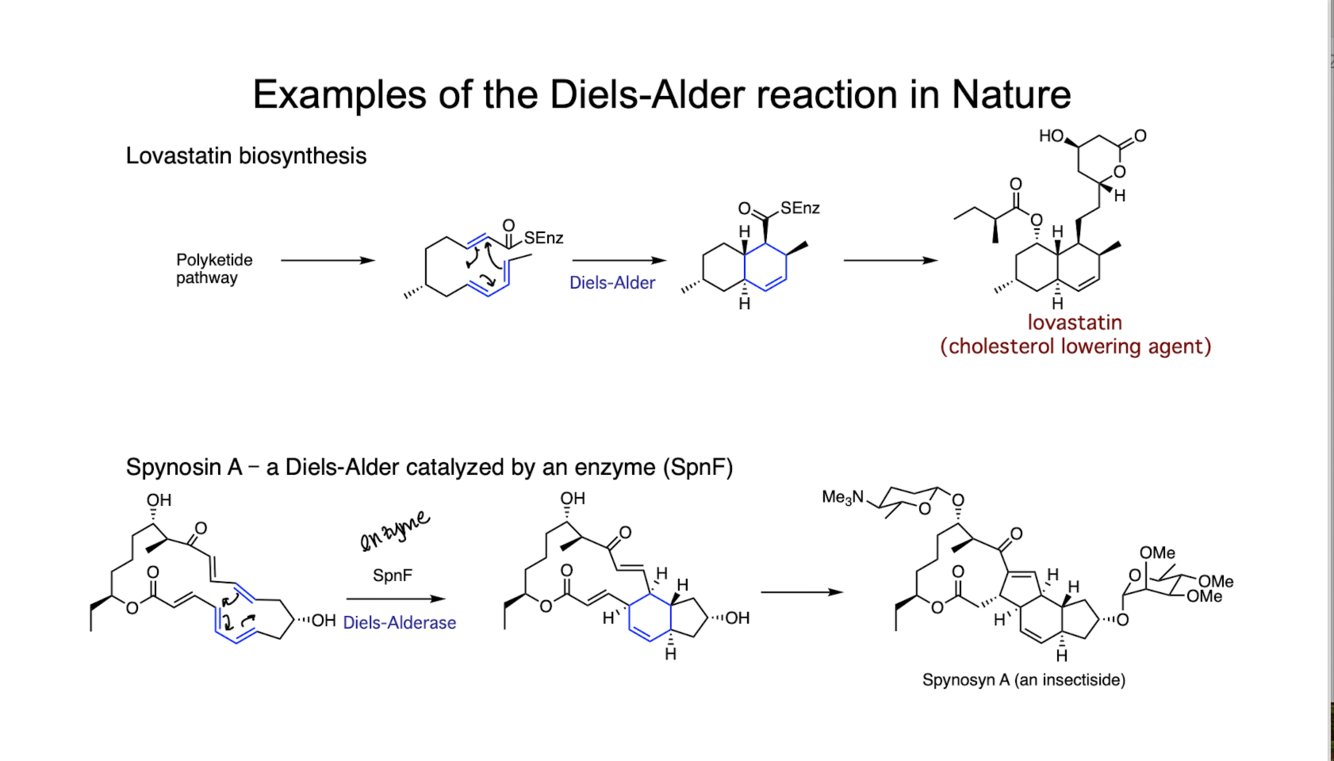
examples of diels-alder in nature?
lovastatin (cholesterol lowering agent) and spynosin A (insecticide)
what is the core process of the claisen rearrangement
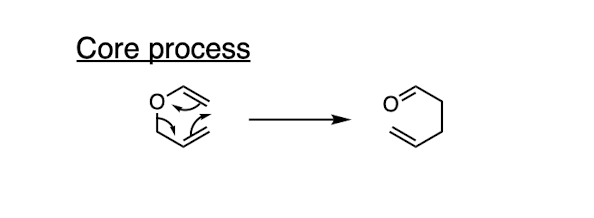
what is an example in nature of a claisen rearrangement?
one step in the synthesis of phenylalanine is a claisen rearrangement
what is the core process of the cope rearrangement?
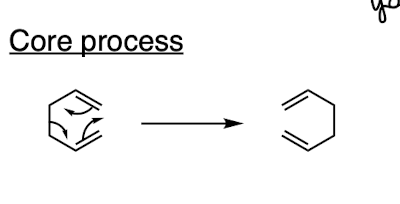
what is the core process of electrocyclic rearrangements?
an example of this is the synthesis of vitamin D
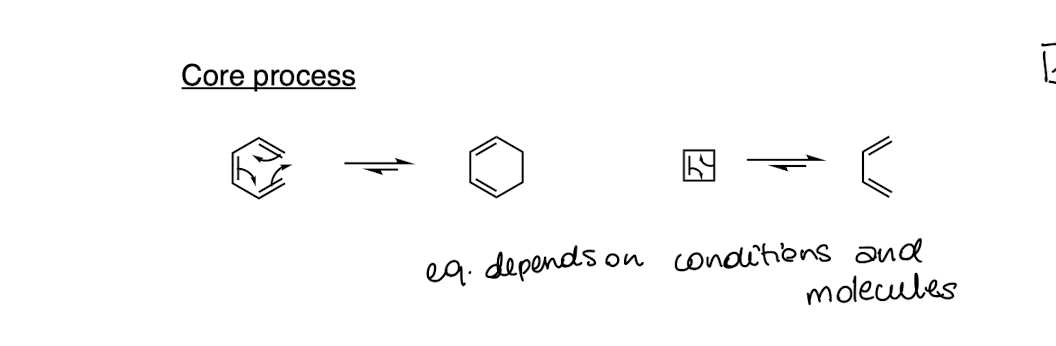
what are pericyclic reactions and the three classes of pericyclic reactions?
concerted rearrangements involving a reorganization of bonding electrons in a cyclic fashion three main classes: - cycloadditions - electrocyclic reactions - sigmatropic shifts one minor class: - group transfer
what are cycloadditions and examples?
addition of two pi systems (usually) to form a ring

what are electrocyclic reactions, the rule and examples?
interconversion between acyclic polyenes and cyclic systems the rule for this: if you make a new sigma bond it’s an electrocyclic reaction
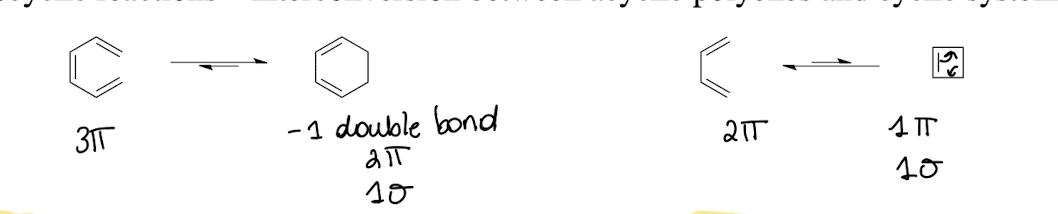
what are sigmatropic shifts, the rule and examples?
rearrangement where the location of the sigma bond moves across a pi system rule= no new sigma bonds are made, the bonds just move

how are cycloadditions named?
named by the number of reacting atoms in each component only count the atoms that are part of the pi system that is part of the process remember, the ATOMS not the ELECTRONS
QUIZ: what would be the nomenclature of the cycloaddition of this reaction?
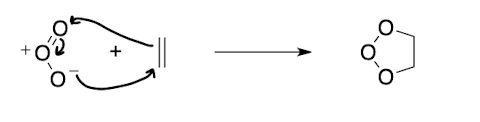
[3+2]
what are some observations regarding [4+2] and [2+2] cycloadditions?
[4+2] additions go under thermal reactions [2+2] additions are only observed under the influence of light both reactions are thermodynamically possible, this means kinetics must play into this
what is the effect of polar substituents on the diels-alder reaction?
if you put an EDG on the diene and an EWG on the dienophile, the reaction will increase this still does not help [2+2] reactions however
what does the fact that stereochemistry is conserved suggest?
stereochemistry in the diene and dienophile and product are conserved this suggests that the reactions are concerted, everything happens at the same time so there is no time for twisting
what conformation of diene does a diels-alder reaction require?
requires an s-cis diene conformation that is why cyclopentadiene reacts really fast, it is locked into a s-cis conformation
how is cyclopentadiene made from its dimer?
cyclopentadiene dimerizes with itself heating cracks the dimer to produce the monomer which is distilled out
how do orbitals affect reactions?
chemical reactions are characterised by the interactions of the electrons in the HOMO (nucleophile) of one molecule and the LUMO (electron acceptor) or another molecule these interactions are significant when HOMO and LUMO are close in energy and when the symmetry of the orbitals allows bonding to occur (the reason why thermal 2+2 cannot happen)