Topic 16 Kinetics
No description yet. This curated deck is ready for daily study.
Card preview (14)
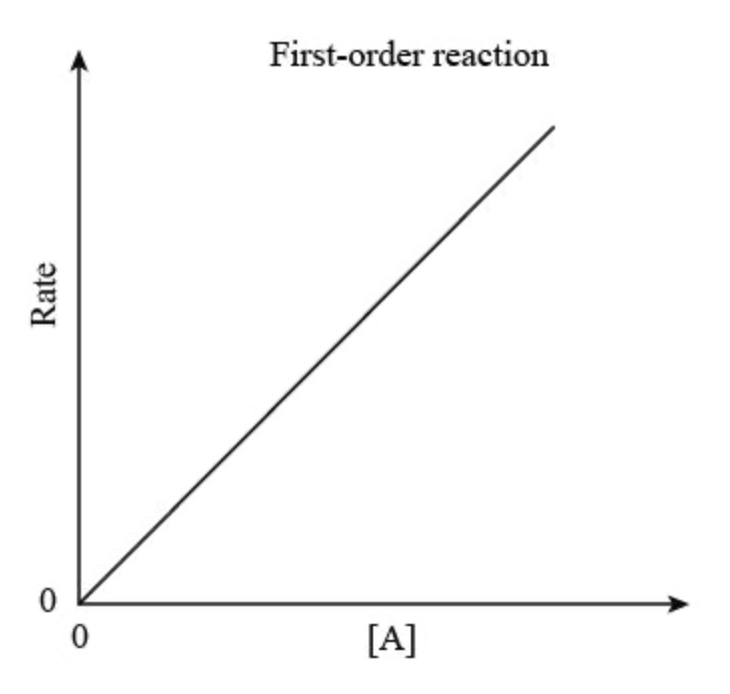
First order
The rate is proportional to the concentration of a reaction Rate equation: Rate = k[A]^1
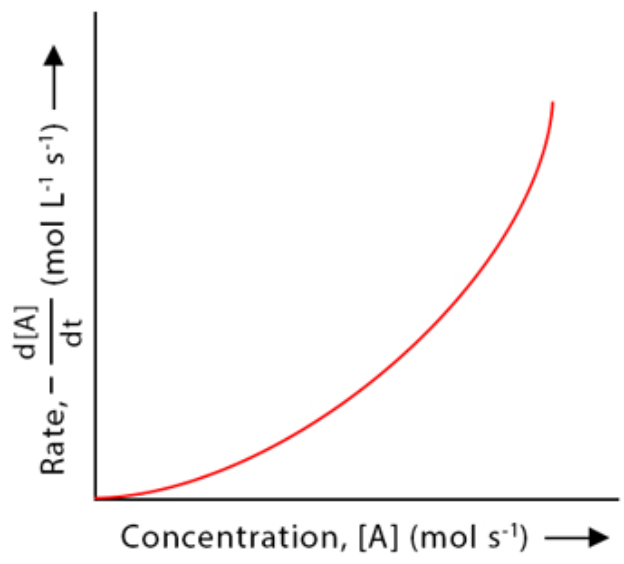
Second order
The rate is proportional to the square of the concentration Rate equation: Rate = k[A]^2
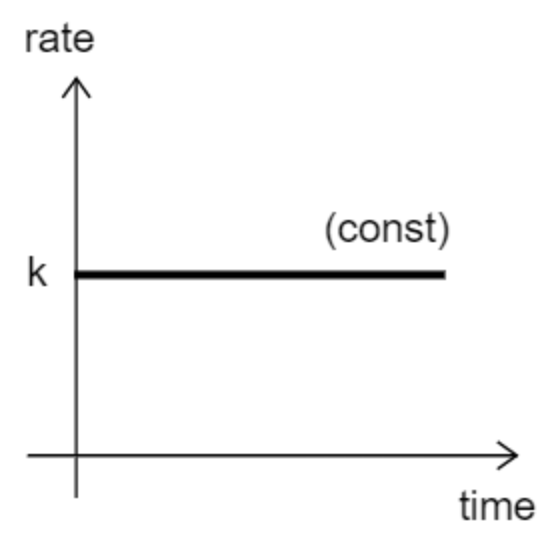
Zero order
Increasing concentration has no effect on rate Rate equation: Rate = k[A]^0 Therefore in a zero order reaction, the rate is equal to the rate constant.
Overall rate of reactants
The overall rate of reactants is the change in concentration of a species divided by the time taken for the change to occur. All reactions rates are positive. Rate = d[product]/dt Rate = -d[reactant]/dt
Measuring rates of reaction: Volume of gas
When a gas is involved look for (g) in equation
Measuring rates of reaction: Colourimetry
When a coloured species is lost or produced we can measure the loss/gain in intensity of that colour (halogens are common examples)
Measuring rates of reaction: Loss of mass
When a relatively dense gas such as CO2 is evolved
Measuring rates of reaction: Titration
Quench the reaction, then titration to obtain the concentration of a species. Often used when acids are involved, either as reactants/products or catalysts.
Measuring rates of reaction: Electrical conductivity
When an increase/decrease in the number of ions occurs in the reaction
What is the equation to calculate rate?
Rate = change in concentration/time
What is the unit for rate of reaction?
mol dm^-3 s^-1
What is the effect of increasing temperature on rate of reaction?
Increasing temperature –> increased rate of reaction Much higher proportion of particle have energy greater than the activation energy = many more successful collisions.
How would you measure reaction rate for really fast reactions?
Use a flash of light to break bonds, use probe flashes to record amount of light absorbed by a species. This can show its concentration.
Finding the rate constant (k)
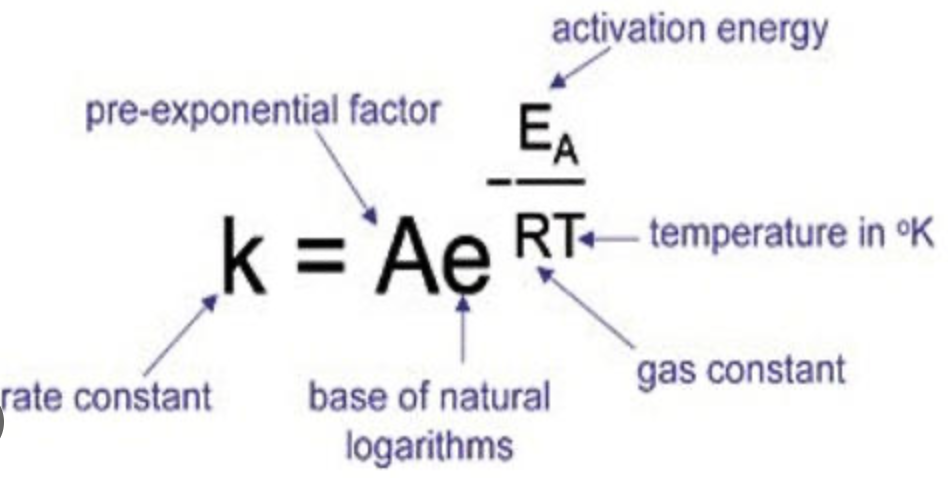
e^(ΔG/-RT)