Chapter 6 (Pt. 1)
No description yet. This curated deck is ready for daily study.
Card preview (24)
What are the functions of a operating system? (3 Answers)
• Communicates with users • Determines what they want • Activates other systems programs, applications packages, or user programs to carry out their request
User Interface
Provides user with an intuitive visual overview
What role do language services (assembler, compilers, and interpreters) provide?
Allow you to write programs in a high level
Memory Manager
Allocate memory space for programs and data
Information Managers
Handle the organization, storage, and retrieval of information on mass storage devices.
What are the types of system softwares? (3 Answers)
• I/O Systems • Scheduler • Utilities
I/O Systems
Allow you to easily and efficiently use the input and output devices that exist on a computer system
Scheduler
Keeps a list of programs ready to run on the processor and selects the one that will execute next
Utilities
Library routines that provide useful services either to a user or to other system routines
What are some of the problems with machine language? (4 Answers)
• Uses binary • Is difficult to read • Is difficult to change • Is difficult to create data
Assembly Language (5 Main Answers; 2 Subanswers)
• Low level programming language • Each symbolic assembly language instruction is translated into exactly one binary machine language instruction • Better than machine language • Machine specific (tied to OAM architecture) • Design decisions: • Op codes • Include/exclude specific functions
Source Program
Program written in assembly language
Object Program
Source program must be translated into a corresponding machine language program.
Assembler
System software that carries out translation
What are the advantages of assembly language?
Allows use of symbolic addresses
Give examples of assembly language code (OAMPL)
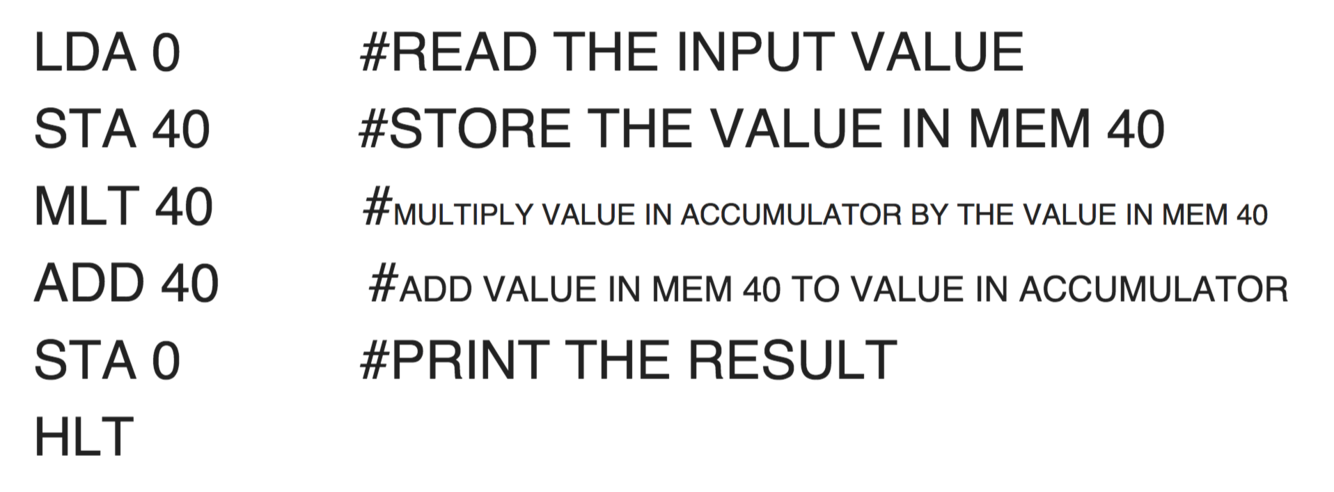
What is the role of an assembler? (2 Main Answers: 4 Subanswers)
Translates a symbolic assembly language program into machine language Tasks performed: • Convert symbolic op codes to binary • Convert symbolic addresses to binary • Perform the assembler services requested by the pseudo ops • Put the translated instructions into a file for future use
Op Code Table
Sorted list of legal assembly language op codes and their binary equivalents
How is a symbol defined in assembly language?
A symbol is defined when it appears in the label field of an instruction or data pesudo-op
Pass
Process of examining and processing every assembly language instruction in the program, one instruction at a time.
What occurs during the first pass over source code?
Assembler looks at every instruction
Binding (2 Main: 2 Sub)
Process of associating a symbolic name with a physical memory address OAM: • Symbolic name (label) • Memory address (line number)
What is the primary purpose of the first pass of an assembler? (2 Answers)
• To bind all symbolic names to address values • To enter those bindings into symbol table
Location Counter
Variable used to determine the address of a given instruction